Award-Winning AP Environmental Science Tutors
serving Concord, CA
AP Environmental Science
Tutors in Concord
Private 1-on-1 tutoring, weekly live classes for academic support, test prep & enrichment, practice tests and diagnostics, and more to elevate grades and test scores.
Based on 3.4M Learner Ratings
UniversitiesSchools & Universities
DeliveredHours Delivered
ProficiencyGrowth in Proficiency
Who needs tutoring?
No obligation. Takes ~1 minute.
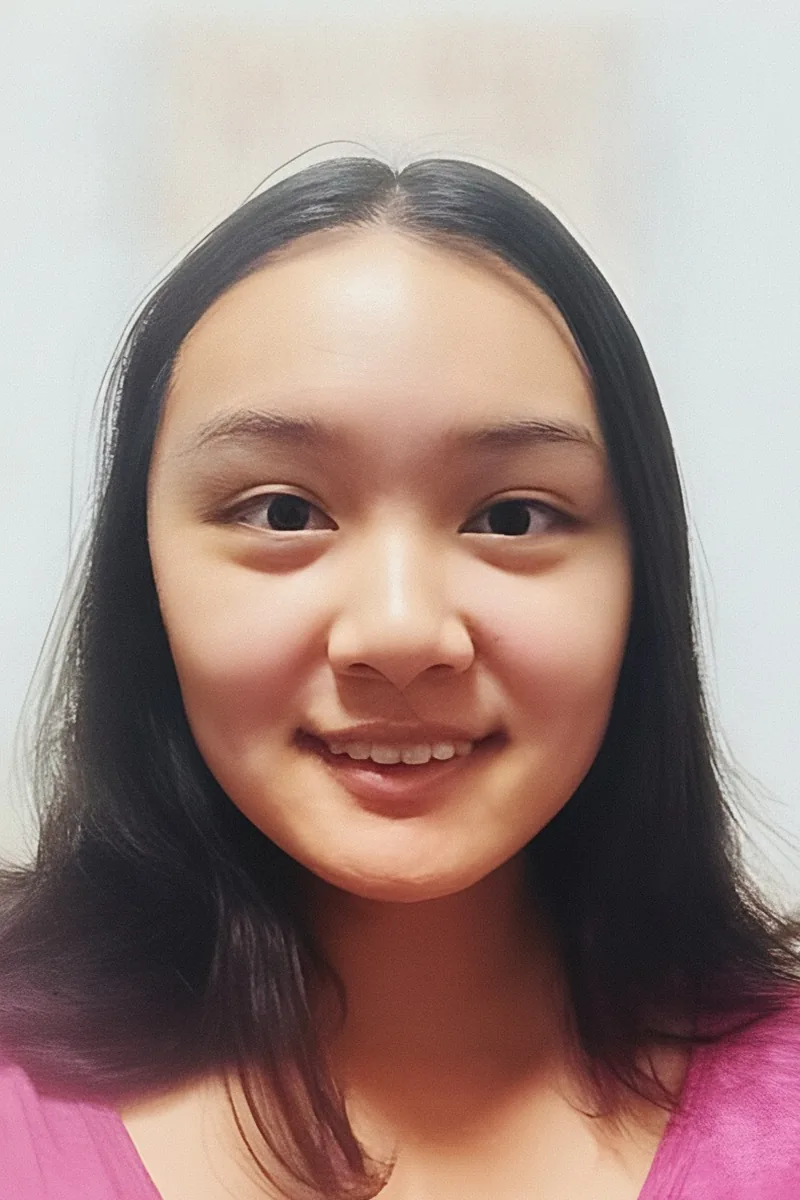
Pharmacy students spend semesters on toxicology, chemical fate in biological systems, and dose-response relationships — concepts Amy applies directly to APES units on pollution, bioaccumulation, and human health impacts. Her biology minor at Northeastern reinforces the ecological side, from nutrient cycling to population dynamics, and a 1550 SAT signals the quantitative precision needed for the exam's calculation-heavy free-response questions. Rated 4.9 by students.

A history and political science background turns out to be a real asset for the APES units on environmental legislation, resource policy, and the human-systems questions that dominate the free-response section — Andrew can explain why the Clean Air Act matters in both a political and ecological context. He also tutors across math and science, so he's comfortable walking through the quantitative problems like resource depletion rates and energy calculations that trip up students who expected a purely memorization-based course.
Eric's degree in Ecology & Evolutionary Biology means he studied the actual science behind APES — population ecology, species interactions, and ecosystem-level processes — not just the survey-course version. He teaches students to think about environmental problems the way an ecologist would, tracing how a disturbance like deforestation or nutrient loading ripples through trophic levels and feedback loops until the full picture clicks.
Chellam earned her Environmental Science degree from UC Berkeley with a biological science concentration, which means AP Environmental Science isn't a subject she studied once — it was her entire academic focus. She breaks down everything from biogeochemical cycles to environmental policy analysis with the depth of someone who's done the fieldwork and the lab work behind the textbook diagrams.
Having earned her degree in Environmental Studies from Temple, Annie knows AP Environmental Science inside and out — from biogeochemical cycles and ecosystem energy flow to the policy and human-impact questions that dominate the free-response section. She also spent a gap year working on organic farms in New Zealand, which means topics like soil science, sustainable agriculture, and biodiversity loss come with firsthand context that sticks.
Finance majors learn to model complex systems with multiple interacting variables — resource scarcity, cost-benefit trade-offs, long-term risk — and Rinky applies that same analytical framework to APES topics like resource depletion, environmental cost analysis, and sustainability trade-offs that show up heavily in free-response prompts. Her 1520 SAT and 5.0 tutoring rating speak to the precision she brings when walking through the data-interpretation and calculation questions that surprise students expecting a soft science course.
Computer science and environmental science don't often overlap — until the APES exam asks students to interpret large data sets on biodiversity indices, model population growth curves, or analyze trends in atmospheric CO₂ concentrations, which is where Firas's PhD-level data analysis and machine learning research at Princeton becomes genuinely useful. He teaches students to read graphs and tables with the systematic precision of a data scientist, breaking down the quantitative free-response questions that catch memorization-focused students off guard. Rated 5.0 by students.
Before she ever tutored APES, Jenna was on the other side — she used tutoring herself in high school to push through tough coursework and earned a 31 ACT and full-tuition scholarship along the way. That experience gives her a sharp read on where students get stuck, especially on the policy and legislation units where environmental science intersects with the kind of big-picture cause-and-effect reasoning she sharpened across her humanities and writing coursework. Rated 4.9 by students.
Primary care medicine means Kellyann sees the downstream effects of environmental problems daily — asthma exacerbated by air quality, waterborne pathogens, the health toll of industrial pollutants — which gives her a clinical lens on APES units covering pollution, toxicology, and human impact that pure ecology tutors often lack. She pairs that real-world perspective with nine years of science tutoring experience and a 4.9 rating, teaching students to trace environmental causes through biological systems the way a clinician would during a differential diagnosis.
A Harvard-trained researcher who wrote his senior thesis on John Dewey's philosophy of education, Henry connects AP Environmental Science topics like biogeochemical cycles and ecosystem dynamics to the real-world policy debates that make them matter. He teaches students to interpret data sets and construct free-response answers that earn full credit by linking evidence to scientific claims.
Running a natural sciences department at a bilingual elementary school in Ecuador gave Joy firsthand experience with the ecological and conservation concepts that anchor the AP Environmental Science curriculum. She digs into topics like biogeochemical cycles, biodiversity loss, and resource management with real-world case studies drawn from her ecology and conservation biology specialization at Boston University. Her Master of Arts in Teaching adds a layer of exam-strategy coaching that keeps students focused on the free-response skills the AP exam rewards.
Ashley's dual degrees in the Science of Natural and Environmental Systems and Economics mirror exactly what APES demands — the ability to think across ecological principles and the human economic forces driving resource depletion, land use change, and pollution policy. She tackles topics like cost-benefit analysis of environmental regulations and the economics behind tragedy-of-the-commons scenarios with genuine subject fluency, not just textbook familiarity.
Testimonials
Because the right AP Environmental Science tutor makes all the difference.
Average Session Rating – Based on 3.4M Learner Ratings
Practice AP Environmental Science
Free practice tests, flashcards, and AI tutoring for AP Environmental Science
Nearby AP Environmental Science Tutors
Other Concord Tutors
Related Science Tutors in Concord
Frequently Asked Questions
AP Environmental Science covers eight major units: energy flow and primary productivity, population ecology, interactions between species, community ecology, succession and disturbance, energy resources and consumption, atmospheric composition and climate change, and human impacts on water systems and land use. The course emphasizes real-world environmental problems and requires both conceptual understanding and data analysis skills. Tutors can help you master each unit's core concepts and practice the types of questions you'll encounter on the exam.
Score improvement depends on your starting point and study timeline, but most students see meaningful gains with focused preparation. If you're starting below a 3, consistent tutoring over 8-12 weeks often helps students reach a 3 or 4. Students already scoring 3-4 typically need targeted work on specific units or exam strategies to break into the 5 range. The key is identifying your weak areas early—whether that's ecosystem dynamics, data interpretation, or test-taking pacing—and building a study plan around them.
Students often struggle with three main areas: (1) integrating concepts across units—the exam expects you to connect energy flow to population dynamics to human impacts, (2) interpreting graphs and data sets quickly under time pressure, and (3) understanding the distinction between correlation and causation in environmental studies. Many students also find the free-response questions challenging because they require you to apply concepts to novel scenarios. Personalized tutoring helps you practice these specific skills with feedback tailored to your learning style.
Effective strategies include: reading the multiple-choice questions before looking at answer choices to focus your thinking, spending 1-2 minutes per MC question to leave time for the harder ones, and tackling free-response questions by underlining key verbs (explain, calculate, predict) to ensure you answer what's actually being asked. Many students benefit from practicing with released exams to get comfortable with question formats and pacing—the exam gives you 90 minutes for 80 MC questions and 90 minutes for 3 free-response questions. Tutors can help you develop a personalized pacing strategy and build confidence with timed practice.
Most students benefit from 3-4 months of consistent preparation, with 5-8 hours per week of focused study. If you're taking the course for the first time, tutoring sessions every 1-2 weeks help you stay on track with curriculum concepts while building exam skills. As the exam approaches, increasing to weekly sessions and adding timed practice tests helps identify remaining weak spots. The timeline is flexible—some students need more time for foundational concepts, while others primarily need exam strategy and practice.
Your first session focuses on assessment and planning. Tutors will ask about your current score (if you've taken practice tests), which units feel strongest and weakest, and what your target score is. You'll likely work through a few practice questions together so the tutor can see your thinking process and identify specific gaps—whether that's conceptual understanding, data interpretation, or test-taking pacing. From there, you'll develop a customized study plan that targets your priorities and fits your timeline.
Practice tests are essential—they're the best way to identify weak units, get comfortable with question formats, and build stamina for the full 3-hour exam. Most students should take at least 3-4 full-length practice tests before exam day, starting with untimed versions to focus on accuracy, then moving to timed practice. After each test, review every question you missed, not just the ones you guessed on—understanding why a wrong answer seemed plausible helps you avoid similar traps on test day. Tutors can help you analyze practice test results and focus your studying on patterns in your mistakes.
Look for tutors with strong science backgrounds—ideally a degree in environmental science, biology, chemistry, or a related field—and experience teaching or tutoring AP-level content. It's helpful if they've worked with multiple students on the exam and understand common misconceptions and test-taking strategies specific to AP Environmental Science. When you connect with a tutor, ask about their approach to the course, whether they use released exams for practice, and how they help students move from understanding concepts to applying them under time pressure.
Let’s find your perfect tutor
Answer a few quick questions. We’ll recommend the right plan and match you with a top 5% tutor.