Award-Winning AP Physics C: Mechanics Tutors
serving Concord, CA
AP Physics C: Mechanics
Tutors in Concord
Private 1-on-1 tutoring, weekly live classes for academic support, test prep & enrichment, practice tests and diagnostics, and more to elevate grades and test scores.
Based on 3.4M Learner Ratings
UniversitiesSchools & Universities
DeliveredHours Delivered
ProficiencyGrowth in Proficiency
Who needs tutoring?
No obligation. Takes ~1 minute.
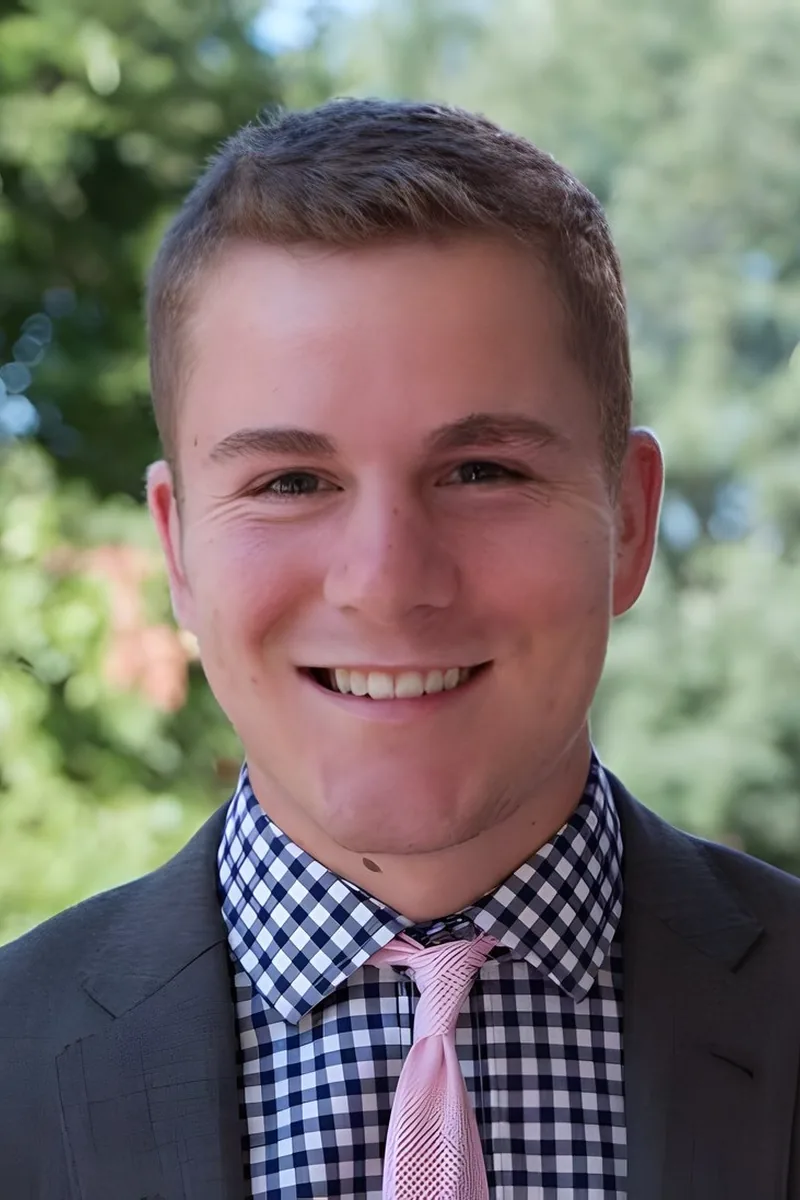
I am a graduate of Cornell University's College of Arts and Sciences. I received my Bachelor of Arts in Chemistry with Distinction in 2015. Since graduation, I was a physics/chemistry teacher and soccer coach at a private school in Virginia for a year, where I led the soccer team to an undefeated season. Before teaching and coaching professionally, I was a Teaching Assistant for the Cornell Math and Physics Departments, where I taught many subjects including calculus, mechanics, electromagnetism. Throughout my time at Cornell and as a teacher, I tutored subjects ranging from the SAT to AP Physics and Algebra II, which is where my true talents lie: in small group or one-on-one settings where I can give students the full attention they deserve and tailor my approach specifically to their learning styles. This is why I am now pursuing tutoring as a part-time occupation at Varsity Tutors. I embrace teaching all math and science subjects, especially physics and calculus, at both the college and high school level and will go above and beyond to make sure all of my students succeed, according to their definition of success. In my spare time, I enjoy playing league soccer, basketball, tennis and guitar, and also like to travel and see as much of the world as I can.
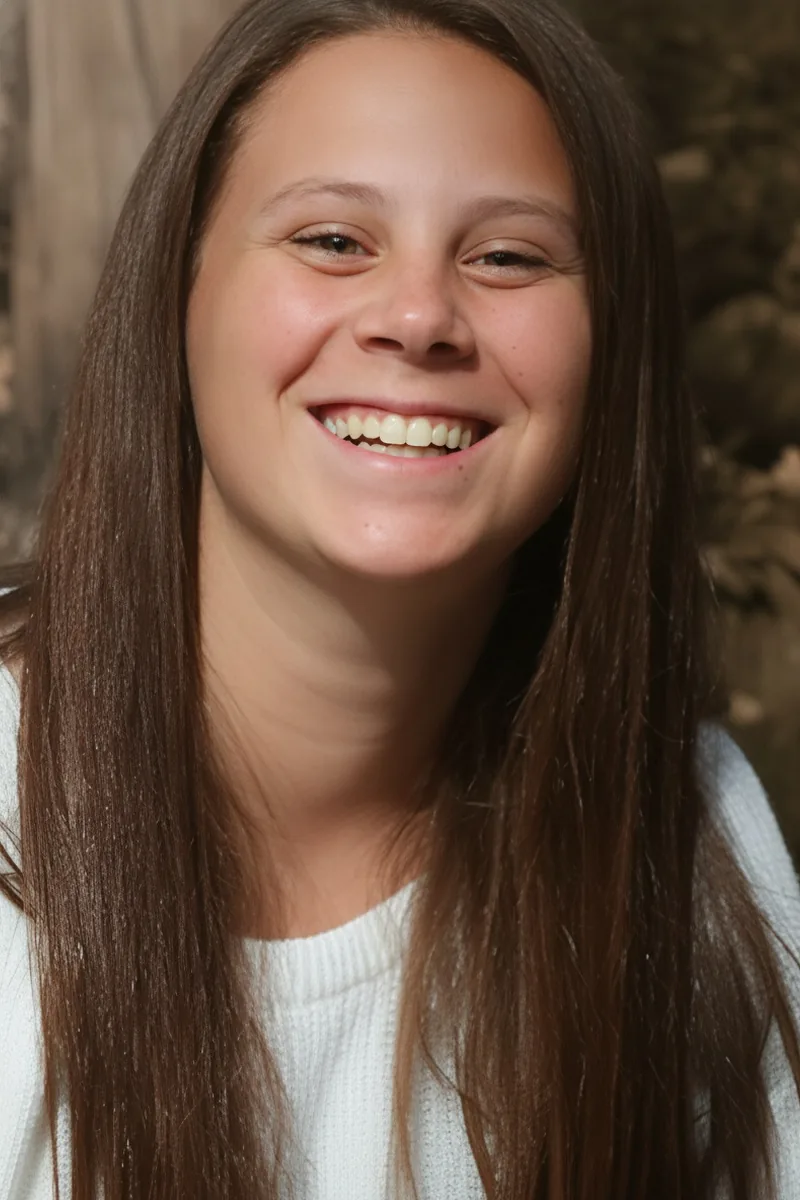
Rachel's business economics major might not scream physics, but her 35 ACT and deep math background — she tutors through AP Calculus BC — mean she's comfortable with the calculus-based problem-solving that Mechanics demands. She approaches kinematics and force problems the way an economics student would: set up the model carefully, define your variables, then let the math do the work.
I'm pursuing a double major in Mathematics and English at Vanderbilt University. I have been tutoring math since High School and have native proficiency in Mandarin Chinese. I am dedicated to helping students explore the study methods that will fit their individual needs.
Mechanics is where Cory is most at home. He treats AP Physics C: Mechanics as a student's first real encounter with calculus-based reasoning about the physical world — deriving kinematic equations from integrals, connecting Newton's laws to differential equations in rotational dynamics, and building intuition for conservation laws that goes beyond plugging into formulas. His physics degree means the vector calculus never gets hand-waved away.
Three years of tutoring introductory physics students while completing dual bachelor's degrees in physics and mathematics — followed by a PhD in Computational Mathematics — means Justin has taught the calculus-based mechanics in AP Physics C from both sides of the chalkboard. He digs into the spots where students typically stall, like setting up angular momentum problems or knowing when a scenario calls for energy methods versus force analysis, and walks through the underlying math until the physics clicks. Rated 5.0 by students.
Dylan's physics major at Vanderbilt means he's working through the same calculus-based Newtonian mechanics — torque integrals, rotational kinematics, differential equations for oscillating systems — that AP Physics C: Mechanics demands, and his 36 ACT reflects the quantitative precision that carries over to exam performance. He leans on graphical and physical intuition to make abstract quantities like angular momentum feel tangible before translating them into the calculus setup the free-response section scores on.
Biomedical engineering at Rice means Aurnab regularly applies calculus-based mechanics to biological systems — modeling forces on skeletal structures, analyzing motion in prosthetic designs — so the kinematics and Newton's laws on the AP Physics C exam map directly onto problems he's already solving in his coursework. His 36 ACT and 1590 SAT point to the mathematical precision that matters most when students need to cleanly set up a work-energy integral or differentiate a position function under exam time pressure. Rated 4.9 by students.
An applied physics degree means Karen didn't just study mechanics for an exam — she built her entire undergraduate education around the Newtonian framework, calculus-based problem-solving, and laboratory work that AP Physics C condenses into a single course. She's especially sharp at connecting real-world scenarios (a spinning figure skater, a car banking a curve) to the free-body diagrams and integrals students need to produce under timed conditions. Rated 5.0 by students.
Holding dual degrees in mathematics and physics, Maxwell brings the rare ability to see both sides of every AP Physics C: Mechanics problem simultaneously — the physical intuition and the calculus machinery. Where many students stumble is in translating a free-body diagram into the correct line integral or second-order differential equation; Maxwell treats that translation step as the core skill to master, not an afterthought. Rated 5.0 by students, with a 1520 SAT backing up the quantitative chops.
Biophysics at Rice means Aadith solves mechanics problems where the calculus isn't optional — modeling forces on protein structures, analyzing torque in molecular motors, applying Newton's laws to systems most students never picture in a physics classroom. That cross-disciplinary lens gives him a knack for teaching students how to read a physical scenario and decide whether to reach for an energy integral or a force-based differential equation. His 1590 SAT underscores the mathematical precision he brings to every free-response setup.
Cornell pre-med students rarely double down on calculus-based physics, but Pratik tutors AP Physics C: Mechanics alongside AP Chemistry and AP Biology — giving him a cross-disciplinary lens that's especially useful when mechanics problems involve biological or chemical systems in free-response scenarios. His 35 ACT confirms the quantitative fluency needed to walk students through setting up torque equations or integrating variable forces without losing sight of the underlying physics.
Four years of teaching undergraduate physics labs at the University of Michigan — especially circuits, electromagnetism, and wave mechanics — gave Michael a sharp eye for where students' calculus intuition breaks down inside a physics problem. For AP Physics C: Mechanics, he zeroes in on that breakdown point: translating a physical setup (a block on a spring, a rotating disk with non-uniform mass) into the correct integral or differential equation. His PhD-level fluency means he can explain not just which formula applies, but why the math takes that particular form.
Testimonials
Because the right AP Physics C: Mechanics tutor makes all the difference.
Average Session Rating – Based on 3.4M Learner Ratings
Practice AP Physics C: Mechanics
Free practice tests, flashcards, and AI tutoring for AP Physics C: Mechanics
Nearby AP Physics C: Mechanics Tutors
Other Concord Tutors
Related Science Tutors in Concord
Frequently Asked Questions
AP Physics C: Mechanics focuses on classical mechanics and includes kinematics, Newton's laws, work and energy, momentum, circular motion, oscillations, and gravitation. The course emphasizes calculus-based problem solving, requiring students to understand derivatives and integrals as they apply to physics concepts. This rigorous curriculum prepares students for the AP exam and college-level physics coursework.
AP Physics C: Mechanics demands strong mathematical skills alongside conceptual understanding—students must not only grasp physics principles but also apply calculus to solve complex problems. Many students struggle with the transition from algebra-based physics to calculus-based reasoning, and the fast pace of the course leaves little time to catch up if concepts aren't mastered early. Time management during the exam is another common challenge, as students must work through multi-step problems efficiently.
Personalized 1-on-1 instruction allows tutors to identify your specific weak areas—whether that's understanding free-body diagrams, mastering energy conservation, or applying calculus to kinematics problems—and tailor lessons accordingly. Tutors can help you develop problem-solving strategies, work through practice exam questions under timed conditions, and build confidence in areas where you feel stuck. Regular practice with feedback accelerates learning far more effectively than studying alone.
Score improvement depends on your starting point, consistency with tutoring, and effort outside sessions. Students who work with tutors typically see meaningful gains by focusing on their weakest topics and practicing regularly with guidance. Most students benefit from starting tutoring several months before the exam to allow time for deep understanding rather than last-minute cramming. Your tutor can help you set realistic goals based on your current performance and timeline.
Your first session is an assessment and planning meeting. Tutors will review your current understanding of AP Physics C: Mechanics concepts, discuss your goals (target AP score, areas of struggle), and learn your learning style. Together, you'll create a personalized study plan that addresses your priorities, whether that's mastering foundational concepts, improving problem-solving speed, or building exam confidence. This foundation ensures every session after is focused and productive.
Practice tests are essential for AP Physics C: Mechanics because they reveal which topics need more work, help you develop pacing strategies, and reduce test anxiety by familiarizing you with the exam format and question types. Taking full-length practice exams under timed conditions mimics the real test experience and helps you identify whether you struggle with conceptual questions, calculations, or time management. Your tutor can review your practice test results to pinpoint patterns in your mistakes and adjust your study plan accordingly.
Varsity Tutors connects you with experienced tutors who specialize in AP Physics C: Mechanics and understand the specific challenges of the course. When you get matched with a tutor, you can review their qualifications, experience with AP Physics, and student reviews to ensure they're a good fit for your learning style. The matching process considers your goals, schedule, and preferred approach so you can start working with someone who's set up to help you succeed.
Most students benefit from 1-2 tutoring sessions per week starting 3-4 months before the AP exam, combined with independent practice between sessions. The exact frequency depends on your current level, how much time you can commit to studying on your own, and how quickly you're progressing. Your tutor can recommend a schedule that balances intensive review of difficult topics with practice problems and full-length exams as test day approaches.
Let’s find your perfect tutor
Answer a few quick questions. We’ll recommend the right plan and match you with a top 5% tutor.