Award-Winning AP Environmental Science Tutors
serving San Francisco, CA
AP Environmental Science
Tutors in San Francisco
Private 1-on-1 tutoring, weekly live classes for academic support, test prep & enrichment, practice tests and diagnostics, and more to elevate grades and test scores.
Based on 3.4M Learner Ratings
UniversitiesSchools & Universities
DeliveredHours Delivered
ProficiencyGrowth in Proficiency
Who needs tutoring?
No obligation. Takes ~1 minute.
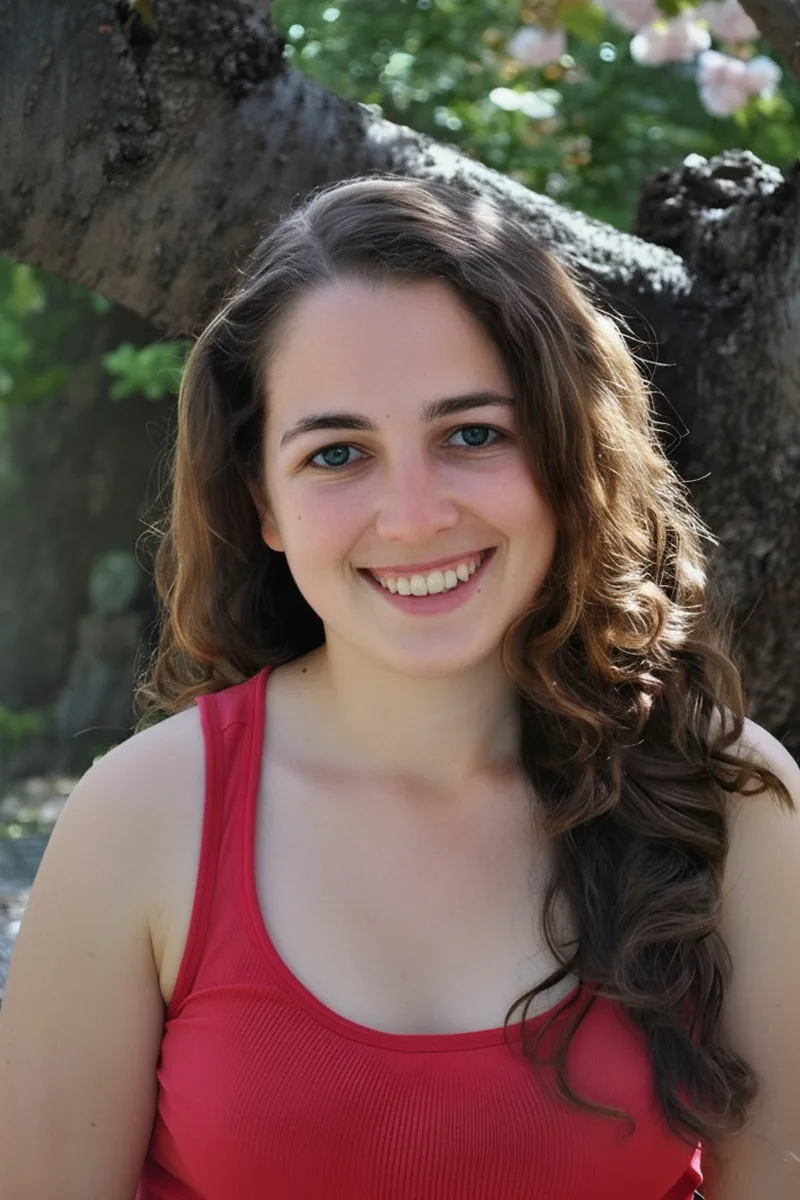
Having earned her degree in Environmental Studies from Temple, Annie knows AP Environmental Science inside and out — from biogeochemical cycles and ecosystem energy flow to the policy and human-impact questions that dominate the free-response section. She also spent a gap year working on organic farms in New Zealand, which means topics like soil science, sustainable agriculture, and biodiversity loss come with firsthand context that sticks.

Stanford's Science, Technology, and Society major sits at the exact intersection APES lives in — where ecological science meets human systems, policy decisions, and technological trade-offs. Rithika's IB and National AP Scholar background means she's already navigated the kind of interdisciplinary, essay-heavy exams that APES models itself on, and she uses that experience to teach students how to connect scientific evidence to real-world environmental consequences in their free-response answers.
Cognitive science trains you to think in systems — how inputs, feedback loops, and cascading effects connect across complex networks — which maps surprisingly well onto APES topics like biogeochemical cycles, ecosystem disruption, and human-environment feedback. Zachary applies that systems-thinking lens to help students trace cause-and-effect chains across units, which is the skill that separates 3s from 5s on the free-response section. He scored a 32 on the ACT and carries a 4.8 tutoring rating.
Supervising an AmeriCorps conservation program in New Mexico means Rachel doesn't just teach APES concepts like land management, resource depletion, and habitat restoration — she manages real projects dealing with them daily. Her Johns Hopkins master's in Environmental Health Sciences adds the scientific rigor behind topics like pollution pathways and risk assessment, while her public health training sharpens the kind of systems-level thinking the exam's free-response questions demand.
Biology majors have an advantage in APES that's easy to overlook — Krisha's coursework in cellular biology and ecology means topics like biogeochemical cycles, trophic levels, and population growth models aren't abstract vocabulary terms but concepts she's studied with real depth. She also scored a 36 on the ACT, so the data-interpretation and calculation questions that blindside students expecting a soft science course are squarely in her wheelhouse. Rated 5.0 by students.
Having spent a year as a climate change researcher at the University of Helsinki — where she completed PhD-level atmospheric science coursework — Marika brings firsthand lab and field experience to AP Environmental Science. She digs into biogeochemical cycles, energy flow, and climate modeling with the depth the AP exam demands, connecting FRQ strategies to the actual science behind each topic.
Before she ever tutored APES, Jenna was on the other side — she used tutoring herself in high school to push through tough coursework and earned a 31 ACT and full-tuition scholarship along the way. That experience gives her a sharp read on where students get stuck, especially on the policy and legislation units where environmental science intersects with the kind of big-picture cause-and-effect reasoning she sharpened across her humanities and writing coursework. Rated 4.9 by students.
An anthropology degree might seem like an unusual background for APES, but it's surprisingly relevant — Libby understands human-environment interactions, resource use patterns, and cultural dimensions of environmental policy, which are exactly the themes the exam's free-response questions probe. She teaches students to think about ecological problems through the lens of human systems, connecting topics like land use, pollution, and sustainability to the societal forces driving them. Rated 5.0 by students.
I am a sophomore at UIUC studying agricultural and biological engineering. Eventually, I hope to work on environmental engineering related projects concerning the improvement of ecosystem management and reducing the harmful effects of pollutants in the environment. As an aspiring engineer, my favorite subjects to teach students are math and science. I've been working with kids as a swim instructor and music teacher for the past six years now. As I've begun developing experience tutoring students, my favorite part about helping students learn math and science concepts is teaching them how these different concepts interconnect and later helping them to develop critical thinking skills to work through difficult material.
Ashley's dual degrees in the Science of Natural and Environmental Systems and Economics mirror exactly what APES demands — the ability to think across ecological principles and the human economic forces driving resource depletion, land use change, and pollution policy. She tackles topics like cost-benefit analysis of environmental regulations and the economics behind tragedy-of-the-commons scenarios with genuine subject fluency, not just textbook familiarity.
Shawn's master's in chemistry gives him a molecular-level understanding of the processes that drive APES content — ocean acidification equilibria, nitrogen fixation pathways, ozone depletion mechanisms — so he can explain the why behind environmental phenomena instead of just naming them. He also teaches the course's surprisingly tricky math, from parts-per-million conversions to energy budget calculations, with the comfort of someone who's done far harder stoichiometry. Rated 4.9 by students.
Training as a family medicine resident means Jordan regularly encounters the real-world health consequences of environmental issues — lead exposure, air quality-driven asthma, waterborne illness — which gives her a clinical lens on APES units covering pollution, toxicology, and human impact that most tutors can't offer. She teaches students to think through dose-response relationships and environmental health data the way a physician evaluates a patient, building the cause-and-effect reasoning that free-response questions reward. Rated 5.0 by students.
Testimonials
Because the right AP Environmental Science tutor makes all the difference.
Average Session Rating – Based on 3.4M Learner Ratings
Practice AP Environmental Science
Free practice tests, flashcards, and AI tutoring for AP Environmental Science
Nearby AP Environmental Science Tutors
Other San Francisco Tutors
Related Science Tutors in San Francisco
Frequently Asked Questions
Score improvement depends on your starting point and commitment level. Students who work with tutors typically see gains of 1-2 points on the AP scale (which ranges from 1-5), though some improve more significantly. The key is identifying your specific weak areas—whether that's unit mastery, free-response writing, or exam pacing—and targeting those systematically.
Most students benefit from starting tutoring 3-4 months before the May exam, which gives enough time to review content, practice full-length tests, and refine test-taking strategies.
Students in San Francisco and beyond often struggle most with Unit 8 (Aquatic and Terrestrial Ecosystems), Unit 6 (Energy Resources and Consumption), and Unit 4 (Biogeochemical Cycles). These units require synthesizing complex systems and understanding interconnected processes—not just memorizing facts.
Free-response questions on these topics demand higher-level thinking and clear written explanations. A tutor can help you move beyond memorization to truly understanding how these systems work, which is what the AP exam tests.
The free-response section has three questions: two short-answer questions (3 points each) and one long essay (10 points). Success requires clear, concise writing and specific evidence. Many students lose points by being vague—the rubrics reward concrete examples and quantitative thinking.
A solid strategy includes: reading each question twice before answering, identifying exactly what's being asked, organizing your response with clear topic sentences, and using specific data or examples. Practice writing under timed conditions (about 20 minutes per question) helps you develop efficiency and clarity before test day.
You have 90 minutes for 80 multiple-choice questions—about 1 minute per question. Many students waste time overthinking easier questions or get stuck on difficult ones, leaving less time for sections they'd find easier. The key is strategic triage: quickly identify questions you can answer confidently, tackle medium-difficulty ones next, and come back to truly difficult questions if you have time.
Practice full-length exams under timed conditions helps you internalize this pacing. A tutor can review your practice tests to identify which question types slow you down and teach you patterns to recognize answers faster.
Varsity Tutors connects you with expert tutors who specialize in AP Environmental Science and understand the specific challenges San Francisco students face. When you get matched with a tutor, you can discuss your current score, target score, and which units need the most work—whether that's climate systems, human population dynamics, or environmental policy.
The best tutors combine deep subject knowledge with test strategy expertise, helping you understand content while also teaching the specific skills the AP exam rewards.
Ideally, start preparing 4-5 months before the May exam (around January). This timeline allows you to review all 8 units systematically, take multiple practice tests, identify weak areas, and build confidence. If you're starting later, even 6-8 weeks of focused tutoring can meaningfully improve your score, especially if your tutor targets your specific weaknesses.
Starting early also reduces test anxiety—you'll have time to practice under realistic conditions and refine your approach before the actual exam.
Practice tests serve two purposes: building endurance for the 3-hour exam and identifying content gaps. Take your first full-length practice test early (around January) to establish a baseline. Then take tests every 3-4 weeks to track improvement and adjust your study focus.
After each test, analyze your performance carefully: Did you miss certain question types? Did time pressure cause careless errors? Were you weak on specific units? A tutor can help you interpret these patterns and create a targeted study plan rather than just reviewing everything again.
Let’s find your perfect tutor
Answer a few quick questions. We’ll recommend the right plan and match you with a top 5% tutor.