Award-Winning AP Environmental Science Tutors
serving Los Angeles, CA
AP Environmental Science
Tutors in Los Angeles
Private 1-on-1 tutoring, weekly live classes for academic support, test prep & enrichment, practice tests and diagnostics, and more to elevate grades and test scores.
Based on 3.4M Learner Ratings
UniversitiesSchools & Universities
DeliveredHours Delivered
ProficiencyGrowth in Proficiency
Who needs tutoring?
No obligation. Takes ~1 minute.

Business students learn to think in systems — supply chains, market feedback loops, cost-benefit trade-offs — and Myna applies that same framework to APES topics like resource depletion, environmental policy trade-offs, and the economic arguments embedded in free-response questions about sustainability. Her 34 ACT reflects sharp reading comprehension and data interpretation skills, which she channels into breaking down the graphs, experimental designs, and calculation problems that catch students off guard on exam day.
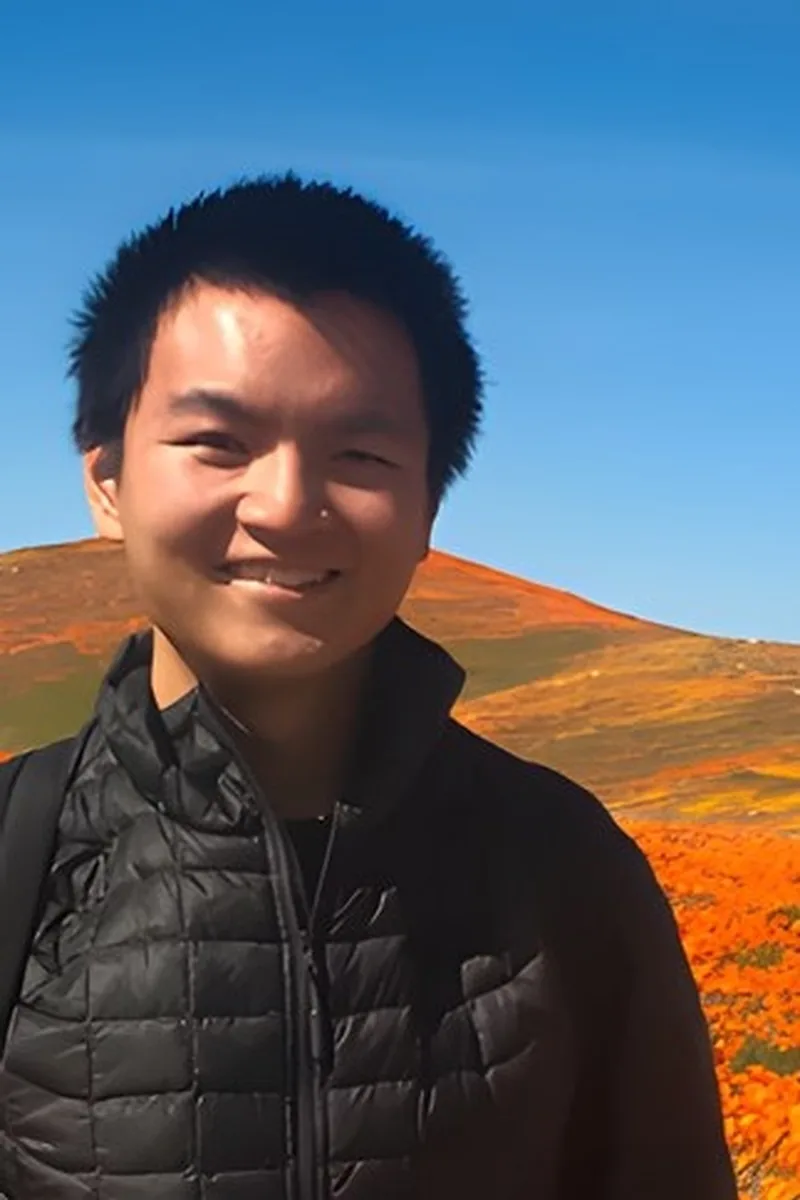
Computer science at UCLA might not scream environmental science, but David's training in modeling complex systems and analyzing large datasets maps directly onto APES topics like climate feedback loops, population modeling, and resource depletion calculations. He tackles the quantitative side of the exam — unit conversions, energy math, experimental design — with the algorithmic precision of a software engineer, which is exactly what the data-heavy free-response questions demand. Rated 4.8 by students.
Most APES tutors come at the subject from biology or policy — Courage holds a Master's in Environmental Science, meaning he studied climate systems, land degradation, and resource management as his primary discipline, not a sidebar. He digs into the interconnections between Earth systems that the exam's free-response questions demand, teaching students to trace how a single disruption — deforestation, nutrient runoff, atmospheric CO₂ increases — ripples across multiple units.
Biochemistry gives Don a molecular-level understanding of the processes APES only scratches the surface of — he can explain why dissolved oxygen drops downstream of a nutrient spill by walking through the actual chemistry of eutrophication and aerobic decomposition, not just labeling a diagram. That depth, plus a 35 ACT and 5.0 rating from students, makes him especially sharp on the exam's quantitative pieces like calculating biomass transfer between trophic levels or interpreting water quality data sets.
Finance majors learn to model complex systems with multiple interacting variables — resource scarcity, cost-benefit trade-offs, long-term risk — and Rinky applies that same analytical framework to APES topics like resource depletion, environmental cost analysis, and sustainability trade-offs that show up heavily in free-response prompts. Her 1520 SAT and 5.0 tutoring rating speak to the precision she brings when walking through the data-interpretation and calculation questions that surprise students expecting a soft science course.
Creative writing isn't the obvious path to APES, but Sydney's strength is in the skill most students neglect: constructing clear, evidence-driven free-response answers that earn full credit instead of rambling through half-remembered vocabulary. Her 35 ACT and 1600 SAT reflect the kind of analytical reading ability that translates directly to interpreting experimental designs and data sets on the exam. Rated 4.9 by students.
Cognitive science trains you to think in systems — how inputs, feedback loops, and cascading effects connect across complex networks — which maps surprisingly well onto APES topics like biogeochemical cycles, ecosystem disruption, and human-environment feedback. Zachary applies that systems-thinking lens to help students trace cause-and-effect chains across units, which is the skill that separates 3s from 5s on the free-response section. He scored a 32 on the ACT and carries a 4.8 tutoring rating.
An anthropology degree might seem like an unusual background for APES, but it's surprisingly relevant — Libby understands human-environment interactions, resource use patterns, and cultural dimensions of environmental policy, which are exactly the themes the exam's free-response questions probe. She teaches students to think about ecological problems through the lens of human systems, connecting topics like land use, pollution, and sustainability to the societal forces driving them. Rated 5.0 by students.
Stanford's Science, Technology, and Society major sits at the exact intersection APES lives in — where ecological science meets human systems, policy decisions, and technological trade-offs. Rithika's IB and National AP Scholar background means she's already navigated the kind of interdisciplinary, essay-heavy exams that APES models itself on, and she uses that experience to teach students how to connect scientific evidence to real-world environmental consequences in their free-response answers.
Between his Biology Honors program at UIUC and his time hiking and studying ecosystems firsthand, Ian tackles AP Environmental Science with both academic rigor and genuine enthusiasm for the material. He breaks down FRQ-heavy topics like biogeochemical cycles, biodiversity loss, and environmental legislation so students can construct the kind of evidence-based arguments the exam rewards.
Pharmacy students spend semesters on toxicology, chemical fate in biological systems, and dose-response relationships — concepts Amy applies directly to APES units on pollution, bioaccumulation, and human health impacts. Her biology minor at Northeastern reinforces the ecological side, from nutrient cycling to population dynamics, and a 1550 SAT signals the quantitative precision needed for the exam's calculation-heavy free-response questions. Rated 4.9 by students.
Having earned her degree in Environmental Studies from Temple, Annie knows AP Environmental Science inside and out — from biogeochemical cycles and ecosystem energy flow to the policy and human-impact questions that dominate the free-response section. She also spent a gap year working on organic farms in New Zealand, which means topics like soil science, sustainable agriculture, and biodiversity loss come with firsthand context that sticks.
Testimonials
Because the right AP Environmental Science tutor makes all the difference.
Average Session Rating – Based on 3.4M Learner Ratings
Practice AP Environmental Science
Free practice tests, flashcards, and AI tutoring for AP Environmental Science
Nearby AP Environmental Science Tutors
Other Los Angeles Tutors
Related Science Tutors in Los Angeles
Frequently Asked Questions
Score improvement depends on your starting point and commitment level. Students typically see the most significant gains—often 2-4 points on the 1-5 AP scale—when they work with a tutor for 3-4 months before the exam, focusing on weak content areas and test-taking strategies. Consistent practice with released AP exams, combined with targeted instruction on challenging topics like ecosystems and biogeochemical cycles, helps you build both content mastery and confidence. The key is identifying your weak spots early and addressing them systematically rather than trying to learn everything at once.
Students in Los Angeles AP Environmental Science courses often struggle most with the quantitative problem-solving section, particularly calculations involving energy flow, population dynamics, and water/soil chemistry. The exam also tests your ability to connect environmental concepts across multiple systems—for example, understanding how carbon cycling relates to climate change and ocean acidification. Many students find the free-response questions challenging because they require you to explain complex environmental processes and propose solutions, not just identify correct answers. A tutor can help you practice breaking down these multi-part questions and develop a systematic approach to tackling them.
For most students, 8-12 weeks of tutoring sessions (typically 1-2 hours per week) provides enough time to review the entire curriculum, identify weak areas, and practice with full-length exams. If you're starting later in the year or struggling with specific units, you may benefit from more frequent sessions. Beyond tutoring sessions, you should plan to spend 2-3 hours weekly on independent practice with released exam questions and review materials. This combination of guided instruction and self-directed practice is what typically leads to meaningful score improvement.
The AP Environmental Science exam has 80 multiple-choice questions (90 minutes) and three free-response questions (70 minutes), so pacing is critical. For the multiple-choice section, budget about 1 minute per question—flag difficult ones and return to them if time allows. For free-response questions, spend 2-3 minutes reading and planning before writing, as these questions reward organization and clear communication of environmental concepts. A common mistake is spending too much time on calculations; instead, show your work and move on rather than getting stuck. Tutors can help you practice these strategies with actual released exams so they become automatic on test day.
Use released College Board exams strategically: take your first practice test early (weeks 4-6 of prep) to identify weak content areas, then take targeted mini-tests on those specific units before attempting full-length exams. For your final 2-3 weeks, complete at least one full-length practice exam under timed conditions each week to build stamina and refine your pacing. After each practice test, review every question you missed—not just to learn the correct answer, but to understand why the wrong answers were tempting and what concept gap led to your error. A tutor can guide this review process and help you spot patterns in your mistakes across multiple exams.
Varsity Tutors connects you with expert tutors in Los Angeles who specialize in AP Environmental Science. When getting matched with a tutor, you can specify your goals (score target, specific topics to focus on, test anxiety concerns) and preferred meeting schedule. Look for tutors who have AP exam teaching experience and can demonstrate familiarity with the current exam format and scoring rubrics. Many tutors offer a first session to assess your current level and discuss a customized study plan before committing to ongoing sessions.
Test anxiety often stems from feeling unprepared or unfamiliar with question formats. Tutors reduce anxiety by helping you build genuine mastery of content and practicing extensively with realistic exam questions so test day feels familiar rather than scary. Working through full-length practice exams with feedback helps you recognize that you can handle the time pressure and complexity. A tutor can also teach you specific strategies for managing stress during the exam—like how to allocate time wisely so you're not rushing, and which questions to tackle first to build confidence. Feeling well-prepared is the most effective anxiety reducer.
Let’s find your perfect tutor
Answer a few quick questions. We’ll recommend the right plan and match you with a top 5% tutor.