Award-Winning Thermodynamics
Tutors
Thermodynamics
Tutors
Private 1-on-1 tutoring, weekly live classes for academic support, test prep & enrichment, practice tests and diagnostics, and more to elevate grades and test scores.
Based on 3.4M Learner Ratings
UniversitiesSchools & Universities
DeliveredHours Delivered
ProficiencyGrowth in Proficiency
Who needs tutoring?
No obligation. Takes ~1 minute.
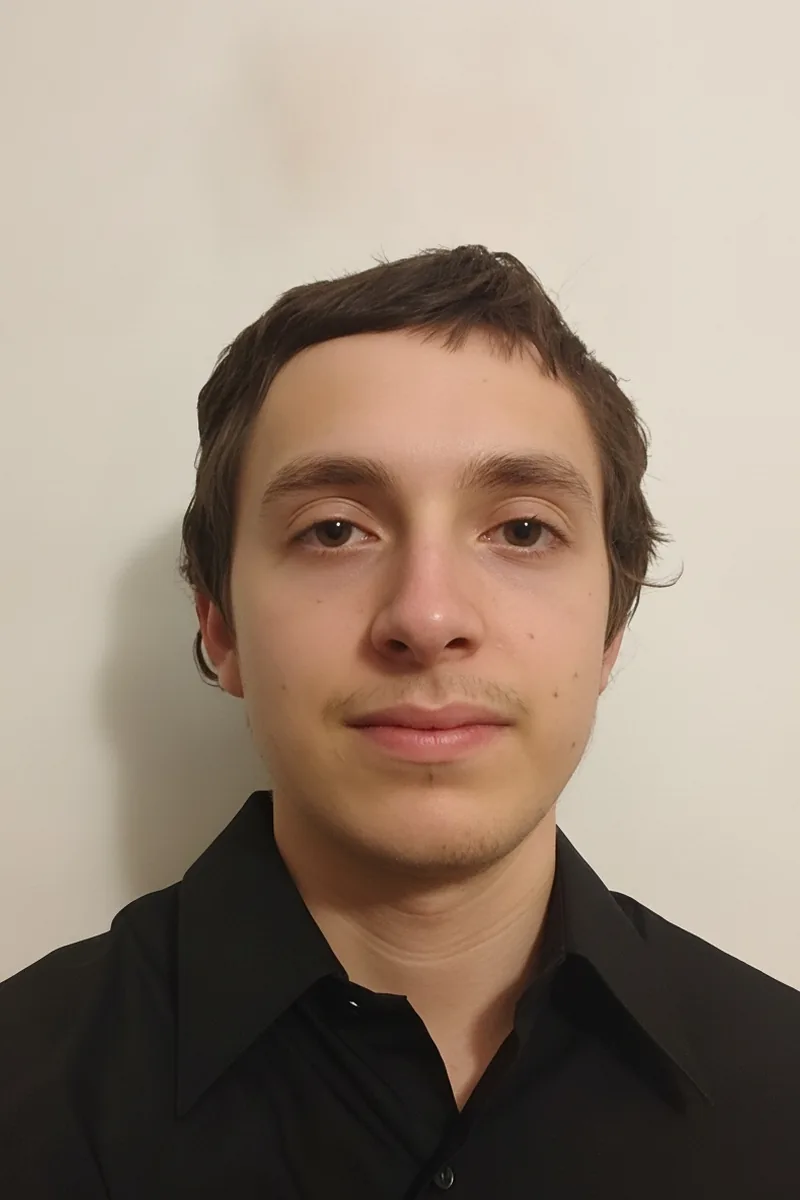
Having studied both physics and computational mathematics through the PhD level at UChicago, Justin built his understanding of thermodynamics from two directions — the physical intuition behind heat, work, and energy transfer, and the rigorous mathematical framework that makes entropy and state functions precise. He's especially sharp at untangling the spots where students confuse path-dependent and state quantities, or struggle to set up problems involving the second law. Rated 5.0 by students.
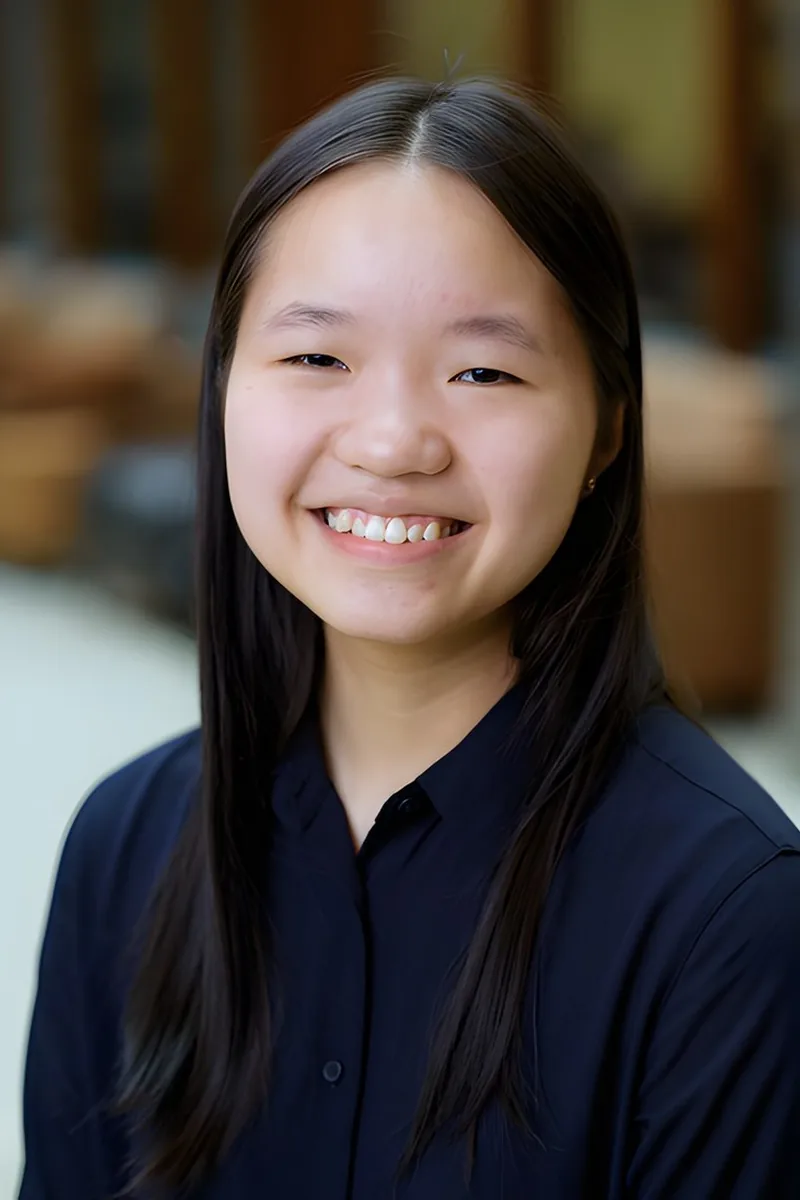
Biomedical engineering at Northwestern means Ingrid has worked through the thermodynamic principles that govern biological systems — from enthalpy changes in biochemical reactions to the energy constraints on drug delivery and biomaterial behavior. She connects the laws of thermodynamics to problems students can visualize, breaking down abstract quantities like Gibbs free energy by tying them to real processes rather than leaving them as symbols in an equation.
Biomedical engineering at Brown means Phillip works through thermodynamic principles in contexts most physics students never see — heat transfer in biological tissue, energy constraints on implant materials, and the thermodynamic feasibility of biochemical processes. He's sharp at breaking down the first and second laws by walking through concrete problem setups, especially for students who struggle to connect state variables like internal energy and entropy to what's actually happening physically. Rated 5.0 by students.
Most students struggle with thermodynamics not because the math is hard, but because the concepts — entropy, enthalpy, free energy — feel like abstractions piled on abstractions. Brian's Caltech training in economics and computer science actually sharpens his approach here: he treats thermodynamic systems the way an economist treats equilibria, teaching students to reason about constraints, optimization, and state changes in ways that make the formalism intuitive rather than opaque.
Entropy, enthalpy, heat engines, PV diagrams — thermodynamics is notoriously abstract until someone ties each law to a physical scenario you can actually picture. Ian's Yale physics training means he's worked through statistical mechanics and classical thermo in depth, and he unpacks concepts like Carnot efficiency and the second law with concrete examples that make the math feel purposeful.
An applied mathematics degree gives Alex a distinct edge in thermodynamics: the subject's toughest moments — setting up energy balance equations, working through partial derivatives of state functions, or interpreting PV diagrams quantitatively — are fundamentally math problems dressed in physics language. Alex digs into the calculus behind concepts like work, heat, and internal energy so students understand not just which formula to use, but why the math describes what's physically happening.
Neurobiology might not scream thermodynamics, but Emily's coursework in cellular energetics means she's grappled with the same principles — entropy-driven protein folding, enthalpy changes in ATP hydrolysis, and the free energy calculations that determine whether a biological reaction actually proceeds. She teaches the laws of thermodynamics by anchoring them in these concrete molecular events, which gives students a more intuitive handle on quantities that textbooks often leave frustratingly abstract. Rated 5.0 by students.
Rahul calls thermodynamics his personal favorite subject, and his chemical engineering degree from Cornell is the reason — it's where energy balances, phase equilibria, and reaction spontaneity stopped being abstract and started governing every process he studied. He pushes past plug-and-chug problem solving to build genuine conceptual understanding of quantities like entropy and Gibbs free energy, connecting the math to what's physically happening in the system. Rated 4.9 by students.
Three mechanical engineering degrees mean Andrea didn't just take thermodynamics — she's been through the full gauntlet of energy systems, fluid behavior, and heat transfer that the discipline demands. She teaches concepts like control volume analysis and the interplay between work and internal energy by grounding them in the engineering problems where those ideas actually get used, from HVAC design to power generation cycles.
Studying biomedical engineering at Johns Hopkins, Christine has tackled thermodynamics where it intersects with living systems — think heat generation in tissues, energy budgets in metabolic processes, and the constraints that govern how biomaterials respond to temperature changes. She's particularly good at walking through problem setups step by step, making sure students can identify what energy transfers are happening before jumping into the math. Holds a 5.0 rating.
Studying molecular biology means Agustin regularly grapples with the thermodynamic principles that dictate protein folding, membrane transport, and the spontaneity of biochemical reactions — entropy and Gibbs free energy aren't abstractions, they're what determine whether a biological process actually runs. He breaks down state functions and energy relationships by connecting them to the molecular systems where they matter, giving students a concrete handle on concepts that textbooks often leave frustratingly abstract.
Chemical engineering at its core is applied thermodynamics — energy balances, phase equilibria, reaction spontaneity — and Siva's ChemE degree plus medical training means he's worked through these principles from both the industrial process side and the biological systems side. He's particularly sharp at teaching students to think about entropy and enthalpy changes in terms of what's physically driving a process forward, whether that's a distillation column or a metabolic pathway. Holds a 5.0 rating.
Preparing for dental school at Columbia means Erica has had to master the thermodynamic principles underlying physical chemistry and materials science — from enthalpy changes in chemical reactions to the energy constraints that govern phase transitions in dental biomaterials. Her Harvard training in the history of science also gives her an unusual ability to explain *why* thermodynamic concepts developed the way they did, which often makes the logic behind state functions and the second law feel less arbitrary. Rated 4.9 by students.
A materials engineering PhD means Nivedina encounters thermodynamics constantly — phase stability, diffusion kinetics, and free energy minimization are the tools she uses to understand why materials behave the way they do at different temperatures and pressures. Her chemistry foundation lets her explain state functions and equilibrium from the molecular level up, connecting the math to what's actually happening in a system. She approaches each problem by building the physical picture first, then layering in the equations.
Erik's physics degree means he's worked through the full thermodynamic framework — state functions, PV diagrams, entropy arguments — with the mathematical rigor that a lot of introductory courses gloss over. Where many students get lost is in translating between the physical picture (a gas expanding, heat flowing across a boundary) and the calculus that describes it, and that's exactly the gap his dual background in physics and math lets him close.
Few tutors have spent as much time living inside thermodynamic systems as Steven, whose PhD chemical engineering career revolved around energy balances, entropy calculations, and phase equilibria. He breaks down intimidating concepts like Carnot efficiency or Gibbs free energy by walking through the same problem multiple ways — mathematically, conceptually, and through real engineering scenarios.
I am a recent graduate of Princeton University's Mechanical and Aerospace Engineering Department. I am passionate about teaching and mentoring and have done so in multiple capacities over the last four years, including a fellowship during which I taught pre-algebraic math to a group of middle school students from traditionally underserved backgrounds in Saint Paul, MN. I love interacting with students and seeing them grow over the course of their studies. I'm ecstatic at the opportunity to learn alongside them as we venture into educational rabbit holes and uncover key concepts about math, science, and everything else.
Pursuing a PhD in mechanical engineering means Jared has gone deep on the thermodynamic concepts that trip most students up — not just the first and second laws in isolation, but how they play out in real systems involving work, heat transfer, and efficiency trade-offs. His biomedical engineering undergrad adds a less common angle: he can explain entropy and energy balances through both traditional engineering cycles and biological system constraints, which gives students a second way in when the standard textbook framing isn't clicking.
Entropy, enthalpy, and the laws of thermodynamics can feel impossibly abstract until someone walks you through what's physically happening at the molecular level. Theresa tackles these concepts regularly in her Rice engineering coursework, where thermodynamic principles govern everything from heat transfer in medical implants to energy balance in biological systems.
A chemistry degree followed by graduate work in entrepreneurial studies means David has seen thermodynamics from both the molecular side — enthalpy of reaction, spontaneity, Hess's law — and the engineering process side where energy balances drive real decisions. He's particularly effective at teaching students to interpret what state functions like entropy and Gibbs free energy actually tell you about a system, rather than just manipulating them algebraically. Rated 4.9 by students.
Heat transfer, entropy, and the laws of thermodynamics can feel impossibly abstract until someone connects them to tangible systems. Jay draws on his physics and science teaching background to walk through PV diagrams, thermal equilibrium, and energy flow in ways that make the math meaningful rather than mechanical.
Subashini earned her Doctor of Science in Chemistry, which means thermodynamic reasoning — reaction spontaneity, enthalpy changes, equilibrium shifts — was woven into nearly every problem she solved at the doctoral level. She breaks down state functions and energy relationships by grounding them in the chemical reactions students are actually working through, turning quantities like Gibbs free energy from intimidating symbols into tools that predict real outcomes.
Entropy, enthalpy, and Gibbs free energy aren't just equations to memorize — they tell you whether a process will actually happen and why. Enric's doctoral training in chemistry required extensive work with thermodynamic principles, from phase diagrams and Hess's law to statistical interpretations of the second law. He teaches students to read what the math is physically saying about energy and spontaneity.
Between a biochemistry degree and a pharmacy doctorate in progress at VCU, Joel has worked through thermodynamic principles from the chemical side — enthalpy of reactions, Gibbs free energy predictions, and the energy landscapes that determine whether a process is spontaneous or not. His experience as adjunct chemistry faculty means he's taught these concepts to classrooms full of students who confuse state functions with path functions, and he knows exactly where the misunderstandings take root. Holds a 5.0 rating.
Applied mathematics gives Drisana an edge when thermodynamics problems demand careful manipulation of partial derivatives, exact differentials, and Maxwell relations — the calculus-heavy machinery that connects measurable quantities like pressure and temperature to abstract ones like entropy. As a current math grad student who also teaches physics and physical chemistry, she builds the mathematical reasoning behind each law rather than asking students to accept formulas on faith. Rated 5.0 by students.
Every chemical engineering student hits a point where thermodynamics stops being one chapter and starts being the backbone of everything — energy balances in reactor design, phase equilibria in separation processes, spontaneity predictions that determine whether a proposed process is even feasible. Jonathan reached that point early and brings an engineer's problem-solving instinct to teaching concepts like entropy, enthalpy, and the laws that connect them, breaking each one down through the industrial and chemical contexts where they actually matter.
As a PhD student in Biomedical Engineering who TA'd chemistry and calculus courses throughout undergrad, Maggie has spent years working through the energy relationships that govern biological and engineered systems — from heat transfer in biomaterials to the enthalpy and entropy changes that determine whether a reaction actually proceeds. She's especially effective at teaching students to set up first and second law problems step by step, connecting the math to the physical picture rather than treating equations as formulas to memorize.
With dual bachelor's degrees in math and physics plus a master's in atmospheric and space sciences, Richard has worked through thermodynamics from multiple directions — the formal mathematical framework, the physical laws governing heat and energy transfer, and the atmospheric systems where those principles drive weather and climate behavior. He teaches concepts like entropy and the laws of thermodynamics by connecting them to tangible phenomena students can picture, from why storms intensify to how energy moves through fluid systems.
Twenty-five years teaching physics and chemistry in Massachusetts classrooms means Jacques has explained entropy, enthalpy, and energy conservation to hundreds of students who initially couldn't tell a state function from a path function. His Princeton chemical engineering degree is where thermodynamics became second nature — energy balances, phase behavior, and reaction spontaneity were the daily currency of his coursework. He grounds every concept in concrete physical scenarios, making the leap from PV diagrams to real systems feel natural rather than forced.
Nuclear engineering is essentially thermodynamics under extreme conditions — reactor heat cycles, energy conversion efficiency, and the physics of heat transfer all depend on mastering state functions, entropy production, and the laws that govern energy flow. Moe's nuclear engineering degree and electrical engineering master's mean he's worked through these principles in contexts where precision isn't optional, and his deep math background lets him walk through the calculus-heavy derivations without losing the physical intuition. Rated 4.9 by students.
Few tutors have applied thermodynamics as directly as someone who's TAed chemical engineering process design and reactor kinetics at Cornell. Apoorva tackles entropy, enthalpy, Gibbs free energy, and phase equilibria by tying each concept back to physical systems — heat exchangers, reaction spontaneity, energy balances — so the math and the science reinforce each other instead of feeling like separate hurdles.
Chemical and biomolecular engineering at Johns Hopkins means Madeline has worked through energy balances, reaction spontaneity, and phase equilibria in contexts where getting the thermodynamics wrong means the entire process design falls apart. She's especially strong at teaching students to set up problems systematically — identifying system boundaries, choosing the right state properties, and connecting the math back to what's physically changing in the system. Holds a 5.0 rating.
I grew up in the Boston area and now live in Citrus County, Florida. I graduated from MIT in chemical engineering and worked for many years as a chemical process engineer, so I have a strong background in math and science, especially chemistry and thermodynamics. I've also been granted six U.S. patents. When the pandemic hit us, I moved to Florida and did part-time work as a chess tutor, then became a substitute teacher in the middle and high schools in our district. I enjoyed working with the students, many of whom had difficulty learning in big classes with many disruptions. I found that I could best help these students by using real-world examples to teach difficult concepts in a new way. Often, then, the student would come away with a new perspective and a much better understanding of the concept. I was happy to be able to help. These days as a VT tutor, I continue to use, whenever possible, real-world examples in my own material in chemistry and thermodynamics.
As a PhD student in mechanical engineering at Columbia with a Berkeley ME degree, William has taken thermodynamics from undergraduate fundamentals through graduate-level research — working with real systems where the first and second laws aren't exam questions but design constraints. He's especially effective at teaching students to think through open and closed system problems by building intuition around what energy, work, and heat are actually doing at each step, rather than pattern-matching to equation sheets. Holds a 5.0 rating.
Georgia Tech's chemical engineering curriculum treats thermodynamics as the backbone of everything — energy balances, phase behavior, reaction feasibility — and Matthew lived in that material for four years before continuing into biotech research at ETH Zurich. He's especially good at walking students through the logic of setting up enthalpy and entropy calculations from scratch, so the equations feel like they're describing something real rather than just producing numbers. Rated 5.0 by students.
Teaching AP Chemistry, Honors Chemistry, and Anatomy & Physiology daily means Samuel regularly tackles the thermodynamic concepts that bridge those disciplines — from calorimetry and Hess's law in the chemistry classroom to metabolic energy transfer in A&P. His biology master's and classroom experience give him a practical sense of exactly where students lose the thread between the math and the meaning, especially when state functions like enthalpy start feeling disconnected from the reactions they describe. Rated 4.9 by students.
Heading into a PhD in electrical engineering after completing his physics degree, Thomas has tackled thermodynamics from the fundamental side — statistical mechanics, heat engines, and the laws that connect microscopic behavior to macroscopic quantities like temperature and pressure. He's especially effective at teaching students to reason through problems involving work, heat, and internal energy by building intuition for what the math is actually describing. Rated 5.0 by students.
As a mechanical engineering senior at Yale, Yossi has worked through thermodynamics the way it's meant to be learned — embedded in real engineering problems like engine cycles, heat exchangers, and energy conversion systems where the first and second laws aren't theory, they're design constraints. He breaks down tricky concepts like entropy generation and irreversibility by walking through the physical systems where those quantities actually decide whether a design works or fails. Rated 5.0 by students.
Working in the biomedical industry after earning both a BS and MS in mechanical engineering, Ziad has applied thermodynamic principles across fluid mechanics and heat transfer problems where energy balances and system boundaries aren't theoretical — they're design constraints. He teaches students to read PV diagrams and work through the laws of thermodynamics the way a practicing engineer does: by connecting each equation to the physical process it describes, whether that's a compression cycle or a heat exchanger. Rated 4.8 by students.
Having studied physics at the undergraduate level, Cory has worked through the full thermodynamic framework from first principles — the laws, state variables, PV diagrams, and the calculus that ties them together. He's especially effective at walking students through the conceptual leap from energy conservation to entropy, using a conversational style that turns abstract quantities into something students can reason about rather than just memorize. Rated 4.9 by students.
Testimonials
Because the right Thermodynamics tutor makes all the difference.
Average Session Rating – Based on 3.4M Learner Ratings
Top 20 Science Subjects



Top 20 Subjects
Frequently Asked Questions
Thermodynamics builds critical thinking and problem-solving skills that apply across academics and careers. A strong foundation in Thermodynamics opens doors to advanced coursework and prepares students for standardized tests.
Many students find that success in Thermodynamics boosts their confidence in related subjects too.
Common challenges include gaps from earlier material, difficulty with specific concepts, and trouble applying what's learned to new problems. These issues compound quickly in Thermodynamics because topics build on each other.
A tutor identifies exactly where you're stuck, fills in gaps, and gives you targeted practice until the concepts click. That 1-on-1 attention makes a big difference.
Look for someone with strong Thermodynamics knowledge who can explain concepts in multiple ways until you understand. Patience and the ability to adapt to your learning style matter as much as expertise.
Varsity Tutors vets all tutors through background checks, credential review, and teaching evaluation—so you can focus on finding the right personality and teaching approach fit.
For students who are struggling, stuck, or want to excel, tutoring often pays off in better grades, stronger test scores, and reduced stress. The 1-on-1 format lets you move at your own pace and focus on what you actually need.
Many students also develop better study habits that serve them in other subjects.
Most students benefit from 1-2 sessions per week. If you're significantly behind or have a major exam coming up, more frequent sessions can help you catch up faster.
Your tutor can recommend a schedule based on your goals and timeline.
Yes—both are core parts of tutoring. Tutors help you work through challenging homework problems while teaching the underlying concepts, so you're not just getting answers but actually learning.
For exams, tutors provide targeted review, practice problems, and test-taking strategies specific to Thermodynamics.
Tutoring is typically purchased in hour packages, with rates varying by tutor experience and subject complexity. Varsity Tutors offers several package options.
You can discuss pricing during your consultation to find an option that fits your budget and goals.
Your tutor will assess where you are, discuss your goals, and start working on areas where you need the most help. Many students bring current homework or upcoming test material to focus on.
By the end of the session, you'll have a plan for moving forward and a sense of how your tutor approaches teaching Thermodynamics.
Let’s find your perfect tutor
Answer a few quick questions. We’ll recommend the right plan and match you with a top 5% tutor.