Award-Winning Earth Science
Tutors
Earth Science
Tutors
Private 1-on-1 tutoring, weekly live classes for academic support, test prep & enrichment, practice tests and diagnostics, and more to elevate grades and test scores.
Based on 3.4M Learner Ratings
UniversitiesSchools & Universities
DeliveredHours Delivered
ProficiencyGrowth in Proficiency
Who needs tutoring?
No obligation. Takes ~1 minute.

Isabella's math background from MIT isn't the obvious earth science credential, but her analytical training pays off when students hit topics like interpreting topographic profiles, calculating rates of erosion, or understanding the logarithmic math behind the Richter scale. She also TA'd science courses and taught STEM at summer programs for gifted middle and high schoolers, so she knows how to make quantitative reasoning feel approachable in a subject students often try to survive on memorization alone. Holds a 5.0 rating.
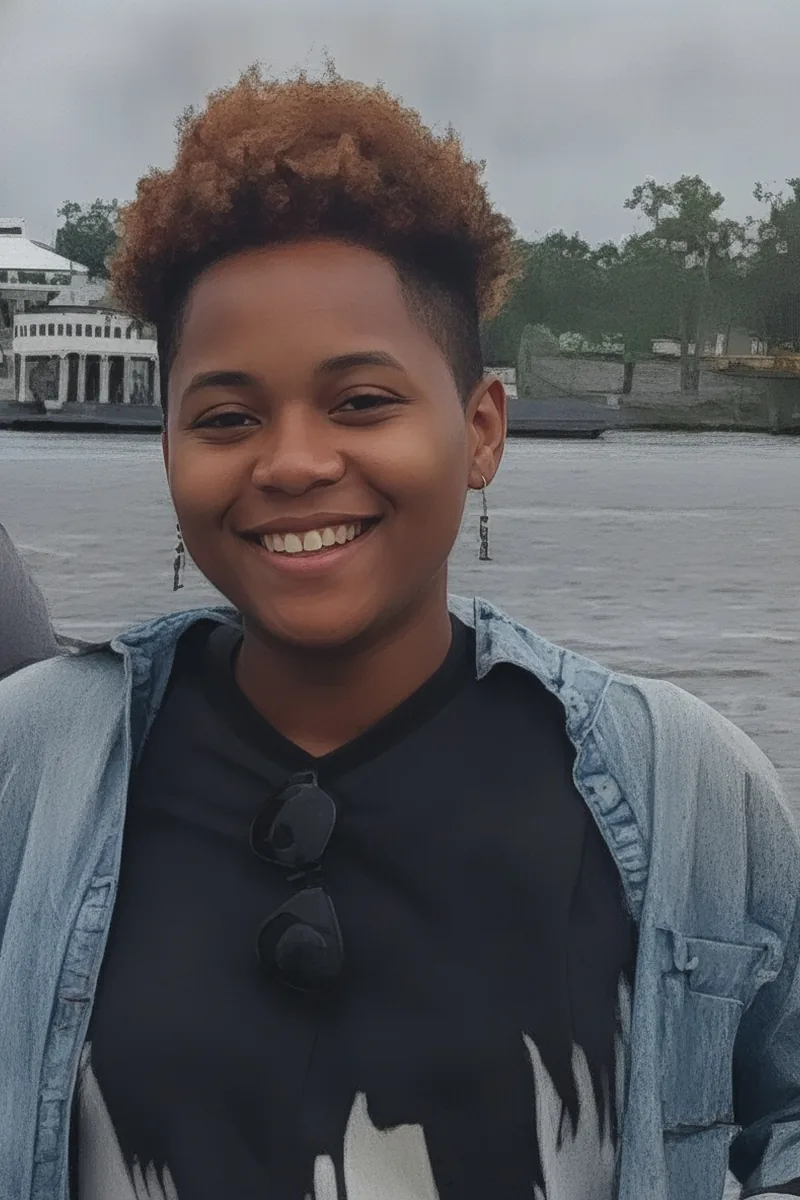
Plate tectonics, rock cycles, atmospheric layers, and weathering processes all make more sense when a tutor can point to the actual landscape and say, "Here's where you see it." Rachel has spent years working outdoors in New Mexico's parks and conservation sites, giving her firsthand knowledge of geological formations, erosion patterns, and desert hydrology. She turns earth science vocabulary into vivid, memorable explanations grounded in real terrain.
As a former middle school science teacher and science curriculum chair, John designed lessons covering plate tectonics, weathering cycles, and atmospheric systems from the ground up. That curriculum-building experience means he knows exactly where students get tripped up — like confusing rock cycle stages or misreading topographic maps — and how to clear those roadblocks.
An English major might seem like an unusual fit for earth science, but Ayako's well-rounded academic background and 5.0 tutoring rating show she can break down topics like rock classification, weather systems, and erosion into clear, logical explanations that stick. She's especially strong at teaching students how to read diagrams, interpret data tables, and write lab responses — the skills that often separate a good earth science grade from a great one.
Plate tectonics, rock cycles, atmospheric layers — earth science covers an enormous range of material, and students often struggle to see how it all fits together. Simon approaches each unit by anchoring it to observable phenomena, like connecting weathering patterns to the geology visible in a local landscape. His Environmental Studies background gives him a systems-level perspective that makes the content cohere.
Plate tectonics, the rock cycle, atmospheric layers — Earth Science asks students to think on scales of time and space that don't match everyday experience. Eric makes those scales tangible by tying geological processes to observable evidence, like explaining how fossils and magnetic striping on the ocean floor proved continental drift. His ecology background also means he can show how Earth's physical systems directly shape the living world.
Studying how living things interact with ocean chemistry and how those interactions get recorded in sediment and rock — that's literally Lisa's PhD research at Stony Brook. She teaches earth science concepts like the rock cycle, plate tectonics, and biogeochemical processes with the authority of someone who spends her days analyzing mud cores. Rated 5.0 by students.
Plate tectonics, the rock cycle, atmospheric layers, ocean currents — Earth Science asks students to think across vastly different scales of time and space, which can feel overwhelming. Patricia's Environmental Science background gives her a natural command of geology and earth systems, so she can explain how weathering shapes landforms or why seismic waves behave differently in each layer of the Earth with real clarity.
Plate tectonics, rock cycles, atmospheric layers — earth science asks students to think in timescales and spatial dimensions they've never encountered before. Sydney unpacks these concepts by anchoring them in observable evidence, walking through how scientists actually figured out continental drift or the structure of Earth's interior rather than presenting conclusions as facts to memorize.
Miriam's PhD is in planetary science, which means earth science isn't a subject she studied once — it's the foundation her entire career is built on. She researches the composition and geological evolution of rocky bodies like the Moon and Mercury, giving her deep expertise in mineralogy, plate tectonics, volcanism, and the rock cycle that goes far beyond a standard textbook treatment.
Plate tectonics, the rock cycle, atmospheric circulation — earth science is really a story about how interconnected systems shape the planet over time. Kiera's ecology background at Dartmouth gives her a systems-level perspective that turns isolated facts about minerals or weather patterns into a coherent narrative students can actually retain.
Plate tectonics, rock cycles, atmospheric layers — earth science asks students to think across enormous scales of time and space, which can feel overwhelming without a clear framework. Morgan approaches each unit by building a narrative: how one process (like weathering) feeds into the next (sediment transport, deposition, lithification). That storytelling instinct, sharpened by her English degree, makes complex systems easier to remember.
Rock cycles, plate tectonics, weather systems, and ocean currents can feel like disconnected facts until someone ties them together into one coherent picture of how the planet works. Mona approaches earth science by linking each topic to the next — showing, for instance, how volcanic activity connects to atmospheric composition and climate patterns.
Plate tectonics, rock cycles, atmospheric layers — earth science covers an enormous range of material that rewards students who can see the systems connecting it all. Rebecca approaches the subject by linking processes together, like how weathering feeds sedimentation which feeds rock formation, so each topic reinforces the last instead of feeling like a separate chapter to memorize.
Victoria's degree in Earth and Planetary Science means plate tectonics, mineral identification, and atmospheric processes aren't just exam topics — they're the foundation of her professional work assessing geological hazards for Washington's coastline. She teaches earth science by connecting rock cycles, weathering, and seismic activity to the actual landscapes students can see around them.
Dance training might seem unrelated to earth science, but Alisha's 34 ACT composite reflects genuine scientific chops — she tutors across biology, physics, and chemistry, which means she can explain the energy transfers behind weather systems or the chemical processes driving rock formation without treating them as isolated vocabulary. Her science background lets her connect topics like erosion, plate movement, and atmospheric cycles into a coherent picture rather than a list of terms to memorize.
Shawn's master's in chemistry gives him a molecular-level understanding of the reactions behind topics like chemical weathering, mineral crystallization, and ocean acidification — processes that most earth science textbooks describe but rarely explain. He walks students through the "why" of each geological and atmospheric process so they can predict outcomes on exams rather than just recall definitions. Rated 4.9 by students.
Teaching Regents Earth Science in New York classrooms means Sarah knows exactly which topics — from mineral identification to reading weather station models — trip students up on the Living Environment and Earth Science exams. Her biology training at Brandeis and science education masters from Fordham let her tie geological and atmospheric concepts back to the biological systems students often find more intuitive. Rated 5.0 by students.
Pursuing a master's in biology with a focus on evolution and bioanthropology means Alex regularly thinks about deep time — how species change across geological epochs, how fossils form in sedimentary layers, and how shifting climates reshape ecosystems over millions of years. That evolutionary lens gives him a narrative thread through earth science topics like stratigraphy, the rock cycle, and paleoclimate that makes geological timescales feel less abstract. Rated 4.8 by students.
At UC Berkeley's Lawrence Hall of Science, Mary developed project-based Earth Science curriculum covering plate tectonics, rock cycles, weathering, and atmospheric systems — all designed to be accessible to middle schoolers reading below grade level. That experience means she knows how to unpack dense scientific vocabulary and make concepts like geological time or mineral classification click.
As an Environmental Studies major at Brown, Julia doesn't just know earth science — she lives it. She unpacks topics like plate tectonics, the rock cycle, atmospheric systems, and watershed dynamics by tying them to real sustainability issues she studies in her coursework, which makes the material stick far better than memorizing textbook definitions.
Emily's environmental science degree from Brandeis means earth science isn't just a subject she tutors — it's a field she studied deeply, from plate tectonics and rock cycles to atmospheric systems and watershed dynamics. She connects textbook diagrams to real geological processes, making concepts like weathering or ocean circulation click. Her 4.9 student rating backs up that depth.
Sarah is a geology major from Caltech now starting graduate research in Earth and Planetary Sciences at Harvard, so the material in a typical earth science course — plate tectonics, volcanism, mineral formation, stratigraphic layering — is the same content she works with daily at a research level. That depth means she can explain not just what happens during, say, a subduction event, but walk through the physical and chemical reasons it happens and why the resulting landforms look the way they do.
Plate tectonics, rock cycles, and atmospheric science all require students to think across huge scales of time and space, which is a genuinely different skill from most other science classes. Sofia's physical sciences background at UChicago gives her the tools to explain processes like weathering, volcanism, and ocean circulation in ways that connect cause and effect clearly. She's especially good at turning diagram-heavy material into something a student can reason through on an exam.
Running a marine biology summer camp means Zoey teaches the same earth systems from the ocean side — how tidal forces sculpt coastlines, how ocean currents regulate climate, and how seafloor spreading drives plate tectonics. Her biology and marine science degrees give her a living-systems perspective on geological processes that makes topics like the water cycle and coastal erosion feel immediate rather than textbook-abstract. Rated 4.9 by students.
Rock cycles, plate tectonics, weather systems — earth science covers an enormous range of interconnected processes. Danielle's background includes geology coursework and classroom science teaching, so she can walk students through how these systems interact, from mineral formation deep underground to atmospheric patterns overhead.
Plate tectonics, rock cycles, atmospheric layers — Earth Science covers an enormous range, and Adam's geology and natural resources training means he can explain the underlying mechanisms rather than just labeling diagrams. He ties concepts like weathering and mineral formation back to observable, everyday phenomena so students remember the science, not just the terms.
Studying biological sciences at Cornell, Andrew sees earth science through an ecological lens — how soil composition supports ecosystems, how nutrient cycles connect living organisms to geological processes, and how climate patterns shape biodiversity over time. His veterinary oncology research background means he's comfortable reading scientific data and explaining complex systems in terms that actually make sense to students. Rated 4.7 by students.
A history degree trains you to think in deep time — how landscapes, climates, and resources shaped civilizations over millennia — which gives Adam an unusual entry point into earth science topics like glaciation, erosion, and natural resource distribution. He connects geological processes to the human stories they enabled, making concepts like soil formation or climate shifts feel consequential rather than abstract. His chemistry background fills in the science side, so students get both the how and the so-what.
Veterinary medicine requires understanding how living systems interact with their physical environment — soil chemistry, water quality, climate patterns, and how geological processes shape the landscapes animals inhabit. Marika draws on that training plus her biology foundation to teach earth science topics like the rock cycle, weathering, and nutrient cycling as interconnected processes rather than isolated vocabulary lists. She holds a 5.0 rating from students.
Teaching introductory geology lectures, labs, and an upper-level sedimentology course has given Katarina a deep command of earth science from plate tectonics and rock cycles to weathering, erosion, and atmospheric systems. She explains these processes as interconnected rather than isolated chapters — showing, for example, how volcanic activity links to ocean chemistry and climate patterns. Rated 5.0 by students.
Studying geology at the undergraduate level means Hillel didn't just learn about plate tectonics, mineral identification, and atmospheric circulation — he applied them in fieldwork and in an honors thesis analyzing Antarctic ice dynamics. That firsthand research experience lets him explain processes like weathering, rock cycle transitions, and glacial landform development with a depth that goes well beyond the standard curriculum. Rated 5.0 by students.
I am a graduate of Duke University with a degree in Health Policy and Education Policy. While at Duke University I was a student athlete, participated in the leadership of several clubs and service groups; as well as, working as a Math and Reading tutor. After graduation I spent a year pursing a business venture allotted to me through the Elevator Pitch Competition, my senior year of college, which I won in my category - Non-Profits. After that year, I joined the Teach for America Fellowship, where I fell in love with teaching. The Teach for America Fellowship is 2 years; however, after my first year due to the recognition and growth in my classroom I was invited to start a school. I spent 2 years at that school prior to getting married and moving to California, a few months ago, with my amazing, aerospace loving, husband.
Studying sustainability at Columbia means Melody engages daily with the systems Earth Science covers — plate tectonics, atmospheric cycles, ocean currents, and how they all interact. She unpacks these large-scale processes by grounding them in observable phenomena like weather patterns and rock formation, making the science tangible rather than abstract.
Kendall's graduate work in Environmental Studies means she's actively researching the systems that earth science courses cover — plate tectonics, atmospheric circulation, the water cycle, and how they interact. She brings real-world data and current environmental questions into sessions, which makes textbook diagrams feel a lot more relevant.
Justine's background is in film production, not geology — but years of one-on-one tutoring across subjects like chemistry, algebra, and history built a knack for making unfamiliar material accessible, which is exactly what earth science requires when students face topics like mineral classification or atmospheric layers for the first time. She's especially effective at breaking down dense diagrams and vocabulary-heavy units into clear, structured explanations that give students a way to reason through the material rather than just memorize it.
Physics training at UC Berkeley means Susanna thinks about earth science processes in terms of the forces actually driving them — why convection moves tectonic plates, how energy transfer creates weather systems, and what makes seismic waves behave differently through solid rock versus magma. That quantitative instinct is especially useful when students hit topics like atmospheric pressure gradients or radiometric decay, where the geology and the physics are inseparable. Holds a 5.0 rating.
Plate tectonics, rock cycles, atmospheric systems — earth science covers an enormous range of material, and students often struggle to see how it all connects. Alison's doctoral research in plant science gave her deep experience with soil composition, biogeochemical cycles, and climate interactions, making her especially strong at tying geological concepts to living systems.
Neuroscience might seem far from rocks and weather systems, but Katie's coursework in biology and chemistry at Boston University covers the same foundational science that drives topics like the water cycle, atmospheric composition, and how organisms interact with geological environments over time. She's especially good at breaking down process-based questions — like how fossils form or what triggers different types of erosion — into step-by-step cause-and-effect chains. Rated 5.0 by students.
Tarif approaches earth science by connecting big-picture concepts — plate tectonics, atmospheric systems, rock cycles — to the kinds of cause-and-effect reasoning students need for Regents exams and beyond. His experience teaching across multiple science disciplines means he can tie earth science topics back to chemistry and biology when those connections make a concept easier to grasp.
Testimonials
Because the right Earth Science tutor makes all the difference.
Average Session Rating – Based on 3.4M Learner Ratings
Practice Earth Science
Free practice tests, flashcards, and AI tutoring for Earth Science
Top 20 Science Subjects

Top 20 Subjects
Frequently Asked Questions
Students often find plate tectonics and mineral/rock identification challenging because they require visualizing dynamic processes happening beneath Earth's surface and distinguishing between similar-looking specimens. Atmospheric and ocean circulation patterns are also difficult—students struggle to understand how pressure systems, wind patterns, and currents interconnect across global scales. Additionally, many students find it hard to interpret topographic maps, cross-sections, and other Earth Science diagrams without hands-on guidance. A tutor can break these abstract spatial concepts into manageable pieces and use real-world examples to make them concrete.
Tutoring strengthens both the technical execution and conceptual understanding behind lab work. A tutor can help you design experiments to test hypotheses about weathering, erosion, or mineral properties; interpret data from seismic waves or weather instruments; and connect lab observations back to larger Earth Science principles. Many students struggle to move beyond "following the steps" to actually understanding why an experiment works and what the results mean—tutoring bridges that gap by emphasizing scientific reasoning alongside procedure.
Earth Science relies heavily on visualizing processes you can't directly see—magma convection, fault movements, atmospheric layers, and geological time scales. Tutors use diagrams, 3D models, animations, and physical demonstrations to make these invisible processes tangible. For example, a tutor might use a simple model to show how subduction zones work, or walk through how to read a cross-section of rock layers to understand Earth's history. Breaking down these spatial and temporal concepts into visual steps helps concepts stick much faster than reading alone.
Strong Earth Science understanding requires interpreting data, making predictions, and applying concepts to new situations—not just recalling definitions. Students need to analyze seismic data to locate earthquakes, use climate graphs to identify patterns, interpret weather maps, and reason through how changes in one Earth system affect others. Tutoring emphasizes these analytical skills alongside content knowledge, teaching you to think like an Earth scientist: asking questions, testing ideas, and using evidence to support conclusions.
One of Earth Science's biggest conceptual hurdles is grasping geological time (millions of years), planetary distances, and the interconnected nature of global systems. Tutors use comparative frameworks and analogies—like scaling down Earth's history to a 24-hour clock, or relating plate movement speeds to fingernail growth—to make these scales intuitive. They also help you connect local observations (like a rock formation in your region) to global processes, building a sense of how Earth systems operate at multiple scales simultaneously.
Earth Science involves working with diverse units—temperature scales, pressure measurements, seismic magnitude scales, and geological time periods—which confuses many students. Tutors teach you to think dimensionally: understanding what each unit represents and why scientists use it, not just plugging numbers into formulas. For example, understanding that the Richter scale is logarithmic (each step represents 30 times more energy) makes earthquake comparisons meaningful rather than memorized. This conceptual approach to quantitative skills makes conversions and calculations feel logical instead of arbitrary.
Earth Science isn't just separate topics—it's an interconnected system where the atmosphere, hydrosphere, lithosphere, and biosphere constantly interact. Students often learn about weather, oceans, and rocks as isolated units, missing how a volcanic eruption affects climate, or how ocean currents influence weather patterns. Tutors help you see these connections by asking "how does this change affect...?" and building mental models of Earth as a dynamic, integrated system. This systems thinking is essential for understanding real-world phenomena and performing well on assessments that test conceptual reasoning.
An effective Earth Science tutor combines deep subject knowledge with the ability to translate complex spatial and temporal concepts into understandable explanations. They should be skilled at interpreting maps, cross-sections, and diagrams; explaining how to read scientific instruments and data; and connecting abstract processes to real-world examples and current events. Strong tutors also ask probing questions to assess your understanding and identify gaps—they teach you to think scientifically, not just memorize, which builds lasting comprehension and problem-solving skills.
Let’s find your perfect tutor
Answer a few quick questions. We’ll recommend the right plan and match you with a top 5% tutor.