Award-Winning AP Physics
Tutors
AP Physics
Tutors
Private 1-on-1 tutoring, weekly live classes for academic support, test prep & enrichment, practice tests and diagnostics, and more to elevate grades and test scores.
Based on 3.4M Learner Ratings
UniversitiesSchools & Universities
DeliveredHours Delivered
ProficiencyGrowth in Proficiency
Who needs tutoring?
No obligation. Takes ~1 minute.
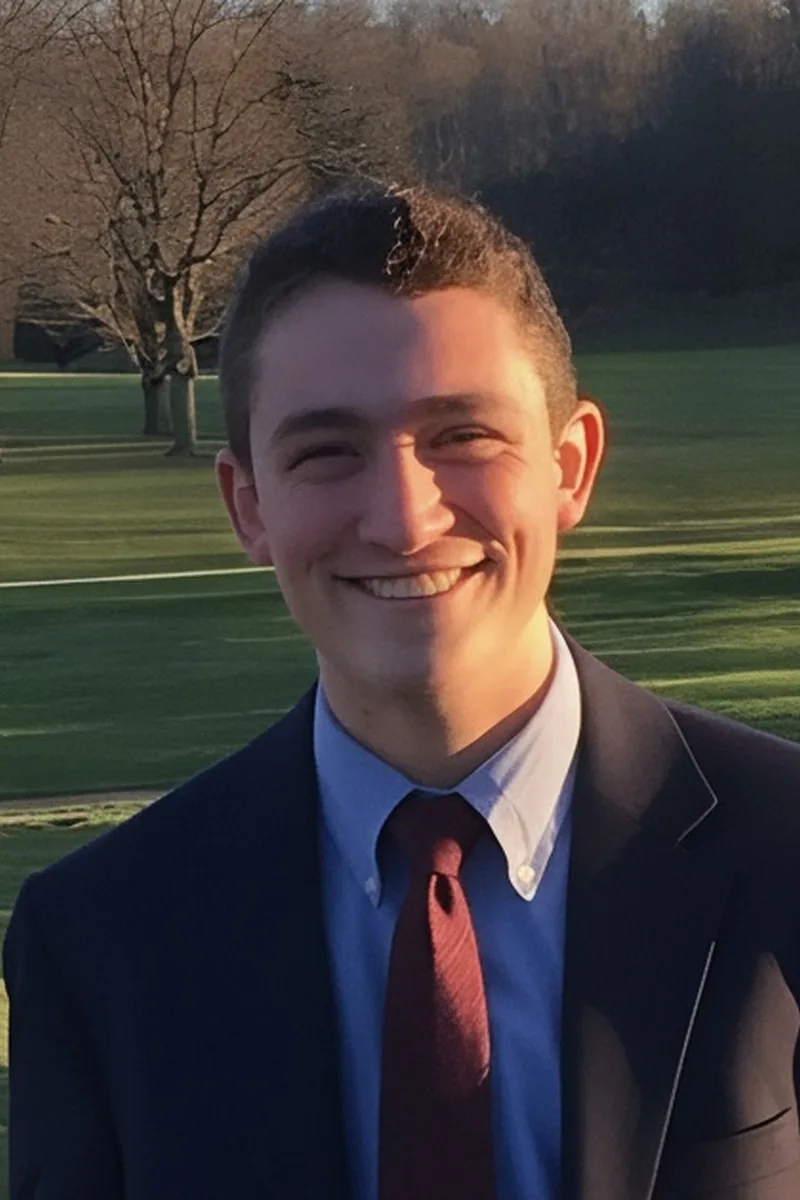
I am a graduate of Syracuse University, with a BS in bioengineering. I am pursuing my MS in electrical engineering at the University of Pennsylvania. I spent my senior year tutoring student athletes in calculus and physics, and currently tutor physics and high school mathematics at a private tutoring center. I'm passionate about the subjects as I teach, and believe mathematical literacy is a critical component to success. Any student can become successful in math with the proper instruction and perspective!
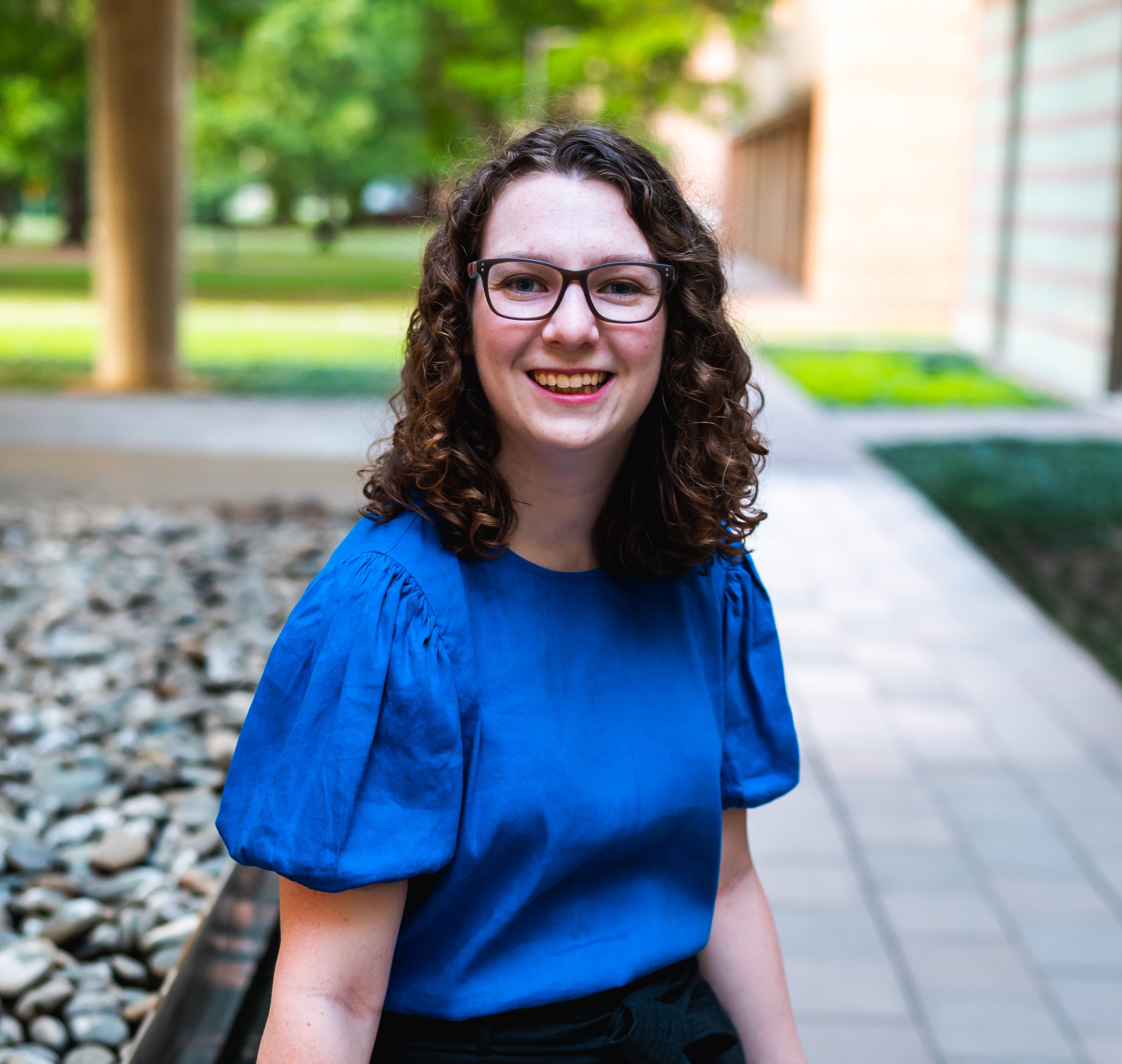
I am a graduate of Rice University with a Bachelor of Science in Physics, a Bachelors of Arts in Philosophy, and a minor in Neuroscience. My previous tutoring experiences have primarily focused on college level physics, math, and chemistry; AP Calculus, AP Physics, and AP Chemistry; the ACT and SAT college entrance exams; general mathematics at the high school level; and middle school level math and english for state standardized testing. Additionally, I have experience working with students with learning differences including dyslexia, ADHD, and ASD. As someone who loves learning, I am a firm believer in making our meetings enjoyable as well as educational. STEM subjects in particular have the reputation for being boring and complicated, but I love that as a tutor I can help students make sense of the topics and find the fun!
I am currently a Harvard student majoring in Computer Science with a minor in Applied Mathematics. I graduated Class Valedictorian in high school and was named National Merit Finalist. I took 16 AP classes in high school, including AP Calculus AB, AP Calculus BC, AP Computer Science A, AP Physics C : Mechanics and AP Physics 1, with a score of 5 in all of the tests. I scored a 1570/1600 in my SAT and 800 in the SAT Math Level 2 Subject Test and 790 in the SAT Physics Subject Test.
I am a current (though almost graduated) student in Chemical Engineering at Georgia Tech. I absolutely love teaching and tutoring, and I have 3 years experience tutoring and just over a year's experience in being a teacher's assistant. I am passionate about math and science, and I love helping people understand new material. Learning is something I have always loved, and I want to share that passion with others.
I am passionate about both. I have been a teaching assistant, tutor, researcher, guest lecturer, researcher, and am currently a practicing engineer.
I am a recent graduate of Cornell University, where I received a B.S. in Chemical Engineering and graduated Magna Cum Laude. Over the past several years, I have worked with students from diverse backgrounds and experiences tutoring thermodynamics (my personal favorite), chemistry, and math. I have also tutored in the past for ACT/SAT and other subjects such as history, but I am deeply passionate about science and engineering. I tend to push my students to understand conceptual topics, as opposed to rote or algorithmic learning. In my free time, I love to bake sourdough, learn about history, garden, and recently started biking again.
I am current master's student pursuing an advanced degree in environmental engineering. I have about 3 years of experience tutoring a standard math and science curricula to students ranging in age from 7-17. I attended college at Washington University in St. Louis receiving a degree in mechanical engineering and energy engineering in 2020. During my time there, I worked as a teaching assistant for several different engineering courses, tutoring students outside of class in the calculus and physics related topics. As someone that benefitted greatly from tutors and teaching assistants, I really love being able to help students that are struggling in certain areas. I am able to help with standardized tests, focusing on math and science sections, AP Calculus and AP Physics exams, and high school math.
I am currently conducting breast cancer research as the lab manager in an immunology lab at Columbia University Medical Center. I am extremely comfortable with physics and mathematics (from my studies) as well as biology, chemistry, and biochemistry (through my research experience) and sincerely enjoy tutoring students in those areas. I also enjoy tutoring for standardized tests. While I was studying for the SAT, ACT, and MCAT, all of my preparation was through self-study; as a result, I have a unique approach to preparing for tests that emphasizes knowing the test itself more than the actual material. In addition to tutoring natural sciences and standardized test prep, I tutor Spanish, which I studied for 7 years and spoke for a year while living in Spain. In my spare time, I play guitar, cook for my friends, read, and play with my cat Suki.
I am an aspiring applied mathematician, with particular interest in image processing and climate science. I graduated in May 2017 from Washington University in St. Louis with a bachelor's in physics and mathematics, and am beginning a PhD program in September 2017 at the University of Chicago in Computational and Applied Mathematics. I've tutored introductory physics students for three years and enjoyed it thoroughly, as a chance to help other students while revisiting fundamental concepts to enhance my own knowledge. I'm eager to continue reaching out and helping students of math and physics to succeed and, furthermore, to appreciate the beauty and power of these subjects.
A chemical and biomolecular engineering degree means Steve spent years applying thermodynamics, fluid mechanics, and electromagnetism to real systems — the same core principles that drive AP Physics 1 and 2. He's particularly sharp at teaching students how to connect free-body diagrams to Newton's laws and energy bar charts to conservation principles, building the kind of physical intuition the exam's qualitative questions demand. Rated 5.0 by students.
I'm a sophomore at Vanderbilt University, majoring in Physics and Classics and minoring in Mathematics and Computer Science. I'm qualified to teach a wide variety of subjects, but prefer to focus on the fields I'm studying in school listed above; I have a passion for those areas that I want to share with everyone, no matter the education level or confidence. I believe that no one is "bad at math," but many people haven't been taught math and science concepts in a way that matches how they best learn. As a result, I try to tailor my teaching style to be the best it can be for each individual student. With regard to math and physics, I myself prefer a physical, graphical understanding of different concepts, so I do best at explaining what seemingly abstract concepts actually mean in the real world and how they act on a graph.
I'm a sophomore at Harvard studying Applied Math, Economics, and Computer Science. I've tutored in a variety of subjects throughout high school and currently work part-time as a Course Assistant for an Introductory Calculus course at Harvard. I especially love tutoring math and making it a more accessible subject for students to learn. Aside from academics, I'm passionate about community service (I'm a director for a student-run homeless shelter!), music, digital design, and baking!
I am also adept in tutoring english grammar, language, and literature. There are few things I enjoy more than a true challenge, whether it be physical or mental. I aspire to be a great inventor and hope that my ideas and creations may simplify life as we know it and bring health, comfort, and joy to the masses. My favorite book is "Good Omens" by Neil Gaiman & Terry Pratchett and I recommend that everyone read promptly.
I am a student at Cornell University pursuing a double major in Biological Sciences, concentrating in computational biology, and Computer Science. I have tutored math, biology, physics, and French to middle school and high school students. I have also facilitated group discussion sessions for English language learners. I love learning new things and helping others understand these concepts as well.
I am currently working for a tutoring service called Princeton Tutoring as an independent contractor. As a member of their tutoring base, I instruct students in Math, Physics, AP Exams and most often, the SAT. I have obtained outstanding scores and am confident I can convey instruction and techniques that have worked for me. I have a solid foundation in the Spanish language and am completely fluent in German and Russian.
I'm not tutoring or buried in my textbooks, you will either find me rock climbing at the Triangle Rock Club, playing Ultimate Frisbee, working on my car, or enjoying the great outdoors (beaches, mountains, forests--you name it, I love it). On rainy weekends I enjoy tinkering with computers and old electronics, playing Pokemon, or picking at my guitar.
I'm a rising junior at Brown University studying biomedical engineering. I have lots of experience in middle school through college level instruction in STEM and SAT/ACT prep. My goal is to provide a fun and productive learning environment by only teaching subjects that I am passionate about.
I'm available to tutor biology, chemistry, physics, math from Algebra up through AP Calculus, SAT test prep, and French. I've been tutoring students in science and math for 7 years. I also spent 8 months working and studying in France, and have tutored high school and adult students in French. When I'm not working or studying, I love playing volleyball (indoors or on the beach!) and spending time outside, canoeing or hiking with my dog. I look forward to meeting and working with you!
I am enrolled in the Mechanical Engineering PhD program at Rice University which will begin Fall 2020, and I am hoping to return to academia as a professor after earning my PhD. In the meantime, I am looking to share my passion for gaining knowledge, specifically in STEM, by educating the up and coming members of such a great field. I have experience tutoring both Calculus and Physics at Notre Dame, as well as experience as a Student Assistant for Differential Equations and Mechanics. I believe the key to learning is much deeper than learning to solve problems and that seeking knowledge is one of the best means for personal improvement.
I'm Dennis. I study physics, math, and computer science. I have done research about cosmic ray acceleration at supernova shock fronts in the Princeton University Department of Astrophysics, simulating how the turbulent plasmas push protons and ions. I have also worked at the Norfolk State University Department of Engineering, designing, simulating, optimizing, and building light filters for wavelength-division optical-electronic multiplexers. Another field I study is the mathematics of quasicrystals and aperiodic tilings, such as the Penrose tiling of rhombuses.
I am a lifelong learner, teacher, and researcher in the field of physics. I received a PhD in Physics from the University of Michigan and a BS in Physics from Rice University. I have four years of physics teaching experience at the University of Michigan, primarily undergraduate laboratory courses with an emphasis on electromagnetism, circuits, waves, optics, and real-world applications of these and other physical phenomena. Many of these courses, including one I helped design, focused on helping non-STEM students master physics concepts that may be difficult to grasp in a standard classroom setting. I have tutored in a variety of subjects since high school, but most recently I have spent several years helping students understand concepts and succeed in coursework throughout a large variety of college-level physics topics, from basic mechanics to advanced electrodynamics and special relativity.
I'm a freshman at Stanford University pursuing a degree in mathematical and computational science. I've been tutoring students from grades 3-12 throughout high school, and I look forward to continue in college. Nothing excites me more than learning something new, and I strive to share my excitement with my tutees.
I am a rising senior at Harvard College pursuing an AB in Government. Academically, I have diverse interests, including history, language, math, physics, philosophy, music, and politics. In high school, I tutored elementary, middle, and high school students in music, math, ACT and SAT prep, and Spanish. At Harvard, I spent a year as a course assistant in the math department, helping to teach introductory undergraduate calculus. Currently, I volunteer with the Leadership Institute at Harvard College (LIHC) as part of its Social Outreach Committee. This work involves teaching a weekly course called "Fundamentals of Leadership" to a class of middle school students. Overall, I have found my experiences tutoring math to be the most rewarding.
I am an undergraduate of the Johns Hopkins University, majoring in Biomedical Engineering and Computer Science. I have years of experience tutoring and teaching math and various sciences from an elementary to a college level. I primarily tutor college level courses such as physics and biochemistry, but also have extensive experience in social sciences, biology, and higher mathematics such as Calculus and Differential Equations. I believe that demonstrating the various real-world applications of a given concept is the best method to increase a student's understanding.
I'm an Iowa native who moved to Nashville for graduate school. My background is in the life sciences; I have a Masters from Vanderbilt in Chemical and Physical Biology, and my undergraduate degree is in Biochemistry. However, my education has been well rounded and I have interests in philosophy, literature, writing, and history. I have extensive research experience, and I hope to share my passion for science with students. I have experience mentoring undergraduate students during my graduate school education to help them gain research experience. I am a very patient teacher and have the ability to see problems from the students perspective; my tutoring style adapts to each student's individual needs, but centers on getting each student to come to their solutions rather than following any one formula for success. I have a lot of experience with standardized testing, and have taken multiple AP subject tests in addition to the ACT, SAT, and GRE examinations.
I am currently a student at Stanford University studying math and political science. I am passionate about sharing my knowledge and experience with younger students. I have helped students of different ages and from diverse socioeconomic backgrounds, and so I am very conscious of the needs and prior knowledge my students and tailor my tutoring method and style individually.
I am a rising sophomore at Duke University and am double majoring in Electrical & Computer Engineering and Computer Science with a minor in Economics. I love problem solving and analyzing situations creatively and enjoy studying the real-world applications that accompany engineering. I mostly tutor math and science courses and hope to illustrate my passion for these subjects to my students.
I am available to help students with any topics they are struggling with in their high school or early college-level Physics courses.
I'm currently a PhD student in economics at Yale University. I also have a BS in physics and math from Yale. Other subjects I enjoy are history, geography, and philosophy, and I dabble in photography and baking. I enjoy helping people understand tricky concepts and solve challenging problems, academic and otherwise.
I am a May 2012 graduate of Princeton University with a degree in Mechanical and Aerospace Engineering currently working in Midtown Manhattan as a consultant. In the past I have had a variety of opportunities to tutor - from one on one tutoring for the SAT in high school and peer tutoring in college, to online tutoring students in Korea and and teaching a two month English seminar in Brazil. Although I have a variety of academic interests, my educational emphasis in math and sciences has led me doing the majority of my tutoring in these subjects. I have worked with students of all ages, learning styles, and strengths, and I love the opportunity to shape a learning experience together!
I am currently a senior at Johns Hopkins studying Biomedical Engineering. I have a lot of experience tutoring in math, physics, chemistry, and thermodynamics. I have also proof-read essays for college applications and english classes as well. Outside of school I like to cook, play basketball, and listen to music.
I am currently a student at Brown University seeking a degree in molecular biophysics. I love studying physics and its many applications in the realms of the life sciences. I have a strange penchant for ultimate frisbee and anything that involves golf (mini golf, frisbee golf, actual golf, etc.). One can often find me at Clark Park or Walnut Greens trying to shoot for par or die trying.
I am a 2023 graduate of the University of Notre Dame with a Finance/Economics major and a minor in Innovation and Entrepreneurship. I am a passionate student in the math and business realms, as I enjoy the intuitiveness of the former and the real-world potential of the latter. During classes in middle and high school, I developed a reputation of being a good source of help within my classes in a non-tutor capacity, and grew that into a peer tutor role a couple times a week during lunch my senior year of high school. What I hope to accomplish with my tutoring is ensure that you not only achieve your desired grade/score, but see how the different concepts relate to each other in the bigger picture. The more important part is to critically think about the subject matter in other, more unfamiliar contexts. Also, in my math subjects, I seek to provide personal secrets in realms including quicker computation strategies, unique acronyms for certain rules, and other intuitive shortcuts.
I am a Thomas Jefferson High School for Science and Technology graduate and currently attend Vanderbilt University majoring in Computer Engineering with a minor in Business. I've tutored in various subjects for about 6 years now. I've done it so much, one of the companies I started was tutoring-based. In all, I am a technology-oriented entrepreneur, an impact-driven member of the community, and a striving academic. My passion for computer engineering and dedication to solving the world's problems push me to continue to be better tomorrow than I am today. I am currently pursuing a career in engineering and business where I hope to improve the lives of those around me every step of the way.
I'm an electrical engineering major at Brown University with interests in neuroscience, linguistics, and robotics, among other things. I've always loved learning, and my curiosity has led me through numerous subject areas. I constantly seek to apply my classroom learning in practical situations. For example, I have conducted research on dementia using electrophysiology in a mollusk model. I participate in hackathons and robotics challenges that test not only my programming ability but also my hardware skills as a tinkerer. My engineering pursuits require a strong foundation in mathematics, my interest in the life sciences calls for a myriad of memorization techniques, and my participation in the academic world at large reminds me daily of the importance of sharp writing skills. I hope to share some of these things, both content and technique, with my students. Though I will make sure that they can come away from each session armed with the skills needed to take on the modern education system, I also hope that they will take with them some appreciation for learning itself.
I am an energetic tutor with an abundance of tutoring experience in a broad range of subjects. As a biology major at Washington University in St. Louis, I am well-versed in chemistry, biology, physics and calculus. I have privately tutored elementary through high school students in these areas of study, as well as algebra, trigonometry and geometry. However, my academic interests are not limited to math and science. My true academic passion is for French language and literature, which is my second major at my university. I developed this passion at a young age, but mastered the language during my semester abroad in a language-immersion program in Toulouse, France.
I'm a graduate of the School of Engineering at Virginia Commonwealth University (2015). I have a Bachelor's of Science degree in Biomedical Engineering, and am pursuing a Masters Degree in Business Administration from the VCU School of Business. I've been a mentor for the past four years and am very active in my method of tutoring. I have helped several students with official tests and homework assignments.
I am a sophomore at Washington University in St. Louis studying business. I am majoring in Economics and Strategy and Organization and Strategic Management with a minor in Psychology. I have tutored students in all grade levels. Most recently, I have volunteered at the Biome School in St. Louis tutoring elementary school students. My subject strong suits are ACT and SAT test prep and math. In my free time, I like to ski, play board games and watch sports.
I am a rising college sophomore who will be attending Duke University on a full merit scholarship in the fall. I love to run cross country and play the viola, as well as tutoring students in a whole variety of subjects! Feel free to message me!
I am a rising sophomore studying civil engineering at Cornell University. I enjoy tutoring math (algebra-calculus 3), high school and college physics, Spanish, and writing. I have experience tutoring throughout high school, where I was the head of a peer-tutoring program. I have continued tutoring in college as well.
Testimonials
Because the right AP Physics tutor makes all the difference.
Average Session Rating – Based on 3.4M Learner Ratings
Top 20 Science Subjects
Top 20 Subjects
Frequently Asked Questions
Students typically find circular motion, rotational dynamics, and the relationship between torque and angular acceleration particularly challenging because they require visualizing motion in non-linear ways. Electromagnetism—especially Faraday's law and the interaction between electric and magnetic fields—is another major stumbling block. Additionally, many students struggle with the conceptual understanding of energy conservation and work-energy problems, often treating them as purely computational rather than grasping the underlying physics principles.
Free-response questions require you to show your reasoning and setup, not just the final answer—partial credit is available for correct methodology even with calculation errors. Start by identifying what physics principles apply, draw force diagrams or relevant sketches, define your variables clearly, and show each step of your solution. Many students rush through the setup to get to calculations, but tutors can help you develop a systematic approach that maximizes points by emphasizing conceptual clarity over speed.
Memorizing formulas without understanding when and why to use them leads to mistakes on the exam. Strong preparation involves working backwards from problems—given a scenario, identify which physics principles apply before reaching for equations. Tutors can guide you through this process by asking probing questions about what's happening physically in each problem, helping you build mental models of concepts like Newton's laws, energy, and momentum rather than just plugging numbers into equations.
Taking full practice tests under timed conditions is essential, but the real learning happens in the review. After completing a test, identify patterns in your mistakes—are they conceptual misunderstandings, calculation errors, or pacing issues? Tutors can help you analyze your performance systematically, focusing your study time on weak areas rather than reviewing content you already understand. Spacing out practice tests over several weeks, with targeted review between attempts, is more effective than cramming multiple tests together.
The AP Physics exam requires balancing speed with accuracy—rushing leads to careless errors, but spending too long on one problem wastes time. Tutors can teach you to quickly categorize problems by difficulty and tackle easier questions first to build confidence and secure points early. Practicing with timers helps you develop intuition for how long different problem types should take, and learning to recognize when to skip a difficult problem and return to it later is a crucial exam strategy.
AP Physics questions frequently present motion, force, or energy data in graphs, requiring you to extract information and connect it to underlying physics principles. Many students treat graphs as isolated visuals rather than representations of physical relationships—for example, understanding that the slope of a position-time graph represents velocity, or that the area under a force-displacement graph represents work. Tutors can develop your graph literacy by having you practice translating between graphical, mathematical, and physical representations until these connections become automatic.
Test anxiety often stems from feeling unprepared or uncertain about problem-solving approaches. Regular tutoring sessions build confidence through repeated exposure to different problem types and reinforced problem-solving strategies, so you enter the exam with a toolkit of approaches rather than relying on memory alone. Tutors can also help you develop mental strategies for managing stress during the test—like breaking complex problems into smaller steps and using your scratch paper effectively to stay organized and focused.
An effective AP Physics tutor should have strong content knowledge in mechanics, electricity and magnetism, and waves—the core topics on the exam—and ideally have experience with the specific AP Physics course you're taking (AP Physics 1, 2, or C). Beyond subject expertise, they should be skilled at explaining complex concepts in multiple ways, asking questions that guide you toward understanding rather than just providing answers, and recognizing the difference between conceptual gaps and calculation mistakes. Experience with AP exam format and scoring rubrics is also valuable for helping you develop strategies that maximize your score.
Let’s find your perfect tutor
Answer a few quick questions. We’ll recommend the right plan and match you with a top 5% tutor.