Award-Winning Microbiology Tutors
serving San Francisco, CA
Microbiology
Tutors in San Francisco
Private 1-on-1 tutoring, weekly live classes for academic support, test prep & enrichment, practice tests and diagnostics, and more to elevate grades and test scores.
Based on 3.4M Learner Ratings
UniversitiesSchools & Universities
DeliveredHours Delivered
ProficiencyGrowth in Proficiency
Who needs tutoring?
No obligation. Takes ~1 minute.
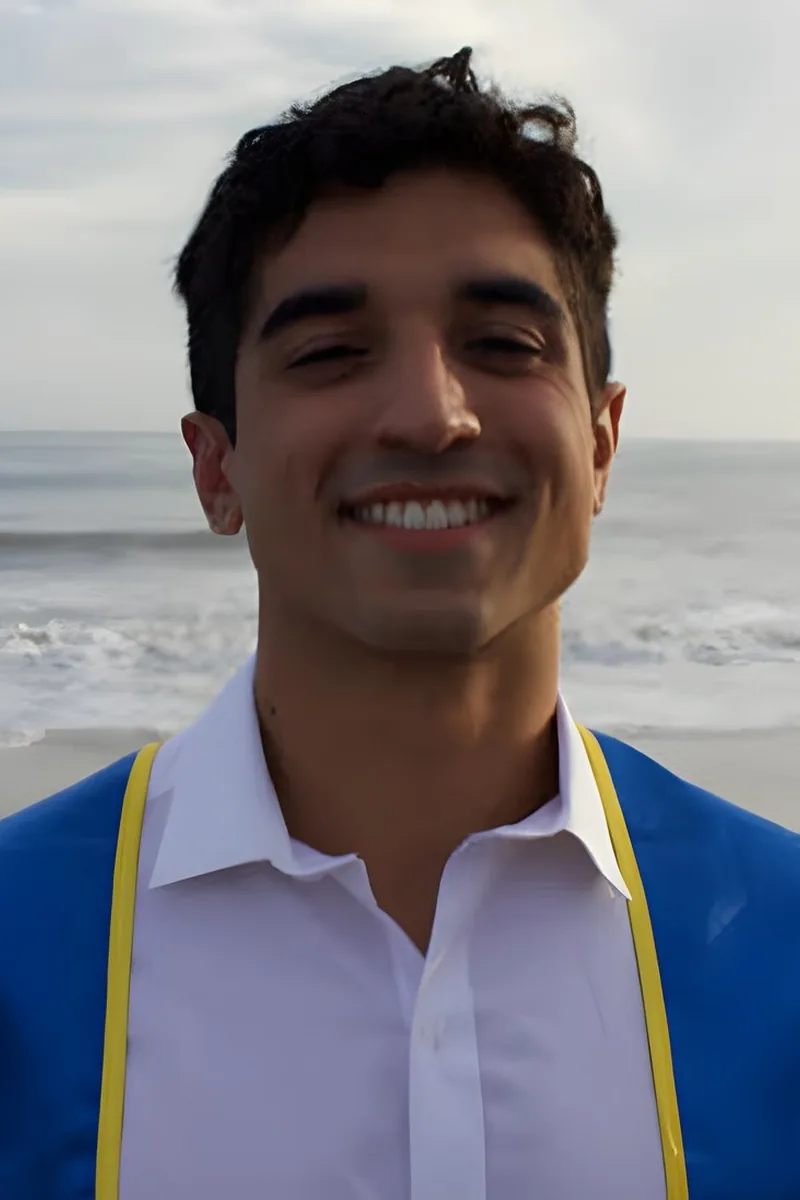
Kevin's honors biology degree from UC Santa Barbara included deep work with microbial systems — bacterial cell structure, metabolic pathways, and the mechanisms behind antibiotic resistance. He unpacks dense topics like gram staining protocols, viral replication cycles, and microbial genetics by connecting each process to its clinical or environmental significance. For pre-med students especially, he knows exactly which concepts carry forward into pathology and pharmacology.
The trick with microbiology is that it sits at the intersection of biology, chemistry, and physics — and Nicholas actually teaches all three, which means he can trace a concept like bacterial membrane transport from the biological function down to the thermodynamics and chemical gradients driving it. His biology degree gave him the core training in cell structure and microbial physiology, while his physical chemistry and organic chemistry background lets him explain mechanisms like cell wall synthesis or metabolic pathways at the molecular level where they actually make sense.
Having completed his biology degree at UCLA with coursework in cell biology and physiology, Nathan can trace microbial processes — like how opportunistic pathogens exploit immune gaps or how metabolic differences between aerobic and anaerobic bacteria shape infection outcomes — back to the underlying biology. He also teaches anatomy, physiology, and nutrition, so he naturally frames microorganisms in terms of the body systems they colonize and disrupt.
Pre-med preparation means Fady has spent real time with the microbial world — learning how pathogens cause disease, how the immune system responds, and how microbial physiology ties into the bigger picture of human health. His biology degree and parallel coursework in anatomy, physiology, and chemistry let him trace concepts like bacterial structure and infection mechanisms back to the underlying science rather than treating them as disconnected vocabulary lists.
Richard's PhD research at Northwestern is in microbiology, which means he's not teaching this subject from a textbook — he's living it. He digs into topics like bacterial pathogenesis, microbial genetics, and host-immune interactions with the kind of detail that comes from years at the bench. Students preparing for exams or struggling with lab reports get someone who can connect microscopic mechanisms to the bigger public health picture.
Ryan's master's work in cellular and molecular biology at Stanford, combined with hands-on synthetic biology research at NASA Ames, gave him deep fluency in microbial genetics, metabolic pathways, and laboratory techniques like PCR and gene cloning. He unpacks topics like bacterial pathogenesis and antimicrobial resistance by connecting them to the molecular mechanisms driving each process. Rated 5.0 by students.
Her global health minor at Cornell meant Emily spent real time studying how pathogens spread, how immune responses work, and why microbial ecology matters beyond the lab. She digs into topics like bacterial cell structure, viral replication cycles, and antimicrobial resistance with the kind of context that makes memorization-heavy material more intuitive.
Medical school at Penn's Perelman School of Medicine gave Daniel hands-on exposure to microbiology that goes well beyond a standard textbook — from bacterial virulence factors to antibiotic resistance mechanisms to the clinical presentations they produce. He connects microbial physiology to real infectious disease scenarios, which makes distinguishing gram-positive from gram-negative organisms or understanding viral replication cycles far more intuitive.
As a biology major at Boston College, Andrew's coursework in cell biology and lab science gave him hands-on experience with the microbial world — bacterial structure, growth dynamics, and the metabolic differences that determine how organisms thrive in different environments. His parallel study of chemistry strengthens how he explains topics like cell membrane function and nutrient uptake at the molecular level, turning dense material into something students can actually reason through. Rated 5.0 by students.
Understanding microbiology means keeping dozens of organisms, metabolic pathways, and virulence mechanisms straight — and knowing when the differences actually matter. Jonathan's human biology training and pre-med preparation at Cornell gave him a clinical lens for bacterial genetics, host-pathogen interactions, and antimicrobial resistance that makes the material more intuitive than rote flashcard review.
Haley's day job in a public health laboratory gives her hands-on experience with the bacterial cultures, staining techniques, and antimicrobial susceptibility testing that microbiology courses cover in theory. She brings real bench context to topics like gram-negative vs. gram-positive classification, metabolic pathways, and pathogenesis — turning textbook organisms into something tangible. Rated 5.0 by students.
Jean's medical training at Harvard Medical School gave her deep familiarity with the microbiology that matters most: bacterial pathogenesis, viral replication cycles, immune evasion strategies, and antimicrobial resistance. She breaks down complex host-pathogen interactions by tying them to clinical scenarios, which makes the material stick far better than rote memorization of genus and species lists.
From bacterial gene regulation to viral replication strategies, microbiology demands comfort with both molecular detail and big-picture ecology. Zachary's graduate work in molecular biology gave him hands-on familiarity with the techniques and concepts — Gram staining, quorum sensing, antibiotic resistance mechanisms — that form the backbone of most microbiology courses.
As a fourth-year medical student at Thomas Jefferson University, Anshel has spent years immersed in bacterial pathogenesis, antimicrobial mechanisms, and the clinical consequences of infections that microbiology courses describe in the abstract. He connects concepts like gram staining, virulence factors, and antibiotic resistance to the patient scenarios that make them memorable. That clinical lens turns dense microbiology material into something students can actually reason through on exams.
Studying chemistry at Vanderbilt gave Elsa a strong molecular-level lens for understanding microbial processes — from bacterial cell structure and metabolic pathways to mechanisms of antibiotic resistance. She approaches microbiology by connecting cellular machinery to the chemical reactions driving it, which makes topics like gram staining or viral replication cycles easier to retain.
Emily studied molecular, cellular, and developmental biology at Yale and then earned her MPH in epidemiology, giving her a dual lens on microbiology — she knows the bench science of bacterial genetics and viral replication cycles, and she understands how those organisms behave in populations. She digs into topics like gram staining, metabolic pathways, and host-pathogen interactions with the detail a college-level course demands.
Testimonials
Because the right Microbiology tutor makes all the difference.
Average Session Rating – Based on 3.4M Learner Ratings
Nearby Microbiology Tutors
Other San Francisco Tutors
Related Science Tutors in San Francisco
Frequently Asked Questions
Microbiology covers a broad range of topics, and tutors help students master everything from bacterial cell structure and metabolism to viral pathogenesis, immunity, and ecological roles of microorganisms. Common areas where students seek support include understanding prokaryotic vs. eukaryotic cells, gram staining procedures, microbial genetics, fermentation pathways, and how microbes interact with human health. Tutors work with students to connect these concepts to real-world applications—whether that's antibiotic resistance, food safety, or environmental microbiology—so the material feels relevant and memorable rather than just abstract memorization.
Lab work is where microbiology becomes tangible, and tutors help you understand both the 'how' and the 'why' behind experimental design. They can explain proper aseptic technique, help you interpret your results, and walk you through troubleshooting when cultures don't behave as expected. Beyond just getting through the lab, a tutor helps you develop scientific reasoning skills—asking why you're using specific stains, what would happen if you changed a variable, or how your observations connect to the theory you learned in class. This deeper understanding translates directly to better lab reports and stronger performance on practical exams.
Absolutely. While microbiology does involve learning new vocabulary and facts, tutors focus on building conceptual frameworks so you're understanding relationships rather than memorizing lists. For example, instead of just memorizing different bacterial shapes, a tutor helps you understand how shape relates to surface area, nutrient transport, and survival advantages. They use visual models, analogies, and real-world examples to make abstract concepts concrete. When you understand the 'why' behind a concept, you retain it longer and can apply it to new situations—like predicting how a mutation might affect bacterial growth or understanding why certain antibiotics work against specific organisms.
Visualization is key in microbiology since you're often studying structures and processes you can't see with the naked eye. Tutors use multiple strategies: interactive diagrams, 3D models, animations, and scaled analogies that make the microscopic world tangible. For instance, when studying how a virus infects a cell, a tutor might walk through the process step-by-step using visuals, then relate it to something familiar like a key fitting into a lock. They also help you practice drawing and labeling structures from memory, which strengthens your understanding and boosts exam performance. The goal is moving from 'I memorized the names' to 'I can picture exactly what's happening and explain it.'
Varsity Tutors connects San Francisco students with expert tutors who have specialized knowledge in microbiology. When you get matched with a tutor, you can discuss your specific needs—whether you're preparing for an AP Biology exam with a microbiology focus, working through a college-level Microbiology course, or tackling challenging lab work. Tutors can customize lessons to match your learning style and pace, whether you need help with foundational concepts, exam preparation, or deeper understanding of specific topics. The personalized 1-on-1 instruction means your tutor focuses entirely on you, not a classroom of 20+ students like you might experience in San Francisco's schools (which average a 20.2:1 student-teacher ratio).
Balancing equations is a crucial skill in microbiology, especially when studying metabolic pathways like aerobic respiration, fermentation, and photosynthesis. Tutors break down the process into manageable steps, teaching you the systematic approach rather than trial-and-error guessing. They help you understand what you're actually balancing (atoms and charges) and why it matters biologically—for example, understanding why the ATP yield differs between aerobic and anaerobic respiration. With guided practice and immediate feedback, you build confidence and develop the pattern recognition skills that make balancing feel intuitive rather than frustrating.
Beyond teaching facts and concepts, tutoring develops your ability to think like a scientist. This means learning to ask good questions, design logical experiments to test hypotheses, interpret data critically, and revise your understanding based on evidence. For example, when studying antibiotic resistance, a tutor doesn't just explain the mechanism—they help you think through how evolutionary pressure drives resistance, predict what would happen in different scenarios, and evaluate the real-world implications. These scientific reasoning skills transfer beyond microbiology to other subjects and become invaluable in higher-level coursework and STEM careers. You're building a mindset of curiosity and critical thinking that serves you far beyond any single exam.
Let’s find your perfect tutor
Answer a few quick questions. We’ll recommend the right plan and match you with a top 5% tutor.