Award-Winning 11th Grade After School
Tutors
Who needs tutoring?
FEATURED BY


TUTORS FROM
- YaleUniversity
- PrincetonUniversity
- StanfordUniversity
- CornellUniversity
Award-Winning 11th Grade After School Tutors
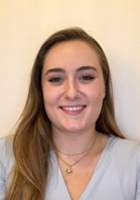
Certified Tutor
6+ years
Mimi
I am an interdisciplinary educator with an Ed.M. from the Harvard Graduate School of Education and a B.A. from Dartmouth College. My background is primarily in integrated arts learning and museum education and I specialize in visual arts, history and art history, and object-based learning. In all su...
Harvard University
Masters in Education, Education
Dartmouth College
B.A.
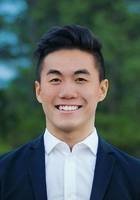
Certified Tutor
10+ years
Aaron
I'm not tutoring or buried in my textbooks, you will either find me rock climbing at the Triangle Rock Club, playing Ultimate Frisbee, working on my car, or enjoying the great outdoors (beaches, mountains, forests--you name it, I love it). On rainy weekends I enjoy tinkering with computers and old e...
The University of Texas at Dallas
Bachelors, Mechanical Engineering
Duke University
Current Grad Student, Mechanical Engineering
Certified Tutor
10+ years
Nina
I am a recent graduate from a masters program in biostatistics at Columbia University. I received my Bachelor of Arts in biological sciences, with a focus in neurobiology at Northwestern University. In August, I will be starting a doctoral program in biostatistics at NYU. I was a teaching assistant ...
Columbia University
Masters in biostatistics
Northwestern University
Bachelor of Arts in biological sciences (focus in neurobiology)
Columbia University in the City of New York
Current Grad Student, Biostatistics
Certified Tutor
I am a graduate of Wesleyan University, where I received my Bachelor of Arts in Sociology with High Honors. With eight years of experience working in education, I've tutored students in math, science, history, and English, as well as helped students prepare for standardized tests. I've guided adults...
Harvard University
PHD, Education
Wesleyan University
Bachelor in Arts, Sociology
Certified Tutor
Christopher
I am a rising sophomore at Harvard College and am about to declare as a Mechanical Engineering concentrator, working towards a Bachelor of Science degree. I've always enjoyed sharing my knowledge with my peers and those around me and have done so in both formal and informal settings. I've been a tut...
Harvard College
Bachelor of Science, Mechanical Engineering
Certified Tutor
Liz
I am a graduate of Washington University in St Louis, where I received my Bachelor of Arts in History with minors in Humanities and Anthropology. Since graduation, I have worked as a tutor, teacher, and director of tutors at a charter public middle school in Boston. During this time I also received ...
Simmons College
Masters, Special Education: Mild to Moderate Disabilities 5-12
Washington University in St. Louis
Bachelor of Arts in History (minors in Humanities and Anthropology)
Certified Tutor
Charles
I am a junior Mechanical Engineering major at Yale, and I hope to become a Naval Aviator after college. I am also a varsity sailor, and enjoy playing music with friends when I can get some free time. I have been tutoring my fellow students throughout my entire academic career, and I would best descr...
Yale University
Bachelor of Science, Mechanical Engineering
Certified Tutor
Michelle
I am proud to be a part of Varsity Tutors! I am originally from San Antonio, TX; I completed my undergraduate education at Rice University in Houston where I received a bachelor's degree in Biochemistry and Cell Biology. Currently, I am in my second year of medical school at Baylor College of Medici...
Baylor College of Medicine
Current Grad Student, M.D.
Rice University
Bachelor's in Biochemistry and Cell Biology
Certified Tutor
8+ years
Solange
I'm Solange - a recent graduate from Harvard where I studied Sociology & Women's Studies. I've been tutoring for eight years now, and have worked with a wide range of ages and in a wide range of subjects. Some of my specialties are college prep/test taking II worked in the admissions office on campu...
Harvard University
Bachelor in Arts (Sociology & Women's Studies)
Certified Tutor
10+ years
Clara
I am tutoring I tend to ask my students to try to "teach" me concepts they are struggling with, or walk me through a problem that is challenging them, so that any conceptual mistakes or assumptions they are making become clear. In addition, I am a firm believer in never providing the answer to a spe...
Stanford University
Bachelors, Psychology
Top 20 Other Subjects
Meet Varsity Tutors Experts
Connect with highly-rated educators ready to help you succeed.
Justin
AP Calculus BC Tutor • +48 Subjects
I am an aspiring applied mathematician, with particular interest in image processing and climate science. I graduated in May 2017 from Washington University in St. Louis with a bachelor's in physics and mathematics, and am beginning a PhD program in September 2017 at the University of Chicago in Computational and Applied Mathematics. I've tutored introductory physics students for three years and enjoyed it thoroughly, as a chance to help other students while revisiting fundamental concepts to enhance my own knowledge. I'm eager to continue reaching out and helping students of math and physics to succeed and, furthermore, to appreciate the beauty and power of these subjects.
Asta
Pre-Algebra Tutor • +74 Subjects
I am a graduate of the University of Chicago where I received my undergraduate degree in political science. Right after graduation, I worked as an academic and test prep tutor as well as admissions consultant in Hong Kong. For the past two years, I worked with a number of students to help prepare them for college in the United States.
Daniel
Pre-Algebra Tutor • +26 Subjects
I am excited to be home and help fellow straphangers on their educational paths! My largest wealth of tutoring experience is in foreign languages--particularly French--but I also feel very comfortable editing essays of any kind and working through standardized test concepts. My availability is extremely flexible, and anywhere in New York City works for me. I look forward to working with you.
Sabira
Middle School Math Tutor • +35 Subjects
I am currently attending Johns Hopkins University, pursuing a dual degree in Computer Science and Applied Math and Statistics. I love helping students and I love the feeling I get knowing that I was able to use my knowledge to make someone else happier. My favorite subject to teach is math because there are so many ways to learn it and if one way does not help I can use another. I used to teach taekwondo and interacted with all kinds of students, and I'm excited to help out more! Hobbies: books, reading, music, writing, art
Isabella
Pre-Algebra Tutor • +27 Subjects
I am a graduate of MIT. I received my Bachelor of Science in Mathematics with minors in Management Science and Ancient and Medieval Studies. Since graduation, I have started my PhD at Georgia Tech in Operations Research. Throughout my career I have TA'd several math and computer science courses at the college level. I have also taught at summer programs for gifted middle school and high school students. I am passionate about tutoring kids in math and science because I think that a strong foundation in STEM at an early age can set the tone for their future. In my spare time I like to engage in athletics, and was a Division 1 rower in college. Hobbies: reading, swimming, writing, books, music, running, art
James
AP Calculus AB Tutor • +41 Subjects
I am currently a senior at Harvard College where I study chemistry, and I'll be attending Columbia Medical School next year. I have years of experience tutoring college students in math (mostly calculus) and chemistry including both general and organic chemistry. In addition, I am very familiar with all sections of the SAT and ACT having prepared several high school students for these tests. I believe that every student is capable of boosting his or her baseline score on these tests, so long as he or she works hard to get to know the format of the tests and the most popular types of questions. I tutor because I love seeing students develop a genuine passion for the subjects they once disliked (such as math and science), once they understand the power of these subjects and their applications to the real world.
Henry
Calculus Tutor • +41 Subjects
I'm eager to help you in your education. I'm a recent graduate of Harvard College looking to apply to law school. My senior thesis was written on John Dewey's ideas of education, which I deeply believe has incredible power to transform individuals and society.
Andrew
Pre-Algebra Tutor • +26 Subjects
I am comfortable tutoring math subjects up to multivariable calculus and differential equations, as well as college physics. Hobbies: books, music, art, reading, writing
Elena
Calculus Tutor • +32 Subjects
I am a graduate of McGill University (BA First Class Honors) and the University of Edinburgh (MSc First Class Honors with Distinction) with over eight years of tutoring experience. I am currently a curriculum developer for a company which creates relatable and culturally-literate courses for middle and high-schools, and am particularly adept at communicating and explaining concepts in a quirky, engaging, and intelligent manner. I was named Scotland International Young Thinker of the Year 2014 for exactly that sort of work. Much of my tutoring background is in test-prep and essay coaching, which I enjoy because it allows the tutor and student to think strategically together, and work as a team to achieve concrete results. I have worked with students ranging in age from 6-32, and believe that, in an educational context, a few jokes never hurt anybody. I love reading and learning, and my educational approach is centered around making the material just as engaging to students as it is to me. I think J.K. Rowlings, the writer of Harry Potter, is just as brilliant as Stephen Hawking, and in my free time, I manage my (terrible) fantasy baseball team, write songs for my comedy band, and crack jokes about terrible science-fiction movies with my friends.
Ingrid
Pre-Algebra Tutor • +51 Subjects
I am exploring my creativity by pursuing a double major in Asian Languages and Cultures with a focus in Korean, studying abroad in South Korea as a Benjamin A. Gilman Scholar, leading workshops that teach 3D printing and CAD for undergraduate students as the president of 3D4E, advocating for the first-generation and low-income student community as the Outreach Chair of the Quest+ Scholars Network, and getting involved with the Society of Women Engineers' outreach committee. I currently hold a work-study position as an administrative clerical aide in the Institute of Sustainability and Energy at Northwestern and was an undergraduate researcher in the John Rogers Lab. As I look forward with aspirations of applying to graduate school, areas of research in biomedical engineering and biotechnology that I am particularly interested in include biomaterials, pharmaceuticals, and drug delivery systems. Outside of the classroom, I enjoy learning on my own and sharing my experience and knowledge with my peers and other students. I hope to make use of my experiences with academics and learning in high school and so far in my undergraduate career in order to effectively tutor students who may be experiencing the same struggles in learning that I also experienced.
Top 20 Subjects
Frequently Asked Questions
Junior year is when course difficulty peaks—students juggle AP/honors classes, standardized test prep (SAT/ACT), college applications, and increased homework loads simultaneously. After-school tutoring provides focused time to tackle specific problem areas before they compound, whether that's calculus concepts, essay writing for AP Lang/Lit, chemistry lab reports, or test-taking strategies. A tutor can help students manage the cognitive load by breaking complex material into digestible chunks and creating sustainable study habits that prevent burnout.
Many 11th graders need to balance maintaining strong grades while preparing for standardized tests—a tutor can strategically connect the two. For example, improving reading comprehension skills directly boosts both AP Literature performance and SAT/ACT reading scores, while algebra mastery supports both precalculus grades and math test sections. Personalized tutoring allows students to identify which foundational gaps are holding them back across both academic and testing contexts, then address those gaps efficiently rather than studying in isolation.
Successful 11th graders need to master active learning techniques like spaced repetition, practice testing, and retrieval practice—skills that significantly improve retention compared to passive review. They also need to develop metacognitive awareness: understanding which subjects require deep conceptual work versus which need procedural practice, and how to allocate limited after-school hours accordingly. A tutor helps students build these executive function skills by modeling effective study strategies, teaching them to self-assess their understanding, and creating accountability systems that work with their schedule.
The jump from standard to honors or AP courses requires not just content mastery but also shifts in analytical thinking and academic rigor. Tutors help students develop the deeper conceptual understanding these courses demand—moving beyond memorization to understanding the 'why' behind concepts, making connections across topics, and engaging with more complex problem-solving. For students new to AP courses, tutors can also teach the specific exam format, pacing strategies, and free-response techniques that differ significantly from traditional tests.
Effective 11th grade tutors combine strong subject expertise with understanding of adolescent learning and junior-year pressures. They should have demonstrated mastery in their subject area (ideally including AP-level coursework or equivalent), experience with standardized testing, and the ability to diagnose why a student is struggling—whether it's a conceptual gap, a test-taking strategy issue, or an organizational problem. Beyond academics, strong tutors are skilled at building rapport with teens, recognizing signs of stress or overwhelm, and helping students develop confidence during a high-pressure year.
Progress extends beyond grade improvements—students should demonstrate increased independence in problem-solving, better retention of concepts over time, and stronger performance on cumulative assessments like midterms and standardized tests. Observable improvements include students asking more sophisticated questions, catching their own mistakes, and applying learned strategies to new problems without prompting. Parents and students often notice reduced stress, improved confidence, and more efficient study sessions within 4-6 weeks of consistent tutoring.
Math (especially precalculus, calculus, and statistics), chemistry, and AP humanities courses are where 11th graders most frequently seek tutoring support. Math struggles often stem from accumulated gaps in foundational algebra or geometry; chemistry requires both conceptual understanding and problem-solving skills that many students haven't fully developed; and AP courses demand essay-writing, analytical reading, and synthesis skills that need explicit instruction. Language-based courses also see increased tutoring needs as students tackle more sophisticated literary analysis and argumentative writing.
Ideal frequency depends on the student's goals and challenges, but research on spaced practice suggests that consistent, regular sessions (1-2 times per week) produce better long-term retention than cramming before exams. Students tackling a single challenging subject often benefit from weekly sessions; those juggling multiple courses or test prep may need twice-weekly support. The key is consistency—regular shorter sessions build better study habits and catch misunderstandings early, compared to sporadic intensive sessions.
Connect with 11th Grade After School Tutors
Get matched with expert tutors in your subject