Award-Winning Grade 11 Math
Tutors
Grade 11 Math
Tutors
Private 1-on-1 tutoring, weekly live classes for academic support, test prep & enrichment, practice tests and diagnostics, and more to elevate grades and test scores.
Based on 3.4M Learner Ratings
UniversitiesSchools & Universities
DeliveredHours Delivered
ProficiencyGrowth in Proficiency
Who needs tutoring?
No obligation. Takes ~1 minute.
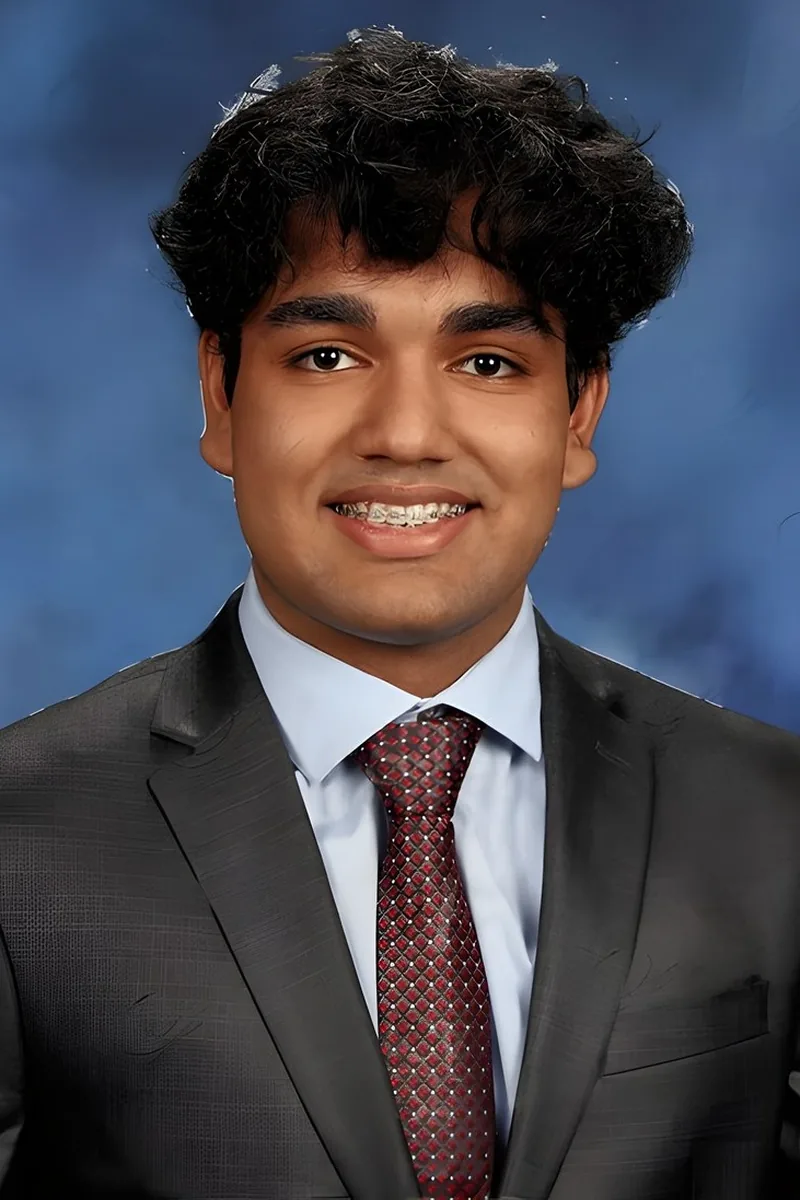
Ravnoor's computer science training at Cornell means he thinks about Grade 11 topics like sequences, exponential functions, and logarithms through the lens of algorithmic problem-solving — breaking each problem into smaller, manageable pieces until the logic clicks. He's particularly effective at showing students how to recognize patterns in unfamiliar problem types so they can adapt on exams, not just repeat practiced examples. Rated 5.0 by students.
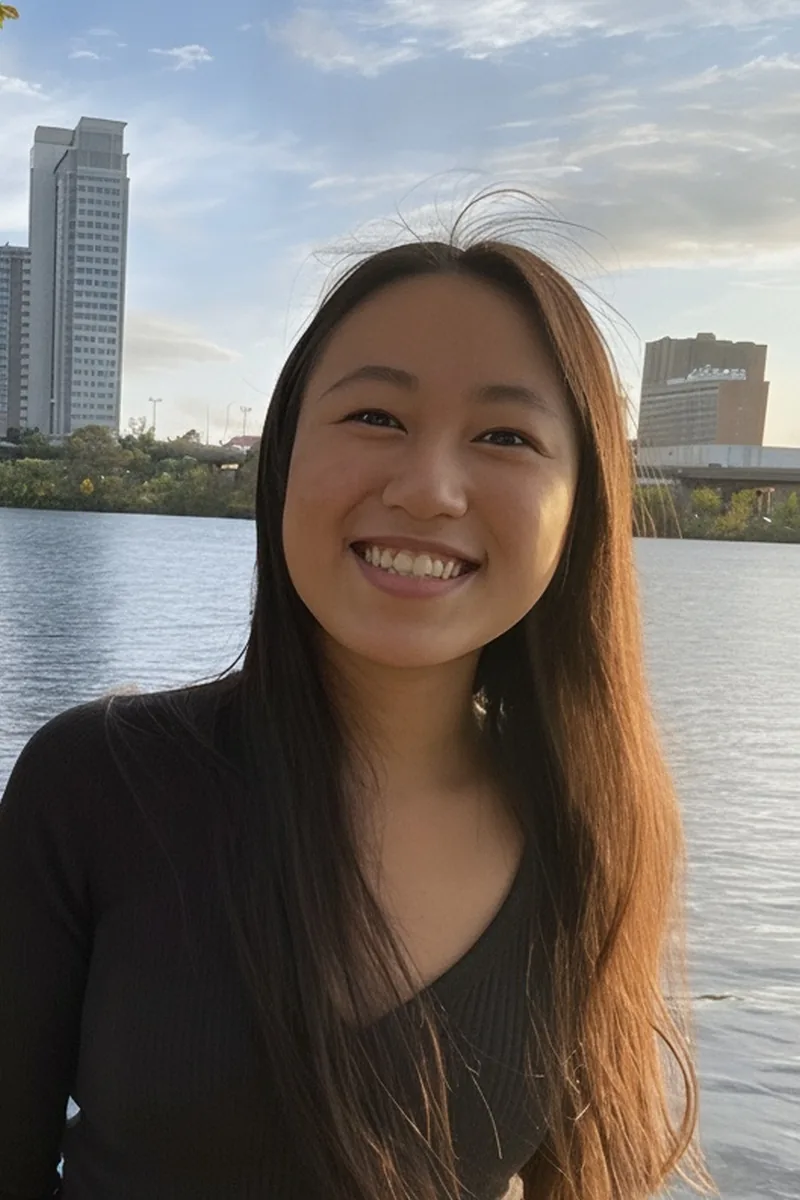
Junior year math — typically precalculus or advanced functions — is where transcript pressure and genuine conceptual difficulty collide. Yan tackles topics like trigonometric identities, polynomial behavior, and logarithmic functions by connecting each one back to graphical intuition so students can reason through problems instead of relying on memorized steps. Rated 4.5 by students, she brings both classroom teaching experience and a structured curriculum mindset to every session.
Junior-year math often piles on new complexity — polynomial division, sequences and series, trig identities — right when students are also prepping for standardized tests. Brian's experience as a business school peer tutor at Georgia Tech's Scheller College sharpened his ability to teach quantitative reasoning under pressure, and he brings that same structured approach to 11th-grade topics.
Junior-year math is where everything ramps up — polynomials, trigonometric identities, sequences and series all converge into a single course. Lillian is studying mathematics alongside product design at the University of Minnesota, which means she's comfortable connecting abstract formulas to tangible, real-world applications that make the material stick.
Junior-year math — typically precalculus or an accelerated track — piles on trigonometric identities, polynomial analysis, and sequences right when students are also juggling SAT prep and college planning. Rinky scored a 1520 on the SAT herself, so she naturally ties classroom concepts to the kinds of problems students will see on standardized tests. That dual focus keeps the work efficient and relevant.
Junior-year math often piles on new territory fast: logarithmic and exponential functions, sequences and series, and early probability. Jeff tackles these topics by connecting them to each other — showing, for instance, how exponential growth ties directly into the logarithms students find so abstract — drawing on the applied math perspective he developed at Princeton.
Junior-year math is where everything accelerates — whether it's Algebra 2 sequences and series or the start of pre-calculus concepts like polar coordinates and limits. Austin captained his high school's Math UIL Number Sense team during his junior and senior years, which sharpened his ability to spot shortcuts and teach efficient problem-solving strategies. Rated 4.7 by students, he makes the jump to upper-level math feel manageable.
Junior-year math — typically pre-calculus or early calculus — is where everything from previous years has to click together: trigonometric identities, limits, polynomial behavior, and rate-of-change reasoning. Snipta's dual background in computer science and cognitive science means he understands both the math itself and how students process increasingly abstract material.
I have a Master's degree in Chemical Engineering, with additional graduate studies in Chemical Engineering and Computer Science, and over 10 years of experience teaching and tutoring STEM subjects. I work with students of different ages, backgrounds, and learning styles in mathematics, physics, chemistry, and related subjects. I believe the best tutoring starts with understanding how each student thinks. My goal is to identify where a concept becomes unclear, explain it from the student's perspective, and help them build both understanding and confidence. I want my students to learn not just how to find the right answer, but why it is the right answer and how to approach similar problems independently. I believe there is always learning in teaching, and that is one of the reasons I continue to enjoy working with students after all these years.
Junior-year math — typically Algebra 2 or Precalculus — is often the year students start questioning whether they're 'math people.' Thomas, who powered through heavy quantitative coursework at Michigan on his way to medical school, knows that feeling and tackles it by zeroing in on the specific skill gaps (often in logarithms or sequences) that create the illusion of a bigger problem. He's rated 5.0 across his students.
Junior-year math — whether it's precalculus, trigonometry, or an accelerated track — often coincides with standardized test prep and college planning pressure. Akshadha teaches the underlying structure of topics like logarithmic functions and sequence behavior so students aren't just memorizing formulas for Friday's test. She's tutored across enough subjects and age groups to know when a student needs a conceptual reset versus more practice reps.
Junior-year math is where everything converges — polynomial analysis, logarithmic functions, and sequences all demand both algebraic fluency and conceptual reasoning. Melanie tackles these topics using real-world modeling scenarios, drawing on her neuroscience and pre-med coursework where functions like exponentials and logarithms describe actual biological processes. As a National Merit Finalist, she brings serious mathematical depth to every session.
Looking for a tutor that is patient, loves teaching and produces great results? I'll meet you/your child at their level and build the foundational components that will lead to overall academic success with a fun, effective, focused learning evironment. Highlights: - Bachelor of Computer Science from University of Waterloo - 5+ years of tutoring experience - I love gymnastics, taekwondo and fashion! SUBJECTS: Math, Computer Science, French, English, Language Arts and Reading CODING LANGUAGES: Python, Java, C, C++, React/Typescript
Junior-year math — whether it's precalculus, trigonometric identities, or sequences and series — often determines a student's readiness for AP Calculus or college-level coursework. Sheena digs into the conceptual gaps that hold students back, using her engineering and business background to show how these topics connect to fields students actually care about. She's rated 5.0 by her students.
Junior-year math — whether it's precalculus, trigonometry, or an intro to limits — often determines a student's trajectory into AP courses and college readiness. Emma connects topics like polynomial behavior and trigonometric identities to the computational logic she studied in her CS degree, giving students a framework that makes abstract functions feel concrete and predictable.
Junior-year math — whether it's precalculus, trigonometry, or an intro to limits — often determines how prepared a student feels heading into senior year and standardized testing. Esther, who scored a 1550 on the SAT, understands exactly how these topics show up under test pressure and in college-level coursework. She unpacks identities, sequences, and function behavior in ways that stick beyond the next exam.
Holding a BA in Mathematics (with departmental honors) from Northwestern University, armed with experience in mathematics research and graduate-level math courses, and having achieved a 5 on the AP Calculus exam and a 1500 on the SAT, my students can count on me to be a knowledgeable and capable mentor in mathematics. I am a new and rising math tutor from southern Indiana with a sympathetic tutoring ethos: Math is hard, so I work not only to effectively teach what is in a course's curriculum, but also to instill my students with the confidence needed to be proficient problem-solvers. I handcraft exercises and examples tailored to a particular students needs. Oftentimes, a well-placed example is the key to understanding. Whether you or your student is falling behind in class, trying to nail the next big test, or seeking a challenge, my services will be an invaluable aid to your learning.
Junior year math — whether it's precalculus, trigonometry, or an intro to limits — often determines a student's confidence heading into AP courses and college applications. Jennifer approaches these topics by connecting them to scientific contexts she uses in her own teaching, making identities and function behavior feel purposeful instead of arbitrary.
Junior-year math often piles on new function families — logarithmic, exponential, polynomial — right when the pace picks up. Kathryn connects these topics to her engineering background, showing how exponential growth models real phenomena and why logarithms exist as a practical tool, not just a textbook exercise.
Junior-year math often piles on new territory fast — polynomial division, logarithmic functions, sequences and series — right when college prep pressure is highest. Sid, a computer engineering major carrying a math minor at Cleveland State, knows exactly which of these topics show up on standardized tests and in college coursework, so he prioritizes the skills that pay off twice.
I'm a graduate student in Applied Statistics with experience in general math and computer programming to boot. I currently have a PhD in Applied Statistics with experience in data analytics. I've had the opportunity to do some math and statistics work for hospitals and research facilities, and I enjoy getting to share my passion for math with others to assist them in their education.
By 11th grade, math often means juggling polynomials, logarithmic functions, and sequences all in the same semester. Isabel's teaching style leans heavily on organization and structured problem-solving — skills she honed through her writing background — which turns out to be exactly what juniors need when the material gets dense.
I've been tutoring for over 3 years and I'm incredibly passionate about helping student's grow in confidence and their abilities. I appreciate the relationships I form with students, and enjoy connecting! The student growth and interaction is the reason I love tutoring. Currently I'm a student at the University of Toronto studying Economics, Mathematics, and Political Science.
I have been an academic student who has always focused on excelling at whatever I do and giving my 100%. Teaching is my true passion and seeing my students learn and succeed gives me immense joy. Having helped several students over the past 5+ years, I am able to adapt my teaching style to my students' learning styles and methods. I look forward to helping many more students through the Varsity platform. While I tutor a variety of subjects, my passion is in teaching Math, Accounting, and Finance. My education: MBA in Strategic Management + Bachelor's degree in Business (Accounting and Finance).
Hey I'm Hudson! I self-studied for every exam I took in high school, including the SAT, ACT, and 10+ AP Courses, so I have a very thorough understanding of standardized tests. I just graduated high school earlier this year, so I still remember exactly what it was like to be in your shoes. Because of this, I believe I'll be able to help you boost your scores in very niche and underrated ways. Test prep shouldn't be stressful, you should feel confident and prepared when the time comes. SAT prep is my specialty.
Neurobiology training means Sonali spent years working through the same math that trips up juniors — exponential models, logarithmic scales, and function behavior — because those tools are baked into every biology and chemistry course she took at Boston University. She breaks down each problem by identifying the exact step where the logic falls apart, then rebuilds from there with targeted practice. Six years of tutoring K-12 students means she's seen nearly every version of the mistakes 11th graders make.
As a PhD candidate in Applied Economics, I bring years of experience in tutoring and mentoring students across a wide range of subjectsfrom foundational algebra, statistics and calculus to advanced microeconomic theory and econometrics. My teaching philosophy centers on adaptability: I begin with a personalized assessment to identify each student's strengths, challenges, and learning style, ensuring a tailored approach that fosters confidence and mastery. Beyond simply conveying concepts, I strive to make learning dynamic and relevant. By integrating real-world applicationswhether in policy, business, or everyday decision-makingI help students see the practical value of statistics, economics and mathematics, sparking curiosity and deeper engagement. My experience extends beyond the classroom; as a research mentor at the university level, I guide students in developing analytical rigor, critical thinking, and a genuine appreciation for the subjects they study. What drives me is not just academic success but intellectual empowerment. I want students to leave our sessions not only with better grades but with sharper problem-solving skills, a growth mindset, and enthusiasm for the material. Whether tackling a challenging theory or preparing for exams, I'm committed to creating a supportive, stimulating environment where learning thrives. Let's work together to turn obstacles into opportunitiesand discover the excitement in economics and mathematics along the way. Let's have fun with numbers
Hi! I'm an Aerospace Engineering student at UT Austin with experience tutoring physics and a passion for helping students succeed in STEM. I focus on making challenging topics clear, engaging, and approachable through personalized, student centered instruction. As a Microsoft Certified Educator, I aim to build confidence, strengthen understanding, and help students reach their academic goals in a supportive learning environment.
Junior-year math — whether it's Algebra 2, Precalculus, or an accelerated track — is where abstract functions like logarithms and rational expressions start piling up fast. Gabriel tackles these by connecting each new concept back to patterns students already recognize, building intuition alongside procedural skill. His 4.8 rating speaks to how well that approach clicks.
By 11th grade, math threads from earlier years converge: polynomial behavior, trigonometric functions, sequences, and early calculus ideas all land in the same course. Arish teaches these connections explicitly, showing how a concept like rate of change in a trig context echoes what students already know from linear and quadratic work. That cross-topic clarity is what turns a confusing year into a confident one.
My passion for guiding students stems from a belief in the transformative power of education. With a master's degree in Electrical Engineering from McGill University, I have experience teaching Grade 12 Advanced and General Mathematics in Nigeria and UK A Level Engineering. I find joy in helping students conquer challenges and develop critical thinking skills. My teaching philosophy centers on fostering a supportive learning environment where students feel empowered to explore concepts at their own pace. Outside of academia, I am dedicated to community engagement and environmental conservation, striving to make a positive impact that extends beyond the classroom and empowers students to succeed academically and personally..
Eleventh-grade math often marks the shift into sequences, series, polynomial analysis, and early limits — territory where students who coasted on procedural skills start to struggle. Isha connects these topics back to the logic and pattern recognition she uses daily in her computer science work, making abstract ideas feel purposeful. She's particularly strong at bridging the gap between Algebra 2 concepts and the pre-calculus reasoning that follows.
As a Computer Science graduate with a minor in Mathematics from Dalhousie University, I am passionate about teaching and dedicated to fostering a deep understanding of complex concepts in my students. With over 2 years of tutoring experience, I specialize in a wide array of subjects, including AP Calculus AB, AP Calculus BC, Linear Algebra, ACT, SAT and various College-level Calculus and Computer Science courses. My teaching philosophy centres on creating a supportive learning environment where students feel encouraged to ask questions and explore their curiosity. I believe in tailoring my approach to meet the unique needs of each student, ensuring they grasp the material and build confidence in their abilities. My goal is to inspire a love for learning and help students achieve their academic aspirations.
I am a graduate from Rochester Institute of Technology with a master's in Game Design and Development. My passions lie in everything related to games and mathematics. In the past, I have tutored various subjects in mathematics throughout high school and college, including but not limited to Algebra, Algebra II, Trigonometry, Calculus, Discrete Mathematics, Mathematics of Graphical Simulation, and Linear Algebra. As for technology, I am more than happy to reach out for help in Web Development (HTML, CSS, Javascript) or C# programming. I believe that every person can learn any topic. While every individual has different tastes, strengths, and weaknesses, there is no such thing as an "incapability" to know a subject. Education often possesses a guise of anti-fun, but I can promise you that all topics can be engaging, and I am willing to show you how engaging mathematics and technology can be. As a Game Designer, I have a deep interest in both playing games and making games. This includes games of all kinds: video games, board games, tabletop role-playing games, trading card games, miniatures, and even some sports like tennis or ping pong. Games act as a fantastic teaching tool. They teach by design without users recognizing. It is always a satisfying moment when somebody says "I learned that word from Magic" or "D&D taught me that." Remember: you can succeed. If something is important to you, then it's always worthwhile.
As a Mathematics Major and Computer Science minor, I am passionate about tutoring students in Mathematics and French. With over 2 years of experience, I have successfully supported students aged 13 to 16, helping them grasp complex concepts through tailored lesson plans and engaging exercises. My approach centers on building upon students' existing knowledge, fostering a supportive learning environment where they can discover solutions independently. I am particularly enthusiastic about mathematics and language, having excelled in French and even winning a French award in my youth. My goal is to empower students not just to learn, but to develop effective study habits that will serve them throughout their academic journey.
With a Master's degree in Data Analytics from the University of Waterloo and a Bachelor's in Mechanical Engineering, I have over 3 years of experience in tutoring students in SAT, ACT, English, Mathematics, and Statistics. My approach is tailored and student-centered, focusing on making complex concepts accessible and engaging. I am passionate about fostering a supportive learning environment where students feel confident in their abilities. My previous roles, including tutoring elementary to high school students and serving as a Teaching Assistant, have equipped me with the skills to connect with diverse learners. Outside of tutoring, I enjoy reading and engaging in sports, which help me maintain a balanced and energetic approach to teaching. I am committed to guiding each student toward their academic goals and instilling a lifelong love of learning.
Junior-year math — whether it's functions, trigonometry, or early calculus concepts — often determines a student's trajectory into AP courses and college readiness. Katherine approaches Grade 11 material by connecting each new topic to problems students will actually encounter in STEM fields, drawing on her own engineering coursework at Northwestern to make abstract ideas tangible.
Junior-year math — whether it's Algebra 2, Precalculus, or an integrated curriculum — is where polynomial functions, logarithms, and trigonometric identities start demanding real conceptual fluency. As a working high school math teacher with a mathematics minor from the University of Richmond, Brianna sees these topics from both sides of the classroom every day. She connects abstract ideas to the kinds of problems that actually appear on tests and college entrance exams.
With a Ph.D. in Mechanical and Materials Engineering and over 5 years of experience in tutoring core STEM subjects, including Math, Physics, and Science, I bring both expertise and passion to my teaching. I have worked with students from elementary to college levels, adapting my methods to ensure each student thrives. My approach combines practical, real-world examples with clear, step-by-step guidance to make even the most challenging topics easy to grasp. I incorporate proven teaching techniques such as active learning, problem-based learning, and scaffolding to ensure students not only understand the material but can apply it effectively. Whether you're preparing for exams, improving grades, or simply building a stronger foundation, I am dedicated to helping students learn efficiently and achieve their academic goals.
Grade 11 is where math shifts from procedural to conceptual — quadratic modeling, trigonometric identities, and function transformations all demand a deeper kind of reasoning. Nil digs into the 'why' behind each technique so that exam questions with unfamiliar wording don't throw students off. He regularly uses past midterm and final exam problems to sharpen both speed and accuracy before test day.
Testimonials
Because the right Grade 11 Math tutor makes all the difference.
Average Session Rating – Based on 3.4M Learner Ratings
Top 20 Math Subjects



Top 20 Subjects
Frequently Asked Questions
Grade 11 students often find the shift from concrete procedures to abstract reasoning challenging, particularly with trigonometry (understanding sine, cosine, and tangent beyond memorized ratios), logarithms and exponential functions, and polynomial division. Word problems involving multi-step reasoning—especially those requiring students to translate real-world scenarios into equations—are another common pain point. Many students also struggle with proofs in geometry or algebra, where they need to justify each step logically rather than just compute an answer. A tutor can help break these concepts into manageable pieces and show how they connect to what students already know.
Grade 11 Math demands deeper understanding—it's not enough to follow steps; students need to know *why* those steps work. Tutors help by asking guiding questions that encourage students to explore patterns, make connections, and develop intuition. For example, instead of just teaching the quadratic formula, a tutor might explore why completing the square works, how it relates to graphing parabolas, and what the discriminant actually tells us about solutions. This approach helps students retain concepts longer and apply them flexibly to unfamiliar problems, rather than memorizing isolated procedures.
Word problems require students to extract mathematical relationships from text, which is a skill separate from computation. Tutors teach systematic strategies: reading carefully to identify what's given and what's unknown, drawing diagrams or setting up variables, and translating English into equations step-by-step. For Grade 11 problems involving systems of equations, exponential growth, or trigonometric applications, a tutor can model how to organize information and check whether answers make sense in context. Breaking this skill into smaller, repeatable steps builds confidence and reduces the anxiety many students feel when facing unfamiliar scenarios.
In Grade 11, showing work isn't just for partial credit—it's essential for developing mathematical thinking and communication. Teachers and tutors use work to diagnose exactly where conceptual gaps exist, not just whether an answer is right or wrong. A tutor can teach students how to write clear, logical steps (especially important for proofs and multi-step problems), help them understand why each step follows from the previous one, and show how organized work prevents careless errors. This skill also prepares students for higher-level math and standardized tests where reasoning is explicitly evaluated.
Many Grade 11 students memorize SOHCAHTOA without understanding what sine, cosine, and tangent actually represent—the ratios of sides in right triangles and their relationship to angles. Tutors help by connecting trig to the unit circle, showing how these ratios extend beyond right triangles, and exploring real applications like finding heights of buildings or angles of elevation. When students see trig as a tool for solving meaningful problems—not just abstract calculations—they develop intuition for when to use each ratio and can adapt their knowledge to new situations, like inverse trig functions or applications in physics.
Math anxiety in Grade 11 often stems from accumulated gaps, fast-paced classroom instruction, or fear of making mistakes. One-on-one tutoring creates a judgment-free space where students can ask questions repeatedly, work at their own pace, and build confidence through small wins. Tutors help by celebrating progress, normalizing mistakes as part of learning, and showing students that struggling with a concept doesn't mean they're not capable. When students understand *why* a concept works and see themselves successfully applying it, anxiety decreases and motivation increases—making future learning feel more achievable.
Proofs intimidate many Grade 11 students because they require logical reasoning and clear communication, not just computation. Tutors teach systematic approaches: starting by identifying what you need to prove, working backward from the conclusion, and recognizing common proof structures (like using congruent triangles or properties of parallel lines). They model how to organize thoughts, write statements with justifications, and check that each step logically follows. By practicing proofs with guided support—rather than struggling alone—students develop the logical thinking skills that extend far beyond geometry into algebra and higher mathematics.
Grade 11 students often treat equations and graphs as separate topics, but understanding their relationship is crucial for success in precalculus and beyond. Tutors help by using dynamic exploration: showing how changing coefficients in an equation shifts or stretches a graph, how roots of an equation correspond to x-intercepts, and how the vertex form of a quadratic reveals key features without graphing. This visual-algebraic connection transforms abstract equations into meaningful pictures, helping students predict graph behavior and solve real problems involving rates of change, optimization, and modeling.
Let’s find your perfect tutor
Answer a few quick questions. We’ll recommend the right plan and match you with a top 5% tutor.