Award-Winning AP Statistics Tutors
serving Knoxville, TN
AP Statistics
Tutors in Knoxville
Private 1-on-1 tutoring, weekly live classes for academic support, test prep & enrichment, practice tests and diagnostics, and more to elevate grades and test scores.
Based on 3.4M Learner Ratings
UniversitiesSchools & Universities
DeliveredHours Delivered
ProficiencyGrowth in Proficiency
Who needs tutoring?
No obligation. Takes ~1 minute.
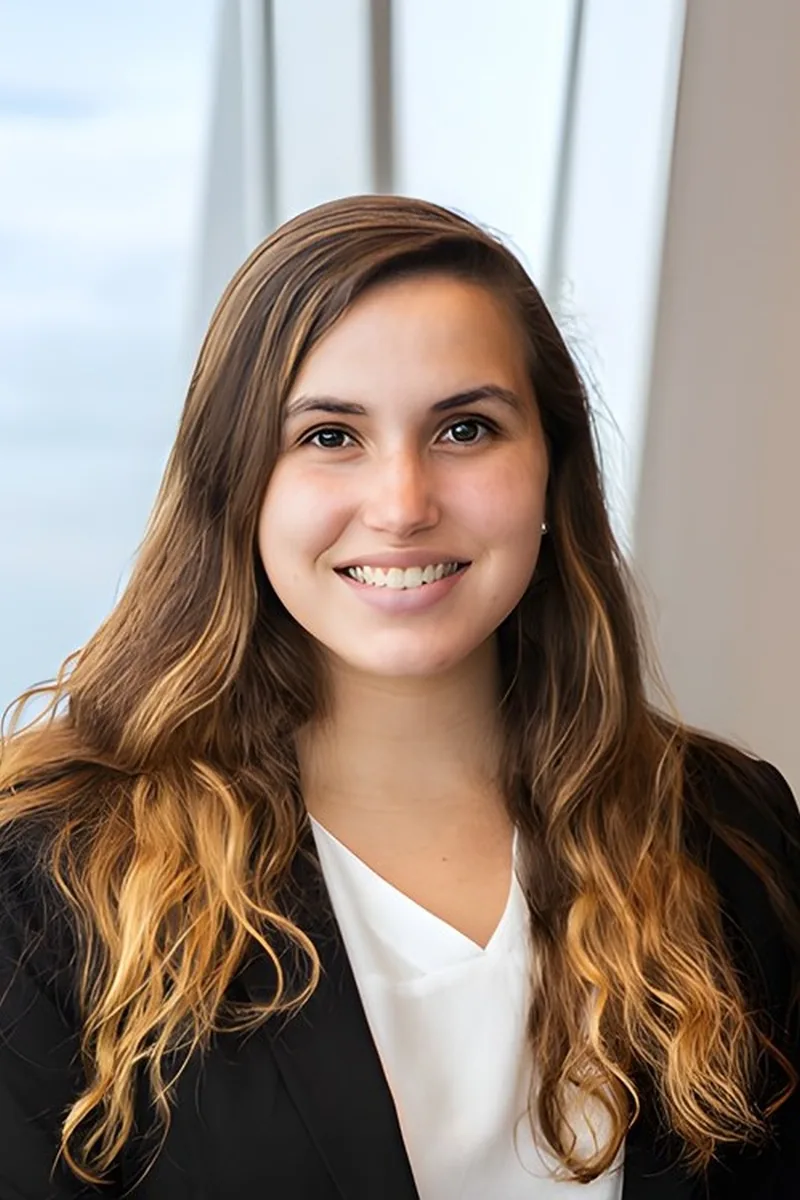
Heather minored in Quantitative Methods at Vanderbilt, which means AP Statistics isn't a side subject for her — it's core to her academic training. She breaks down inference procedures, experimental design, and probability distributions with the kind of fluency that comes from applying statistics daily, not just teaching it from a textbook. Rated 4.9 by students.

Most AP Stats students come in expecting another calculation-heavy math class, then hit a wall when the exam asks them to explain *why* they chose a particular test or *what* a confidence interval actually captures in context. Elena's Child Development background gives her sharp instincts for identifying exactly where that conceptual shift stalls out for each student, and her 1540 SAT confirms the quantitative chops to back it up. She breaks down the free-response writing demands — describing distributions, justifying inference choices — as a communication skill, not just a math skill.
Neuroscience at Vanderbilt means Elliot lives in data — designing experiments, running statistical tests, and interpreting p-values in research contexts every week. He brings that applied perspective to AP Statistics, breaking down concepts like confidence intervals, chi-square tests, and experimental design with real examples rather than abstract formulas.
I'm a graduate student in Applied Statistics with experience in general math and computer programming to boot. I currently have a PhD in Applied Statistics with experience in data analytics. I've had the opportunity to do some math and statistics work for hospitals and research facilities, and I enjoy getting to share my passion for math with others to assist them in their education.
Studying statistics at Northwestern means Jake isn't just learning the concepts AP Stats covers — he's using them daily in upper-division coursework involving real data analysis, probability models, and inference procedures. That ongoing immersion makes him sharp on the details students tend to blur, like the difference between a parameter and a statistic or why checking conditions before running a test isn't optional. Rated 5.0 by students.
Computational mathematics at Rice means Vinson doesn't just know the formulas behind normal distributions and chi-square tests — he understands the underlying theory well enough to explain why a particular inference procedure works, not just when to use it. That mathematical depth is especially useful for the AP Stats units on sampling distributions and probability, where students with strong computational instincts often struggle to shift into the interpretive, context-driven reasoning the exam actually scores on. Rated 4.8 by students.
Biomedical engineering at UIC meant Apoorva was designing experiments, collecting noisy biological data, and running statistical tests to figure out whether a device prototype actually performed better than chance — which is the same inferential reasoning AP Stats builds its curriculum around. She's especially sharp on the probability and simulation units, where her engineering instinct for modeling uncertainty makes abstract concepts like sampling variability feel concrete and grounded. Holds a 4.6 rating.
Studying Data Science at NYU's Courant Institute means Diego lives in the world of probability distributions, hypothesis testing, and regression analysis every day. He breaks down AP Statistics concepts like confidence intervals and chi-square tests by connecting them to real datasets, making the logic behind inference click before students ever touch a formula sheet.
As a statistics major at Michigan Tech, Blake lives in the material that AP Stats students are tested on — probability distributions, inference procedures, experimental design, and the logic behind hypothesis testing. He breaks down tricky concepts like Type I and Type II errors or interpreting confidence intervals in context, which are exactly the areas where AP exam free-response questions separate 4s and 5s.
A philosophy major with a certificate in Statistics and Machine Learning from Princeton, Julie approaches AP Stats from both sides — the computational mechanics and the careful logical reasoning about what the numbers actually prove. That philosophy training is surprisingly relevant: questions about whether correlation implies causation, what constitutes a valid inference, and how to structure an argument from evidence are the same skills the free-response section grades hardest on. Rated 4.9 by students.
Caltech's economics program is quantitatively rigorous — Brian's coursework meant building econometric models, running hypothesis tests on real datasets, and defending statistical conclusions in ways that mirror exactly what AP Stats free-response questions demand. His dual background in CS and economics gives him a knack for explaining the logic behind choosing between z-procedures and t-procedures, or why independence conditions matter, in terms that click for students who think algorithmically. SAT score of 1580 speaks to the precision he brings to exam strategy.
Biology research at Yale means Shreya regularly interprets data — reading regression output, evaluating sample designs, and deciding whether results are statistically significant before drawing conclusions. She brings that same analytical lens to AP Statistics, teaching students how to set up and justify inference procedures the way the free-response section demands. Rated 5.0 by students.
With two master's degrees in mathematics education and state teaching certification, Anthony has taught the full arc of the math curriculum — which means he knows exactly where AP Stats diverges from every other math class students have taken. He zeroes in on the reasoning behind inference procedures, teaching students to articulate why they're choosing a particular test and what their conclusion actually means in context, rather than just punching numbers into a calculator. His 34 ACT reflects the kind of disciplined, structured thinking that pays off on the exam's language-heavy free-response questions.
Cornell biology coursework has Drishti knee-deep in research methods — designing controlled experiments, interpreting data tables, and evaluating whether results actually support a hypothesis or just look like they do. That training maps cleanly onto the AP Stats units on experimental design and inference, where she teaches students to articulate the reasoning behind their procedure choices instead of just punching numbers into a calculator. Rated 5.0 by students.
Most AP Stats students come in expecting another formula-driven math class, then hit a wall when the exam asks them to explain *why* a normal model applies or *what* a 95% confidence level actually means in context. JF's math and CS background at Stanford means he thinks in both precise computation and logical argumentation — exactly the combination the free-response section rewards. Rated 5.0 by students.
Neuroscience research at Vanderbilt means Blake regularly encounters experimental design, data interpretation, and statistical inference in contexts like brain imaging studies and behavioral experiments — the same reasoning AP Stats tests on every free-response question. He's especially strong on the conceptual side, walking through why a particular test applies and how to communicate conclusions about p-values and confidence intervals with the precision the rubric demands. Rated 5.0 by students.
Testimonials
Because the right AP Statistics tutor makes all the difference.
Average Session Rating – Based on 3.4M Learner Ratings
Practice AP Statistics
Free practice tests, flashcards, and AI tutoring for AP Statistics
Nearby AP Statistics Tutors
Other Knoxville Tutors
Related Math Tutors in Knoxville
Frequently Asked Questions
AP Statistics covers four main units: exploring data through distributions and relationships, sampling and experimentation, probability and random variables, and inference. The course emphasizes understanding statistical concepts, designing studies, analyzing data, and communicating results—skills tested across multiple-choice and free-response sections on the AP exam. A tutor can help you master each unit's core concepts and practice applying them to real-world scenarios.
Score improvement depends on your starting point and consistency with tutoring. Students who work with a tutor typically see gains by identifying knowledge gaps, practicing problem-solving strategies, and building confidence with unfamiliar question formats. The national average AP Statistics score is around 2.9 out of 5, so many students benefit from focused instruction on probability concepts and inference procedures—areas where tutoring makes the biggest impact.
Students often struggle most with probability concepts (conditional probability, independence, distributions), hypothesis testing and confidence intervals, and interpreting statistical output from calculators and software. These topics require both conceptual understanding and procedural fluency, which is where personalized 1-on-1 instruction helps most. A tutor can break down abstract concepts with concrete examples and help you practice until these ideas click.
The AP Statistics exam includes 40 multiple-choice questions (90 minutes) and 6 free-response questions (90 minutes). A strong strategy involves reading questions carefully to identify what's being asked, showing all work on free-response items (partial credit is available), and managing your time so you don't rush through either section. Tutors can help you practice pacing with full-length exams and teach you how to recognize question types quickly.
Practice tests are essential for AP Statistics because they help you identify weak areas, build familiarity with question formats, and develop exam pacing skills. Taking full-length practice exams under timed conditions reveals which topics need more review and whether you're managing your time effectively. Tutors typically use practice tests to diagnose gaps and structure your study plan around the areas where you need the most support.
A graphing calculator is essential for AP Statistics—you'll use it to calculate statistics, create graphs, and perform inference procedures. The exam allows the TI-83/84 or equivalent, and knowing how to use it efficiently saves valuable time. Many students benefit from tutoring focused specifically on calculator skills and when to use technology versus working through calculations by hand to show understanding.
Most students benefit from starting tutoring at least 2-3 months before the AP exam in May, though starting earlier gives you more time to build foundational understanding. Consistent weekly sessions combined with regular practice between meetings work better than cramming. A tutor can create a personalized study schedule based on your current level and target score, ensuring you cover all units with adequate time for review and practice exams.
Look for a tutor with strong knowledge of AP Statistics curriculum and experience preparing students for the exam. They should be able to explain statistical concepts clearly, help you practice with actual AP questions, and teach you test-taking strategies specific to the exam format. Varsity Tutors connects you with expert tutors for students in Knoxville who understand both the subject matter and what it takes to succeed on exam day.
Let’s find your perfect tutor
Answer a few quick questions. We’ll recommend the right plan and match you with a top 5% tutor.