Award-Winning High School Chemistry Tutors
serving Knoxville, TN
High School Chemistry
Tutors in Knoxville
Private 1-on-1 tutoring, weekly live classes for academic support, test prep & enrichment, practice tests and diagnostics, and more to elevate grades and test scores.
Based on 3.4M Learner Ratings
UniversitiesSchools & Universities
DeliveredHours Delivered
ProficiencyGrowth in Proficiency
Who needs tutoring?
No obligation. Takes ~1 minute.
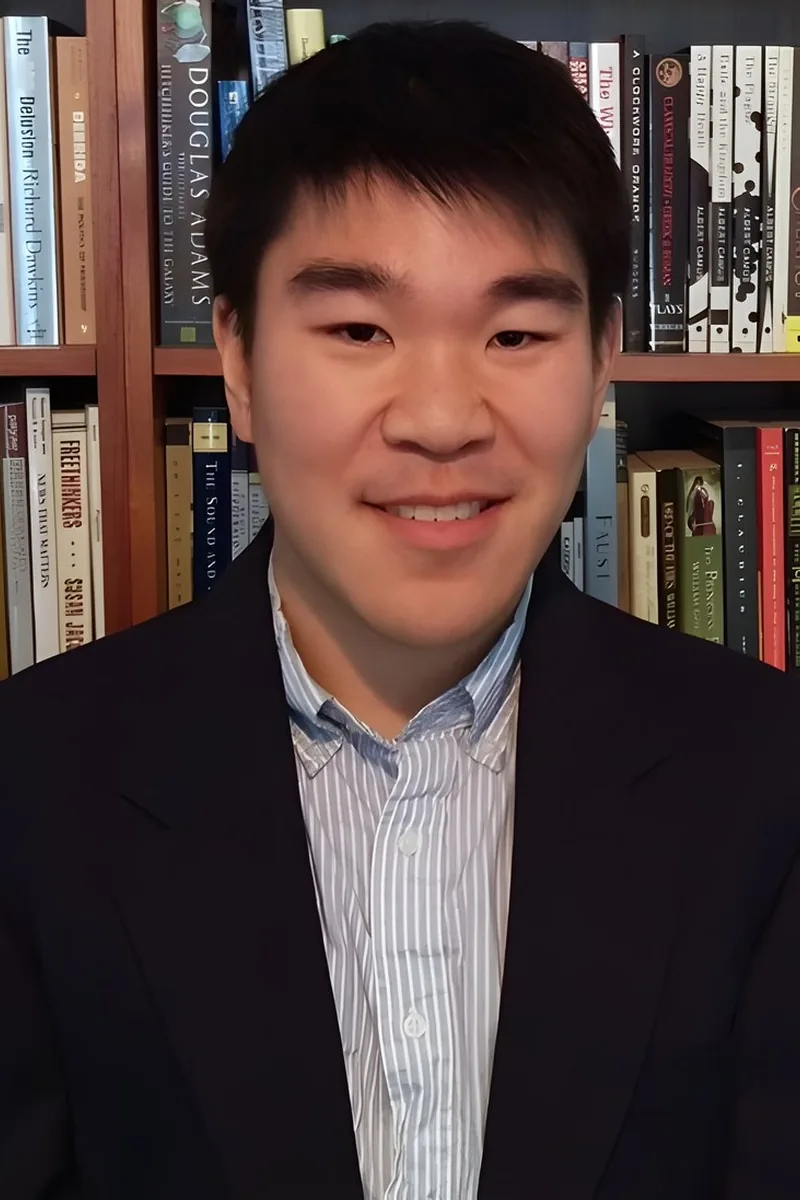
Chemistry clicks when students see the logic underneath the formulas — why electron configurations predict reactivity, or how stoichiometry is really just bookkeeping for atoms. Dennis earned his Masters in Chemical and Physical Biology at Vanderbilt, so he teaches concepts like equilibrium, thermodynamics, and bonding from a place of deep daily familiarity rather than rote textbook review. Rated 5.0 by students.

Teaching college chemistry for years gave Jeremy a clear picture of what high school students actually need before they arrive on a college campus — and where most curricula leave gaps. He zeroes in on the conceptual reasoning behind topics like mole conversions, gas laws, and electron configurations, making sure students can explain *why* an answer is correct, not just arrive at the right number.
Balancing equations, predicting products, and navigating the mole concept are the topics where most high school chemistry students start to struggle. Kelly's chemical engineering training gave her deep fluency with these ideas, and she's the kind of person friends and family still call when they need a chemistry concept explained clearly — a habit she's turned into a 5.0 tutoring rating.
In 2022, I completed my Ph.D. in Chemistry at Vanderbilt University. My goal is to use my expertise in chemistry, algebra, and calculus to help students not only learn but also enjoy these subjects. My favorite subject to teach is general chemistry as it highlights the importance of interdisciplinary study combining, physics, math, and even biology. While my degree expertise lies in chemistry, I am equally adapt in teaching all levels of mathematics. I take pride in reinforcing mathematics concepts with tangible applications in other fields to highlight its importance and making learning interesting.
Pursuing a chemistry degree at Vanderbilt means Lawrence isn't just recalling high school material — he's actively building on it in college-level courses every semester, which keeps concepts like stoichiometry, chemical kinetics, and thermodynamics sharp and interconnected. That ongoing immersion lets him explain the reasoning behind problem setups rather than just walking through the steps, especially when students hit the quantitative side of the course. Rated 4.7 by students.
Balancing equations and stoichiometry tend to be the first stumbling blocks in high school chemistry, and Matthew tackles them by teaching students to think in terms of conservation — the same principle that drove much of his engineering coursework. He's especially strong on gas laws and thermochemistry, where his physics intuition adds an extra layer of clarity.
Two biomedical engineering degrees mean Allyson has spent years working with chemistry at the molecular level — understanding how materials interact with biological tissue, how reaction kinetics govern drug delivery, and why thermodynamics matters in device design. That engineering lens gives her a practical way to teach high school topics like stoichiometry and chemical bonding, tying the calculations to problems where getting the chemistry wrong has real consequences. Rated 4.9 by students.
The jump from memorizing element names to actually solving equilibrium expressions or predicting reaction products is where most high school chemistry students stall. Andrew walks through the logic behind each calculation step — why you flip a Ka expression, how sig figs actually work, what a limiting reagent really means — so the problem-solving becomes repeatable, not random.
Studying biochemistry means Fay doesn't just remember high school chemistry — she's actively building on it, using concepts like equilibrium, reaction energetics, and molecular structure in upper-level coursework right now. That proximity to the material shows when she explains something like gas laws or periodic trends, because she can pinpoint exactly where a concept is headed and why it matters beyond the current chapter. Rated 4.9 by students.
Kathleen's Ph.D. in Molecular Pathology & Immunology from Vanderbilt sits on top of an undergraduate chemistry degree from the University of Arkansas, which means she's never really left chemistry behind — she's just kept applying it at higher and higher levels. That depth shows when she teaches topics like electron orbitals or chemical equilibrium, because she can trace exactly how those high school concepts become the tools that drive real research in biochemistry and medicine.
I'm a high school chemistry and biology teacher with a love of languages. I consider myself a lifelong learner and am excited to share and discover new subjects and ideas. I'd love to help you in your learning journey as well! I started tutoring as a college freshman after taking an advanced chemistry course and realizing how much I enjoyed working with my classmates to help them study and solve difficult problems. My college hired me to tutor French, biology, and chemistry students throughout the next three and a half years. I also started meeting with several gifted high school students who needed guidance in preparing the best college applications possible. Having successfully passed seven AP tests as a student, I was able to help them prepare for the most challenging content in the classes and on the AP tests. I was also able to share ACT test strategies and content knowledge from my own experience that helped me achieve a 35 cumulative score and qualify as a national merit scholar on the PSAT. During college, I also had the opportunity to volunteer my time with high school students who were internationally adopted or in foster care while awaiting immigration proceedings. Working with students who were learning math, science, and other subjects in their second language became a passion that drove me to switch career paths and become a teacher in a public school. I speak conversational French and Spanish which has given me such an appreciation for the patience and grace of native speakers willing to help me. This has framed my entire approach to education as science often feels like a foreign language to students who are not yet fluent. With patience, exposure, and practice, I believe every student can be successful at even the most challenging science concepts. Now I teach high school chemistry and AP chemistry, but I'm also certified in and have taught high school biology and physical science. My favorite part of teaching chemistry is the moment of satisfaction students experience when they have struggled and overcome a difficult task. My students may have different journeys to success, but I love celebrating every victory.
Balancing equations, mole conversions, and periodic trends can feel like disconnected topics until someone shows how they all connect. Elizabeth's science degree gave her deep fluency with these foundational chemistry concepts, and she teaches them as a coherent story — atoms behave in predictable ways, and once a student sees the pattern, problems that seemed impossible start solving themselves.
Stoichiometry trips up more high school chemistry students than almost anything else, usually because the dimensional analysis framework wasn't taught clearly the first time. Kristen walks through unit conversions and mole relationships step by step, building the kind of problem-solving routine that carries through to acids and bases, gas laws, and beyond.
I am a chemistry tutor with a solid academic and teaching background, possessing more than seven years of experience in chemistry. Being a tutor is an exciting interaction surpassing anything else I have experienced. I want to continue tutoring because I can positively influence students to reach their full potential academically. Enabling students to understand the basic knowledge and skills they may use for the rest of their lives is mightily rewarding. I have had a tremendously positive experience of both high school and college education. I received a chemistry bachelor's degree at the Cross River University of Technology, Nigeria, and a master's degree in chemistry at East Tennessee State University, TN. As a high school classroom teacher, and a graduate assistant, I taught a Chemistry course and instructed Organic Chemistry laboratory sessions, respectively. These teaching assignments have kindled positive and gratifying responses. The work of Howard Gardner has influenced my learning style. He theorized that we have many kinds of intelligence and that everyone has the potential to be brilliant but tends to express it uniquely. Therefore, all students have a unique learning style that is suitable for them. As a tutor, I can meet my students' academic needs provided I know their right learning style. Outside teaching, I volunteer in my local church youth weekly program to set up the gym so that the youths could have some fun games before listening to Bible-based teaching. I believe the spiritual well-being of an individual is just as important as their academic success. Volunteering my time to something that makes young people spiritually and mentally fit is fulfilling. Having decided to teach, I look forward to working as a tutor. It will be an honor to make a real difference in the life of those I tutor.
Studying chemistry as his actual major — not just a prerequisite to check off — means Nathan lives inside concepts like stoichiometry, equilibrium, and bonding theory semester after semester, building the kind of fluency that makes explaining them second nature. He's particularly sharp at walking through dimensional analysis and mole calculations, two areas where high school students tend to lose the thread between setup and solution. His pre-med trajectory keeps him actively applying these ideas in contexts that go well beyond the textbook.
A physics major might seem like an unusual pick for chemistry, but Nima's deep comfort with atomic structure, thermodynamics, and quantitative problem-solving maps directly onto the trickiest parts of high school chem — stoichiometry, equilibrium calculations, and electron configurations. He approaches chemical concepts through the lens of why atoms and molecules behave the way they do, not just how to balance the equation.
Three science bachelor's degrees — including one specifically in chemistry — mean Sung has spent serious time with everything from electron orbitals to thermochemistry, not just at the introductory level but across multiple disciplinary angles. He digs into the "why" behind concepts like periodic trends and reaction energetics so students can reason through unfamiliar problems on exams instead of relying on memorized shortcuts. Rated 5.0 by students.
Balancing equations, mole conversions, and periodic trends are the building blocks of high school chemistry, and Camille tackles each one by teaching the underlying logic rather than handing students a formula sheet. Her pre-med background at Duke means she's fluent in the problem-solving style these courses demand. Rated 5.0 by students.
The jump from memorizing element symbols to actually predicting reaction products trips up a lot of high school chemistry students. Viraj zeroes in on that transition, teaching how oxidation states, electronegativity trends, and molecular geometry determine what happens when substances mix. His Cornell lab experience means he can ground abstract concepts in tangible examples students remember.
Fourth-year medical students don't usually think about stoichiometry or gas laws anymore, but Michael's path through Albert Einstein College of Medicine — plus his biology degree earned summa cum laude — means he's built on those high school chemistry foundations repeatedly in biochemistry, pharmacology, and physiology. He also spent time tutoring Regents-level chemistry and teaching MCAT prep for Kaplan, so he knows exactly where the gaps tend to form around topics like nomenclature, mole calculations, and balancing equations, and how to close them quickly.
Three-plus years of classroom instruction in advanced chemistry means Sugi has seen exactly where high school students get stuck — balancing redox equations, applying Le Chatelier's principle, or connecting molecular geometry to polarity. She teaches the underlying logic of each topic so students build real problem-solving skills, and her biochemistry training at Rice keeps the material grounded in real-world applications.
Balancing equations and stoichiometry trip up most high school chemistry students because the logic feels invisible at first. Garrett teaches the mole concept by tying it to tangible quantities — grams on a scale, liters of gas — so the math stops feeling arbitrary. His background in biology and physical chemistry also lets him show students where these reactions actually matter in living systems.
Balancing equations, understanding molarity, and predicting reaction products are all things Lisa does routinely in her marine biogeochemistry lab at Stony Brook. She approaches high school chemistry by grounding each new topic in a concrete example so students see the logic behind the math, especially in tricky areas like equilibrium and acid-base chemistry.
Balancing equations and stoichiometry problems click faster when you understand what's actually happening at the molecular level — and Laura's biology coursework at WashU in St. Louis means she's constantly applying chemistry concepts like bonding, reaction energetics, and solution behavior in biological contexts. That dual perspective lets her explain why a concept like electronegativity or gas behavior matters beyond the chemistry classroom, which tends to make the logic memorable rather than disposable. Rated 5.0 by students.
Between his UCLA biology coursework and medical school, Abrahim has taken chemistry from multiple angles — stoichiometry, equilibrium, acid-base reactions, thermodynamics. He's direct about pinpointing where a student's understanding breaks down, whether that's balancing redox equations or interpreting periodic trends. His 5.0 rating speaks to how well that targeted approach works.
Most high school chemistry students hit a wall somewhere around mole conversions or balancing redox reactions — the point where the subject stops feeling like science and starts feeling like math. Jessica approaches those sticking points by explaining the underlying logic first, then layering on the calculations. Her background in medicine keeps her grounded in why this chemistry actually matters.
Stoichiometry, equilibrium, and thermodynamics tend to click faster when a student can see how the math actually maps onto what's happening at the molecular level. Ellie's pre-med and engineering background means she teaches these concepts with an eye toward why the numbers behave the way they do, not just how to balance the equation.
Testimonials
Because the right High School Chemistry tutor makes all the difference.
Average Session Rating – Based on 3.4M Learner Ratings
Nearby High School Chemistry Tutors
Other Knoxville Tutors
Related Science Tutors in Knoxville
Frequently Asked Questions
High school chemistry requires mastering both abstract concepts and practical skills—balancing chemical equations, understanding molecular structures, and applying unit conversions are frequent stumbling blocks. Many students struggle with visualizing atoms and molecules or connecting theoretical concepts like stoichiometry to real-world applications. Personalized 1-on-1 instruction helps break down these complex ideas into manageable pieces and builds the foundation needed for success.
Absolutely. Beyond just reviewing lab reports, tutors can help you understand the scientific method, explain what's happening at the molecular level during experiments, and develop stronger scientific reasoning skills. For students in Knoxville, this means getting support that connects your classroom labs to the concepts you're learning, so you truly understand why reactions occur the way they do.
Understanding concepts is far more important than memorization in chemistry. While you'll learn some key facts (like the periodic table), real success comes from grasping how atoms bond, how reactions work, and why certain elements behave the way they do. Personalized tutoring focuses on building deep conceptual understanding rather than rote memorization, which helps you solve new problems and perform better on exams.
Your first session is about understanding where you are and where you want to go. A tutor will assess your current knowledge, identify specific areas of struggle (whether it's balancing equations, understanding bonding, or lab concepts), and learn about your learning style. From there, they'll create a personalized plan tailored to your needs and goals in chemistry.
Chemistry involves a lot of invisible processes—atoms, electrons, and molecular interactions that are hard to picture. Expert tutors use multiple strategies to make these concepts concrete: drawing molecular structures, using analogies, working through step-by-step processes, and connecting abstract ideas to real-world examples you can observe. This multi-sensory approach helps concepts stick and makes chemistry feel less abstract.
Many students see noticeable improvement within a few weeks once they understand the foundational concepts they were missing. However, chemistry is cumulative—each unit builds on previous knowledge—so consistent tutoring over time yields the strongest results. The timeline depends on where you're starting and how frequently you meet, but personalized instruction typically helps students move from struggling to confident much faster than studying alone.
Look for tutors with strong chemistry backgrounds—ideally those who've studied chemistry at the college level or have extensive teaching experience. They should be able to explain concepts clearly, help you understand the "why" behind reactions, and guide you through both problem-solving and lab concepts. Varsity Tutors connects you with expert tutors who have the knowledge and teaching skills to help you succeed in high school chemistry.
Yes. The chemistry section on standardized tests requires both conceptual understanding and the ability to apply knowledge quickly under pressure. Tutors can help you master key chemistry concepts, practice test-style problems, and develop strategies for managing time during the exam. With personalized preparation, you'll feel confident tackling chemistry questions when test day arrives.
Let’s find your perfect tutor
Answer a few quick questions. We’ll recommend the right plan and match you with a top 5% tutor.