Award-Winning AP Statistics Tutors
serving Memphis, TN
AP Statistics
Tutors in Memphis
Private 1-on-1 tutoring, weekly live classes for academic support, test prep & enrichment, practice tests and diagnostics, and more to elevate grades and test scores.
Based on 3.4M Learner Ratings
UniversitiesSchools & Universities
DeliveredHours Delivered
ProficiencyGrowth in Proficiency
Who needs tutoring?
No obligation. Takes ~1 minute.
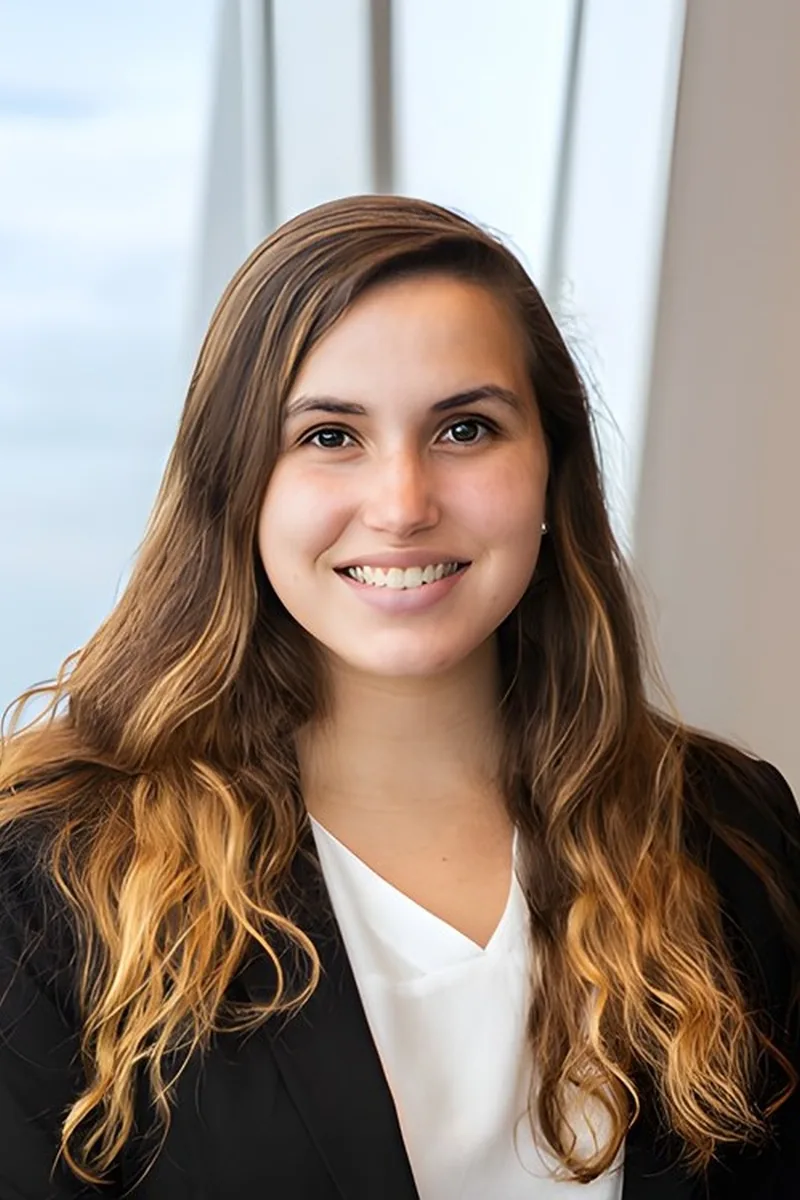
Heather minored in Quantitative Methods at Vanderbilt, which means AP Statistics isn't a side subject for her — it's core to her academic training. She breaks down inference procedures, experimental design, and probability distributions with the kind of fluency that comes from applying statistics daily, not just teaching it from a textbook. Rated 4.9 by students.

Most AP Stats students come in expecting another calculation-heavy math class, then hit a wall when the exam asks them to explain *why* they chose a particular test or *what* a confidence interval actually captures in context. Elena's Child Development background gives her sharp instincts for identifying exactly where that conceptual shift stalls out for each student, and her 1540 SAT confirms the quantitative chops to back it up. She breaks down the free-response writing demands — describing distributions, justifying inference choices — as a communication skill, not just a math skill.
Neuroscience at Vanderbilt means Elliot lives in data — designing experiments, running statistical tests, and interpreting p-values in research contexts every week. He brings that applied perspective to AP Statistics, breaking down concepts like confidence intervals, chi-square tests, and experimental design with real examples rather than abstract formulas.
I'm a graduate student in Applied Statistics with experience in general math and computer programming to boot. I currently have a PhD in Applied Statistics with experience in data analytics. I've had the opportunity to do some math and statistics work for hospitals and research facilities, and I enjoy getting to share my passion for math with others to assist them in their education.
Game Theory for advanced middle schoolers at Johns Hopkins CTY required Carter to make probability, expected value, and strategic reasoning click for students years ahead of the typical curve — experience that translates directly to the combinatorics and probability units in AP Stats. His economics training at Brown also means he's comfortable with regression and inference in applied contexts, so he can ground abstract concepts like sampling variability in real decision-making scenarios rather than just calculator routines. Rated 5.0 by students.
Cornell biology coursework has Drishti knee-deep in research methods — designing controlled experiments, interpreting data tables, and evaluating whether results actually support a hypothesis or just look like they do. That training maps cleanly onto the AP Stats units on experimental design and inference, where she teaches students to articulate the reasoning behind their procedure choices instead of just punching numbers into a calculator. Rated 5.0 by students.
Cognitive science at Rice meant Adam spent semesters immersed in experimental design, hypothesis testing, and statistical inference — the exact skills AP Statistics demands. He teaches students to think through probability distributions and confidence intervals the way a researcher would, connecting each concept to the logic behind the test rather than just the formula sheet.
Computational mathematics at Rice means Vinson doesn't just know the formulas behind normal distributions and chi-square tests — he understands the underlying theory well enough to explain why a particular inference procedure works, not just when to use it. That mathematical depth is especially useful for the AP Stats units on sampling distributions and probability, where students with strong computational instincts often struggle to shift into the interpretive, context-driven reasoning the exam actually scores on. Rated 4.8 by students.
When I was young, I used to hate swimming at the beach. The idea of sharks moving around under the waves where I could not see them made me scared to go into the water. As I grew up, however, and began to learn about the different sharks that lived off the shores of my home in Massachusetts, USA, I became less and less scared and more and more fascinated with how and why sharks move around in this underwater world. I began to ask questions like, what do sharks do under the water when we cannot see them? and, where do sharks like to go and why? As a marine scientist now I try to answer these questions. Because sharks live and breathe under the water and can swim long distances and go deep into the ocean, further and deeper than I could follow by myself, to study how these animals move and behave underwater I have to use lots of different types of technology. Sometimes I use underwater robots that can follow the sharks down deeper than humans can go, and that can carry things like cameras so I can directly see what the sharks are doing. In my work now, I use special tags that send out signals every few seconds with a unique name that identifies individual sharks. When the shark swims close enough to receivers placed out in the ocean, these receivers are able to hear and record the tag name, telling where and when individual sharks are present in different areas of the ocean. One thing I love about being a shark scientist is that I can follow sharks all over the world. First, I followed the movement of sharks all the way over in the Atlantic Ocean off the east coast of the USA. Then I moved to Tasmania, Australia, and I followed young sharks as they move around off the coast of New South Wales. Now I am back home in Massachusetts and working on publishing my research.
Carnegie Mellon's biology program is lab-intensive, and Puja spent semesters designing experiments, collecting messy real-world data, and determining whether results were meaningful — skills that map directly onto AP Stats topics like experimental design, sampling methods, and inference reasoning. She's particularly sharp at teaching students how to translate calculator output into the precise written explanations the free-response section demands, since her science training required the same kind of defend-your-conclusion thinking. Rated 4.7 by students.
Biostatistics coursework during her Master's in Biotechnology gave Rithi hands-on experience designing experiments, running statistical tests on biological data, and interpreting whether results actually mean something — which is the exact reasoning cycle AP Stats builds its curriculum around. She's especially sharp on the probability and sampling distribution units, where her neuroscience research background makes concepts like normal approximations and variability in sample means feel concrete rather than abstract. Rated 4.9 by students.
Graduate-level applied statistics at Penn State is a different animal from AP Stats, but William uses that deeper training to show students why formulas like the one for standard error of a sampling distribution are built the way they are — which makes the interpretation questions on the exam far less mysterious. His biomedical engineering background also means he's comfortable grounding lessons in real study designs, from clinical trials to observational health data, so students practice writing the kind of context-specific conclusions the free-response rubric actually rewards. Rated 4.8 by students.
Data analytics coursework in biomedical and public health analysis means Vishank doesn't just know the AP Stats formulas — he's used them to draw real conclusions from messy health data sets, which is the exact skill the exam's free-response questions are testing. He's especially sharp on the data collection and study design unit, breaking down why randomization matters and how confounding variables sneak into observational studies. Rated 4.9 by students.
Scoring a 36 ACT means Ethan knows how to break down standardized testing — and AP Statistics is really a standardized test in statistical thinking, where the free-response grading hinges on precise language about inference and experimental design. His environmental science and public policy background at the undergraduate level required constant engagement with data analysis, from interpreting regression models in climate studies to evaluating sampling methods in policy research. Rated 5.0 by students, he zeroes in on the communication side of stats that most math-oriented tutors overlook.
Engineering PhD programs at Georgia Tech don't let you hand-wave through data — Jordan's biomedical research required designing experiments, validating sensor measurements, and running the kind of statistical inference that AP Stats builds its entire curriculum around. That lab experience makes him especially sharp on the exam's trickiest conceptual pieces, like distinguishing between observational studies and experiments or explaining why a particular confidence level changes an interval's width. Rated 5.0 by students.
Neuroscience research runs on statistics — hypothesis testing, confidence intervals, regression analysis, interpreting p-values from real experimental data. Daniel applies that firsthand lab experience from his work at the Jungers Center for Neuroscience Research to break down AP Statistics concepts in ways that go beyond formula sheets. His biomedical engineering coursework at Rice keeps these tools sharp and current.
Testimonials
Because the right AP Statistics tutor makes all the difference.
Average Session Rating – Based on 3.4M Learner Ratings
Practice AP Statistics
Free practice tests, flashcards, and AI tutoring for AP Statistics
Nearby AP Statistics Tutors
Other Memphis Tutors
Related Math Tutors in Memphis
Frequently Asked Questions
AP Statistics focuses on four main units: exploring data through visualizations and summary statistics, sampling and experimentation design, probability and random variables, and statistical inference using confidence intervals and hypothesis tests. The course emphasizes understanding when and how to apply different statistical methods rather than heavy computation. For students in Memphis, a strong tutor can help you master both the conceptual foundations and the practical applications tested on the exam.
Score improvement depends on your starting point and consistency with preparation. Students who work with a tutor typically see gains of 2-4 points on the AP scale (out of 5), though some improve more significantly if they address fundamental gaps early. The key is identifying your weakest areas—whether that's study design, probability calculations, or inference interpretation—and building targeted practice around those concepts. Regular practice tests and consistent study schedules make the biggest difference.
Many students struggle with distinguishing between different study designs (observational studies vs. experiments vs. surveys) and understanding when each is appropriate. Others find probability concepts abstract and have trouble connecting them to real-world scenarios. The free response section also trips up students who can't clearly explain their reasoning or justify their statistical choices. A tutor can help you build confidence in these areas through targeted practice and clear explanations of the underlying logic.
The exam is 3 hours long and consists of two sections: a 90-minute multiple-choice section (40 questions) and a 90-minute free response section (6 questions, including one investigative task). Time management is critical—you need to work efficiently on multiple choice while leaving enough time for thoughtful free response answers. Tutors can help you develop pacing strategies and practice the specific skills needed for each section, like quickly identifying the right statistical test or clearly communicating your reasoning.
Practice tests are essential for AP Statistics success. They help you identify weak topics, build test-taking stamina, and get comfortable with the exam's format and timing constraints. Taking full-length practice tests under timed conditions reveals whether you're struggling with specific concepts or just with pacing. Working with a tutor, you can review your practice test results to pinpoint exactly which statistical concepts or question types need more work, then focus your study time accordingly.
Test anxiety in AP Statistics often stems from uncertainty about which method to use or whether you've explained your reasoning clearly enough. Building confidence through repeated practice with different question types and study designs helps reduce anxiety significantly. Tutors can also teach you strategies like reading free response questions carefully before diving in, checking your work for logical consistency, and staying calm when you encounter an unfamiliar scenario—because the underlying statistical principles remain the same.
Ideally, start targeted AP Statistics prep 8-12 weeks before the exam, though students taking the course throughout the year benefit from consistent tutoring from the beginning. If you're starting closer to exam day, focus on high-yield topics like inference, study design, and probability. A tutor can help you create a realistic study schedule that prioritizes the concepts most likely to appear on the exam and leaves time for practice tests and review.
Look for tutors with strong knowledge of the AP Statistics curriculum and experience helping students improve their scores. They should be able to explain both the 'how' (calculations) and the 'why' (when and why to use each method), since the AP exam emphasizes conceptual understanding. Varsity Tutors connects you with expert tutors in Memphis who understand the specific challenges of AP Statistics and can tailor their approach to your learning style and goals.
Let’s find your perfect tutor
Answer a few quick questions. We’ll recommend the right plan and match you with a top 5% tutor.