Award-Winning Statistics Tutors
serving Knoxville, TN
Statistics
Tutors in Knoxville
Private 1-on-1 tutoring, weekly live classes for academic support, test prep & enrichment, practice tests and diagnostics, and more to elevate grades and test scores.
Based on 3.4M Learner Ratings
UniversitiesSchools & Universities
DeliveredHours Delivered
ProficiencyGrowth in Proficiency
Who needs tutoring?
No obligation. Takes ~1 minute.
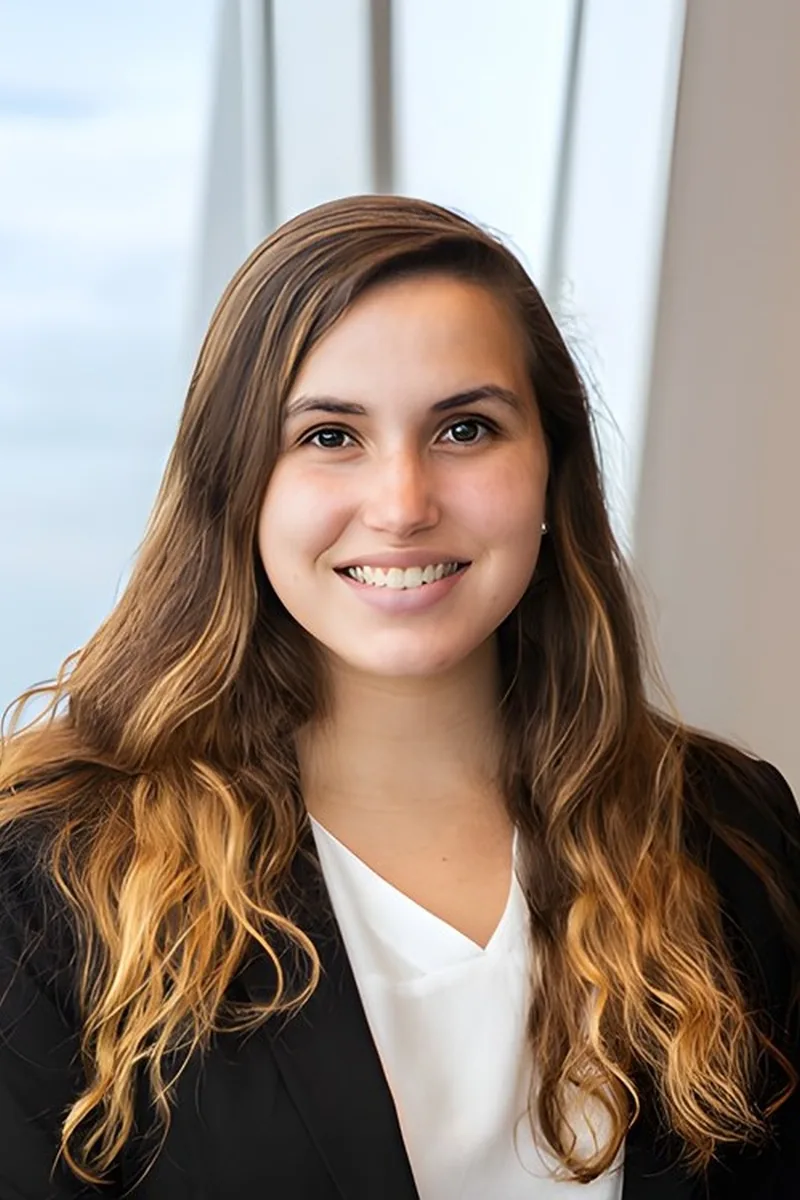
A Quantitative Methods minor at Vanderbilt means Heather spent semesters immersed in regression analysis, hypothesis testing, and probability — the exact material that trips up most statistics students. She teaches the reasoning behind each test so students can choose the right method on their own, not just follow a decision flowchart. Her 4.9 rating speaks to that approach.
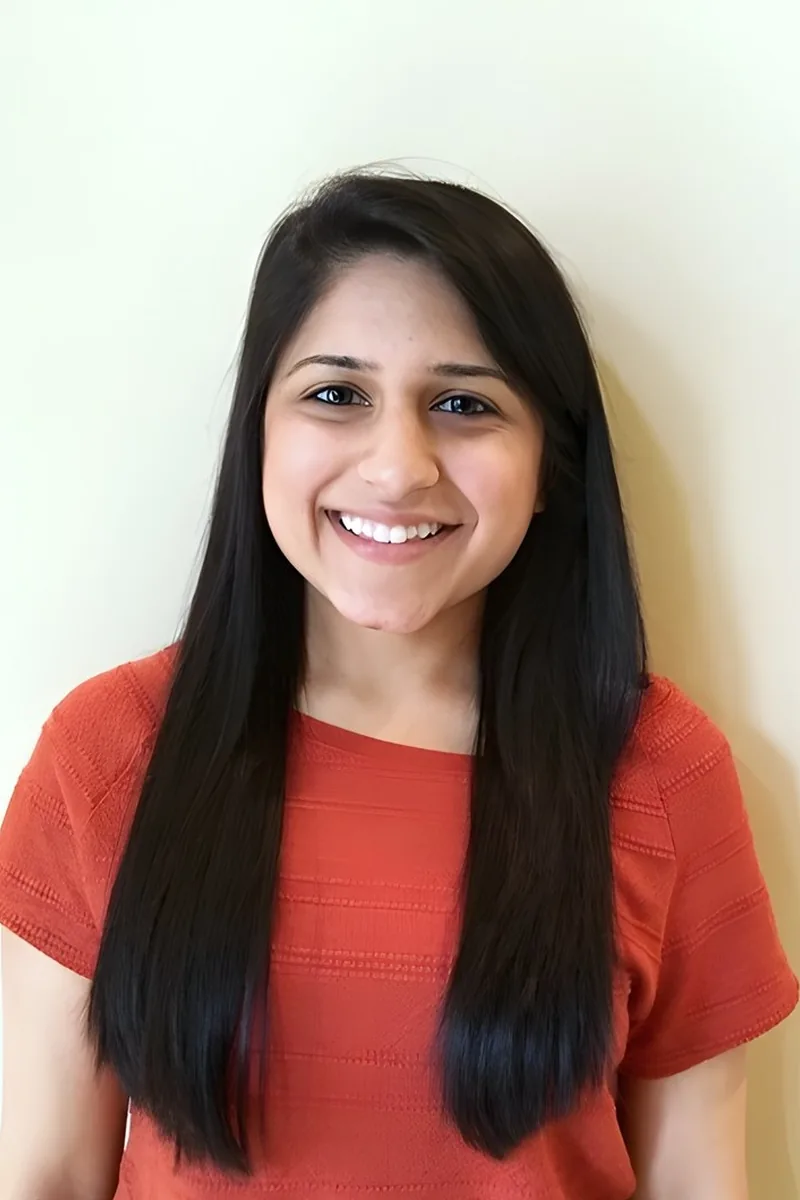
I am a rising sophomore at Emory University working towards a Bachelors of Arts degree in Psychology, as well as a minor in global health, culture, and society. I tutored in multiple subject areas in high school as a peer tutor as well as a tutor to younger students in elementary and middle school. I also tutored elementary school students in multiple subject areas during my first year at Emory. I tutor in many subjects, but have always been passionate specifically about tutoring in math. I have been tutored by peers many times throughout high school and college in different subjects, including the ACT. I found unique ways to solve problems and expand my problem solving skills through this, especially because I felt as though my peers were better able to relate to me, and therefore cater to my needs as a student. My approach is catered specifically to each student by first learning how he or she best learns, and then using tactics that will benefit them the most as they learn and grow as a student.
I attended law school at Vanderbilt University and I earned an MBA and a Ph.D. in Finance (Statistics minor) from the University of Iowa. I served for over 10+ years as a finance professor, teaching assistant, and tutor at 4 Top-40 public universities, during which time I received numerous awards for exemplary teaching. I qualified for MENSA by scoring in the 99.9th percentile on standardized tests for graduate schools: LSAT, 173 (6.0+ AWA) and GMAT, 760. I use a student-centered approach and I personalize educational plans to balance student needs based on learning styles, motivations, and interests. I have experience fostering one-on-one learning in a variety of environments, including online platforms. I guide students in identifying resources to improve their ability to succeed and monitor their progress while providing ongoing feedback. I will help you thrive in your mathematics, probability/statistics, and business courses or in your preparation for standardized tests.
The jump from calculating a mean to understanding confidence intervals and hypothesis testing trips up a lot of students because statistics requires a different kind of mathematical thinking — probabilistic rather than deterministic. Lawton approaches each concept by building intuition around what a distribution actually represents before introducing formulas. His math coursework and programming skills in Python also make him a strong resource for students working with statistical software or data sets.
Studying neuroscience means Elliot reads and produces statistical analyses constantly — from hypothesis testing to regression models to understanding what a standard deviation actually tells you about a dataset. He teaches statistics by grounding every formula in a concrete question, so students understand when to use a t-test versus a z-test and why it matters.
I'm a graduate student in Applied Statistics with experience in general math and computer programming to boot. I currently have a PhD in Applied Statistics with experience in data analytics. I've had the opportunity to do some math and statistics work for hospitals and research facilities, and I enjoy getting to share my passion for math with others to assist them in their education.
Probability distributions, hypothesis testing, and regression analysis all click faster when a student understands *why* the formulas work, not just how to punch them into a calculator. Matthew connects statistical reasoning to real-world decision-making — the kind he practiced throughout his MBA and legal training. That cross-disciplinary perspective makes abstract concepts like p-values and confidence intervals feel grounded and practical.
Public health coursework at the University of Memphis means Paul lives in statistics daily — from interpreting confidence intervals in epidemiological studies to running hypothesis tests on real population data. He teaches the logic behind each method so that choosing between a t-test and a chi-square feels intuitive, not arbitrary.
I am currently a Junior at The University of Alabama pursuing degrees in both Mathematics & Economics. After I graduate, I intend to stay at Alabama to get an M.A. in Economics. I have been tutoring both Math and ACT Prep since I was a Sophomore in High School. After 4 years of experience, I continue to enjoy tutoring these subjects, and the constant challenge of improving my abilities and techniques. I get a great sense of satisfaction in helping those I tutor improve their grades, test scores, and overall understanding of the subjects I am teaching them. Not only do I focus on the subject matter being taught, but I also focus on helping students develop the study skills and habits that are imperative to success later in their academic careers. Through my four years of tutoring, I have developed the ability to mold my tutoring style around however the student learns best whether that be visually, through examples, etc. This allows me to provide an individualized tutoring session to each person I tutor. I believe no two students should be tutored the same was; every student has different learning methods and I view it as my responsibility to modify my tutoring style to fit each individual student.
I'm from New Jersey and of Italian decent, so I naturally love cooking and all things pizza. My favorite childhood book is The Giver by Lois Lowry, and favorite high school class was physics (rockets, easy winner). I enjoy playing guitar and ride my bicycle on a sunny day.
I am currently applying for medical school and working towards a masters in public health. I have experience working with many different ages ranging from middle school to college level students. Most of my experience is with math and sciences as well as test prep for English ACT exams. I can tutor in math (pre calculus, trigonometry, algebra, geometry) sciences (biological sciences, chemistry, physics) and English. My favorite subject to tutor is algebra because it is like a puzzle, and who does not like a good puzzle? My teaching philosophy consists of learning about the students' interests and providing a way to relate their interests into the work they are doing so it can be more meaningful to them. I have found that the more a subject means to a student personally, the better they do in the subject. So, in this way it is possible to turn a subject weakness into a strength and passion.
I am a junior at Vanderbilt University studying Child Development and Art History, and I have always had a passion for tutoring and mentorship. Although most of my tutoring experience has been for elementary students in reading and math, I am most excited about tutoring middle and high schoolers because the subjects that are learned during these times are so much more detailed, dynamic, and interesting! These were also the years where my love of learning really took shape, and getting the opportunity to foster this same love and appreciation for learning in other students excites me.
I'm a recent graduate from Lehigh University where I majored in behavioral neuroscience, and I am now pursuing my Master's in Public Health with George Washington University. I am very enthusiastic about tutoring and I have three years of experience working with students of all different backgrounds in a wide variety of subjects, from middle school English to college level biology. My number one priority is to get to know you, both as a student and as a person, in order to create a solid foundation in your learning experience. I firmly believe that everyone's learning styles are different and what works for one student may not work for another. Teaching and learning is a highly collaborative process, and through open communication and understanding your learning style I strive to make the learning process fun and engaging. I can assure you that as your tutor, there is no question not worth asking and I am dedicated to making your learning experience tailored to your strengths in order to yield to most successful results!
Studying economics at the undergraduate level means living inside probability distributions, hypothesis tests, and regression models — so Laura treats statistics as a language she already speaks fluently. She breaks down concepts like p-values and confidence intervals by tying them to concrete decision-making scenarios rather than abstract formulas. Her 5.0 rating speaks to how clearly that approach translates for students.
Interpreting a p-value or choosing between a z-test and a t-test trips up even strong math students because statistics demands a different kind of reasoning than algebra or calculus. Natasha's biostatistics background and MIT engineering training mean she can explain hypothesis testing, confidence intervals, and regression analysis through real experimental contexts. She's rated 4.9 by students.
A public policy background is surprisingly useful for teaching statistics — Noel spent his University of Chicago coursework interpreting real datasets, evaluating survey methodology, and distinguishing correlation from causation in policy research. He brings that same lens to topics like hypothesis testing, confidence intervals, and probability distributions, grounding abstract formulas in concrete examples that make the reasoning intuitive.
Probability distributions, hypothesis testing, and regression analysis all clicked for Crony during his neuroscience research at Brown, where he used statistics daily to interpret experimental data. He brings that applied perspective to tutoring sessions, showing students how each concept works in practice — not just on a problem set.
Studying Comparative Human Development at the doctoral level means Gabriel has spent years designing studies, interpreting data sets, and running statistical analyses firsthand. He teaches statistics by grounding concepts like probability distributions, hypothesis testing, and regression in real research questions rather than abstract formulas. That practical lens makes the subject click for students who struggle with the textbook approach.
Probability distributions, hypothesis testing, confidence intervals — statistics asks students to think in a fundamentally different way than most math courses. Elliot spent years running statistical analyses on neural data during his PhD research, which means he can show exactly how concepts like p-values and regression actually function in practice, not just on a formula sheet.
As experienced and passionated educator with a Bachelor's degree in Computer Science from Rice University, I am passionate about empowering students to achieve their academic goals. With over 3 years of tutoring experience in subjects such as AP Computer Science A, Machine Learning, and SAT Math, I adapt to different learning styles and create a supportive learning environment. My teaching philosophy centers on personalized instruction, where I connect with each student to understand their unique learning styles and challenges. I take pride in guiding students through the complexities of computer science and college application essays, equipping them with the skills they need for future success. Outside of tutoring, I enjoy exploring new technologies and engaging in coding projects to improve my teaching approach.
Understanding statistics means learning to ask the right questions about data before running any test: Is the sample random? What's the shape of the distribution? Could this result have happened by chance? Ethan's policy background gave him years of practice interrogating datasets and translating statistical output into plain-language conclusions, a skill he now brings directly to topics like hypothesis testing and regression analysis.
The hardest part of statistics for most students isn't the math — it's interpreting what a p-value or confidence interval actually means in context. Vy's training in cognitive studies at Vanderbilt, which is heavily research-methods driven, means she's spent real time designing studies and running analyses. She unpacks concepts like distributions, hypothesis testing, and regression by tying them to concrete research questions.
Understanding probability distributions or interpreting a confidence interval requires a different kind of thinking than most math classes demand. Dillon spent years applying statistics in engineering contexts — quality control, data analysis, experimental design — and he brings that applied lens to topics like standard deviation, z-scores, and regression so students see what the numbers actually tell them.
Emily's computational biology concentration at Cornell is essentially applied statistics — she uses probability distributions, confidence intervals, and regression analysis to interpret biological data every week. That hands-on context lets her explain statistical reasoning through concrete examples rather than abstract formulas.
A year as a course assistant in Harvard's math department gave Richard a front-row seat to where students get tripped up — and in statistics, it's almost always the jump from computing a value to interpreting what it means. He teaches concepts like variability, correlation, and probability by connecting the math to the kind of data-driven arguments he encounters in his government coursework, where a misread confidence interval can derail an entire policy claim.
Testimonials
Because the right Statistics tutor makes all the difference.
Average Session Rating – Based on 3.4M Learner Ratings
Practice Statistics
Free practice tests, flashcards, and AI tutoring for Statistics
Nearby Statistics Tutors
Other Knoxville Tutors
Related Math Tutors in Knoxville
Frequently Asked Questions
Statistics is taught through various frameworks depending on your school—some emphasize traditional hypothesis testing and probability theory, while others focus on data analysis and interpretation. Tutors who work with students in Knoxville are familiar with the different approaches used across Knox County Schools and private institutions, and they adapt their instruction to match your specific curriculum, textbook, and teacher's expectations.
Many students struggle with interpreting statistical concepts abstractly—understanding what a p-value actually means, distinguishing between correlation and causation, and designing valid experiments. Additionally, word problems in Statistics require careful reading and translation into mathematical models, and calculating confidence intervals or performing hypothesis tests involves multiple steps where one error compounds throughout. Personalized 1-on-1 instruction helps students build conceptual understanding rather than just memorizing formulas.
Statistics anxiety often stems from feeling overwhelmed by abstract concepts and the fear of making computational mistakes. Working with a tutor in a low-pressure environment allows you to ask questions freely, work through problems at your own pace, and understand the 'why' behind each step rather than just following procedures. When you see patterns and connections in data analysis, confidence naturally builds.
Your first session focuses on understanding your specific needs—whether you're preparing for an AP Statistics exam, struggling with a particular unit, or building foundational skills. The tutor will assess your current understanding of key concepts like probability, distributions, and hypothesis testing, then create a personalized plan that targets your gaps and builds on your strengths.
Word problems require translating real-world scenarios into statistical language and identifying which test or method applies. Tutors teach students a systematic approach: identify what's being asked, determine what data you have, select the appropriate statistical tool, and interpret your results in context. Breaking down complex problems into manageable steps removes the overwhelm and helps you see the logic behind the solution.
Yes. Tutors who work with students in Knoxville are experienced in helping students prepare for AP Statistics exams, unit tests, and end-of-course assessments. They focus on high-yield topics, practice with released exam questions, teach time-management strategies, and help you understand common mistakes so you can avoid them on test day.
Look for tutors with strong backgrounds in mathematics and Statistics—ideally with teaching experience or advanced coursework in the subject. They should understand both the computational and conceptual sides of Statistics, be able to explain abstract ideas clearly, and know how to connect theory to real-world applications. Varsity Tutors connects you with expert tutors who meet these standards and work well with your learning style.
Statistics is increasingly important for college majors and careers in science, business, economics, and social sciences. Beyond test scores, tutoring helps you develop critical thinking skills—how to evaluate claims based on data, design fair experiments, and avoid statistical fallacies. These skills are valuable in nearly every field and help you become a more informed consumer of information.
Let’s find your perfect tutor
Answer a few quick questions. We’ll recommend the right plan and match you with a top 5% tutor.