Award-Winning College Chemistry Tutors
serving Grand Rapids, MI
College Chemistry
Tutors in Grand Rapids
Private 1-on-1 tutoring, weekly live classes for academic support, test prep & enrichment, practice tests and diagnostics, and more to elevate grades and test scores.
Based on 3.4M Learner Ratings
UniversitiesSchools & Universities
DeliveredHours Delivered
ProficiencyGrowth in Proficiency
Who needs tutoring?
No obligation. Takes ~1 minute.
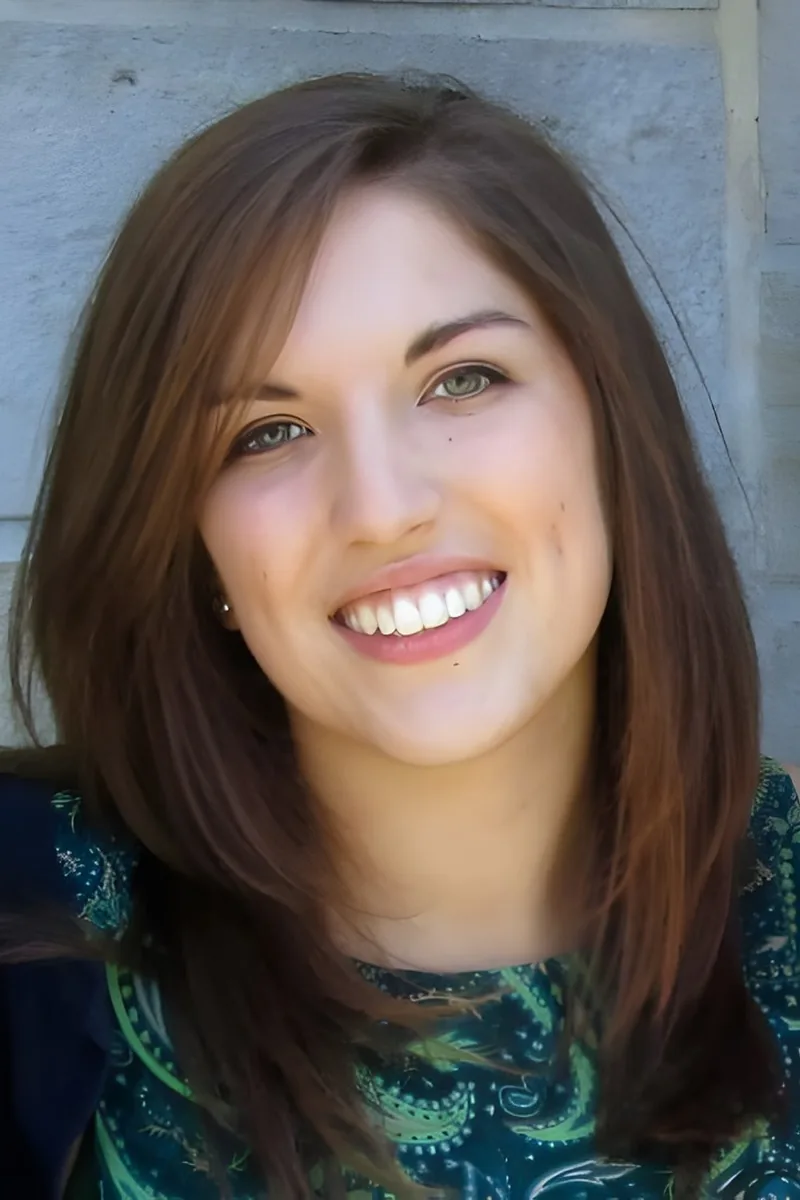
Studying chemical and biological engineering means Suzie has been stress-tested on gen chem material — thermodynamics, reaction kinetics, stoichiometry — in courses that demanded she actually use it to solve mass and energy balances, not just reproduce it on an exam. She's now pursuing an MD/PhD at Michigan Medical School, so she teaches college chemistry with a clear picture of how each concept threads into biochemistry, physiology, and beyond. Rated 5.0 by students.
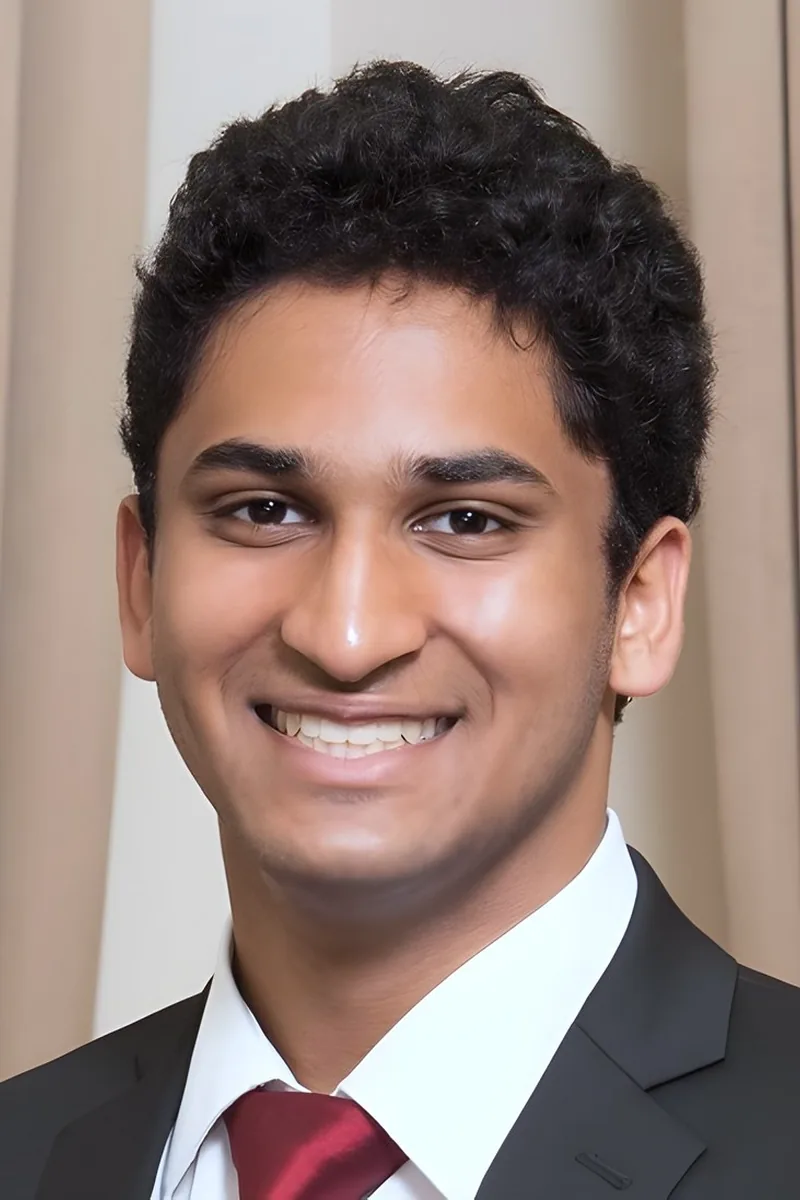
Organic mechanisms, thermodynamics, equilibrium — college chemistry covers an enormous range, and Pratik has tutored it extensively at both the high school and undergraduate level. He digs into the reasoning behind reaction trends and periodic properties so that students can predict behavior on exams rather than relying on memorized examples.
Dartmouth's pre-med track put Arianna through a rigorous gen chem sequence where topics like electronegativity, VSEPR theory, and solution stoichiometry had to stick — not just for exams, but for every upper-level neuroscience and biology course that followed. She teaches college chemistry by anchoring abstract ideas to the biological systems where they resurface, which clicks especially well for life-science majors who need a reason to care about electron configurations. Rated 4.8 by students.
Transitioning from high school to college chemistry means grappling with thermodynamics, equilibrium constants, and orbital theory at a much deeper level. Surina tackled these topics throughout her microbiology coursework at Barrett Honors College and knows where the conceptual gaps from general chem tend to show up in organic and biochemistry courses down the line.
I am a second year medical student at Wayne State University. I graduated from Grand Valley State University with two bachelor's degrees in Biomedical Sciences and Classics with a minor in Chemistry. I have been tutoring for four years in various subjects, but my favorites are Chemistry and Latin. I have experience tutoring from middle school to college age students and enjoy working with them one on one to identify their weaknesses and create a plan to rectify them. I believe that each student learns differently and finding the best strategies for them will lead to their success.
Heading to the University of Michigan to major in Mathematics, Phil brings serious quantitative chops to the parts of college chemistry that are really algebra in disguise — equilibrium expressions, rate law calculations, stoichiometric ratios, and gas law derivations. He also has hundreds of hours tutoring chemistry specifically, so he knows when a student's real problem is the concept and when it's the math tripping them up. That distinction matters in gen chem, where the two get tangled together fast.
Chemical engineering at UW-Madison meant Morgan didn't just take college chemistry — she relied on it daily through courses in reactor kinetics, mass transfer, and process thermodynamics, where sloppy understanding of equilibrium or enthalpy calculations would tank an entire problem set. That engineering context gives her a sharp eye for the specific conceptual gaps that cause students to lose points, especially in topics like solution stoichiometry and calorimetry where the chemistry and the math have to work in lockstep.
A PhD in Chemistry with research time at both Windsor and Cornell means Alaaeddeen has taught college chemistry topics — electron configurations, chemical kinetics, solution stoichiometry — across every level from introductory lectures to graduate seminars. He digs into the reasoning behind each step of a problem rather than letting students default to formula-plugging, a teaching approach he's refined since 2011. Rated 5.0 by students.
Pursuing a chemistry doctorate at the University of Michigan after completing his bachelor's at Truman State, Tyler has lived college chemistry from both sides of the classroom — learning the material and then teaching it at the undergraduate level. He's particularly sharp on the topics where students quietly fall behind, like electron configurations feeding into bonding theory or how equilibrium math depends on getting ICE tables set up correctly before touching the calculator. Rated 5.0 by students.
Biochemistry at Michigan meant Kirby didn't just take college chemistry — she kept using it, applying concepts like reaction thermodynamics, acid-base equilibria, and molecular interactions through upper-level coursework in organic chemistry, physical chemistry, and biochemistry. That layered exposure gives her a clear sense of which gen chem topics students need to truly internalize versus which ones they can afford to revisit later. Rated 4.9 by students.
Working as a research assistant in transplant surgery at Johns Hopkins School of Medicine, Jonathan applies chemistry daily — from understanding drug interactions to the biochemistry of tissue preservation. That hands-on lab experience means he can ground tricky gen chem topics like stoichiometry and solution chemistry in real scenarios rather than leaving them as abstract textbook exercises. Rated 5.0 by students.
Quantum numbers, molecular orbital theory, kinetics — college chemistry demands a level of abstraction that a general chemistry course only hints at. Vazrik earned his B.S. in Chemistry before moving into a materials science doctoral program, so he can walk through concepts like crystal field theory or electrochemistry with the depth of someone who applies them in active research.
I'm Yanti, a USC award-winning writing instructor, an emergency medicine continuing educator, and a biology major with a chemistry minor. For 36 years, I've taught students how to master difficult concepts across a very wide range of subjects. While I focus on professional licensing and standardized exam test prep, I've taught most major subjects at every level and ability. I love teaching, not lecturing. You will get information and techniques in any way that works for you: color-coded charts, visual mind maps, easy-to-memorize songs. Whatever the format, I break complex ideas into clear, doable steps that make sense to you. No fluff. No jargon. Just clarity, confidence, and even some fun. In our sessions, you get structure, support, and a coach who makes learning enjoyable and easy again. If you're ready to succeed, laugh a little, and learn a lot, please book a lesson. I'd love to work with you. Thank you!
I am passionate about. Throughout my education, even in elementary school, I would love helping my friends do better in their schooling, whether that be by just answering a few questions they had, some one-on-one time, or a group study session.
I am eternally grateful! I minored in Chemistry after getting interested in the inner workings of organic chemistry. While going to college I earned money by tutoring classes I had already taken. I also offered "supplemental instruction" which were informal classroom question and answer sessions. I worked in a research lab after earning an undergraduate research fellowship and explored Physiology at the School of Medicine. Then went on to study Toxicology at the University of Wisconsin, Madison. While there a decision appeared clear between focusing on research or teaching. I like teaching better. I truly enjoy spreading knowledge about Biology and Chemistry and finding fun ways to introduce people to these (often difficult) subjects.
Between his physics training and years of hands-on biochemistry research, Matthew tackles college chemistry from both the theoretical and applied sides. He's especially effective with thermodynamics, molecular orbital theory, and kinetics — topics where students often struggle to bridge lecture material and problem sets. His lab experience at Columbia gives him concrete examples that make abstract concepts like enthalpy and entropy click.
Eric holds a master's degree in inorganic chemistry, which means he can teach college chemistry topics like thermodynamics, electrochemistry, and coordination compounds from genuine research experience rather than rote textbook knowledge. He breaks down complex equilibrium and kinetics problems into logical steps that make the math feel manageable. Rated 5.0 by students.
Between a biochemistry degree and ongoing work in biochemical laboratories, Andrew has used gen chem concepts like reaction thermodynamics, molecular bonding, and acid-base chemistry as everyday tools — not just exam material he learned and forgot. He teaches college chemistry by grounding abstract ideas in the lab contexts where they actually behave, so topics like equilibrium constants and enthalpy changes carry physical meaning rather than just numerical answers. Rated 4.9 by students.
Thermodynamics, equilibrium constants, and reaction kinetics demand more than memorizing formulas — they require thinking about why a reaction proceeds the way it does. Garrett's coursework in physical chemistry and organic chemistry means he can unpack the energy landscapes and molecular interactions behind each concept. He connects general chemistry principles to their applications in biochemistry and physiology, which makes abstract ideas click faster.
Sung earned his B.S. in Chemistry, which means he can unpack topics like thermodynamics, equilibrium constants, and molecular orbital theory with real depth rather than surface-level definitions. He connects abstract concepts — like why Gibbs free energy determines spontaneity — to concrete problem-solving strategies that stick. Rated 5.0 by students.
Neuroscience at Yale meant David couldn't just skim gen chem — he needed concepts like electrochemistry, molecular bonding, and reaction thermodynamics to stick, because they showed up again in every neurobiology and biochemistry course that followed. Now pursuing graduate work in bioethics, he teaches college chemistry by linking each topic to the bigger scientific picture, so students see why mastering something like intermolecular forces or acid-base equilibria pays off well beyond the final exam. Rated 5.0 by students.
Chemical and biomolecular engineering at MIT means Natasha uses general chemistry concepts — equilibrium, kinetics, electrochemistry — as daily tools, not just exam topics. She talks through reaction mechanisms and stoichiometry problems out loud with students, treating each session more like a collaborative lab meeting than a lecture. Rated 4.9 by students.
Studying chemistry at Harvard while preparing for Columbia Medical School means James has taken college chemistry far past the introductory level — he knows which early concepts like electron configurations, VSEPR theory, and reaction stoichiometry quietly become load-bearing walls for everything from organic mechanisms to biochemical pathways. He teaches gen chem by flagging those high-stakes fundamentals early, so students aren't blindsided when later courses assume fluency. Rated 4.9 by students.
Samantha studied Chemistry & Chemical Biology at Cornell with a food science concentration, so she's tackled everything from organic reaction mechanisms to thermodynamics and spectroscopy at the college level. She teaches tricky concepts like equilibrium constants, electrochemistry, and molecular orbital theory by building visual models that connect the math to what's physically happening at the molecular scale.
Computer science at Cornell Engineering required Ravnoor to grind through the same rigorous gen chem sequence that gates so many STEM majors — and his 5.0 rating suggests he retained more than enough to teach it. He tackles calculation-dense topics like stoichiometry and gas laws by decomposing them the way a programmer would: isolate the variables, track the units, and debug each step before moving forward.
Forty-plus students tutored in general and AP Chemistry, a bachelor's in chemistry, and a master's in environmental toxicology — Amy has seen college-level chemical concepts from the classroom side and the research side, where sloppy equilibrium reasoning or shaky thermodynamics understanding actually costs you results. She walks through problems like calorimetry, solution preparation, and reaction stoichiometry with an emphasis on dimensional analysis and unit tracking, which is where most gen chem mistakes quietly start. Rated 5.0 by students.
Engineering coursework at Harvard means Christopher regularly uses chemistry concepts like thermodynamics, equilibrium, and reaction kinetics in applied settings. He teaches college chemistry by connecting abstract ideas — say, Gibbs free energy or electrochemical cells — to tangible problems, making the material easier to internalize before exams.
Testimonials
Because the right College Chemistry tutor makes all the difference.
Average Session Rating – Based on 3.4M Learner Ratings
Other Grand Rapids Tutors
Related Science Tutors in Grand Rapids
Frequently Asked Questions
College Chemistry students often struggle with balancing chemical equations, mastering unit conversions, and connecting abstract molecular concepts to real-world applications. Many students also find it challenging to move beyond memorization to develop true conceptual understanding—especially when it comes to equilibrium, thermodynamics, and reaction mechanisms. Personalized 1-on-1 instruction helps break down these complex topics and build the problem-solving skills needed to succeed.
Absolutely. Tutors can help you understand the scientific method, interpret lab results, and connect experimental observations to theoretical concepts. Whether you're struggling with data analysis, report writing, or understanding why an experiment produced unexpected results, personalized instruction helps you develop stronger scientific reasoning skills and perform more confidently in the lab.
Many College Chemistry concepts—like molecular geometry, electron configurations, and reaction mechanisms—are inherently abstract and difficult to picture. Tutors use diagrams, models, and step-by-step explanations to make these concepts tangible and easier to understand. This visual approach helps you build mental models that make problem-solving and exam preparation much more effective.
Your first session focuses on understanding your current level, identifying specific challenges, and learning your learning style. Tutors will assess which topics are giving you the most trouble—whether that's stoichiometry, acid-base chemistry, or something else—and create a personalized plan to address those gaps. This foundation ensures every session after that is tailored to your needs.
Balancing equations is a foundational skill that trips up many College Chemistry students. Tutors break down the process into manageable steps, help you recognize patterns, and give you plenty of practice with immediate feedback. Once you understand the underlying logic rather than just memorizing rules, balancing becomes much more intuitive and you'll be able to tackle even complex equations with confidence.
Tutors help you review key concepts, work through practice problems similar to what you'll see on exams, and identify weak areas before test day. They also teach you problem-solving strategies and help you manage test anxiety by building your confidence through targeted practice. This combination of content review and strategic preparation typically leads to measurable score improvements.
Varsity Tutors connects you with expert tutors who understand College Chemistry curriculum and can provide personalized 1-on-1 instruction tailored to your schedule and learning style. Simply share your goals and availability, and we'll match you with a tutor ready to help you master the material and build your chemistry skills.
College Chemistry exams test your ability to apply concepts to new problems, not just recall facts. If you only memorize, you'll struggle when you encounter unfamiliar questions or need to connect multiple concepts. Personalized tutoring emphasizes deep understanding and problem-solving strategies, which means you'll be better prepared for exams, future chemistry courses, and real-world applications of chemistry in your field.
Let’s find your perfect tutor
Answer a few quick questions. We’ll recommend the right plan and match you with a top 5% tutor.