Award-Winning AP Chemistry Tutors
serving Grand Rapids, MI
AP Chemistry
Tutors in Grand Rapids
Private 1-on-1 tutoring, weekly live classes for academic support, test prep & enrichment, practice tests and diagnostics, and more to elevate grades and test scores.
Based on 3.4M Learner Ratings
UniversitiesSchools & Universities
DeliveredHours Delivered
ProficiencyGrowth in Proficiency
Who needs tutoring?
No obligation. Takes ~1 minute.
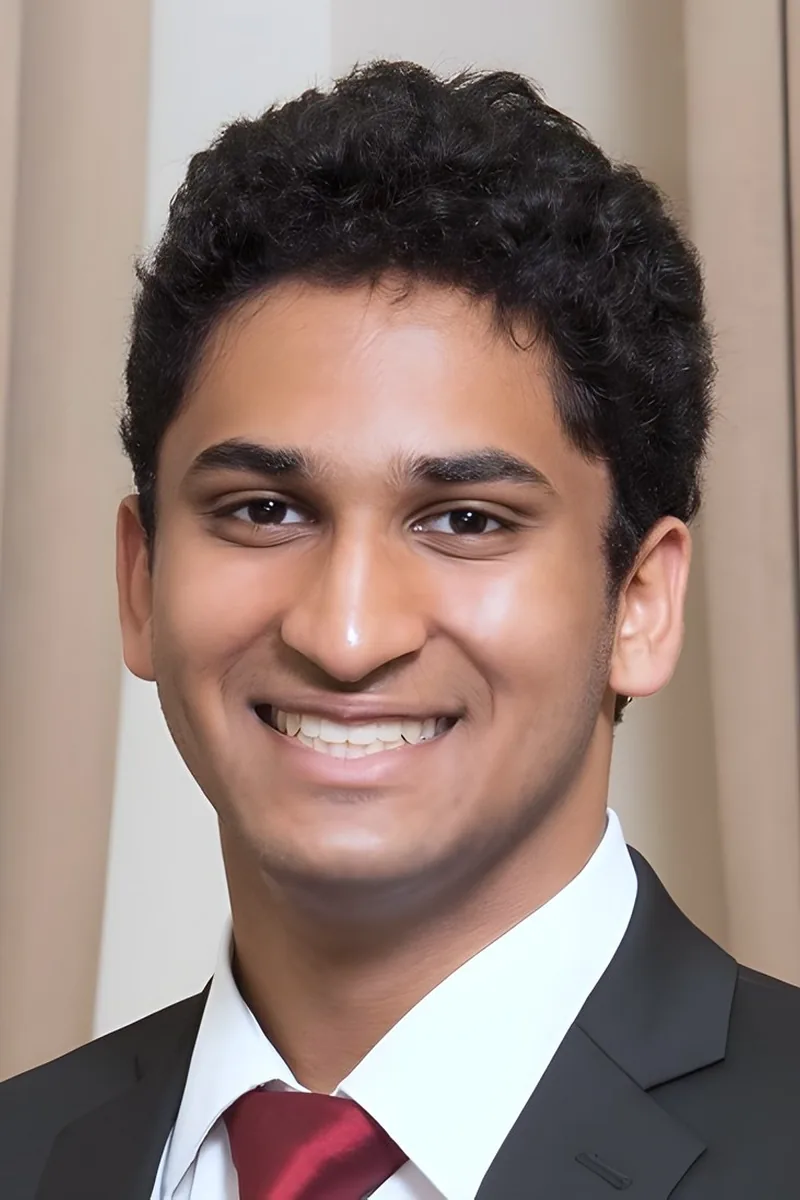
Pratik's strongest subject is chemistry, and it shows — he tutors it at both the high school and college level from his home base as a premed biology major at Cornell. He digs into the conceptual logic behind equilibrium, thermodynamics, and electrochemistry so that students can reason through unfamiliar free-response prompts instead of relying on memorized shortcuts.

Raveena's bioinformatics degree at VCU means she doesn't just know AP Chemistry's content — she applies it daily, using computational tools to analyze molecular structures and chemical data in ways that make topics like electron configuration and periodic trends feel concrete. Her 8-year direct med program has taken her well beyond the AP curriculum through organic chemistry and biochemistry, giving her a clear picture of which foundational concepts the free-response section rewards most. Rated 4.9 by students.
I am a undergraduate freshman of the University of Michigan, studying business at the Ross School of Business. Working together with students and having a good time while seeing steady improvements has proven to provide me great joy. I believe that communication and relationship building is crucial for students to open up about their struggles and also for me to identify problems they don't realize they can improve on, so this is a key aspect of all of my lessons. During my free time, I enjoy playing sports or snacking on desserts while binge-watching Friends!
I am a second year medical student at Wayne State University. I graduated from Grand Valley State University with two bachelor's degrees in Biomedical Sciences and Classics with a minor in Chemistry. I have been tutoring for four years in various subjects, but my favorites are Chemistry and Latin. I have experience tutoring from middle school to college age students and enjoy working with them one on one to identify their weaknesses and create a plan to rectify them. I believe that each student learns differently and finding the best strategies for them will lead to their success.
Biology majors at Michigan often underestimate how much AP Chemistry overlaps with what they're already learning — Krisha didn't, and her coursework in general biology gave her a working fluency with chemical bonding, solution chemistry, and the thermodynamic principles that drive biological systems. She teaches AP Chem's trickiest conceptual leaps, like why Le Chatelier's principle actually predicts what it predicts, by unpacking the molecular reasoning instead of handing students a shortcut to memorize. Rated 5.0 by students.
Thermochemistry, equilibrium constants, electrochemical cells — AP Chemistry demands that students think quantitatively about reactions, not just balance them. Carly earned her degree in industrial engineering, which means stoichiometry and energy calculations are second nature to her. She teaches students to map out multi-step problems before touching a calculator, a strategy that pays off on both the multiple-choice and free-response sections.
Few AP Chemistry tutors have actually conducted graduate-level research at both Windsor and Cornell, which means Alaaeddeen can unpack equilibrium, thermodynamics, and kinetics with the depth the AP exam demands. He knows exactly where the free-response questions test conceptual understanding versus calculation, and he drills both. His 5.0 rating speaks to how clearly he communicates even the trickiest material.
Between earning a biochemistry degree magna cum laude from UMBC and completing three years of medical school at Michigan, Uchenna has worked through every layer of chemistry that AP students encounter — and then watched those same principles reappear in pharmacology and pathophysiology. He digs into topics like electrochemistry and reaction thermodynamics by showing how the math connects to molecular behavior, drawing on the kind of deep conceptual fluency that comes from years of teaching peers through complex material. Rated 4.9 by students.
Kirby's biochemistry degree from the University of Michigan means she didn't just pass through general and organic chemistry — she built on those courses through upper-level work where concepts like thermodynamics, kinetics, and molecular structure had to be second nature. She unpacks AP Chemistry's trickiest areas, particularly equilibrium and acid-base problems, by connecting the math to the molecular behavior driving it. Rated 4.9 by students.
Chemical engineering graduate work means Raha has spent years inside the thermodynamics, kinetics, and equilibrium problems that form AP Chemistry's most demanding units — not as textbook exercises, but as tools for designing real reactors and separation processes. She unpacks concepts like Gibbs free energy and Le Chatelier's principle by showing students the industrial logic behind them, which makes the abstract math feel purposeful and easier to retain.
Tyler is working toward a chemistry doctorate at the University of Michigan, which means he's teaching and studying the exact college-level material — kinetics, thermodynamics, electrochemistry — that AP Chemistry condenses into a single high school year. He unpacks tough quantitative concepts like ICE tables and calorimetry by connecting the math to what's physically happening in solution, so the logic sticks long after the exam. Rated 5.0 by students.
Pursuing a dual degree in Movement Science and Biopsychology, Cognition and Neuroscience at the University of Michigan, Vikhyathi has taken the rigorous college-level chemistry sequence where topics like periodic trends, bonding theory, and intermolecular forces aren't abstract — they're the foundation for understanding how drugs interact with neural receptors. She leverages that context to teach AP Chemistry's conceptual side, particularly molecular geometry and electron configuration, by connecting what's on paper to what's happening at the atomic level. Her 35 ACT speaks to the analytical precision she brings to quantitative problem-solving on exam day.
I'm Yanti, a USC award-winning writing instructor, an emergency medicine continuing educator, and a biology major with a chemistry minor. For 36 years, I've taught students how to master difficult concepts across a very wide range of subjects. While I focus on professional licensing and standardized exam test prep, I've taught most major subjects at every level and ability. I love teaching, not lecturing. You will get information and techniques in any way that works for you: color-coded charts, visual mind maps, easy-to-memorize songs. Whatever the format, I break complex ideas into clear, doable steps that make sense to you. No fluff. No jargon. Just clarity, confidence, and even some fun. In our sessions, you get structure, support, and a coach who makes learning enjoyable and easy again. If you're ready to succeed, laugh a little, and learn a lot, please book a lesson. I'd love to work with you. Thank you!
Earning High Honors in chemistry while tutoring the subject through NHS gave Shobhna a dual perspective — she knows both where the content gets difficult and how to reshape explanations until they land. As an incoming Michigan State freshman, she's especially sharp on the foundational AP Chemistry topics like periodic trends, nomenclature, and stoichiometric setups that students need locked down before tackling the exam's more complex free-response questions.
Cornell's biology curriculum required Viraj to work through college-level chemistry — from reaction energetics to molecular interactions — in courses where chemical reasoning underpins everything from cellular metabolism to pharmacology. He applies that cross-disciplinary perspective to AP Chemistry topics like intermolecular forces and solution chemistry, teaching students to predict behavior at the molecular level instead of memorizing isolated rules. Rated 5.0 by students.
Equilibrium calculations and thermodynamics tend to be the units where AP Chemistry separates students who understand the 'why' from those running on memorized procedures. Sharan digs into the conceptual logic behind Le Chatelier shifts and Gibbs free energy so that quantitative problems feel like extensions of ideas, not isolated formulas. Her premed science background at Cornell keeps her sharp on exactly the kind of rigorous problem-solving the AP exam rewards.
Cornell's engineering curriculum put Ravnoor through rigorous college-level chemistry, and his computer science training sharpened the algorithmic thinking that pays off when students need to systematically work through multi-step problems like limiting reagent calculations or electrochemical cell setups. He teaches AP Chemistry's quantitative sections by treating each problem like a debugging exercise — isolating variables, checking units at every step, and building toward answers methodically rather than jumping to formulas. Rated 5.0 by students.
Equilibrium expressions, thermodynamics, and electrochemistry all demand comfort with both conceptual reasoning and quantitative precision. JF's math and computational science background at Stanford makes the mathematical side of AP Chem — ICE tables, rate law calculations, stoichiometric conversions — second nature, freeing up mental energy for the deeper conceptual understanding the exam rewards. Rated 5.0 by students.
Five semesters as a chemistry teaching assistant — three in general chemistry and two in organic — gave Troy a front-row seat to exactly where AP Chemistry students get stuck: equilibrium calculations, thermodynamics sign conventions, and electron configuration exceptions. He tackles these pain points by tying abstract rules back to the periodic trends and mathematical logic that govern them.
The jump from honors chemistry to AP Chemistry catches students off guard because suddenly they need to explain *why* — why equilibrium shifts, why certain reactions are spontaneous, why atomic structure dictates bonding behavior. Cassandra tackles these conceptual layers by tying each unit back to the underlying thermodynamic and kinetic principles, so students aren't just memorizing trends but understanding the logic that drives them. Her science degree and experience with analytical chemistry give her depth well beyond the AP curriculum.
AP Chemistry's free-response questions demand more than memorizing reactions — they require students to connect equilibrium, thermodynamics, and kinetics into coherent explanations under time pressure. Vishank's data analytics background at Ohio State sharpens how he breaks down multi-step problems, teaching students to identify what the question is really testing before diving into calculations. Rated 4.9 by students.
I have over two years of tutoring and teaching experience at Case Western Reserve University. I served as a Supplemental Instructor for ENGR 145 (Chemistry of Materials), where I created worksheets, led review sessions, and helped students develop strong conceptual foundations. I later worked as a Teaching Assistant for ENGR 210 (Circuits and Instrumentation), grading assignments and assisting students with hands-on circuit building and lab work. As a Biomedical Engineering major on the pre-med track, I specialize in tutoring pre-health and engineering courses, including General and Physical Chemistry, Math, Biology, Physics, and Anatomy and Physiology. I also provide MCAT preparation in the B/B, C/P, and P/S sections. My teaching approach focuses on clear explanations, active problem-solving, and adapting to each student's learning style. I strive to make challenging material approachable while helping students build confidence and independent learning skills.
Forty-plus AP and general chemistry students have worked through thermodynamics, electrochemistry, and equilibrium calculations with Amy, and her 5.0 rating speaks to the results. Her master's in environmental toxicology keeps her deeply connected to the material — she teaches AP concepts like Gibbs free energy and kinetics as tools scientists actually use, not just formulas to memorize for the exam.
Teaching 12th grade Chemistry at a high-performing Philadelphia magnet school means Kathleen sees exactly which AP Chemistry concepts — from equilibrium reasoning to periodic trends — trip students up on exams, and she's built classroom-tested strategies for each one. Her Penn M.S.Ed in Secondary Science Education and her chemistry degree give her both the content depth and the pedagogical training to explain why a reaction proceeds the way it does, not just how to get the right answer. Rated 5.0 by students.
Cornell's environmental engineering program requires a chemistry sequence heavy on aqueous equilibria, redox reactions, and thermodynamics — exactly the content that dominates AP Chemistry's most demanding free-response questions. Akanksha draws on that coursework plus her experience teaching chemistry through Cornell's STEP program to walk students through topics like acid-base titrations and reaction energetics with real-world environmental applications that make the material stick. Rated 4.8 by students.
Equilibrium, thermodynamics, and reaction kinetics aren't abstract concepts for Kristen — they were daily tools in her chemical-biological engineering coursework. She teaches AP Chemistry by connecting each unit back to underlying principles, so students can reason through unfamiliar free-response questions instead of relying on memorized shortcuts. Rated 4.9 by students.
Testimonials
Because the right AP Chemistry tutor makes all the difference.
Average Session Rating – Based on 3.4M Learner Ratings
Practice AP Chemistry
Free practice tests, flashcards, and AI tutoring for AP Chemistry
Other Grand Rapids Tutors
Related Science Tutors in Grand Rapids
Frequently Asked Questions
Score improvement depends on your starting point and how consistently you engage with tutoring. Most students who work with a tutor see meaningful gains—typically moving up one score level (e.g., from a 2 to a 3, or a 3 to a 4) within a few months of regular sessions. The key is identifying your specific weak areas early—whether that's equilibrium calculations, thermodynamics, or organic chemistry—and building targeted practice around those topics. Varsity Tutors connects you with tutors who can diagnose gaps quickly and create a focused study plan.
Yes. AP Chemistry tutoring covers all eight units of the current AP Chemistry curriculum, from atomic structure and bonding through organic chemistry and thermodynamics. Expert tutors work with you on both the conceptual understanding and the problem-solving skills the exam requires. They'll also help you master the AP Chemistry exam format—including multiple-choice questions, free-response problems, and lab-based questions—so you're confident on test day.
Many students struggle with stoichiometry and limiting reagent problems early in the course, then hit a wall with equilibrium calculations and acid-base chemistry. Organic chemistry often feels overwhelming because it requires memorizing reaction mechanisms and predicting products. Time management is another big challenge—the exam moves quickly, and students often run out of time on free-response questions. A tutor can slow down the toughest concepts, build your problem-solving speed through targeted practice, and teach you strategies for tackling unfamiliar question types under pressure.
Beyond content mastery, expert tutors teach you how to approach the exam strategically. This includes pacing techniques for the multiple-choice section (knowing when to skip and come back), how to structure free-response answers to earn maximum points, and how to read questions carefully to avoid careless mistakes. Tutors also use practice tests to identify patterns in your errors—whether you're rushing, misunderstanding concepts, or struggling with specific question formats—so you can fix them before the real exam.
Practice tests are essential. They help you get comfortable with the exam format, build stamina for the full 3-hour test, and reveal exactly where you need to focus. Most students benefit from taking full-length practice tests every 2-3 weeks as they prepare, then reviewing each one carefully to understand why they missed questions. Tutors use practice test results to guide your study plan—pinpointing whether you need more conceptual review, more calculation practice, or better test-taking strategies.
Ideally, tutoring works best when you start in the fall or early winter before the May exam, giving you 4-6 months to build understanding and practice. However, even starting in spring can help if you focus on your weakest units and practice tests. If you're currently taking AP Chemistry, tutoring throughout the course helps you master difficult concepts as they come up, which makes exam prep in the spring much less stressful. Varsity Tutors can connect you with a tutor who can work with your timeline and current level.
Expert tutors working with Varsity Tutors have strong chemistry backgrounds—many hold degrees in chemistry, biochemistry, or related sciences, and many have teaching experience or have scored well on the AP Chemistry exam themselves. They understand both the content and the exam format, so they can teach you not just chemistry concepts but also how to apply them under test conditions. When you connect with a tutor, you can review their qualifications and experience to find the right fit for your needs.
Your first session is focused on assessment and planning. The tutor will ask about your current AP Chemistry course progress, review your recent test scores or assignments, and identify which units or topics are most challenging for you. Together, you'll discuss your goals—whether you're aiming for a 3, 4, or 5—and create a personalized study plan with a timeline. This foundation ensures that every session after that is targeted and efficient, addressing exactly what you need to improve.
Let’s find your perfect tutor
Answer a few quick questions. We’ll recommend the right plan and match you with a top 5% tutor.