Award-Winning Calculus Tutors
serving Grand Rapids, MI
Calculus
Tutors in Grand Rapids
Private 1-on-1 tutoring, weekly live classes for academic support, test prep & enrichment, practice tests and diagnostics, and more to elevate grades and test scores.
Based on 3.4M Learner Ratings
UniversitiesSchools & Universities
DeliveredHours Delivered
ProficiencyGrowth in Proficiency
Who needs tutoring?
No obligation. Takes ~1 minute.
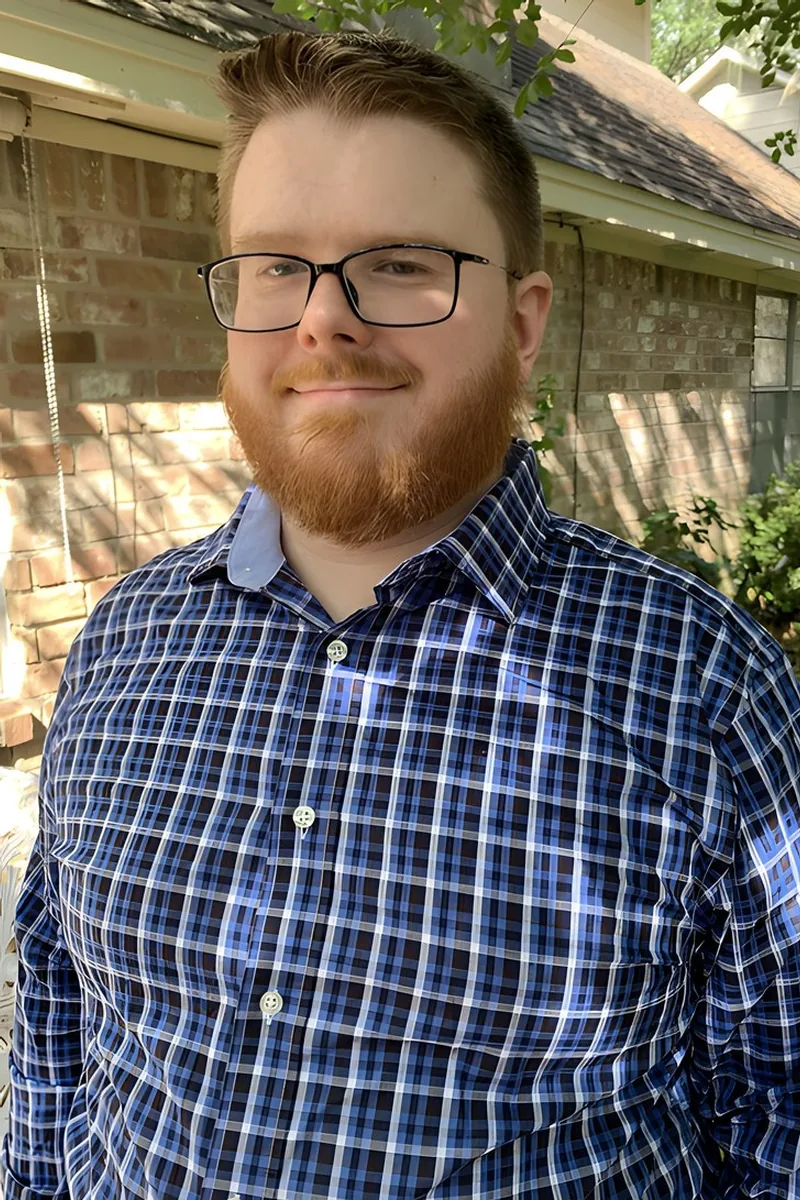
Physics runs on calculus — every force equation, every orbital trajectory, every electromagnetic field Michael studied through his PhD required fluency with integrals, derivatives, and differential equations. That constant application means he teaches calculus not as abstract symbol manipulation but as a toolkit that actually describes how things move, change, and interact. He's especially sharp on multivariable calculus and vector calculus, the areas where most students first feel lost.

Skyler's graduate work is in Russian and Eurasian studies, not mathematics, so calculus sits well outside her academic home — but a 1510 SAT demonstrates she can reason through quantitative material with precision. Her tutoring spans math and science alongside her humanities work, and she brings a language-learner's instinct for decoding unfamiliar notation, which is exactly what trips up most students encountering limits and derivatives for the first time.
Martha's quantitative background in psychology and global health research gave her steady practice with the calculus concepts that trip students up most — derivatives in the context of rates of change, integration for area problems, and the chain rule applied across composite functions. She approaches each topic by connecting the mechanics of problem-solving to the intuition behind them.
Engineering coursework at Yale means Megan uses calculus daily — derivatives, integrals, and differential equations aren't just textbook exercises for her but tools she applies to real problems in fluid dynamics and environmental modeling. She breaks down tricky concepts like the chain rule or integration by parts by connecting each step to a visual or physical intuition that makes the logic stick.
Sophia's degree is in English at Yale, not mathematics, so she's straightforward that calculus isn't her primary lane. That said, her perfect 36 ACT composite reflects genuine quantitative ability, and her approach to close reading — dissecting how each piece of an argument builds on the last — maps surprisingly well onto unpacking the logic of limits and early derivative rules.
Biology coursework at the undergraduate level means Israa has worked through calculus in the context of growth curves, enzyme kinetics, and rate-dependent systems where derivatives describe real biological behavior. Her chemistry certification adds another layer — reaction rates and concentration changes are fundamentally calculus problems. That dual science background lets her ground abstract rules like the chain rule or integration techniques in tangible examples students can actually picture.
Chemical and biological engineering at the undergraduate level means Suzie didn't just take calculus — she used it daily, solving differential equations for reaction kinetics, modeling heat transfer, and optimizing process flows where integrals and derivatives were the working language. That engineering fluency lets her teach concepts like the chain rule or integration by parts with the confidence of someone who's applied them under pressure, not just studied them for an exam. Rated 5.0 by students.
Limits, derivatives, and integrals each demand a different kind of thinking, and rushing past one concept creates cracks in everything that follows. Rebecca's certified math teaching background means she approaches calculus the way she built up her students in Detroit — making sure each layer of reasoning is solid before adding the next.
Derivatives and integrals finally make sense when a student sees them as tools for measuring change and accumulation in real systems. Ashley used calculus constantly during her civil engineering studies at Michigan — computing stress distributions, flow rates, and load curves — and she unpacks each concept by tying it back to tangible problems that give the math a purpose.
Studying mechanical engineering at Yale means Andrew doesn't just remember calculus — he uses integration techniques, differential equations, and multivariable concepts in his coursework every week. That constant practice gives him an intuitive sense for where students get stuck, whether it's visualizing solids of revolution or setting up a tricky u-substitution. He teaches the reasoning behind each method so students can adapt when problems don't look like the examples.
Linguistics training builds an unexpected skill for calculus: the ability to see structure inside complexity. Nicole's MA in Education and BA in Linguistics mean she approaches derivatives and limits by breaking down the symbolic language of calculus itself — treating notation as something to decode and internalize, not just memorize. Rated 4.9 by students, she brings that same pattern-recognition instinct to walking through problems step by step.
Lulu's accounting career meant living in the quantitative world where calculus concepts like optimization and rate-of-change analysis drive real financial decisions — from cost modeling to marginal revenue calculations. Her Harvard education degree adds a teaching dimension to that quantitative fluency, so she can unpack the reasoning behind derivatives and integrals rather than just demonstrating the mechanics.
Philosophy PhD training is essentially an exercise in formal logic — constructing rigorous proofs, following chains of reasoning to precise conclusions, and identifying exactly where an argument breaks down. Anthony applies that same structural discipline to calculus, walking through the logical scaffolding behind limits and derivatives so each step follows necessarily from the last. It's an approach that makes the *why* behind the rules as clear as the *how*.
A chemistry degree means David spent semesters immersed in the calculus that underpins reaction rates, enthalpy curves, and thermodynamic modeling — territory where derivatives and integrals aren't abstract exercises but tools for describing how systems actually change. His engineering background layers on optimization and differential equations, so he can walk through everything from chain rule mechanics to applied integration problems with real technical context. Rated 4.9 by students.
Pre-med at Cornell means Pratik didn't just take calculus — he relied on it, using derivatives to model reaction rates in chemistry and integrals to analyze biological systems where accumulation and change are the whole point. A 1550 SAT and 35 ACT back up that quantitative fluency, and his approach leans on connecting each new rule to the science problems that make it feel necessary rather than arbitrary.
Business administration coursework gave Eric hands-on experience with the calculus that drives economic decision-making — marginal analysis, optimization problems, and the derivative logic behind cost and revenue curves. His 36 ACT composite confirms he can handle the quantitative rigor, and he teaches the material by connecting each rule back to the business intuition that makes it stick.
Economics coursework lives and breathes calculus — marginal cost, marginal revenue, and consumer surplus are all derivative and integral problems in disguise. Rae's economics degree means she learned calculus not as abstract symbol manipulation but as the engine behind optimization and equilibrium, which gives her a practical vocabulary for explaining what a derivative actually represents. Her 33 ACT composite confirms the quantitative chops to back that up.
Studying bioinformatics and minoring in mathematics at VCU means Raveena uses calculus regularly — from modeling biological data to working through differential equations in coursework. She unpacks limits, derivatives, and integration techniques by tying abstract rules back to what they actually represent graphically and practically.
Mechanical engineering at Penn State means Ashley lives in calculus daily — from modeling heat transfer with integrals to applying differential equations to fluid dynamics problems. She breaks down concepts like limits, derivatives, and integration techniques by connecting them to tangible, real-world scenarios that make abstract ideas click.
Mechanical engineering runs on calculus — from computing moments of inertia to modeling fluid dynamics — so Lane didn't just study derivatives and integrals in a classroom; he applied them constantly. He digs into the conceptual meaning behind techniques like the chain rule, related rates, and Riemann sums so that problem-solving feels like reasoning rather than recipe-following.
Between biology coursework and medical school, Ruth has used calculus repeatedly in applied settings — enzyme kinetics, drug absorption curves, and the rate-of-change math that underpins physiology. She graduated summa cum laude with her biology degree, which means she didn't just survive calculus; she internalized it well enough to keep building on it through increasingly quantitative material. That depth lets her teach integration and differentiation as tools with real purpose, not just abstract procedures.
Biochemistry at Michigan means Ajay didn't just take calculus — he kept using it, working through enzyme kinetics, reaction rate equations, and the quantitative reasoning that underpins physical chemistry and organic chemistry coursework. That ongoing exposure gives him a practical grip on derivatives and integrals that goes beyond the standard calc sequence, and a 34 ACT composite confirms the quantitative chops to back it up.
Chemistry majors at Michigan don't just take calculus — they use it constantly, from reaction rate equations to thermodynamic integration and entropy calculations. Sreya brings that applied fluency to her tutoring, connecting derivative and integral rules to the quantitative problem-solving she does in her own coursework every week. Rated 5.0 by students.
I am a learner for life and I love sharing my knowledge with others. I have tutored middle-school students for one year and university students for two years. My focus is mainly on mathematics, chemistry, and related fields. I have degrees in both mathematics and biomedical engineering so I cover a lot of ground in the physiological sciences, computer programming, and statistics as well. Taking tests is one of my strong points and I have some killer strategies to share!
Megan's undergraduate biology degree at the University of Michigan required heavy calculus coursework — differential equations, integration techniques, and modeling biological systems with continuous functions. That science-meets-math background means she can explain concepts like the chain rule or area under a curve using concrete, real-world applications rather than purely abstract notation.
An English major and master's in Educational Studies won't fool anyone into thinking calculus is Joanne's wheelhouse — but her 1450 SAT shows she's comfortable with quantitative reasoning, and her real skill is in teaching people how to read and decode unfamiliar material. That translates surprisingly well to early calculus, where students often struggle less with the math itself than with parsing what a limit expression or derivative notation is actually asking them to do.
Earning a PhD requires the kind of rigorous analytical thinking that translates surprisingly well to unfamiliar territory — Eric's doctoral training in history built his ability to break complex, multi-step reasoning into logical sequences, which is exactly what early calculus demands. He's upfront that math isn't his primary discipline, but he can walk through limits and introductory derivative concepts by treating each problem the way he'd treat a historical argument: one carefully justified step at a time.
Biomedical engineering at Michigan means Nikhil didn't just take calculus — he used it daily, modeling fluid dynamics in biological systems, analyzing signal processing data, and solving the differential equations that describe how medical devices interact with the body. That applied fluency lets him teach integration techniques and derivative rules by connecting them to problems where the math actually does something. Rated 5.0 by students.
I am a undergraduate freshman of the University of Michigan, studying business at the Ross School of Business. Working together with students and having a good time while seeing steady improvements has proven to provide me great joy. I believe that communication and relationship building is crucial for students to open up about their struggles and also for me to identify problems they don't realize they can improve on, so this is a key aspect of all of my lessons. During my free time, I enjoy playing sports or snacking on desserts while binge-watching Friends!
Psychology research leans on statistics, but Audrey's 35 ACT composite shows she handles the quantitative reasoning that underpins calculus just as comfortably. She tackles early derivative and integration problems by connecting them to the kind of rate-of-change thinking that shows up in behavioral data analysis — how a response curve accelerates, peaks, and levels off.
Business students at Michigan Ross don't just encounter calculus in a math class — they use it to optimize profit functions, analyze marginal cost, and model revenue curves. Kerry's BBA coursework means she can walk through derivatives and integrals with those real-world business applications ready to go, turning abstract rules into decisions about pricing, production, and growth. Her 33 ACT composite backs up the quantitative chops behind that approach.
Engineering programs throw students into calculus-heavy coursework from day one, so Douglas didn't just learn derivatives and integrals — he applied them constantly to fluid dynamics, thermodynamics, and structural analysis. That applied perspective makes him especially effective at unpacking concepts like the chain rule, related rates, and integration techniques in ways that actually make sense.
An honors mathematics major at Notre Dame, Matthew is studying calculus at the theoretical level — not just computing derivatives and integrals but understanding the epsilon-delta definitions and proof techniques underneath them. That depth lets him explain the chain rule or the fundamental theorem of calculus in multiple ways until the reasoning genuinely lands. Rated 4.9 by students.
Two degrees in Biomedical Engineering from Michigan meant Jack spent years applying calculus to real problems — modeling fluid dynamics in blood vessels, optimizing system behavior, analyzing rates of change in biological processes. He brings that fluency to teaching integration techniques, series convergence, and multivariable concepts, connecting each method to a reason it exists. Students walk away understanding the calculus, not just surviving it.
Computer science at Carleton means Henry has used calculus as a working tool — analyzing algorithm runtimes with limits, optimizing functions in machine learning models, and applying integrals in probability distributions. That gives him a programmer's intuition for derivatives and summation that makes the material feel like problem-solving rather than abstract symbol-pushing.
Three science degrees — including neuroscience — mean Arianna has actually used calculus to solve real problems: modeling neural signal propagation, analyzing rates of membrane potential change, and interpreting the exponential decay curves that describe synaptic transmission. That hands-on fluency with derivatives and integrals in biological contexts lets her ground abstract rules in systems students can visualize. Rated 4.8 by students.
Business administration coursework at Michigan Ross covers optimization, marginal analysis, and cost modeling — all of which require fluency with derivatives and their applications. Jason brings that quantitative business lens to calculus tutoring, connecting rules like the power rule and chain rule to problems about maximizing profit or minimizing cost so the math has a clear purpose. Rated 4.7 by students.
Eva's degree is in English at Harvard, not mathematics, so she's straightforward that calculus isn't her primary lane — but a 35 ACT composite shows she can handle serious quantitative reasoning when the situation calls for it. She approaches early concepts like limits and derivative rules the way she'd approach a dense passage: methodically, one layer at a time, making sure the underlying logic is clear before moving forward.
Medical school runs on calculus — Naveena uses derivatives to model drug absorption rates and integrals to interpret physiological curves, so she teaches these tools with the fluency of someone who applies them daily. She's particularly sharp at spotting the algebra and trig gaps that cause students to stall out mid-problem, then patching those before moving forward.
Three separate bachelor's degrees means Sierra has spent a lot of time in college classrooms, including the general education math sequences that build toward calculus — limits, continuity, and the logic of how functions behave. Her strength is in the communication side: translating dense notation into plain English so that a derivative definition or integration setup actually reads like a sentence with meaning, not just symbols on a page.
Testimonials
Because the right Calculus tutor makes all the difference.
Average Session Rating – Based on 3.4M Learner Ratings
Other Grand Rapids Tutors
Related Math Tutors in Grand Rapids
Frequently Asked Questions
Many students struggle with the transition from algebra and precalculus to the conceptual thinking that Calculus requires. Common pain points include understanding limits and continuity, mastering derivative and integral concepts, tackling word problems that require translating real-world scenarios into mathematical models, and connecting visual graphs to symbolic equations. Personalized tutoring helps students build these conceptual bridges rather than just memorizing procedures.
Your first session is focused on understanding your specific needs and learning style. A tutor will assess your current understanding of precalculus foundations, identify where gaps might exist, and learn about your goals—whether you're aiming for a strong grade, AP exam preparation, or college readiness. This personalized approach ensures the tutoring plan is tailored to you from day one.
Showing work isn't just about getting points—it reveals your thinking process and helps identify exactly where misunderstandings occur. Tutors work with you to develop clear problem-solving strategies, explain the 'why' behind each step, and practice articulating your mathematical reasoning. This builds both confidence and the communication skills colleges and employers value.
Word problems require translating English into mathematical language—a skill many students find challenging. Tutors teach you to break problems into manageable pieces, identify what information is relevant, set up equations or integrals correctly, and check whether your answer makes sense in context. With practice and guided problem-solving strategies, word problems become less intimidating.
Yes. Grand Rapids schools use various approaches and textbooks, and tutors are experienced working across different curricula—whether your course emphasizes traditional Calculus, AP Calculus AB/BC, or IB Higher Level Math. Tutors align their instruction with your specific course materials and teaching style, ensuring consistency between classroom and tutoring sessions.
Absolutely. Math anxiety is common, especially in advanced courses like Calculus, but personalized tutoring in a low-pressure environment helps rebuild confidence. Working one-on-one allows you to ask questions without hesitation, move at your own pace, and celebrate small wins. As you understand concepts more deeply and see patterns emerge, anxiety typically decreases and confidence grows.
Calculus is deeply interconnected—derivatives and integrals are inverses, limits underpin everything, and applications tie theory to the real world. Tutors help you move beyond isolated procedures to see these relationships. By connecting new concepts to what you already know and showing how topics build on each other, you develop a coherent understanding that makes problem-solving easier and more intuitive.
Varsity Tutors connects you with expert tutors who have strong backgrounds in Calculus and experience teaching students in Grand Rapids. The matching process considers your learning style, schedule, and specific goals—whether you need exam prep, homework help, or conceptual review. You'll work with someone whose expertise and teaching approach align with your needs.
Let’s find your perfect tutor
Answer a few quick questions. We’ll recommend the right plan and match you with a top 5% tutor.