Award-Winning Further Mathematics
Tutors
Further Mathematics
Tutors
Private 1-on-1 tutoring, weekly live classes for academic support, test prep & enrichment, practice tests and diagnostics, and more to elevate grades and test scores.
Based on 3.4M Learner Ratings
UniversitiesSchools & Universities
DeliveredHours Delivered
ProficiencyGrowth in Proficiency
Who needs tutoring?
No obligation. Takes ~1 minute.
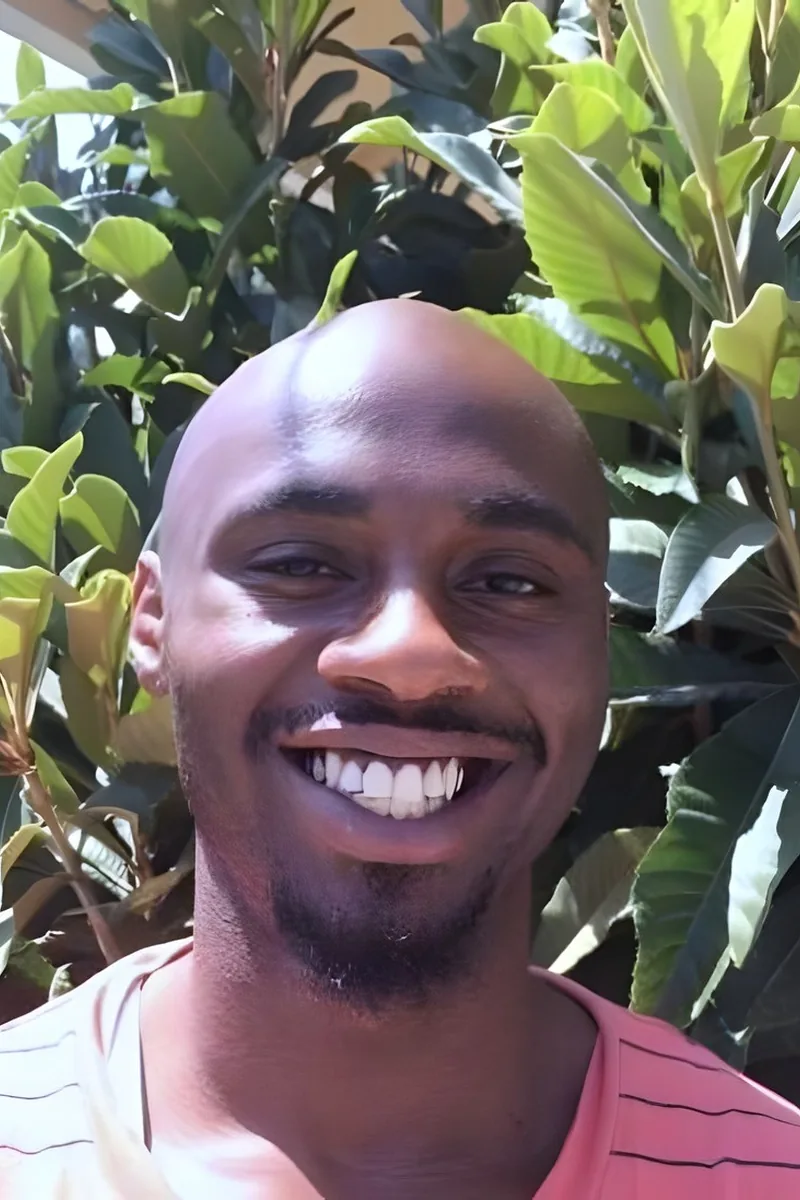
I'm a recent graduate of the California Institute of Technology in Economics and Computer Science. I was also accepted at Harvard, Princeton, MIT, and Stanford. I have a broad range of interests spanning science, math, engineering, social science, the humanities, the arts, and athletics (I also played on the Caltech basketball team). My background allows me to tutor general college prep, especially the SAT, ACT and the GRE. I love to teach analytical thinking, ranging from advanced Math and Physics to strategies for understanding literature and developing arguments.
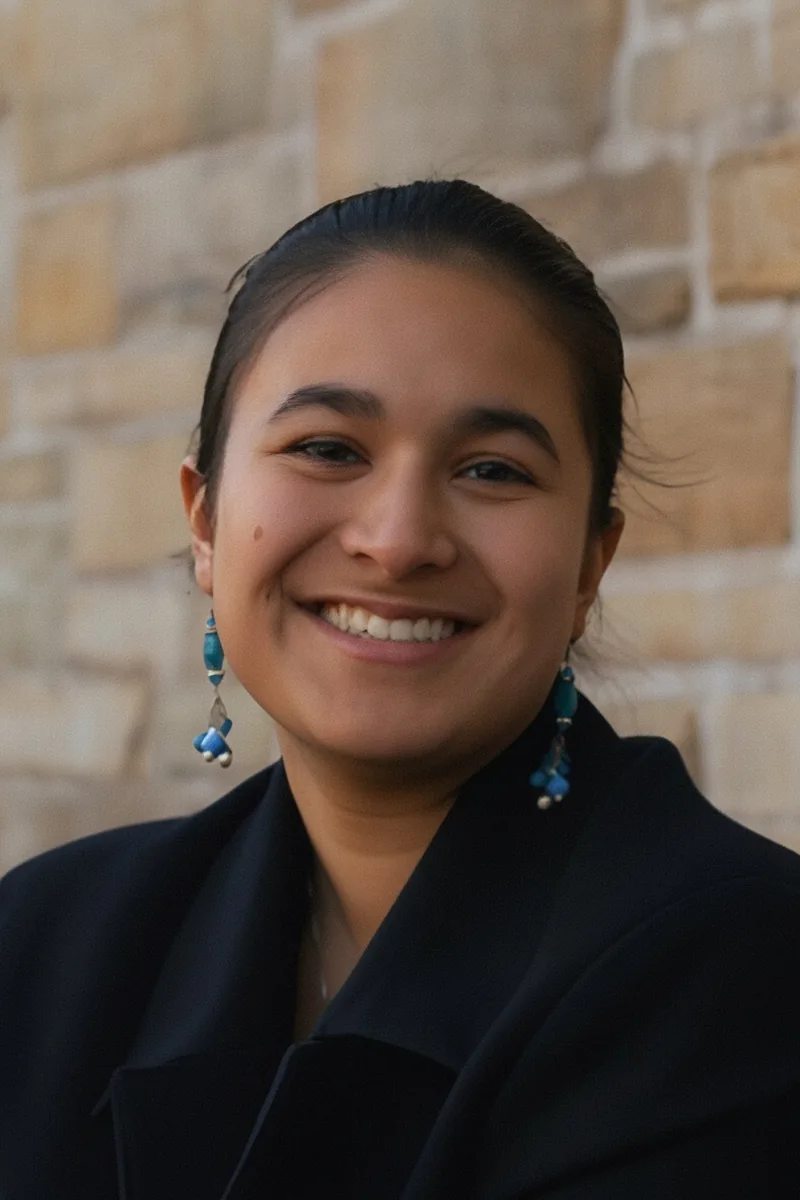
I'm an undergraduate student at Yale University, with a prospective double major in Mathematics and History. I strive to bring students toward their lightbulb moments not by repeating facts until they're drilled in, but by helping my students understand precisely why the laws of science, the rules of grammar, and the events of history are the way they are, and by lifting the curtain on the intricacies of the subject matter. I believe that learning is, and ought to be, for its own sake.
I am now a medical student at Robert Wood Johnson Medical School.
I am very flexible with teaching, ethics and focus on student needs, styles and interests. In languages especially, I can bring students to great leaps in proficiency through low-stress, research-backed methods like immersion in "comprehensible input" and learning through stories and cultural material with lots of context.
I am a graduate of Alexandria University, with a B.Sc. in Nuclear Engineering. In addition, I received a Ph.D. degree from University at Buffalo, Chemical and Biological Engineering Department, in 2015. During that time, I have been working as a teaching assistant and a co-instructor for both undergrad and graduate students, for a broad range of subjects; including: applied mathematics, physics, chemistry, mechanics, and programming. In addition, as a part-time, I have been a private tutor for middle- and high-school students for over 5 years.
I am currently a certified math teacher. I went to The Chinese University of Hong Kong for my bachelor's degree in Electrical Engineering, and University of Southern California (USC) for my master's degree in Financial Engineering. I am big fan of Harry Potter and piano-playing. More importantly, I love instilling confidence in my students and helping them succeed!
I am a mathematics instructor at Tarrant County College and I am interested in helping math and engineering students achieve success!
I am currently a student at the University of Chicago going into my sophomore year. I'm working towards a double major in public policy and international relations with a minor in Middle Eastern studies, and I hope to go to law school after I graduate. I've done paid and volunteer tutoring for three years, across a range of ages and subjects. I've earned consistently high scores on my ACT and AP tests, and I'm comfortable teaching advanced math (up to calculus 3), biology and chemistry as well as ACT/SAT test prep. Besides teaching higher level math and science, I'm comfortable and have experience tutoring elementary and middle school students in all subjects.
I am currently a graduate student at Institute of Optics at the University of Rochester conducting research in Biophysical Chemistry. I recently graduated in June 2017 from the University of California - Irvine with two Bachelor degrees. One was in Biomedical Engineering and the other was in Materials Science and Engineering. With two engineering degrees, I feel comfortable working with students in all realms of Math and Science.
I am a graduate student who will start their PhD from University of Maryland in Applied Mathematics this fall. I completed my MSc in Applied Mathematics from the Swiss Federal Institute of Technology Zurich in Switzerland. I did my Bachelor in Science, majoring in Mathematics, from Lahore University of Management Science in Pakistan.
I am a Senior at the University of Florida studying Industrial Engineering and Statistics. My areas of expertise include Statistics, High School and College level Math, and Government. I emphasize maintaining trust and steady communication with my students to maintain a healthy and comfortable learning environment. I believe developing micro-goals and positively reinforcing students help them stay motivated and excited.
I am a Senior at Worcester Polytechnic Institute studying Mechanical and Robotics Engineering. I am here to help with any Math, Science, Engineering or other tutoring needs. My main approach is to focus on mastery over work pace. I encourage my students to strive for perfection on the basic material, before moving to the hard stuff. That way you won't only "kinda know" two things, but truly understand the material. Outside of class I enjoy, hiking, playing the saxophone, cooking and building robots.
I am an extremely well qualified tutor with many years of practical experience in subject matter combined with 4 years of teaching students. I believe education is the foundation of success. I enjoy knowing that my students are interested in becoming more knowledgeable and proficient in the selected subject matter. I want to help every one of my students achieve their goals and also help make their dreams a reality.
I am a student at Arizona State University and Barrett the Honors College. I am pursuing a degree in chemical engineering and two minors in Spanish and mathematics. I plan on attending medical school upon graduation. I have been a tutor for nearly four years in multiple areas. Primarily, I have tutored mathematics for middle school and high school students. I also have experience in test preparation for the SAT, ACT, IB, AP and Arizona Instrument to Measure Standards (AIMS). Additionally, I have tutored in multiple sciences, such as physics and biology. I very devoted to education and to intend to see to it that every student has the quality of education that I have been privileged to receive. Outside of school, I spend my free time shopping, trying new restaurants, doing yoga, and spending time with friends.
I am not someone who is satisfied when a student memorizes steps to solve a problem. I always want the student to understand what he/she is doing and why they are doing. This insight will make them a stronger, faster and better student, particularly in the field of mathematics. This brings the student long term results that could extend far beyond the work done in the tutoring sessions. Mathematics is my love and economics is my passion and because of this I bring incredible enthusiasm for the subject to my work. I bring the beauty of mathematics into my explanations, through theoretical and visual interpretations. In my spare time I like to paint and run.
I'm a educator and visual artist with many years of experience teaching and tutoring high school and college students. I have a BA in Political Science from New College of Florida and a MFA in Photography from the Savannah College of Art and Design. While I'm a photographer by trade, I also have a passion for and expertise in Math and the Natural Sciences -- as well as French and Spanish, having studied and worked in both Paris and Central America. While I'm proficient now, I struggled with both languages early on, and understand the challenges of both starting a new language and in moving from a conversational to a more proficient level. I'm also available for ACT and SAT test prep -- and work especially well with students who are visual learners (though I have a wide range of materials and resources for all styles of learning!).
I am currently a graduate student in Chemical Engineering at the University of Delaware. I am working on using magnetic and flow fields to create advanced materials by directing the self-assembly process of nanoparticles . I have tutored students in Chemistry, Physics and Math all throughout undergraduate and graduate work. I truly enjoy breaking material down into its core components that allows the students to understand complicated information.
I am currently a tenured mathematics professor at a local university, and I have been at this institution since 2001. I have an undergraduate degree and a PhD in mathematics. I have been tutoring mathematics in many situations since I was in high school. I have experience teaching and tutoring mathematics across the curriculum at the college/university, high school, and developmental levels. I have several years of experience serving as a Reader (grader) for AP Calculus exams.
I am a current student at the University of Florida pursuing an Accounting degree and Entrepreneurship minor. Math has always been my passion, and I hope to show fellow students the fun in it!
I am currently a sophomore at New York University studying Mathematics. Math and science have always fascinated me due to their application towards everyday technology. Along with economics, these are my favorite subjects to tutor because they involve concrete answers deeply rooted in logic. As a tutor, I strive to help students better understand complex problems and develop problem-solving skills. This mindset is obviously crucial for tests, but it also helps students develop analytical techniques that can benefit them in innumerable ways. Outside academics, I enjoy reading about current affairs, weight lifting, and of course, watching Netflix.
I am a student at the Ohio State University, where I am currently studying for a degree in Finance. I have been tutoring students at all ages for the last four years, with a focus on high school students preparing for ACT and IB exams. I am passionate about History and English, where I focus on college entrance papers, essay writing and, standardized test preparation, especially IB and ACT. I feel very comfortable helping students in a wide range of subjects. I have most frequently tutored high school students, but have greatly enjoyed experiences helping younger students. I have additional experience aiding students with difficulties with communication, such as those with speech impediments.
I am a graduate of New York University???s undergraduate history program. My main focus was the cultural and intellectual history of WWII Japan. In my final summer at NYU I traveled to Japan where I studied Japanese, traditional music, and Wartime film.
I am a current Senior at the University of Michigan studying Financial Mathematics. I have tutored professionally for 2 years as well as independently for 3 years. I am tutoring math as well as basic C++. My teaching philosophy is to teach you how to learn rather than give you the answer. Outside of tutoring I love snowboarding, traveling, photography, and reading.
I am a student at the Georgia Institute of Technology studying Chemical Engineering. For the past several years, I have worked with students extensively. Through hosting events for younger kids to learn about STEM and for older teens to practice empathetic design, I know the importance of teaching students in ways that engage them rather than frustrate them, which I apply to my teaching. I have tutored high school students in a drop-in resource center in various subjects including math of all levels, chemistry, and English, making me adequately equipped in a variety of topics. I have also tutored several students long-term. Establishing relationships with students and exploring their unique learning styles is my favorite part of tutoring. I prioritize helping students discover HOW to learn in a manner that is the most effective for them, so they can begin to use those skills on their own throughout their education. Learning is a lifelong skill that requires practice for improvement; I strive to help my students gain confidence in their ability to learn.
I am listening to and learning about him or her as an individual. I can also discover what motivates the student during this conversation and plan for how to frame future tutoring sessions in terms of what the student already knows and enjoys.
I am a senior math major at barnard college of Columbia University. I've tutored in the math help room through calculus III for 2 years. I enjoy algebra, number theory, and topology. I am also premed and enjoy chemistry, intro physics, and organic chemistry.
I am currently an undergraduate perusing my bachelors degree in Computer Engineering at UCF.
I'm not taking care of my farm, I enjoy all crochet, embroidery, cross stitch and, quilting. I also enjoy building with Lego. My largest build so far is the Star Wars AT-AT!
I am certain that everyone has gifts waiting to be uncovered.
I am currently a senior in the Honors College at the University of South Florida pursuing a major in Biomedical Science along with minors in Astronomy and business law. I have had about five years of experience as a tutor so I have helped multiple students of various ages score extremely high on national tests.
Testimonials
Because the right Further Mathematics tutor makes all the difference.
Average Session Rating – Based on 3.4M Learner Ratings
Top 20 Math Subjects
Top 20 Subjects
Frequently Asked Questions
Students often find complex numbers and their applications particularly challenging, especially when moving beyond basic arithmetic to geometric interpretations and De Moivre's theorem. Matrices and their operations—particularly understanding when multiplication is defined and interpreting results geometrically—trip up many learners. Additionally, proof techniques in Further Mathematics require a conceptual shift from procedural math; students struggle with induction, contradiction, and understanding why a proof is valid beyond just following steps. Tutors help students see how these abstract concepts connect to concrete examples and build the logical reasoning skills needed.
Proofs require moving beyond "plug and solve" to understanding the logical structure of mathematical arguments. A tutor can break down proof techniques—induction, contradiction, direct proof—by working through simple examples first, then gradually building to more complex ones. Rather than memorizing proof templates, you'll learn to recognize which technique fits a problem and why it works. Tutors also help you practice "backwards thinking," starting from what you want to prove and working back to known facts, which is essential for tackling unfamiliar proof problems on exams.
Matrices are abstract because they're often taught as mechanical operations (multiply rows by columns) without connecting to what they represent—transformations, systems of equations, or data organization. A tutor helps by grounding matrix operations in visual and practical contexts: seeing how a matrix transforms a shape on a graph, or how matrix multiplication models real-world processes. Once you understand *why* matrix multiplication works the way it does and *what* the result means, the procedures become intuitive rather than arbitrary rules to memorize.
Complex numbers feel alien because they extend beyond the real number line—but they're much less mysterious when visualized on the complex plane. A tutor helps you see complex numbers as points or vectors, making operations like addition (vector addition) and multiplication (rotation and scaling) geometrically meaningful. This visual foundation makes advanced topics like polar form, De Moivre's theorem, and roots of complex numbers far more intuitive. Practice with real examples—finding cube roots or solving polynomial equations—reinforces why complex numbers matter beyond abstract theory.
In Further Mathematics, showing work is critical because examiners want to see your reasoning, not just your final answer. A tutor teaches you how to structure solutions clearly: stating what you're doing at each step, justifying logical jumps, and explaining your approach. This isn't busywork—it helps *you* catch mistakes and understand whether you're solving the right problem. Tutors also help you recognize when a shortcut is acceptable versus when you need to show every step, and how to present proofs and complex calculations in ways that earn full marks.
Multi-step problems in Further Mathematics often require combining several concepts—for example, using complex numbers to solve a polynomial, then interpreting the roots geometrically. Tutors break these down by teaching you to identify the *structure* of the problem: What concept is being tested? What's given, and what do I need to find? Which techniques apply? By practicing this decomposition strategy, you learn to tackle unfamiliar problems systematically rather than feeling lost. Tutors also help you recognize common problem patterns and which toolkit (matrices, complex numbers, proof techniques) each one requires.
Further Mathematics exams test both technical skill and the ability to apply concepts in unfamiliar contexts—which naturally creates anxiety. Tutors build confidence by ensuring you understand *why* techniques work, not just how to execute them, so you can adapt to novel questions. Regular practice with past papers, combined with detailed feedback on your reasoning and presentation, shows you exactly where you stand. Most importantly, tutors help you see patterns across topics and recognize that many "new" exam questions are actually variations of concepts you've already mastered, transforming panic into recognizable problem-solving.
Beyond deep subject knowledge, an effective Further Mathematics tutor understands the conceptual scaffolding—how complex numbers build on polynomials, how matrices connect to transformations and systems, how proof techniques develop logical thinking. They can diagnose whether you're struggling with procedural steps or the underlying concept, and adjust accordingly. Strong tutors also recognize curriculum variations (different exam boards emphasize topics differently) and can teach flexibly. Crucially, they help you develop mathematical communication skills—the ability to explain your thinking clearly—which is as important as getting the right answer in Further Mathematics.
Let’s find your perfect tutor
Answer a few quick questions. We’ll recommend the right plan and match you with a top 5% tutor.