Award-Winning DAT Survey of the Natural Sciences
Tutors
DAT Survey of the Natural Sciences
Tutors
Private 1-on-1 tutoring, weekly live classes for academic support, test prep & enrichment, practice tests and diagnostics, and more to elevate grades and test scores.
Based on 3.4M Learner Ratings
UniversitiesSchools & Universities
DeliveredHours Delivered
ProficiencyGrowth in Proficiency
Who needs tutoring?
No obligation. Takes ~1 minute.
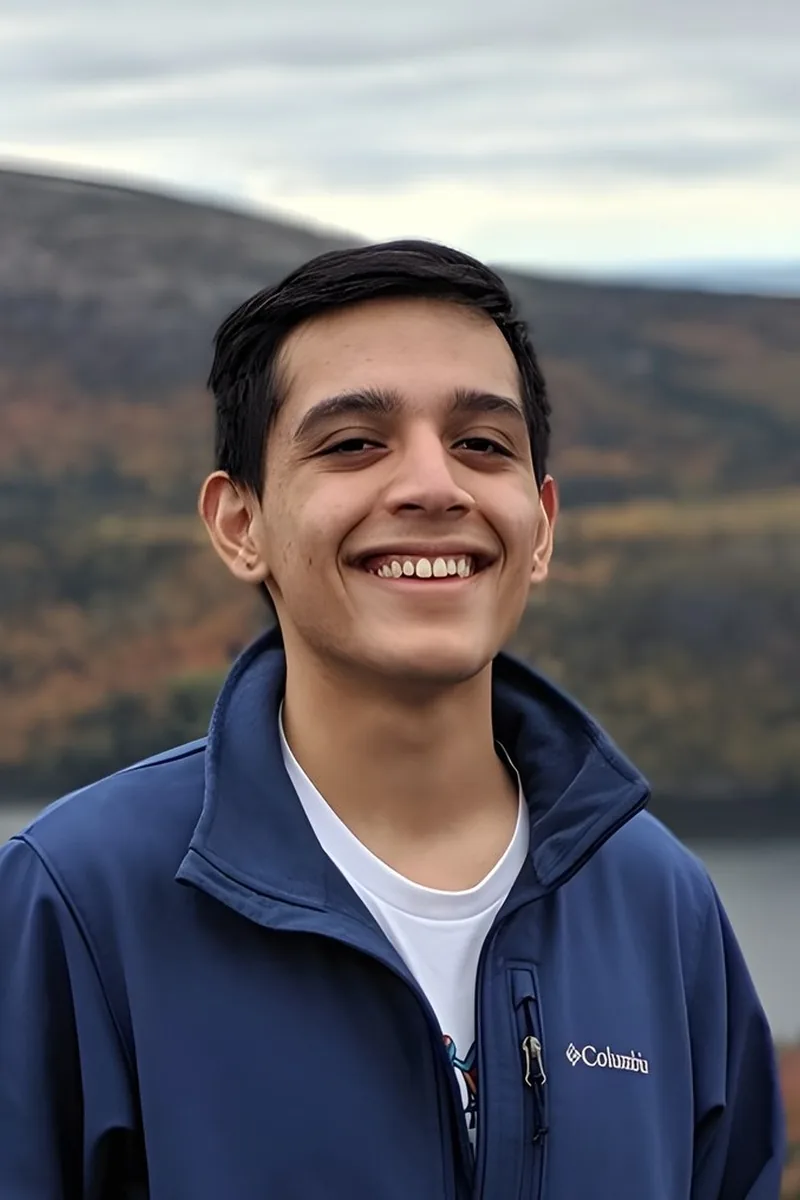
Three science bachelor's degrees — including cognitive science — mean Ivan built the kind of overlapping biology, chemistry, and behavioral science knowledge that the DAT Natural Sciences section's 100 questions test in rapid succession. His MCAT prep experience across biological, chemical, and psychological foundations translates directly to the DAT's cross-disciplinary format, particularly for neuroscience-adjacent biology questions on nervous system anatomy and cellular signaling that many pre-dental students underestimate.

Heading to Columbia College of Dental Medicine this fall, Erica recently navigated the same DAT Natural Sciences gauntlet her students are prepping for — and her Harvard history of science degree trained her to see how biology, chemistry, and organic chemistry concepts connect historically and conceptually rather than as isolated flashcards. She leans on that interdisciplinary thinking to teach the general chemistry subsection's trickier conceptual questions, like thermodynamics and kinetics, where understanding *why* a reaction behaves a certain way beats memorizing formulas. Rated 4.9 by students.
Holding both a Doctor of Dental Science and a B.S. in Microbiology, Daniel has been through the full pre-dental gauntlet — and the Natural Sciences section's 100-question sweep of biology, gen chem, and organic chemistry is territory he's covered from multiple academic angles. His microbiology background is a particular asset on the biology subsection's taxonomy and microbial classification questions, which tend to blindside students who built their study plans around anatomy and organic chemistry alone.
Dental school at Penn means Josh is on the other side of the DAT — he's already conquered those 100 Natural Sciences questions and now applies that biology, gen chem, and organic chemistry knowledge daily in clinical coursework. His biology degree from UC Santa Barbara gives him particular depth on the life sciences subsection, especially anatomy, physiology, and microbiology items that reward understanding body systems as interconnected processes rather than isolated facts to memorize.
A Ph.D. in Inorganic Chemistry gives Andrew an unusually deep command of the general chemistry portion of the DAT Survey of the Natural Sciences — periodic trends, bonding theory, thermodynamics, and acid-base equilibria are territory he's covered at the graduate research level. That depth frees up prep time to concentrate on the biology and organic chemistry sections where most students need the most drilling.
I am pursuing a career in dentistry/oral surgery and will be beginning dental school at Boston University this fall. For this reason I recently took the DAT, which I am capable of assisting you with as well. During my undergraduate education, which I completed this past December, I worked in my school's tutoring center, helping my peers succeed in mathematics and science courses. Outside of my academic life, I am a big sports fan and I mostly follow the New York sports teams. For fun, I like to play basketball and golf with my friends. I am looking forward towards getting to know you and helping you with your academic needs.
I am a first year dental student at The University of Pennsylvania. In a few years, I will be living my dream of improving the lives of others via practicing medicine. In the meantime, I will dedicate my attention towards helping you fulfill your dream.
As an incoming Rutgers dental student with a biology degree and pre-dentistry training, Sunwoo recently prepped for the same 100-question Natural Sciences gauntlet his students are facing — and his organic chemistry coursework through OChem 2 gives him particular depth on the reaction mechanisms and functional group questions that eat up time in the chemistry subsections. He connects those organic chemistry concepts back to the biology side, showing how metabolic pathways and amino acid chemistry link the three disciplines the section treats as one continuous exam.
Between a biology degree and deep tutoring experience across biochemistry, microbiology, anatomy & physiology, and college chemistry, Michelle has the cross-disciplinary coverage the DAT Natural Sciences section's 100 questions demand — but her particular strength is the quantitative side of gen chem that trips up biology-heavy students, from stoichiometry to equilibrium and kinetics. She approaches those chemistry items as applied math problems, drawing on her statistics and calculus background to make the numerical reasoning feel systematic rather than panicked. Rated 4.9 by students.
Currently in dental school with a health sciences background heavy in cell biology, microbiology, anatomy, and immunology, Taylor brings real coursework depth to the biology-heavy portion of the DAT Natural Sciences section — the subsection where many pre-dental students actually lose the most points. She connects physiology and microbiology concepts to the rapid-recall format the exam demands, teaching students to distill dense content into the kind of quick mental frameworks that hold up under time pressure.
Cellular and molecular biology training gives Kevin direct coverage of the DAT Natural Sciences biology subsection — cell division, membrane transport, gene regulation — but his broad tutoring range across math, science, and even test-specific prep means he doesn't stall when students need help pivoting to the gen chem or organic chemistry questions. He teaches students to use their biology intuition as an anchor, connecting familiar cellular processes to the chemical principles (like thermodynamics and reaction kinetics) that underpin them. Rated 4.9 by students.
A biochemistry degree builds exactly the kind of cross-disciplinary fluency the DAT Survey of the Natural Sciences demands — Ashley can move between general chemistry concepts like thermodynamics and equilibrium, organic reaction pathways, and biology topics like cellular metabolism without treating them as separate silos. She approaches prep by linking overlapping principles across all three subsections, so students build a connected understanding that holds up under the section's rapid pacing. Rated 4.9 by students.
Dental school at NYU means James is on the other side of the DAT — he's already survived the Natural Sciences section's 100-question sweep and now applies his biochemistry degree daily in clinical coursework where general chemistry, organic chemistry, and biology converge. His biochemistry background is especially useful for the questions that sit at the intersection of all three subsections, like enzyme kinetics, amino acid properties, and metabolic regulation, where pure memorization tends to fall apart under time pressure. Rated 5.0 by students.
I'm currently a third-year dental student pursuing a DMD degree at Rutgers School of Dental Medicine.
A biochemistry degree means Alec didn't study biology, general chemistry, and organic chemistry as separate silos — he learned them as one integrated system, which is exactly how the DAT Natural Sciences section's 100 questions test them. He's particularly sharp on the biochemical overlap points like metabolic pathways, enzyme kinetics, and amino acid chemistry that bridge the biology and chemistry subsections, where students who prepped each discipline independently tend to lose time.
As a second-year medical student with a strong foundation in science and a passion for education, I specialize in making tough subjects easier to understand. I excel in math, biology, physics, and other challenging topics that often intimidate students and I genuinely enjoy helping others master them. My approach combines patience, clarity, and high-level understanding to break down complex ideas into manageable, confidence-boosting lessons. Whether it's reviewing homework or prepping for exams, I'm here to support and motivate students at any level below mine to reach their full academic potential. My interests include: Weightlifting and fitness training (especially strength and hypertrophy programs) Morning cardio and physical conditioning Studying medicine with a focus on anatomy, physiology, and clinical problem-solving Teaching and tutoring tough academic subjects like math, biology, and physics Watching anime as a way to relax and recharge (especially after a long day) Cooking (with a focus on high-protein, keto/carnivore meals)
I am a graduate of Emory University in Atlanta, GA, where I received my Bachelor of Sciences in Anthropology and Human Biology with a minor in Predictive Health. After I graduated, I worked as a laboratory assistant at a cardiology lab at Emory University School of Medicine. While I am interested in chemistry, math among others in STEM, I am very passionate about biotechnology and general biology including genetics, physiology, and cell biology. As an aspiring dentist, I am currently working towards getting a dental degree. During my undergraduate career, I had several experiences of helping other students with learning materials and quiz/exam preparation. I am excited to have another opportunity to help other students again through Varsity Tutors because I truly believe that education is absolutely imperative to a better quality of life and that everyone is fully capable of learning and making potentials to reality. As for tutoring, I put much emphasis on active participation and positive reinforcement. A learning environment should stay interactive, fun, but challenging. By encountering challenges, I believe a student's potential could rise. Besides my life in academia, I enjoy traveling, photography, and physical activities including hiking, running, and skiing during winter.
Biology coursework plus organic chemistry and microbiology tutoring experience means Paul has lived in the same content ecosystem the DAT Natural Sciences section tests across its 100 questions — and he knows where the biology-to-chemistry handoffs trip students up, especially around metabolic pathways and functional group behavior in biological contexts. He teaches students to read the section as one continuous narrative rather than three disconnected quizzes, using biological logic to anchor the gen chem and organic items. Rated 5.0 by students.
Testimonials
Because the right DAT Survey of the Natural Sciences tutor makes all the difference.
Average Session Rating – Based on 3.4M Learner Ratings
Top 20 Graduate Test Prep Subjects

Top 20 Subjects
Frequently Asked Questions
The Survey of the Natural Sciences covers four primary content areas: Biology (general biology, microbiology, anatomy, physiology), Organic Chemistry, General Chemistry, and Biochemistry. Each area requires different conceptual foundations and problem-solving approaches. Many students find the integration of chemistry concepts with biological systems particularly challenging, since the test expects you to apply chemistry knowledge to explain biological processes rather than treating each subject in isolation.
With 100 questions in roughly 100 minutes, you have about one minute per question on average—but this doesn't mean spending equal time on each. The key is identifying which question types you can answer quickly (often straightforward recall or single-concept questions) versus those requiring multi-step reasoning (like biochemical pathway problems or organic chemistry mechanisms). A strong strategy involves scanning questions first, tackling your strongest content area to build confidence, then returning to more complex questions where you need to think through relationships between concepts.
Organic chemistry mechanisms and reactions consistently challenge students, particularly understanding reaction conditions, stereochemistry, and predicting products. Biochemistry pathways and enzyme kinetics also trip up many test-takers because they require integrating chemistry concepts with biological function. Additionally, students often struggle with questions that blend multiple disciplines—for example, questions asking you to apply general chemistry principles to explain a biochemical process. Identifying which of these areas is your personal weakness early allows you to focus preparation time strategically.
An effective approach involves building your conceptual foundation first—understanding why reactions occur and how mechanisms work—rather than memorizing reaction types. A tutor should help you develop systematic strategies for predicting products, recognizing functional group transformations, and connecting biochemical pathways to underlying chemical principles. They should also help you practice under timed conditions to build speed without sacrificing accuracy, since many students can solve these problems given unlimited time but struggle with the pace required on test day.
Most students benefit from taking 4-6 full-length practice tests under timed conditions, spread across their preparation period rather than crammed at the end. This allows you to identify patterns in your mistakes—whether you're rushing through biology questions you actually know, or consistently misunderstanding organic chemistry concepts—and adjust your study focus accordingly. Between full tests, targeted practice on specific content areas (like a set of 20 biochemistry problems) helps you build confidence in weak spots without the fatigue of a full 100-question session.
Yes—the DAT frequently uses scenario-based questions where you must apply concepts to novel situations rather than simply recall facts. For example, you might be given an unfamiliar organic compound and asked to predict its reactivity, or presented with a biochemical pathway and asked to explain what happens if a specific enzyme is inhibited. These questions test deeper understanding and reasoning rather than memorization. Practicing with official DAT materials early helps you get comfortable with this question style, since it requires a different mindset than traditional multiple-choice exams.
Most students benefit from 6-8 weeks of focused preparation, though this varies based on your science background and starting knowledge level. If you're weak in organic chemistry or biochemistry, you may need 10-12 weeks to build solid conceptual foundations. A typical week includes 8-12 hours of study time split between content review, practice problems, and full-length tests. Working with a tutor can compress this timeline by helping you prioritize high-impact topics and avoid spending excessive time on content you've already mastered.
Start by breaking these subjects into smaller, manageable pieces rather than trying to master everything at once. Spend focused time on one reaction type or one metabolic pathway until you feel comfortable, then build from there—this incremental approach builds genuine confidence rather than surface-level familiarity. Practicing problems at increasing difficulty levels, reviewing mistakes thoroughly to understand *why* you got them wrong, and tracking improvement over time all reinforce that you're making real progress. A tutor can also help you recognize when anxiety is the problem versus actual knowledge gaps, and adjust your study approach accordingly.
Let’s find your perfect tutor
Answer a few quick questions. We’ll recommend the right plan and match you with a top 5% tutor.