Award-Winning AP Physics C: Mechanics Tutors
serving Sarasota, FL
AP Physics C: Mechanics
Tutors in Sarasota
Private 1-on-1 tutoring, weekly live classes for academic support, test prep & enrichment, practice tests and diagnostics, and more to elevate grades and test scores.
Based on 3.4M Learner Ratings
UniversitiesSchools & Universities
DeliveredHours Delivered
ProficiencyGrowth in Proficiency
Who needs tutoring?
No obligation. Takes ~1 minute.
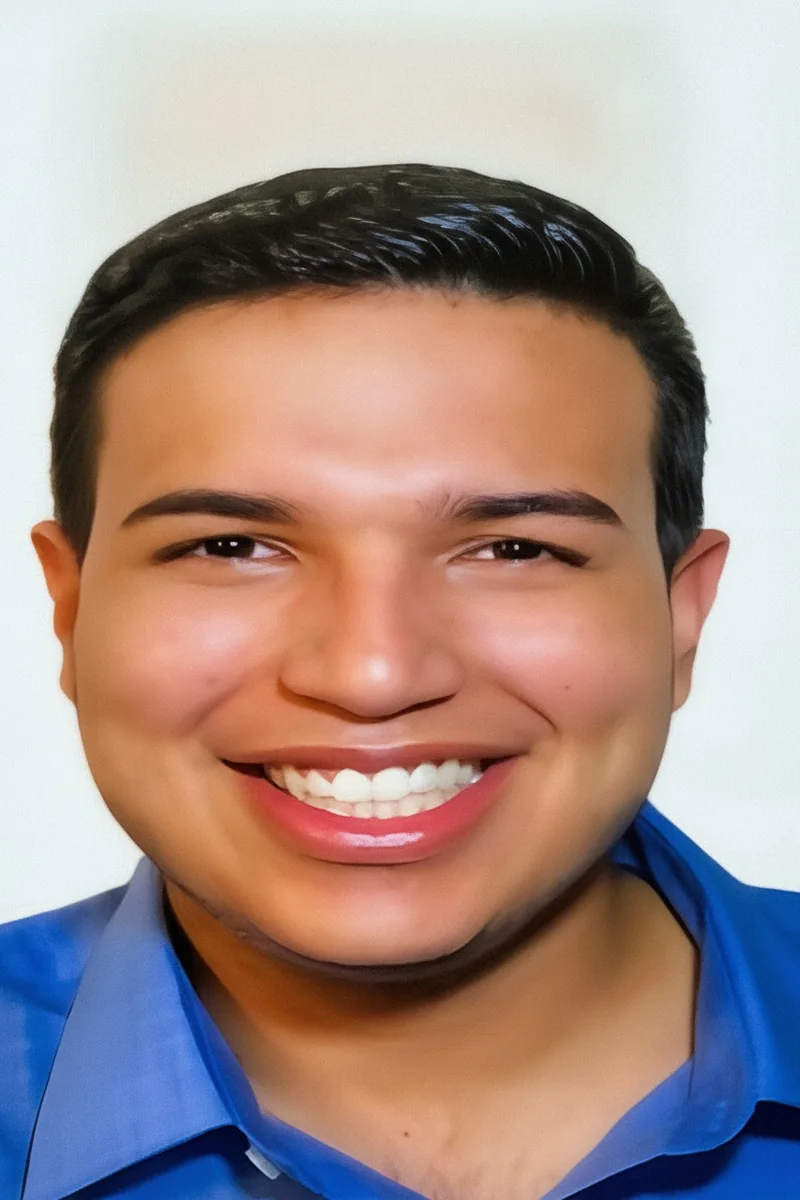
Scoring a 5 on both AP Physics C: Mechanics and AP Calculus BC while taking 16 AP courses total, Derek built the habit of connecting calculus tools to physical intuition under real exam pressure — and he brings that same efficiency to tutoring. His computer science major at Harvard sharpens his approach to mechanics problems: decompose the system, identify constraints, then execute the math cleanly, much like debugging code. Rated 4.9 by students, he's particularly effective at teaching the structured problem-solving that turns rotational dynamics and variable-force scenarios into manageable steps.
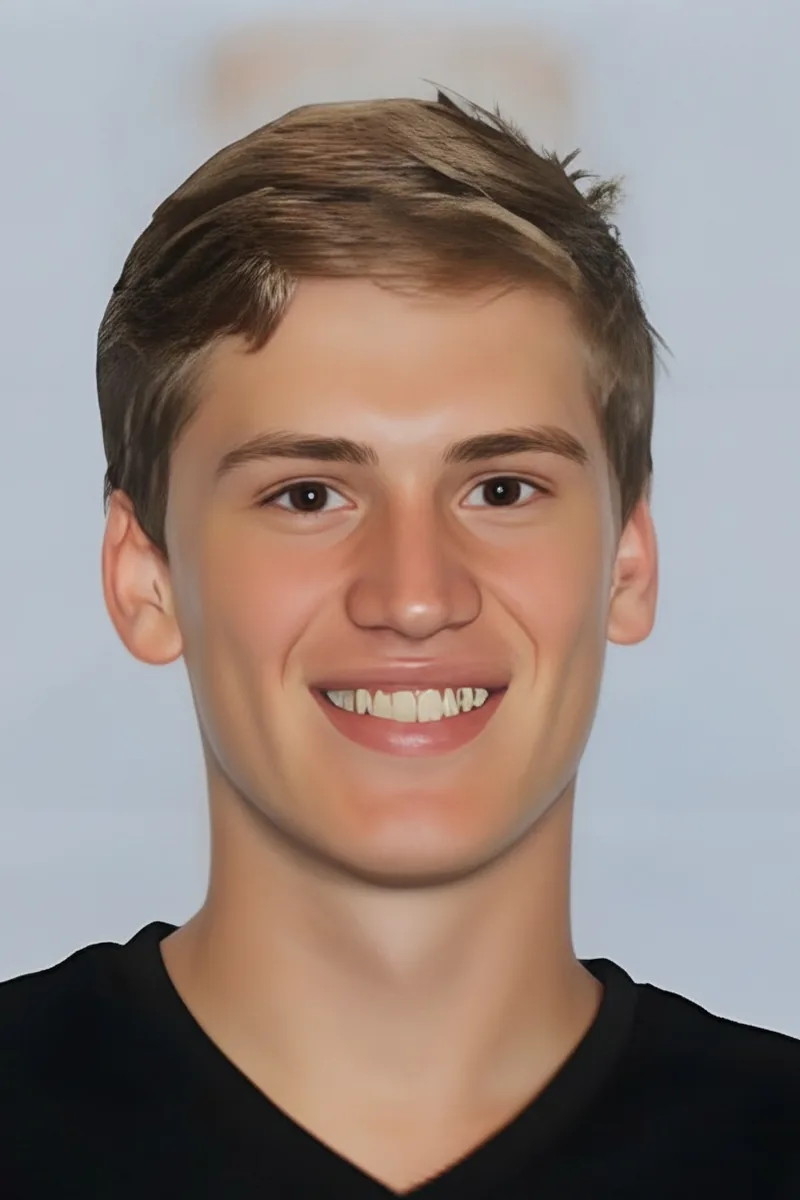
Studying Mechanical & Aerospace Engineering at Princeton, Nicolas solves calculus-based mechanics problems daily that go well beyond what the AP exam asks — rigid body dynamics, energy methods for complex systems, and the vector calculus behind rotational motion. That depth lets him quickly pinpoint whether a student's mistake lives in the physics reasoning or the integral setup, and fix the actual gap. Rated 5.0 by students.
A math degree gives Dalila the calculus fluency that separates AP Physics C from the algebra-based course — she's comfortable setting up the integrals and derivatives that underpin variable-force problems, work-energy applications, and kinematics beyond constant acceleration. She also tutors AP Physics 1, AP Physics 2, and both SAT Math Subject Tests, so she understands how to scale her explanations depending on whether a student needs help with the underlying physics concepts or specifically with translating a free-body diagram into a solvable differential equation.
Thirty years of teaching physics and holding a state certification means Michael has watched thousands of students hit the same stumbling blocks in calculus-based mechanics — the shift from memorizing kinematic equations to actually deriving motion from Newton's second law in integral form. His molecular biology graduate work gave him the quantitative rigor to teach across disciplines, and he uses that cross-training to connect force diagrams and energy methods to the kind of systematic reasoning that clicks on free-response problems.
I am working towards a Bachelor of Arts in Pure and Applied Mathematics as well as a Bachelor of Arts in Astronomy and Physics. I have enjoyed studying math and science since I was in elementary school. I would always help my friends out by answering their questions about the material. For about the last five years, I have had my own tutoring business where I have tutored a wide variety of math courses from elementary school math to pre-calculus and calculus. I like to make sure my students have a complete understanding of the core concepts before going into practice questions. I have also had experience helping my peers with physics and computer science courses.
Working in a nanotechnology lab and finishing an honors thesis means Harrison regularly applies the calculus-based mechanics — force analysis, energy methods, variable-mass systems — that AP Physics C tests, but in contexts where getting the physics wrong has real experimental consequences. He pairs that lab intuition with a 35 ACT and a 4.9 tutoring rating, and he's especially effective at teaching students to read a free-response prompt and decide whether to reach for Newton's second law in differential form or jump straight to a conservation principle.
Fifteen AP exams and a computer science major at UCF mean Nathan thinks about mechanics problems the way a programmer thinks about systems — isolate variables, trace dependencies, solve step by step. That structured approach pays off on the calculus-heavy free-response questions, especially when a problem chains kinematics into a work-energy integral and students need to keep the physics and the math organized simultaneously. Rated 4.9 by students.
Neuroscience taught Evan to think about systems — how forces, feedback loops, and physical constraints interact — which translates surprisingly well to the calculus-based mechanics problems on the AP Physics C exam. He approaches topics like projectile motion and gravitational fields by building physical intuition first, then layering in the derivatives and integrals so the math feels like a natural extension of the reasoning. Rated 5.0 by students.
I'm currently an undergraduate student at Georgia Institute of Technology pursuing a degree in Electrical Engineering. I mostly tutor subjects that reside in the STEM field as those subjects are my strong points. I have been a tutor in the past back in high school. During that time, I realized that helping students understand difficult material can be very awarding. In my free time, when I'm not studying for school or practicing sports, I like to play video games and hangout with friends. Every once in a while I'll pick up my violin and play songs that I've learned in the past; I find it very relaxing.
Mechanics is where Cory is most at home. He treats AP Physics C: Mechanics as a student's first real encounter with calculus-based reasoning about the physical world — deriving kinematic equations from integrals, connecting Newton's laws to differential equations in rotational dynamics, and building intuition for conservation laws that goes beyond plugging into formulas. His physics degree means the vector calculus never gets hand-waved away.
Having scored a 1580 SAT and studied computer science, Rishik brings a programmer's discipline to AP Physics C: Mechanics — treating each problem like an algorithm where you define your variables (forces, constraints, coordinate system) before executing the calculus. He also tutors both AP Physics C exams alongside AP Calculus BC, so he's comfortable moving between the electricity side and the mechanics side while keeping the underlying math sharp. Rated 4.6 by students.
UCLA's engineering curriculum has David solving the same calculus-based mechanics — work-energy integrals, variable-force problems, rotational inertia derivations — that the AP Physics C exam tests, and his computer science training adds a systematic, algorithmic approach to setting up multi-step free-response problems. He's especially sharp at teaching students to diagram a physical system, identify which conservation law applies, and then write the correct integral or derivative before calculating anything. Rated 4.8 by students.
Computer engineering at Michigan means Jie solves mechanics problems where the physics and the math have to work together — modeling forces on robotic actuators, computing torques in electromechanical systems — so the calculus-based dynamics on the AP Physics C exam map directly to what he already builds and debugs. His 34 ACT confirms the quantitative sharpness, and he's especially effective at teaching students how to read a free-body diagram and translate it into the right differential equation rather than reaching for a memorized formula.
Three years of tutoring introductory physics students while completing dual bachelor's degrees in physics and mathematics — followed by a PhD in Computational Mathematics — means Justin has taught the calculus-based mechanics in AP Physics C from both sides of the chalkboard. He digs into the spots where students typically stall, like setting up angular momentum problems or knowing when a scenario calls for energy methods versus force analysis, and walks through the underlying math until the physics clicks. Rated 5.0 by students.
Vaughn's physics degree and 1590 SAT mean the calculus-based problem-solving AP Physics C: Mechanics demands — setting up Newton's second law as a differential equation, computing work done by variable forces — is squarely in his wheelhouse. He zeroes in on dimensional analysis and unit tracking as a way to catch errors before they cascade through multi-step free-response problems, a habit that pays off especially in rotational dynamics where signs and reference frames get tricky.
Biomedical engineering throws you into calculus-based mechanics from day one — Spencer's coursework has him modeling forces on biological systems using the same Newtonian framework and integral setups that AP Physics C tests on free-response problems. His 35 ACT and parallel teaching across both AP Calculus BC and AP Physics C mean he can diagnose whether a student's stuck on the physics concept or the calculus execution, and address the right one.
Computational mathematics at Rice is essentially applied calculus with the volume turned up — Vinson's coursework in differential equations and numerical methods maps directly onto the mechanics problems where students need to set up Newton's second law as a differential equation and solve it, not just memorize kinematic formulas. His 36 ACT and National AP Scholar status (including AP Physics and the full calculus sequence) mean he's been through the exact exam pressure these students face. Rated 4.8 by students.
Free-body diagrams, rotational inertia, and conservation of energy problems all require calculus-based reasoning that trips students up when they try to rely on formulas alone. Emily completed the full pre-med physics sequence at Cornell and spent her senior year tutoring calculus — two skills that converge directly in AP Physics C: Mechanics. She breaks multi-step problems into the underlying math so students see why the setup matters as much as the answer.
Rice's mechanical engineering program puts Ashton through calculus-based statics, dynamics, and kinematics every semester — the same core mechanics that AP Physics C tests, just applied to real structural and machine systems. That daily exposure means he can spot whether a student's free-response mistake is a physics misread or a calculus execution error, and address the right one. His 32 ACT underscores the quantitative fluency backing his approach.
Biochemistry might seem unrelated to mechanics, but Shira's coursework in physics and calculus — plus a 1550 SAT — means she's built the quantitative chops to handle the kinematics, force analysis, and integration problems that define AP Physics C. She approaches mechanics the way she approaches lab work: isolate the variables, set up the math carefully, then check whether the answer makes physical sense. Rated 4.9 by students.
Sanjana's applied math studies at Harvard and her role as a Course Assistant for introductory calculus mean she's fluent in the exact differential and integral techniques that AP Physics C: Mechanics layers onto every force, torque, and energy problem. She's especially effective at bridging the gap when students grasp the physics intuitively but struggle to translate a scenario — say, a block on a spring with friction — into the correct differential equation and solve it cleanly. Rated 5.0 by students.
Testimonials
Because the right AP Physics C: Mechanics tutor makes all the difference.
Average Session Rating – Based on 3.4M Learner Ratings
Practice AP Physics C: Mechanics
Free practice tests, flashcards, and AI tutoring for AP Physics C: Mechanics
Nearby AP Physics C: Mechanics Tutors
Other Sarasota Tutors
Related Science Tutors in Sarasota
Frequently Asked Questions
AP Physics C: Mechanics focuses on classical mechanics and includes kinematics, Newton's laws, work and energy, momentum, circular motion, oscillations, and gravitation. The course emphasizes calculus-based problem solving, which distinguishes it from AP Physics 1. Students learn to apply differential and integral calculus to physics concepts, preparing them for the AP exam administered in May.
AP Physics C: Mechanics requires strong mathematical skills alongside conceptual understanding—students must not only grasp physics principles but also apply calculus to solve problems. Common challenges include understanding vector components, setting up equations of motion correctly, and managing time during the exam. Many students struggle with the transition from algebra-based physics to calculus-based reasoning, which is why targeted tutoring can help clarify these connections.
Personalized 1-on-1 instruction allows tutors to identify your specific weak areas—whether that's free-body diagrams, energy conservation, or rotational dynamics—and focus on those gaps. Tutors can work through practice problems at your pace, explain concepts multiple ways, and teach test-taking strategies specific to the AP exam format. This targeted approach helps students build confidence and improve their understanding before the May exam.
Score improvement depends on your starting point, consistency with tutoring, and how actively you engage with practice problems. Students who work with tutors regularly and complete practice tests typically see meaningful gains—often moving from a 2 or 3 to a 4 or 5 on the AP scale. The key is identifying weak areas early and dedicating time to deliberate practice, which personalized tutoring facilitates effectively.
Practice tests are essential for AP Physics C: Mechanics success. They help you get comfortable with the exam format, identify weak topics, and build pacing skills—the exam includes both multiple-choice and free-response sections with strict time limits. Tutors can review your practice test results with you, pinpoint errors, and help you develop strategies for managing time effectively on test day.
Varsity Tutors connects you with tutors in Sarasota who specialize in AP Physics C: Mechanics and understand the specific demands of the course. When you reach out, you can discuss your current level, goals, and preferred learning style, and we'll match you with a tutor experienced in helping students master calculus-based mechanics and prepare for the AP exam.
Your first session typically includes a diagnostic conversation where your tutor learns about your background, current understanding, and specific challenges in the course. They may review recent exams or problem sets to identify gaps, then work through a few problems with you to understand your problem-solving approach. This foundation helps your tutor create a personalized study plan tailored to your needs and timeline before the AP exam.
Ideally, students benefit from starting tutoring early in the school year to build a strong foundation in kinematics and Newton's laws, which underpin later topics. However, tutoring is valuable at any point—even if you start in spring, focused sessions can help you master remaining topics and solidify test-taking strategies before the May AP exam. The earlier you start, the more time you have to practice and reinforce concepts.
Let’s find your perfect tutor
Answer a few quick questions. We’ll recommend the right plan and match you with a top 5% tutor.