Award-Winning High School Reading
Tutors
High School Reading
Tutors
Private 1-on-1 tutoring, weekly live classes for academic support, test prep & enrichment, practice tests and diagnostics, and more to elevate grades and test scores.
Based on 3.4M Learner Ratings
UniversitiesSchools & Universities
DeliveredHours Delivered
ProficiencyGrowth in Proficiency
Who needs tutoring?
No obligation. Takes ~1 minute.
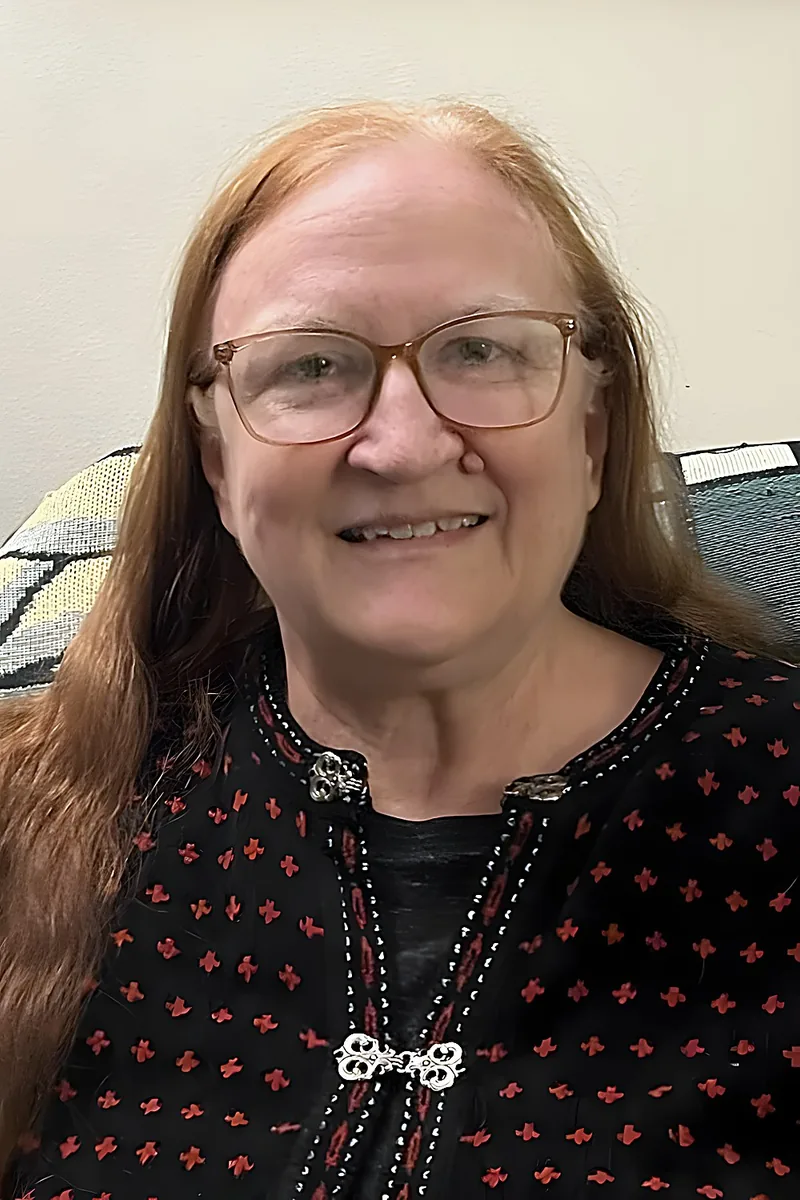
I love to help students to do well on the SAT and ACT Verbal, Reading, and English sections. I have tutored these areas of standardized tests for more than 3 years. My approach is not "standardized" because I enjoy working one-on-one with clients to tailor learning experiences that address each person's unique needs. As a former professor of communication, I also have the skills to help professionals and graduate students with their research and writing. I am currently helping a doctoral student with her dissertation.
Teaching college English for years means Toni has watched firsthand what happens when students arrive without strong reading habits — and she knows exactly which skills close that gap before it widens. She walks high schoolers through how to read literary and nonfiction texts like a conversation, teaching them to talk back to the author by questioning tone, motive, and structure rather than just absorbing words on a page. Her 4.9 rating speaks to an approach that turns reluctant readers into engaged ones.
Patrick's computer science and math training at Penn meant absorbing technical documentation, research papers, and dense problem sets daily — all of which demanded precise, active reading rather than passive skimming. He teaches high schoolers to approach any text the way a programmer approaches code: line by line, asking what each section does, where the logic builds, and what the author assumes you already know. His 33 ACT composite reflects the kind of careful, analytical reading he now breaks down for students tackling everything from literary analysis to argumentative nonfiction.
By high school, reading assignments get dense — whether it's unpacking symbolism in a novel, analyzing rhetorical strategies in nonfiction, or synthesizing multiple sources for a research project. Candice's English degree from the University of Chicago trained her in exactly this kind of close reading, and her MFA work deepened her ability to examine how writers construct meaning at the sentence level. She teaches students to slow down, annotate with purpose, and build interpretations they can actually defend in class discussion or essays.
Years of teaching biology and chemistry have made Philip skilled at breaking down dense, unfamiliar texts — a skill that translates directly to high school reading comprehension. He shows students how to identify an author's central claim, trace how supporting details connect, and distinguish between what a passage says and what it implies.
Teaching both English and French at the secondary level gave Ariana an unusual vantage point on how students process written language — she's watched the same reader who struggles with inference in an English novel suddenly grasp subtext in a French poem, and vice versa. That cross-linguistic perspective lets her diagnose whether a student's reading difficulty is about vocabulary, structure, or simply not knowing what to do when a sentence doesn't make sense on the first pass. She teaches concrete annotation and re-reading techniques tailored to each student's specific sticking point.
Medical school demands a particular kind of reading — synthesizing dense research papers, extracting key findings from studies full of jargon, and connecting information across dozens of sources at once. Kaitlyn applies those same skills to high school reading, teaching students to annotate strategically, track an author's reasoning through complex passages, and distinguish main arguments from supporting detail. Her biology background is especially useful for students who freeze up when handed literary nonfiction or science-heavy texts.
After teaching middle and high school English in NYC public schools, Rachel knows the exact moment a student's eyes glaze over mid-paragraph — and it's usually not because the text is too hard, but because nobody's shown them how to read like a writer, noticing how sentence rhythm, word choice, and paragraph breaks all carry meaning. Her Master's in Teaching English and a summa cum laude English degree give her the literary depth to connect what students are reading to why it was written that way. Rated 5.0 by students.
Reading at the high school level means grappling with unreliable narrators, layered symbolism, and arguments buried under complex syntax — skills that don't come from just re-reading the passage slower. Arlin teaches active reading techniques like annotation, contextual vocabulary inference, and structural mapping that he uses himself when parsing dense neuroscience research. He makes the analytical process feel approachable, even for students who say they "hate reading."
Music performance training at the graduate level requires a kind of reading most people don't think about — interpreting scores, analyzing librettos, and pulling meaning from dense theoretical texts where every word carries weight. Amos brings that same close-reading discipline to high school prose, teaching students to slow down and trace how an author's choices in diction, structure, and tone build toward a larger argument. Rated 5.0 by students.
Strong reading at the high school level means more than comprehension — it means identifying an author's purpose, evaluating how structure shapes meaning, and drawing inferences from context clues. Emily's background as both an honors English graduate and a qualified ESL teacher means she can diagnose exactly where a student's reading process breaks down, whether the challenge is vocabulary, pacing, or analytical depth.
Engineering texts are full of passages where one misread variable or skipped definition derails everything that follows — so Nikit learned early to read slowly, precisely, and with a pencil in hand. He brings that same disciplined approach to high school reading, teaching students to track an author's logic paragraph by paragraph and catch the moments where meaning shifts or an argument pivots. Rated 5.0 by students.
Strong high school readers do more than decode text — they track an author's argument, evaluate evidence, and draw inferences across complex passages. Taylor's five years as a developmental editor sharpened her ability to dissect how texts are structured, and she teaches those same analytical reading habits to students preparing for advanced coursework or standardized exams.
Reading at the high school level isn't just comprehension — it's learning to track symbolism, unreliable narrators, and authorial intent across complex texts. Meg's graduate training in creative writing gave her deep fluency with how literature is constructed, and she uses that lens to teach students how to read like writers. She breaks down everything from close-reading poetry to annotating novels for thematic threads.
Hi, I'm Saskia. I am currently getting my master's degree in Physician Assistant studies & I have a degree in Psychology! Learning to love reading shouldn't feel like a chore. I provide the patience, encouragement, and tailored strategies your student needs to unlock their confidence. I specialize in helping elementary and middle schoolers build strong communication skills, focusing on early literacy, phonics, reading comprehension, social studies, and writing structured paragraphs. In addition to my K-8 focus, I leverage my advanced academic background to support older students and adult learners in specialized fields, including Psychology, Social Sciences, and Medical Terminology. My sessions are interactive, patient, and highly supportivewhether we are breaking down a reading passage step-by-step, mastering active recall for psychology, or deconstructing complex medical roots and prefixes. Let's work together to build your study skills and make learning completely approachable!
Scoring a 1550 on the SAT means Esther has already proven she can tear through complex reading passages under pressure — identifying tone shifts, weighing competing claims, and connecting evidence across paragraphs at speed. As a management student at Binghamton, she regularly tackles case studies and analytical texts that demand the same close-reading skills high schoolers need for literature and nonfiction alike. Rated 5.0 by students.
Emma's computer science training built a habit most English students never develop: reading for precise logic, where skipping one conditional or misreading one operator breaks everything downstream. She applies that same exacting attention to high school reading, teaching students to track how each paragraph's claim connects to the next and to flag the exact sentence where they lose the thread of an argument. Rated 5.0 by students.
Studying international affairs at Columbia means Maha spends her days pulling arguments out of dense policy briefs, foreign policy analyses, and competing editorial perspectives — exactly the kind of critical reading that high schoolers need to practice but rarely encounter outside of AP-level work. She teaches students to identify an author's underlying assumptions and trace how evidence is deployed across a passage, skills she sharpened earning Honors and Distinction at UNC Chapel Hill. Rated 4.7 by students.
Strong high school readers don't just understand what a text says — they evaluate how it says it, tracking tone shifts, rhetorical strategies, and argument structure across complex passages. Lovepreet's teaching certification and years of experience across multiple subjects mean she can connect reading skills to the kind of analytical thinking students need in every class, from English to science.
Strong high school readers don't just comprehend — they interrogate a text, tracking how an author's choices in diction, structure, and tone shape meaning. Gabby brings a journalist's eye to reading instruction, teaching students to break down nonfiction arguments and literary passages with the same analytical rigor she used in her own reporting and graduate research at the University of Oregon. She's particularly effective at closing the gap between "I understood it" and "I can explain what it's doing and why."
As a passionate educator with a Master's in Law from Harvard University and a Bachelor's in Law from Universidad del Pacfico, I bring over 2 years of tutoring experience across subjects like Spanish, Law, Political Science, and Math. My teaching philosophy centers on fostering a supportive learning environment where students feel empowered to explore complex concepts and develop their critical thinking skills. I strive to connect with each student individually, tailoring my approach to meet their unique needs and learning styles. My dedication to helping students succeed is further fueled by my love for languages and cultures, which I share in my lessons. I look forward to guiding students on their academic journeys and celebrating their achievements along the way.
As a passionate tutor working on an Accounting degree, I am dedicated to fostering a supportive and engaging learning environment that empowers students to reach their full potential. My approach is student-centered; I tailor lessons to accommodate diverse learning styles, utilizing interactive discussions, hands-on activities, and real-world examples that make complex subjects more relatable. With experience in a wide array of subjects, including Algebra, AP History, and English Language Arts, I strive to create customized learning plans that address individual goals and challenges. I believe that building strong relationships with my students is key to their success, and I am committed to nurturing their love for learning, and helping them thrive academically. I have experience tutoring multiple students in subjects such as: SAT, SSAT, Algebra, History, English & Writing
Studying economics at Wellesley means Allyson spends her days pulling arguments out of dense, data-heavy texts — isolating a writer's central claim, evaluating the evidence behind it, and spotting where the logic gets slippery. She brings that same analytical discipline to high school reading, teaching students to move through challenging passages with a clear system for marking structure, tracking tone shifts, and distinguishing what an author states from what they imply.
Reading at the high school level is really about learning to interrogate a text — identifying an author's purpose, evaluating rhetorical choices, and synthesizing arguments across multiple sources. Aqsa's business coursework at UCF requires constant close reading of case studies and dense analytical reports, so she brings practical strategies for breaking down complex passages and pulling out key ideas quickly.
I am a PhD student in Classics (Ancient Greek and Roman studies) at the University of Washington. I have been tutoring Latin since 2015 and was a 5th and 6th grade Latin teacher for Basis.Ed from 2016-2018. I love working one-on-one with students of all ages to improve Latin skills!
Qays's science and math background means he's used to reading passages where every detail matters — a misread qualifier in a biology question or a skipped condition in a word problem changes the entire answer. He applies that same precision to high school reading, teaching students to slow down and track exactly what an author is claiming versus what they're merely describing or conceding. Rated 5.0 by students.
Katie's psychology training at the University of Maryland sharpened a skill that transfers directly to reading comprehension: understanding how people process and retain information, and why certain texts cause a reader's attention to fragment. She uses that cognitive lens to teach high schoolers how to actively interrogate what they're reading — tracking an author's claims, catching shifts in tone, and building the habit of pausing to check whether a paragraph actually said what they think it said. Her hands-on style mixes structured annotation with enough space for students to wrestle with a passage independently before she steps in.
From poetry to literary nonfiction to standardized test passages, Paige's broad English background means she can match reading instruction to whatever genre is giving a student trouble. She teaches students to identify an author's purpose and track how tone shifts across a passage — skills that carry over from classroom assignments to the SAT and ACT reading sections she also tutors. Her emphasis on active engagement with the text turns students who passively skim into readers who actually retain what they've read.
I believe every student can improve and achieve their goals regardless of their starting point. I have a Bachelor's degree in History and Education and enjoy being able to use them in tutoring sessions.
I love to read. Reading has always been how I make sense of the world. Stories are simply how our minds organize experience, and the world around us is full of them, in the pages we read and the lives we live. Literary analysis teaches us to seek truth within those stories. I help students read closely, think critically, and write essays with real clarity and confidence, from a first idea to a finished, polished draft. I have a passion for literature and for awakening a love of literature in others. I hold two Master's Degrees in Literature from the University of Edinburgh with a particular specialisation in literature between 1780 and 1914.
Studying government and philosophy at Cornell means Cereese spends her days pulling apart dense political theory and philosophical arguments — texts where every sentence demands active engagement and where skimming guarantees confusion. She brings those same close-reading habits to high school students, teaching them to track how an author builds a claim across paragraphs and to catch shifts in tone or reasoning that change the meaning of an entire passage.
Testimonials
Because the right High School Reading tutor makes all the difference.
Average Session Rating – Based on 3.4M Learner Ratings
Top 20 English Subjects



Top 20 Subjects
Frequently Asked Questions
Tutors help students move beyond passive reading by teaching active comprehension strategies like annotation, questioning the text, and making connections to prior knowledge. They also use retrieval practice—asking students to recall and discuss key details without looking back at the text—which strengthens long-term retention. For complex texts, tutors break down challenging passages, model how to identify main ideas versus supporting details, and help students recognize how authors structure arguments and develop themes.
Literary analysis requires moving beyond plot summary to examine how authors use language, imagery, and structure to create meaning. Tutors teach students to identify literary devices (metaphor, foreshadowing, irony) and explain their purpose, then connect these elements to larger themes and character development. Through guided practice with mentor texts, students learn to support interpretations with specific textual evidence, moving from surface-level observations to deeper, more sophisticated analysis that earns strong grades on essays and exams.
A strong thesis goes beyond stating a topic—it makes a specific, arguable claim about a text that the essay will prove. Tutors help students craft thesis statements that are narrow enough to support in 3-5 pages but broad enough to allow for meaningful analysis. They then guide students in organizing evidence logically, teaching them to structure body paragraphs around topic sentences that connect back to the thesis, use topic sentences to transition between ideas, and save the strongest evidence for last to build persuasive momentum.
Tutors provide targeted feedback that goes beyond surface-level grammar corrections to address the underlying issues affecting clarity and persuasiveness—like weak topic sentences, unsupported claims, or logical gaps in reasoning. Rather than simply marking errors, they ask guiding questions that help students identify problems themselves and develop revision strategies. This personalized approach to revision teaches students to self-edit more effectively, build stronger arguments, and develop their unique writing voice over time.
Tutors teach students the mechanics of MLA and APA formatting while also helping them understand the purpose behind citations—to give credit, establish credibility, and allow readers to verify sources. They guide students in smoothly integrating quotes and paraphrases into their own writing, showing how to introduce sources with signal phrases and explain their relevance rather than dropping quotes into paragraphs unexpectedly. Tutors also help students distinguish between paraphrasing and plagiarism, teaching them to synthesize sources in their own words while maintaining academic integrity.
Rather than memorizing isolated word lists, tutors teach students to use context clues, word roots, and prefixes to decode unfamiliar words while reading—a skill that builds independence and retention. They help students recognize how authors use vocabulary strategically for tone and effect, and they encourage spaced repetition by incorporating new words into discussions and writing assignments. This approach connects vocabulary development directly to reading comprehension and writing quality, making word learning feel purposeful rather than rote.
Standardized reading sections and AP Literature exams require students to analyze unfamiliar texts under time pressure, which demands both strong comprehension skills and test-specific strategies. Tutors teach students how to skim effectively, identify what a question is really asking, and manage time across multiple passages. They also help students practice with released exams and similar passages, building confidence and speed while reinforcing the close-reading and analytical skills that earn high scores on both timed tests and classroom essays.
Each text type requires different analytical lenses. With novels, tutors focus on character development, plot structure, and thematic analysis. Poetry demands attention to sound devices, line breaks, and compressed language where every word carries weight. Non-fiction requires students to identify author purpose, evaluate arguments, and distinguish between fact and opinion. Tutors help students adapt their reading approach based on genre, teaching them what to look for in each text type and how to write analyses that match the specific demands of novels, poetry, essays, and speeches.
Let’s find your perfect tutor
Answer a few quick questions. We’ll recommend the right plan and match you with a top 5% tutor.