Award-Winning Elementary School English
Tutors
Elementary School English
Tutors
Private 1-on-1 tutoring, weekly live classes for academic support, test prep & enrichment, practice tests and diagnostics, and more to elevate grades and test scores.
Based on 3.4M Learner Ratings
UniversitiesSchools & Universities
DeliveredHours Delivered
ProficiencyGrowth in Proficiency
Who needs tutoring?
No obligation. Takes ~1 minute.

Early elementary English covers a huge range, from sight words and sentence capitalization to reading short passages and answering comprehension questions. Sabira's experience teaching taekwondo to young kids gave her a knack for keeping lessons structured but energetic, and she adapts her pace to match each child's attention span and skill level.
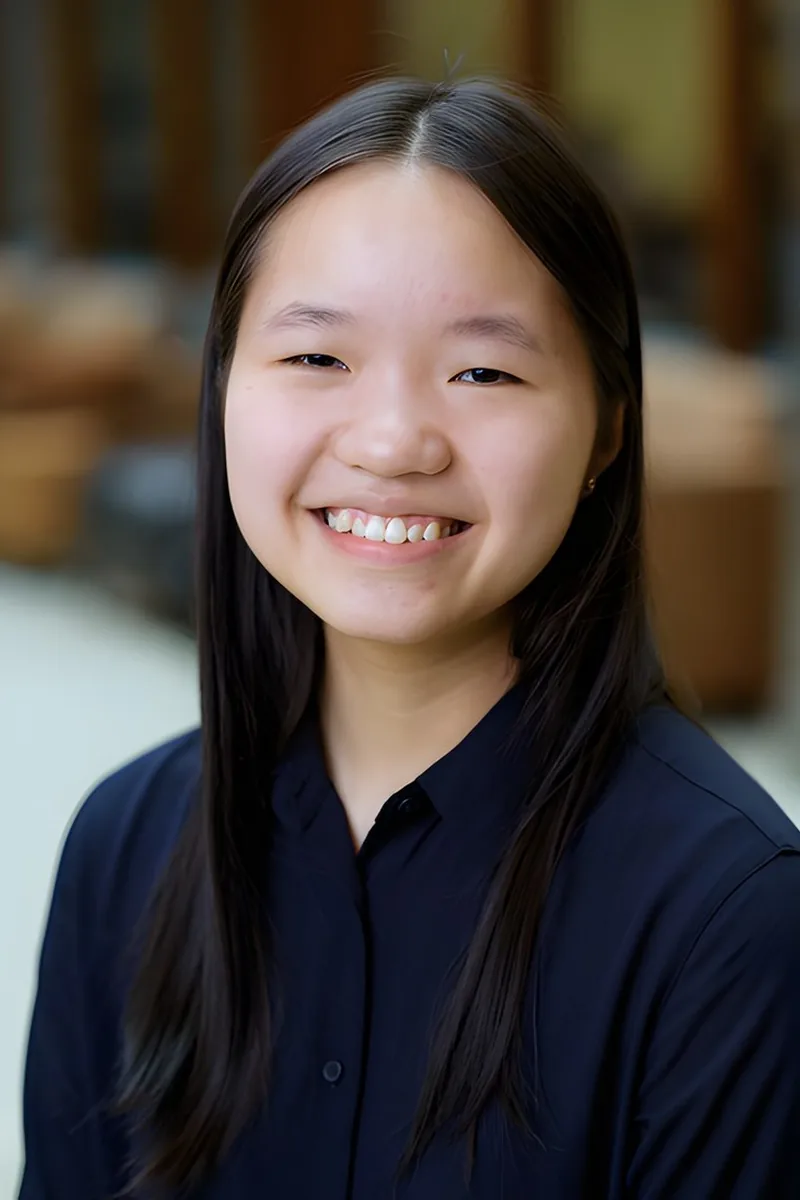
Elementary English covers a lot of ground — grammar rules, spelling patterns, parts of speech, basic sentence construction — and Ingrid keeps lessons organized so students build each skill in a logical sequence. Her experience teaching workshops to peers at Northwestern taught her how to explain concepts step by step without overwhelming a learner.
Elementary English covers a wide range — from grammar basics like subject-verb agreement and punctuation to early paragraph writing and reading comprehension. Sugi's background in cognitive science informs how she sequences these skills so that each lesson builds naturally on the last, keeping young learners engaged without overwhelming them.
Anna's anthropology background gave her a deep appreciation for how language works, and she brings that curiosity to elementary English — from parts of speech and sentence building to early paragraph writing. She makes grammar rules feel logical rather than arbitrary, often using games and short creative prompts to keep younger students engaged.
I am a current medical student at Columbia University, and an alumna of the University of Chicago, where I graduated with a Bachelor of Science in Biological Sciences and Bachelor of Arts in Romance Languages & Literatures. I am extremely passionate about tutoring, and I have several years of experience tutoring students in my high school's learning center, tutoring private clients in Standardized Test preparation, and tutoring through my medical school. While I have a wide range of interests and am able to tutor various subjects, I am most passionate about tutoring in Standardized Test preparation, Biology, Chemistry, Math, English, and Spanish. I truly believe that students should have the opportunity to learn in the way that works best for them, and I love being able to help them succeed by creating a comfortable tutoring environment in which we can best assess their particular needs and use strategies specific to them.
At the elementary level, English is really about building the habits that make someone a strong communicator — knowing how sentences work, expanding vocabulary through reading, and learning to express ideas clearly in writing. Vivian connects these pieces together so that a phonics lesson reinforces spelling, which reinforces writing, giving young learners a sense of how language fits together.
Years of volunteering as an assistant teacher for children ages four through ten gave Emma a toolbox for making letters, phonics, and early reading genuinely fun. She connects vocabulary building and sentence construction to stories kids actually care about, turning reluctant readers into engaged ones. Rated 5.0 by families she's worked with.
Elementary English covers a lot of ground — grammar, reading comprehension, vocabulary, early writing — and Arielle's three years as a classroom teacher mean she knows how these skills actually develop together in real kids. Her Yale Child Development degree gives her a framework for understanding why a second grader approaches language differently than a fifth grader, and she adjusts her teaching accordingly.
I am a graduate of the University of Pennsylvania with a Masters degree in Education and have been an Elementary and Middle School educator for over thirty years. I have worked with students in the inner city, suburbs, Appalachia, and Deep South. I love teaching and children, and have discovered my passion in tutoring students who are struggling in Reading and Math. I have taught children with learning disabilities to read, and coached students with dyscalculia in math and reading. I worked as a principal for the past eight years, so was working with students from Pre-K to 8th grade, coaching teachers, analyzing data, and tutoring individual students in math and reading. I have worked as a national park ranger in the past, so social studies and history are areas of strength. Students that I teach respond well to my teaching style and enjoy working with me. I believe that education is extremely important for children's futures and do everything that I can to help them be successful.
Creating weekly lesson plans for students as young as preschool at Chautauqua Institution gave Emma a clear sense of how younger readers build confidence — through phonics games, guided reading, and writing their own simple stories. She brings that same structured creativity to elementary English, whether a student is working on sight words or writing their first paragraph. Rated 5.0 by students.
Getting young readers to move from decoding words to actually understanding what they read — making inferences, identifying story structure, building vocabulary in context — takes a teacher who knows how to scaffold each skill. Yan taught elementary school in Boston and holds a bachelor's in elementary education from Boston College, so she knows exactly how to sequence phonics, fluency, and comprehension work for developing readers and writers.
Getting young learners excited about reading and writing takes someone who understands how kids actually learn, not just what they're supposed to learn. Adam studied cognitive science at Rice, which means he knows how to match activities to a child's developmental stage — whether that's phonics reinforcement, sentence construction, or early reading fluency. He keeps lessons interactive and builds skills in a sequence that sticks.
Getting a young reader to love books is a different skill than teaching phonics or grammar rules, and Heather brings both. She started tutoring at a nearby elementary school during high school, working with kids on reading comprehension, sentence structure, and early writing — and her psychology training deepened her understanding of how children build confidence with language.
Building early skills in spelling, sentence construction, and reading comprehension sets the tone for how a child approaches every other subject. Eliza makes elementary English feel less like a set of rules to memorize and more like a toolkit — showing young learners how capital letters, punctuation, and word order all work together to express an idea clearly.
Building reading comprehension at the elementary level is about more than phonics drills — it's about teaching kids to ask questions about what they're reading and make predictions before turning the page. Tegan brings patience and a structured approach to skills like sentence construction, vocabulary development, and early paragraph writing. Her 4.9 rating speaks to how well she connects with younger learners.
Getting elementary grammar and writing fundamentals right — parts of speech, sentence structure, basic punctuation — sets up everything that comes later in a student's academic life. Aditi has direct experience tutoring elementary English and pairs that with a warm, structured approach that keeps younger learners engaged through short, focused exercises rather than long worksheets.
Saniya breaks grammar and writing concepts into small, concrete steps — teaching younger students how to build a complete sentence before tackling paragraphs, or how to spot the difference between a main idea and a supporting detail. Her background includes an English minor and experience across multiple writing-intensive subjects, which means she can adapt explanations to match how each child thinks.
Early reading and writing skills shape everything that comes after, which is why Katherine pays close attention to the fundamentals — phonics patterns, sentence construction, basic punctuation, and reading comprehension strategies. Her psychology background gives her a developmental perspective on how younger learners absorb language, and she keeps sessions engaging with age-appropriate reading and creative writing prompts.
Reading, writing, and a love of books have been constants throughout Peter's life — from his journalism degree through his Master's in English Education. He teaches young readers how to decode unfamiliar words, build reading fluency, and write complete sentences with confidence. His background in writing makes him especially effective at turning reluctant writers into kids who actually enjoy putting ideas on paper.
Getting grammar, spelling, and sentence structure right early makes every other subject easier down the road. Amber breaks these skills into manageable pieces — showing a student how to identify the subject and verb in a sentence before worrying about punctuation, or building vocabulary through context clues in stories they actually enjoy. Her experience across elementary age groups means she adjusts her pacing to match each child's reading and writing level.
Early English skills like sentence structure, capitalization, and basic paragraph writing can feel tedious to young learners unless someone makes the logic behind the rules click. As a licensed elementary teacher with classroom experience in kindergarten and second grade, Zoe knows how to teach grammar and vocabulary in ways that stick with kids in grades K–5. She connects reading comprehension to writing practice so students see how the skills reinforce each other.
I am graduated from Penn State University in Industrial Engineering in 2017. I've tutored ever since I was in high school, and I love helping people! I like to help my students understand math (and other topics) instead of just doing it blindly. My goal is to help my students improve their math (and other topics) and build skills that will help them find learning easier in the future! Fun fact, I used to work for Disney and I like to salsa dance!
Early readers and writers need someone who can make phonics, spelling patterns, and sentence-building feel like play rather than drill. Sarah's music background gives her a natural ear for the rhythms of language, and she uses that instinct to teach young students how syllables work, how punctuation controls the speed of a sentence, and how stories have a shape they can learn to recognize.
At the elementary level, the goal isn't just decoding words — it's building the habits that make someone a reader and a writer for life. Kahini pairs her English degree from Brown with a psychology background that gives her real insight into how young learners process language, retain vocabulary, and develop confidence with sentence construction and storytelling.
Teaching elementary English well means making grammar rules and reading skills feel like discoveries rather than chores. Emily spent a year at a private academy for students with learning differences, which sharpened her ability to explain concepts like parts of speech, punctuation, and story structure in multiple ways until something clicks. She also brings a creative writing background that keeps younger learners curious and willing to take risks on the page.
Early literacy skills like phonics, reading fluency, and basic sentence construction set the trajectory for everything that comes after. Layla makes these fundamentals stick by keeping sessions interactive and building confidence alongside ability, so young learners start to see themselves as readers and writers.
Building early confidence in English — sentence structure, parts of speech, basic paragraph writing — shapes how a student handles every subject later on. Alia has taught at every level from elementary through university and knows how to match explanations to a young learner's developmental stage, turning grammar rules and reading skills into something concrete and even fun.
Elementary English covers a lot of ground — spelling patterns, parts of speech, basic punctuation, and the early stages of writing complete sentences. Lenique has taught K–5 students across multiple subjects and knows how to weave grammar and language skills into activities that keep younger learners engaged and building confidence.
I am an experienced tutor specializing in english, essay writing, communications and business. After completing the IB program at an international high school, I recently graduated from Northwestern University with a Bachelor of Science in Communication Studies, Business, and Integrated Marketing Communications. I grew up in a Korean household in China, so I am fluent in Korean and Chinese as well. Feel free to reach out for general inquiries on any classes or essay/writing help you need!
At the elementary level, the building blocks matter: complete sentences, capitalization, basic punctuation, and learning to organize thoughts into a beginning, middle, and end. Hanlu makes these fundamentals stick by connecting reading and writing together — when a student notices how their favorite book uses dialogue or descriptive language, they start trying it in their own work. She's patient and approachable, which goes a long way with younger learners still building confidence.
Getting grammar, spelling, and sentence structure right at the elementary level is less about memorizing rules and more about building habits through practice that feels natural. Chris taught in the Peace Corps and tutored young learners in East Harlem, so he knows how to explain concepts like subject-verb agreement or paragraph organization in language kids actually understand. He keeps lessons interactive and adjusts his approach based on what each student responds to best.
Elementary English covers a lot of ground — parts of speech, sentence construction, capitalization rules, basic paragraph writing — and young learners need someone who can make those building blocks feel purposeful rather than tedious. Madison's background in communication and her hands-on ESL classroom experience mean she knows how to teach grammar through actual reading and writing activities, not just worksheets.
Early reading and writing skills shape everything that comes later, so Felix makes grammar, sentence construction, and reading comprehension feel like puzzle-solving rather than worksheets. His patience with younger learners shows in his 5.0 rating, and his math-trained precision means he explains rules of English clearly and consistently.
Spelling patterns, parts of speech, basic punctuation — elementary English has a lot of moving pieces for a young learner to juggle. Mona keeps lessons grounded in stories and activities that make grammar feel like a tool for self-expression, not a set of rules to memorize. Her 5.0 rating speaks to how well that approach resonates with kids and parents alike.
Early reading and writing habits shape everything that comes later, which is why Giovanna pays close attention to fundamentals like sentence construction, vocabulary development, and reading fluency. Her two years working with elementary-age students at Success Academy gave her hands-on experience tailoring lessons to young learners who need patience, encouragement, and creative approaches to stay engaged with language arts.
Early reading and writing skills grow fastest when a student feels genuinely curious about what they're reading. Saloni pairs phonics and vocabulary exercises with stories that spark questions, turning comprehension practice into something kids actually want to do. Her patient, structured approach keeps young learners building confidence week over week.
Getting young readers excited about language is where Karen thrives — she teaches phonics patterns, sentence structure, and early reading comprehension in ways that build real confidence. Her English Literature degree from Vanderbilt and 6-12 teaching license mean she understands where elementary skills need to lead, so she lays groundwork that actually holds up in later grades. Rated 4.9 by families she's worked with.
Sentence structure, parts of speech, reading fluency, basic comprehension questions — elementary English covers a huge range, and Christina knows the developmental sequence inside and out. Her state K-6 certification and master's in elementary teaching mean she can spot exactly where a child's understanding breaks down and build from that point with targeted practice rather than generic worksheets.
Early readers and writers benefit from someone who can make phonics patterns, sight words, and basic sentence construction feel like a game rather than a chore. Madhura's teaching style leans on humor and encouragement — she adapts each lesson to how a child learns best, whether that's visual cues, storytelling, or hands-on activities. Her spelling bee coaching experience also sharpens her ability to build vocabulary from the ground up.
Ten years of tutoring experience — including five years with students who have learning differences — means Sydney knows how to adapt reading and writing instruction to the way each child actually learns. She breaks down phonics, sentence structure, and early paragraph writing into steps that build real confidence. Rated 4.9 by families she's worked with.
Testimonials
Because the right Elementary School English tutor makes all the difference.
Average Session Rating – Based on 3.4M Learner Ratings
Top 20 English Subjects



Top 20 Subjects
Frequently Asked Questions
A tutor works with your child to develop active reading strategies like predicting what happens next, asking questions about the text, and making connections to prior knowledge. They'll guide your child through close reading techniques—paying attention to key details, understanding character motivations, and identifying the main idea—while building confidence with increasingly challenging texts. Personalized instruction allows tutors to adjust pacing and select books that match your child's interests, which significantly boosts engagement and retention.
Tutors teach elementary students to use graphic organizers like story maps, webs, and outlines before they start writing, which helps them structure their ideas visually. They break the writing process into manageable steps—brainstorming, planning, drafting, revising, and editing—so students aren't overwhelmed trying to do everything at once. With personalized feedback on each draft, tutors show students specifically where ideas need reordering or where more detail is needed, building their ability to self-organize over time.
Rather than teaching grammar rules in isolation, effective tutors weave mechanics instruction into the context of a student's own writing—pointing out a comma splice in their draft and explaining why it matters for clarity. This approach helps students understand that grammar serves communication, not just rule-following. Tutors focus on the most impactful mechanics for each grade level (capitalization and end punctuation in early grades, sentence variety and punctuation in upper grades) and practice them through revision of real student work.
A tutor creates a low-pressure environment where your child can write without judgment, often starting with topics they genuinely care about to rebuild confidence. They use encouragement and specific praise—"I love how you described the character's feelings here"—rather than focusing on mistakes first. Breaking writing into shorter, achievable tasks and celebrating small wins helps students see themselves as writers, which gradually reduces the anxiety and resistance that leads to shutdown.
Tutors introduce literary analysis through concrete, age-appropriate discussions about character, setting, and plot—asking questions like "Why did the character make that choice?" and "How would the story change if it happened somewhere else?" They help students move from simple plot recall to noticing patterns, like how a character's behavior changes or how the author uses descriptive words to create mood. This foundation builds critical thinking skills that prepare students for more sophisticated analysis in middle and high school.
Yes—tutors work with students who struggle with phonics by teaching systematic decoding strategies and reinforcing sound-symbol relationships through targeted practice and real reading. They identify specific gaps (like difficulty with blends, digraphs, or multisyllabic words) and address them with personalized exercises that connect to books the student is actually reading. This targeted approach accelerates progress much faster than waiting for whole-class instruction to address individual needs.
Tutors help students learn new words through multiple exposures in context—encountering them in read-alouds, using them in sentences, and seeing them in different texts—rather than isolated word lists. They teach strategies like using context clues, recognizing word parts (prefixes, suffixes, roots), and making connections between related words, which helps students become independent word learners. Personalized vocabulary instruction targets words from texts your child is actually reading, making learning immediately relevant and memorable.
Strong speaking and listening skills form the foundation for reading and writing—students who can articulate their thoughts clearly and listen actively to others develop stronger writing and comprehension. Tutors build these skills through discussion-based lessons where students explain their thinking, ask clarifying questions, and respond to feedback. This oral language practice directly strengthens vocabulary, sentence structure, and the ability to organize ideas coherently in writing.
Let’s find your perfect tutor
Answer a few quick questions. We’ll recommend the right plan and match you with a top 5% tutor.