Award-Winning College Chemistry Tutors
serving Bridgeport, CT
College Chemistry
Tutors in Bridgeport
Private 1-on-1 tutoring, weekly live classes for academic support, test prep & enrichment, practice tests and diagnostics, and more to elevate grades and test scores.
Based on 3.4M Learner Ratings
UniversitiesSchools & Universities
DeliveredHours Delivered
ProficiencyGrowth in Proficiency
Who needs tutoring?
No obligation. Takes ~1 minute.

Most college chemistry students don't expect a math major to be the one who makes electron configurations or equilibrium expressions click — but Tessa's mathematics training at Yale means she can cleanly separate the quantitative mechanics of a problem from the chemical reasoning, which is exactly where most gen chem confusion hides. She also scored a 36 ACT and holds a 4.9 rating, though what matters more is her knack for showing students the logical structure underneath topics that otherwise feel like pure memorization.
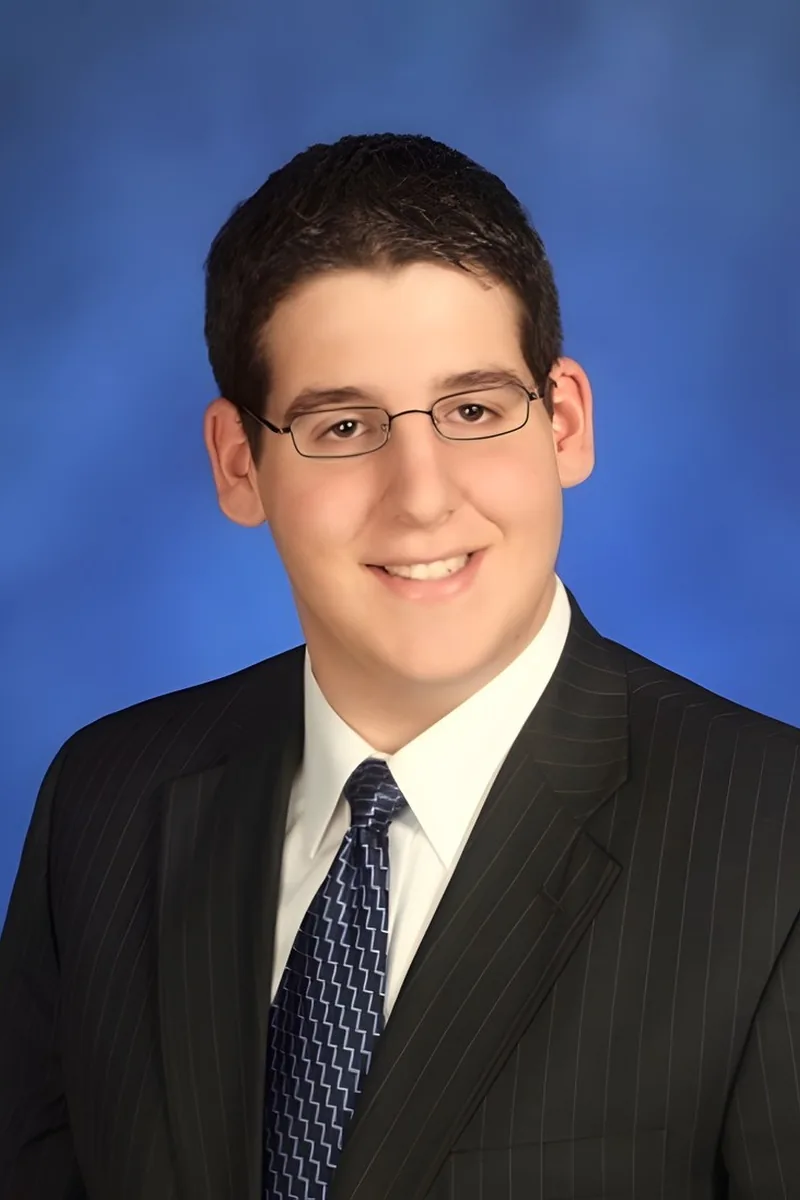
Having scored a 36 on the ACT and taught honors chemistry alongside AP-level math and statistics, Ethan brings a quantitative sharpness to college chemistry that's especially useful when students hit the calculation-dense stretches — gas law problems, enthalpy calculations, solution stoichiometry. His environmental science background also means he can ground abstract topics like chemical kinetics and equilibrium in real-world systems where those principles visibly play out. Rated 5.0 by students.
I am a PhD student in Inorganic Chemistry at Yale University. I've been spreading my love of chemistry for the past several years as a TA for general chemistry, and I'm excited to share my passion with you! Prior to Yale, I got my B.S. in chemistry from Caltech, where I also served as a TA for both general chemistry lab and advanced inorganic chemistry. Outside of teaching and research, I enjoy fencing, reading, and playing piano.
Premed coursework at Yale put Kaitlin through the full gauntlet of gen chem — from electron configurations and VSEPR theory to equilibrium and electrochemistry — alongside some of the most rigorous problem sets in the country. She picked up study strategies along the way that turn dense material into something manageable, breaking each topic into the conceptual piece and the quantitative piece so students can pinpoint exactly where they're getting stuck.
Jumping from high school chemistry to college-level coursework means suddenly dealing with quantum numbers, molecular orbital theory, and multi-step equilibrium problems that move fast. Noah has been on both sides of that transition — he earned his biochemistry degree magna cum laude and then spent two years as a university organic chemistry TA, grading exams and running review sessions. He knows precisely where college students get lost and how to get them back on track.
A molecular biology degree means Chantel spent serious time with the chemistry that underpins biological systems — electron configurations, chemical bonding, solution chemistry, and the thermodynamic principles that drive cellular reactions. She tackles gen chem problems by slowing down at the exact step where notation or logic trips a student up, rebuilding clarity before moving forward.
Having earned her B.S. in Chemistry, Sabine has the full picture of how gen chem topics like electron configuration, bonding theory, and chemical kinetics thread into upper-level coursework — so she teaches introductory material with an eye toward what's coming, not just what's on the next exam. She's especially sharp at breaking down the logic behind equilibrium expressions and redox balancing, where students often memorize steps without understanding the chemistry driving them. Rated 5.0 by students.
Ten years of tutoring chemistry while progressing through medical school and into surgical residency applications means Patrick has revisited gen chem concepts like acid-base equilibria, reaction kinetics, and thermodynamics dozens of times — each pass deepening how he explains them. He zeroes in on the specific step in a multi-part problem where a student's reasoning breaks, whether it's a conceptual misread of Le Chatelier's principle or a unit-conversion slip buried in a stoichiometry chain.
Decades of work as a PhD chemical engineer mean Steven has used gen chem concepts like reaction thermodynamics, equilibrium, and stoichiometry as professional tools — not exam topics he learned once and moved on from. He tackles tough problems by explaining the idea one way, then reframing it from a different angle, and grounding it with a practical example so the concept sticks from multiple directions. Rated 4.9 by students.
Computer science at Cornell Engineering required Ravnoor to grind through the same rigorous gen chem sequence that gates so many STEM majors — and his 5.0 rating suggests he retained more than enough to teach it. He tackles calculation-dense topics like stoichiometry and gas laws by decomposing them the way a programmer would: isolate the variables, track the units, and debug each step before moving forward.
Pursuing a dual degree in biostatistics and public health at Brown, Joyce has worked through college chemistry with the quantitative rigor that comes from living in both the biology and statistics sides of STEM — so she's comfortable with the molarity calculations, reaction stoichiometry, and equilibrium expressions that overwhelm students who expected a purely conceptual course. She tackles problems by clarifying the chemical logic first, then showing how the math follows naturally from it.
Fourth-year med student at Albert Einstein College of Medicine, Michael has been applying gen chem principles — acid-base chemistry, reaction thermodynamics, solution behavior — in clinical and biochemical contexts for years, which means he can explain not just how to solve a problem but where that concept resurfaces later. His biology degree from Yeshiva College (summa cum laude) and time teaching MCAT prep for Kaplan gave him practice breaking down the exact topics that trip up college chemistry students: stoichiometry setups, equilibrium expressions, and the leap from qualitative reasoning to quantitative problem-solving.
Being a Genetics Head Teaching Assistant at Brown while on the immunobiology track means Jessica has applied gen chem concepts like molecular interactions, reaction energetics, and acid-base chemistry in biological contexts where getting the fundamentals wrong isn't an option. She tackles college chemistry problems by pinpointing whether a student is stuck on the concept or the calculation — a distinction her years in math tutoring centers and science labs taught her to spot quickly. Rated 5.0 by students.
Sung earned his B.S. in Chemistry, which means he can unpack topics like thermodynamics, equilibrium constants, and molecular orbital theory with real depth rather than surface-level definitions. He connects abstract concepts — like why Gibbs free energy determines spontaneity — to concrete problem-solving strategies that stick. Rated 5.0 by students.
Working in a Yale research lab with tools like CRISPR-Cas9 means Matthew encounters gen chem principles — reaction kinetics, molecular interactions, buffer systems — in live experimental contexts, which sharpens how he explains them back at the introductory level. His biochemistry and molecular biology coursework built fluency with the bridge between general chemistry and its applications, so he can show students exactly why mastering something like equilibrium or thermochemistry pays off two courses down the road. Holds a 5.0 rating.
Second-year med student at Baylor College of Medicine, Michelle still remembers exactly which gen chem concepts — electron orbitals, buffer systems, reaction thermodynamics — became non-negotiable once biochemistry and physiology started building on them. Her Rice biochemistry degree means she learned college chemistry at a place where the coursework was rigorous enough to expose every shortcut that doesn't hold up, and she teaches accordingly: precise on the fundamentals so nothing collapses later.
Working in Duke's Bilbo lab on neuroimmune interactions means Lauren applies gen chem principles — reaction kinetics, molecular polarity, acid-base behavior — in a research setting where getting the chemistry wrong has real consequences for experimental design. That hands-on context, paired with her neuroscience and chemistry coursework, gives her a practical read on which concepts students need to truly internalize versus which ones they're just memorizing long enough to pass the exam. Rated 4.8 by students.
Having scored 1580 on the SAT and completed AP Chemistry coursework, Kendall brings sharp quantitative instincts to the trickiest parts of gen chem — the unit conversions buried inside equilibrium problems, the logarithmic reasoning behind pH calculations, the algebra hiding inside rate law expressions. She also knows that college chemistry often overwhelms students not because the concepts are impossibly hard, but because the pace is relentless, so she zeroes in on the specific spots where understanding broke down rather than re-teaching entire chapters. Rated 4.9 by students.
Going from a Penn undergrad to medical school means Jessica sat through college chemistry twice — once as a prerequisite and again when biochemistry and pharmacology demanded she actually internalize concepts like reaction energetics, acid-base equilibria, and molecular interactions at a deeper level. That second pass gave her a clear sense of which gen chem topics students need to truly own versus merely survive, and she teaches accordingly. Rated 4.8 by students.
Between a biochemistry degree and ongoing work in biochemical laboratories, Andrew has used gen chem concepts like reaction thermodynamics, molecular bonding, and acid-base chemistry as everyday tools — not just exam material he learned and forgot. He teaches college chemistry by grounding abstract ideas in the lab contexts where they actually behave, so topics like equilibrium constants and enthalpy changes carry physical meaning rather than just numerical answers. Rated 4.9 by students.
Testimonials
Because the right College Chemistry tutor makes all the difference.
Average Session Rating – Based on 3.4M Learner Ratings
Nearby College Chemistry Tutors
Other Bridgeport Tutors
Related Science Tutors in Bridgeport
Frequently Asked Questions
College Chemistry usually covers atomic structure, bonding, stoichiometry, thermodynamics, equilibrium, acid-base chemistry, and oxidation-reduction reactions. Many courses also include laboratory work where you'll conduct experiments to reinforce theoretical concepts and develop hands-on scientific skills. The curriculum builds from foundational principles to more complex problem-solving, so a strong grasp of early topics like balancing equations and unit conversions is essential for success later in the course.
Balancing equations requires understanding both the symbolic language of chemistry and the conservation of atoms—it's easy to get overwhelmed by the mechanics without grasping the underlying principle. Many students try to memorize patterns instead of understanding that you're simply ensuring equal numbers of each element on both sides. Personalized 1-on-1 instruction helps you develop a systematic approach, practice with varied examples, and build confidence so equations become intuitive rather than frustrating.
Yes. Tutors can help you understand the scientific method, prepare for experiments by reviewing the underlying chemistry concepts, and work through data analysis and lab report writing after you've completed your work. They can also help you visualize what's happening at the molecular level during reactions, which deepens your understanding of both the experiment and the broader chemistry concepts it illustrates. This support strengthens both your technical skills and your ability to think like a scientist.
Unit conversions and stoichiometry are about building a reliable system—converting between moles, grams, liters, and other units using dimensional analysis. The key is practice with immediate feedback so you catch errors early and understand where mistakes happen. Personalized tutoring lets you work through problems at your own pace, ask questions when you're stuck, and develop the problem-solving strategies that make these calculations feel manageable instead of overwhelming.
Abstract chemistry concepts become clearer when you can visualize what's happening at the atomic and molecular level. Tutors use diagrams, models, and real-world examples to help you see how electrons behave in bonding, how energy flows in reactions, and why certain processes are spontaneous. By connecting theory to tangible examples—like why salt dissolves in water or how a battery works—you develop genuine understanding rather than just memorizing definitions.
Your first session is about understanding where you are right now—what concepts feel solid, where you're struggling, and what your goals are for the course. Tutors will likely review some foundational material, assess your problem-solving approach, and identify patterns in any mistakes you've been making. From there, you'll work together to create a personalized plan that targets your specific challenges and builds toward mastery of College Chemistry.
Varsity Tutors connects you with tutors who have strong backgrounds in chemistry and experience helping students succeed in College Chemistry courses. When you reach out, you can specify your course level, the topics you need help with, and your learning style—and you'll be matched with someone who's a good fit. Tutors work with students across the Bridgeport area and tailor their approach to your specific needs and schedule.
College Chemistry requires real understanding—memorizing formulas won't help you apply them to new problems or explain why reactions happen the way they do. Tutors focus on building your conceptual foundation by asking you questions, having you work through problems, and connecting ideas across topics. This approach develops your scientific reasoning skills so you can tackle unfamiliar problems with confidence, which is what College Chemistry exams actually test.
Let’s find your perfect tutor
Answer a few quick questions. We’ll recommend the right plan and match you with a top 5% tutor.