Award-Winning AP Chemistry Tutors
serving Bridgeport, CT
AP Chemistry
Tutors in Bridgeport
Private 1-on-1 tutoring, weekly live classes for academic support, test prep & enrichment, practice tests and diagnostics, and more to elevate grades and test scores.
Based on 3.4M Learner Ratings
UniversitiesSchools & Universities
DeliveredHours Delivered
ProficiencyGrowth in Proficiency
Who needs tutoring?
No obligation. Takes ~1 minute.
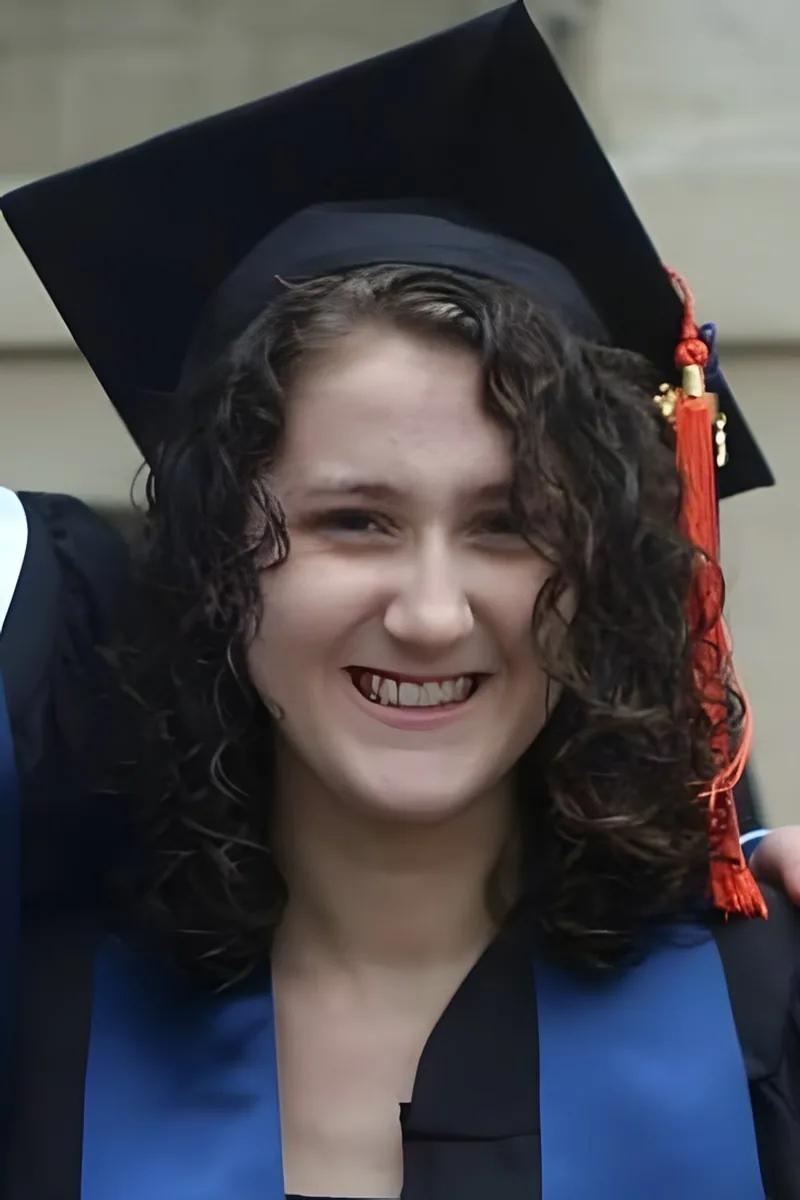
I am a PhD student in Inorganic Chemistry at Yale University. I've been spreading my love of chemistry for the past several years as a TA for general chemistry, and I'm excited to share my passion with you! Prior to Yale, I got my B.S. in chemistry from Caltech, where I also served as a TA for both general chemistry lab and advanced inorganic chemistry. Outside of teaching and research, I enjoy fencing, reading, and playing piano.

Richard coached his school's Chemistry Olympiad team, which means he's comfortable with the kind of multi-step equilibrium, thermodynamics, and kinetics problems that define the AP Chemistry exam. He knows which conceptual gaps — like confusing enthalpy with entropy or misapplying Le Chatelier's principle — tend to cost students the most points on free-response sections. His competition-level chemistry background gives him a toolkit that goes well beyond what most AP prep covers.
Between earning a biochemistry degree magna cum laude and pursuing a PhD in medicinal chemistry, Noah has lived AP Chemistry's toughest topics — equilibrium, thermodynamics, bonding theory, kinetics — at a level far beyond the AP exam. He knows exactly which conceptual leaps trip students up on free-response questions and tackles those gaps head-on. His 5.0 tutoring rating speaks to how clearly he communicates complex material.
A chemistry degree means Sabine didn't just study AP Chemistry topics like equilibrium, electrochemistry, and thermodynamics — she built an entire undergraduate career around them, giving her the depth to explain not just how to solve a problem but why the chemistry works that way. She's particularly sharp on the conceptual reasoning behind reaction spontaneity and acid-base behavior, areas where students often memorize rules without understanding the molecular story. Rated 5.0 by students.
A medical student now applying to Head & Neck Surgery residencies, Patrick has lived through every level of chemistry — from general and organic through biochemistry and the MCAT's chemical foundations — and knows which AP Chemistry concepts actually matter downstream, especially equilibrium, thermodynamics, and acid-base theory. He teaches the free-response side of the exam by connecting each calculation back to the physical process it represents, so students aren't just balancing equations but understanding what drives a reaction forward.
Raveena's bioinformatics degree at VCU means she doesn't just know AP Chemistry's content — she applies it daily, using computational tools to analyze molecular structures and chemical data in ways that make topics like electron configuration and periodic trends feel concrete. Her 8-year direct med program has taken her well beyond the AP curriculum through organic chemistry and biochemistry, giving her a clear picture of which foundational concepts the free-response section rewards most. Rated 4.9 by students.
AP Chemistry's free-response questions demand more than memorizing reactions — they require students to connect equilibrium, thermodynamics, and kinetics into coherent explanations under time pressure. Vishank's data analytics background at Ohio State sharpens how he breaks down multi-step problems, teaching students to identify what the question is really testing before diving into calculations. Rated 4.9 by students.
A mechanical engineering degree from WashU (Magna Cum Laude) and refinery work at ExxonMobil mean Caroline has applied thermodynamics, kinetics, and gas behavior in industrial settings where precision isn't optional — that real-world fluency translates directly to AP Chemistry's most calculation-heavy units. She teaches concepts like enthalpy changes and reaction spontaneity by connecting them to the energy systems she actually engineered, giving students a concrete anchor for abstract ideas. Rated 5.0 by students.
Forty-plus AP and general chemistry students have worked through thermodynamics, electrochemistry, and equilibrium calculations with Amy, and her 5.0 rating speaks to the results. Her master's in environmental toxicology keeps her deeply connected to the material — she teaches AP concepts like Gibbs free energy and kinetics as tools scientists actually use, not just formulas to memorize for the exam.
Cornell's biology curriculum required Viraj to work through college-level chemistry — from reaction energetics to molecular interactions — in courses where chemical reasoning underpins everything from cellular metabolism to pharmacology. He applies that cross-disciplinary perspective to AP Chemistry topics like intermolecular forces and solution chemistry, teaching students to predict behavior at the molecular level instead of memorizing isolated rules. Rated 5.0 by students.
Thermodynamics, equilibrium, and electrochemistry are where most AP Chemistry students start losing their footing. Sharon tackles these topics by connecting abstract concepts to biological systems she knows inside out from medical school — like why buffer systems matter in blood pH regulation. That cross-disciplinary lens makes the toughest AP Chem material more intuitive.
Cornell's environmental engineering program requires a chemistry sequence heavy on aqueous equilibria, redox reactions, and thermodynamics — exactly the content that dominates AP Chemistry's most demanding free-response questions. Akanksha draws on that coursework plus her experience teaching chemistry through Cornell's STEP program to walk students through topics like acid-base titrations and reaction energetics with real-world environmental applications that make the material stick. Rated 4.8 by students.
Computational biology at Cornell means Emily lives at the intersection of quantitative reasoning and molecular science — she's worked through the same college-level chemistry that AP students are preparing for, but with the added demand of modeling chemical systems computationally. She teaches topics like equilibrium and reaction energetics by emphasizing the mathematical structure underneath, so students learn to read what equations are actually telling them about molecular behavior. Rated 4.9 by students.
Thermodynamics, equilibrium, and electrochemistry each demand a different kind of thinking, and AP Chemistry punishes students who treat them as separate chapters instead of interconnected ideas. Jonathan's background spans both biology and chemistry at Cornell, so he unpacks concepts like Gibbs free energy and Le Chatelier's principle by showing how they govern real chemical and biological systems. Rated 4.9 by students.
Enric earned his PhD in Chemistry, which means AP Chem topics like equilibrium, thermodynamics, and kinetics aren't just exam material — they're the foundation of his professional expertise. He knows which free-response question styles the College Board favors and teaches students to connect particulate-level reasoning to macroscopic observations, the skill that separates 4s from 5s. Rated 5.0.
Equilibrium expressions, thermodynamics, and electrochemistry all demand comfort with both conceptual reasoning and quantitative precision. JF's math and computational science background at Stanford makes the mathematical side of AP Chem — ICE tables, rate law calculations, stoichiometric conversions — second nature, freeing up mental energy for the deeper conceptual understanding the exam rewards. Rated 5.0 by students.
The jump from honors chemistry to AP Chemistry catches students off guard because suddenly they need to explain *why* — why equilibrium shifts, why certain reactions are spontaneous, why atomic structure dictates bonding behavior. Cassandra tackles these conceptual layers by tying each unit back to the underlying thermodynamic and kinetic principles, so students aren't just memorizing trends but understanding the logic that drives them. Her science degree and experience with analytical chemistry give her depth well beyond the AP curriculum.
Testimonials
Because the right AP Chemistry tutor makes all the difference.
Average Session Rating – Based on 3.4M Learner Ratings
Practice AP Chemistry
Free practice tests, flashcards, and AI tutoring for AP Chemistry
Nearby AP Chemistry Tutors
Other Bridgeport Tutors
Related Science Tutors in Bridgeport
Frequently Asked Questions
Score improvement depends on your starting point and commitment level, but most students see meaningful gains with consistent, personalized instruction. Many students improve by 1-2 points on the AP scale (which ranges from 1-5), though some see larger jumps if they address foundational gaps early. The key is identifying which topics—like equilibrium, thermodynamics, or kinetics—are holding you back, then building targeted practice around those areas.
AP Chemistry students often struggle with quantitative problem-solving, especially stoichiometry and equilibrium calculations where small errors cascade. Many also find the free-response section intimidating because it requires both conceptual understanding and clear communication of reasoning. Time management on exam day is another frequent pain point—students run out of time on the calculation-heavy section or second-guess themselves on conceptual questions.
Ideally, starting tutoring 3-4 months before the exam gives you time to review the full curriculum, identify weak areas, and build confidence through practice tests. However, even 6-8 weeks of focused sessions can help if you're targeting specific topics or exam strategies. The best approach is to start as soon as you notice gaps in understanding—whether that's September or March—rather than waiting until the last minute.
Practice tests are essential for AP Chemistry success because they help you understand the exam format, identify weak topics, and practice pacing under timed conditions. Taking full-length practice tests every 2-3 weeks lets you track progress and adjust your study strategy. A tutor can review your practice test results to pinpoint exactly where you're losing points—whether it's calculation errors, misreading questions, or conceptual misunderstandings—and target those specific areas.
Varsity Tutors connects you with expert tutors who specialize in AP Chemistry and understand the specific curriculum and exam format. When you get matched with a tutor, you can discuss your current level, target score, and timeline so they can customize their approach to your needs. Many tutors are experienced with Bridgeport-area students and familiar with the teaching styles at local high schools.
Your first session is typically diagnostic—the tutor will assess your current understanding of key AP Chemistry concepts, review your recent test scores or practice problems, and learn about your goals and timeline. They'll ask about topics that feel confusing (like equilibrium or redox reactions) and may give you a brief practice problem to see where gaps exist. By the end, you'll have a clear plan for what to focus on and how frequently you should meet.
Absolutely—test anxiety often stems from feeling unprepared or uncertain about question formats, and personalized tutoring directly addresses both. By working through practice problems regularly and taking full-length practice tests, you build genuine confidence in your abilities. A tutor can also teach you specific test-taking strategies like time management techniques and how to approach unfamiliar questions, which reduces panic on exam day.
A tutor starts by identifying which topics trip you up most—whether that's thermodynamics, acid-base equilibrium, or organic chemistry—through diagnostic questions and practice test review. Then they design sessions around those specific areas, using targeted practice problems and conceptual explanations tailored to how you learn best. This focused approach is much more efficient than reviewing material you already understand, so you make faster progress toward your target score.
Let’s find your perfect tutor
Answer a few quick questions. We’ll recommend the right plan and match you with a top 5% tutor.