Award-Winning College Chemistry Tutors
serving Hartford, CT
College Chemistry
Tutors in Hartford
Private 1-on-1 tutoring, weekly live classes for academic support, test prep & enrichment, practice tests and diagnostics, and more to elevate grades and test scores.
Based on 3.4M Learner Ratings
UniversitiesSchools & Universities
DeliveredHours Delivered
ProficiencyGrowth in Proficiency
Who needs tutoring?
No obligation. Takes ~1 minute.

Jumping from high school chemistry to college-level coursework means suddenly dealing with quantum numbers, molecular orbital theory, and multi-step equilibrium problems that move fast. Noah has been on both sides of that transition — he earned his biochemistry degree magna cum laude and then spent two years as a university organic chemistry TA, grading exams and running review sessions. He knows precisely where college students get lost and how to get them back on track.
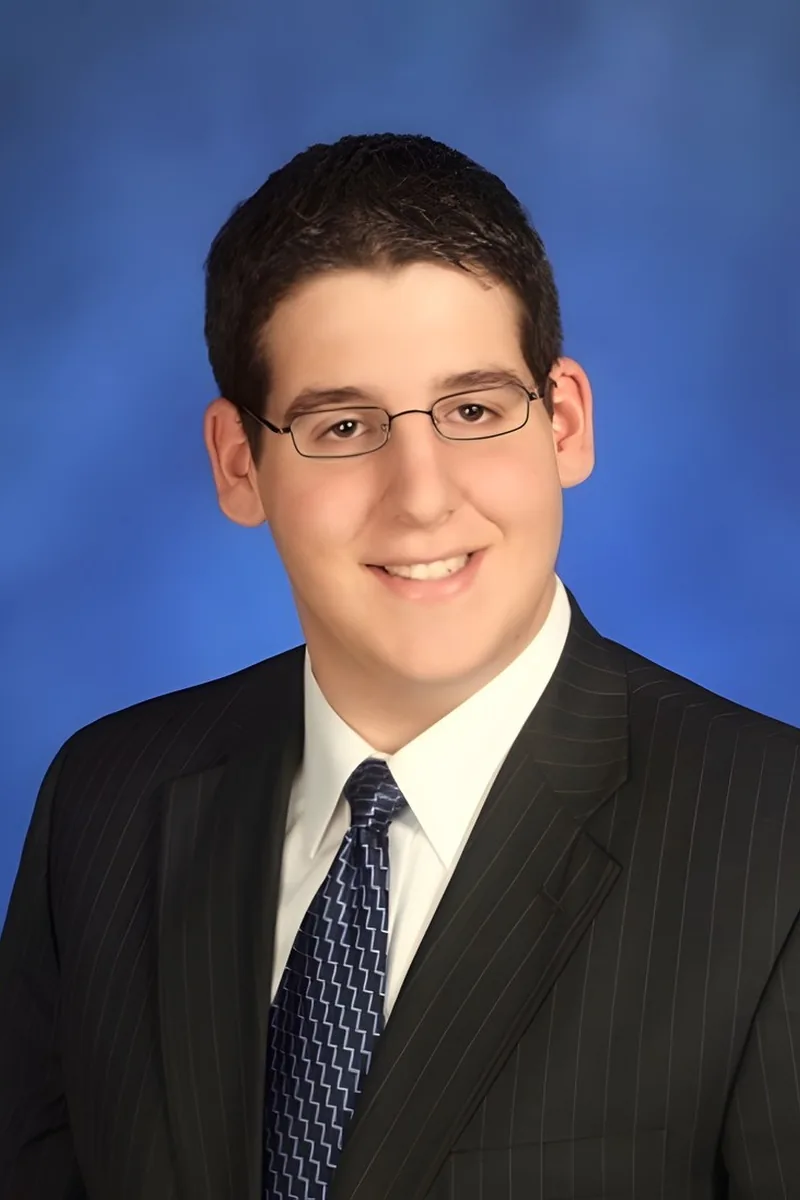
Having scored a 36 on the ACT and taught honors chemistry alongside AP-level math and statistics, Ethan brings a quantitative sharpness to college chemistry that's especially useful when students hit the calculation-dense stretches — gas law problems, enthalpy calculations, solution stoichiometry. His environmental science background also means he can ground abstract topics like chemical kinetics and equilibrium in real-world systems where those principles visibly play out. Rated 5.0 by students.
Most college chemistry students don't expect a math major to be the one who makes electron configurations or equilibrium expressions click — but Tessa's mathematics training at Yale means she can cleanly separate the quantitative mechanics of a problem from the chemical reasoning, which is exactly where most gen chem confusion hides. She also scored a 36 ACT and holds a 4.9 rating, though what matters more is her knack for showing students the logical structure underneath topics that otherwise feel like pure memorization.
I am a PhD student in Inorganic Chemistry at Yale University. I've been spreading my love of chemistry for the past several years as a TA for general chemistry, and I'm excited to share my passion with you! Prior to Yale, I got my B.S. in chemistry from Caltech, where I also served as a TA for both general chemistry lab and advanced inorganic chemistry. Outside of teaching and research, I enjoy fencing, reading, and playing piano.
Premed coursework at Yale put Kaitlin through the full gauntlet of gen chem — from electron configurations and VSEPR theory to equilibrium and electrochemistry — alongside some of the most rigorous problem sets in the country. She picked up study strategies along the way that turn dense material into something manageable, breaking each topic into the conceptual piece and the quantitative piece so students can pinpoint exactly where they're getting stuck.
A molecular biology degree means Chantel spent serious time with the chemistry that underpins biological systems — electron configurations, chemical bonding, solution chemistry, and the thermodynamic principles that drive cellular reactions. She tackles gen chem problems by slowing down at the exact step where notation or logic trips a student up, rebuilding clarity before moving forward.
Ten years of tutoring chemistry while progressing through medical school and into surgical residency applications means Patrick has revisited gen chem concepts like acid-base equilibria, reaction kinetics, and thermodynamics dozens of times — each pass deepening how he explains them. He zeroes in on the specific step in a multi-part problem where a student's reasoning breaks, whether it's a conceptual misread of Le Chatelier's principle or a unit-conversion slip buried in a stoichiometry chain.
Having earned her B.S. in Chemistry, Sabine has the full picture of how gen chem topics like electron configuration, bonding theory, and chemical kinetics thread into upper-level coursework — so she teaches introductory material with an eye toward what's coming, not just what's on the next exam. She's especially sharp at breaking down the logic behind equilibrium expressions and redox balancing, where students often memorize steps without understanding the chemistry driving them. Rated 5.0 by students.
Medical school demands fluency in chemistry that goes well beyond introductory courses, and Abrahim brings that depth to college-level topics like thermodynamics, kinetics, and electrochemistry. He diagnoses conceptual gaps fast — if a student can balance an equation but can't explain why a reaction is spontaneous, that's exactly where the session will dig in.
Li's doctoral-level medical coursework means she's encountered college chemistry concepts like acid-base equilibria, solution chemistry, and reaction energetics in clinical contexts where getting the chemistry wrong has real consequences. Her microbiology and anatomy teaching background also means she can ground abstract gen chem topics — like intermolecular forces or oxidation states — in the biological systems students will see again in upper-level courses.
Chemical and biomolecular engineering at MIT means Natasha uses general chemistry concepts — equilibrium, kinetics, electrochemistry — as daily tools, not just exam topics. She talks through reaction mechanisms and stoichiometry problems out loud with students, treating each session more like a collaborative lab meeting than a lecture. Rated 4.9 by students.
Thermodynamics, quantum numbers, and reaction kinetics all demand the kind of mathematical fluency that comes naturally to Nima as a Duke physics student. He unpacks college chemistry problems by grounding each calculation in the underlying physical principles, which makes topics like enthalpy, molecular orbital theory, and electrochemistry far more intuitive.
Between his physics training and years of hands-on biochemistry research, Matthew tackles college chemistry from both the theoretical and applied sides. He's especially effective with thermodynamics, molecular orbital theory, and kinetics — topics where students often struggle to bridge lecture material and problem sets. His lab experience at Columbia gives him concrete examples that make abstract concepts like enthalpy and entropy click.
Having taken the full gen chem sequence at Cornell alongside organic chemistry and upper-level biology coursework, Jonathan knows exactly where college chemistry concepts like electron configuration, VSEPR theory, and solution stoichiometry start causing problems — usually when the course shifts from memorizable rules to applied reasoning. His human biology background means he naturally ties chemical principles back to biological systems, which tends to click for the pre-med and life science students who make up most of his college chemistry sessions. Rated 4.9 by students.
Having taken college chemistry and then immediately applied it through four years of medical school, Sharon knows which gen chem concepts — electron orbitals, acid-base equilibria, reaction thermodynamics — actually stick with students and which ones need to be taught differently to last beyond the final exam. She unpacks problems by tying the abstract chemistry back to tangible examples from biology and medicine, which tends to make the material click for the pre-health students who make up most gen chem classrooms. Rated 5.0 by students.
General chemistry at the college level lives or dies on whether you actually understand what's happening at the molecular level — equilibrium shifts, thermodynamic spontaneity, orbital hybridization — or just memorize formulas. Mosab's health sciences graduate work means he uses these concepts constantly and can connect them to real biochemical applications. Rated 5.0 by students.
Studying chemistry at Harvard while preparing for Columbia Medical School means James has taken college chemistry far past the introductory level — he knows which early concepts like electron configurations, VSEPR theory, and reaction stoichiometry quietly become load-bearing walls for everything from organic mechanisms to biochemical pathways. He teaches gen chem by flagging those high-stakes fundamentals early, so students aren't blindsided when later courses assume fluency. Rated 4.9 by students.
When college chemistry students feel overwhelmed, it's usually because topics like gas laws, equilibrium, and stoichiometry are piling up faster than they can organize the connections between them — and untangling that clutter is where Rachel excels. Her science background across biology, anatomy, and physiology means she's applied gen chem principles in multiple contexts, so she can show how a concept like acid-base behavior or molecular polarity actually functions beyond the textbook chapter it first appears in.
A bio-organic chemistry degree means Alex has lived through the full gen chem sequence and then pushed those concepts further — into reaction mechanisms, molecular orbital theory, and the quantitative problem-solving that upper-level chemistry demands. That depth shows up when tackling topics like chemical kinetics or periodic trends, where he can explain not just how to solve a problem but why the underlying chemistry behaves the way it does.
Decades of work as a PhD chemical engineer mean Steven has used gen chem concepts like reaction thermodynamics, equilibrium, and stoichiometry as professional tools — not exam topics he learned once and moved on from. He tackles tough problems by explaining the idea one way, then reframing it from a different angle, and grounding it with a practical example so the concept sticks from multiple directions. Rated 4.9 by students.
Testimonials
Because the right College Chemistry tutor makes all the difference.
Average Session Rating – Based on 3.4M Learner Ratings
Nearby College Chemistry Tutors
Other Hartford Tutors
Related Science Tutors in Hartford
Frequently Asked Questions
College Chemistry requires mastering abstract concepts like molecular structure and bonding while simultaneously developing strong problem-solving skills. Students often struggle with balancing chemical equations, unit conversions, and connecting theoretical principles to real-world applications—plus the pace moves significantly faster than high school chemistry. Personalized tutoring helps you build conceptual understanding rather than just memorizing formulas, which is essential for success in both exams and upper-level science courses.
Yes. Expert tutors can help you understand the scientific method, experimental design, and how to interpret lab results—not just complete reports. They can explain the chemistry happening in your experiments, help you troubleshoot unexpected results, and connect lab observations to the theory you're learning in lecture. This deeper understanding strengthens both your lab skills and your grasp of core chemistry concepts.
During your first session, a tutor will assess your current understanding of chemistry fundamentals, identify specific areas where you're struggling (whether it's equilibrium, thermodynamics, or stoichiometry), and learn about your learning style. From there, you'll develop a personalized plan that targets your weak spots while building confidence in areas where you're stronger. Most students find it helpful to bring recent exams, problem sets, or specific topics you want to focus on.
Chemistry involves visualizing things you can't see—atoms, molecular orbitals, reaction mechanisms—which is challenging for many students. Expert tutors use multiple approaches like drawing molecular structures, working through 3D models conceptually, and connecting abstract ideas to tangible examples. When you can visualize what's actually happening at the molecular level, balancing equations and predicting reaction outcomes becomes much more intuitive.
Ideally, start tutoring several weeks before a major exam so you have time to build understanding rather than just cramming. However, even a few focused sessions before an exam can help you identify gaps and practice problem-solving strategies. Consistent, ongoing tutoring throughout the semester is most effective—it prevents knowledge gaps from piling up and reduces test anxiety since you'll feel genuinely prepared.
Look for tutors with strong chemistry backgrounds—ideally a degree in chemistry or a related science field, plus demonstrated experience teaching college-level chemistry. They should understand both the content deeply and how to explain complex concepts clearly. Varsity Tutors connects you with expert tutors who can demonstrate their expertise and teaching approach during your first session, so you can be confident you're working with someone who truly understands the subject.
Memorizing formulas might get you through one exam, but College Chemistry builds on itself—you need deep understanding to succeed in subsequent courses and in your career. Expert tutors focus on helping you understand *why* reactions occur, *how* to apply concepts to new problems, and *when* to use different approaches. This conceptual foundation makes chemistry less overwhelming and prepares you for advanced coursework like organic chemistry or biochemistry.
Hartford's schools and universities offer study groups, office hours, and lab resources that work well alongside personalized tutoring. Tutors can help you maximize these resources by preparing targeted questions for your professor's office hours or guiding you through difficult problem sets before study group sessions. Many students find that combining expert tutoring with campus resources creates the most comprehensive support system.
Let’s find your perfect tutor
Answer a few quick questions. We’ll recommend the right plan and match you with a top 5% tutor.