Award-Winning AP Physics C: Mechanics Tutors
serving Sacramento, CA
AP Physics C: Mechanics
Tutors in Sacramento
Private 1-on-1 tutoring, weekly live classes for academic support, test prep & enrichment, practice tests and diagnostics, and more to elevate grades and test scores.
Based on 3.4M Learner Ratings
UniversitiesSchools & Universities
DeliveredHours Delivered
ProficiencyGrowth in Proficiency
Who needs tutoring?
No obligation. Takes ~1 minute.

Thirty years of teaching physics and holding a state certification means Michael has watched thousands of students hit the same stumbling blocks in calculus-based mechanics — the shift from memorizing kinematic equations to actually deriving motion from Newton's second law in integral form. His molecular biology graduate work gave him the quantitative rigor to teach across disciplines, and he uses that cross-training to connect force diagrams and energy methods to the kind of systematic reasoning that clicks on free-response problems.
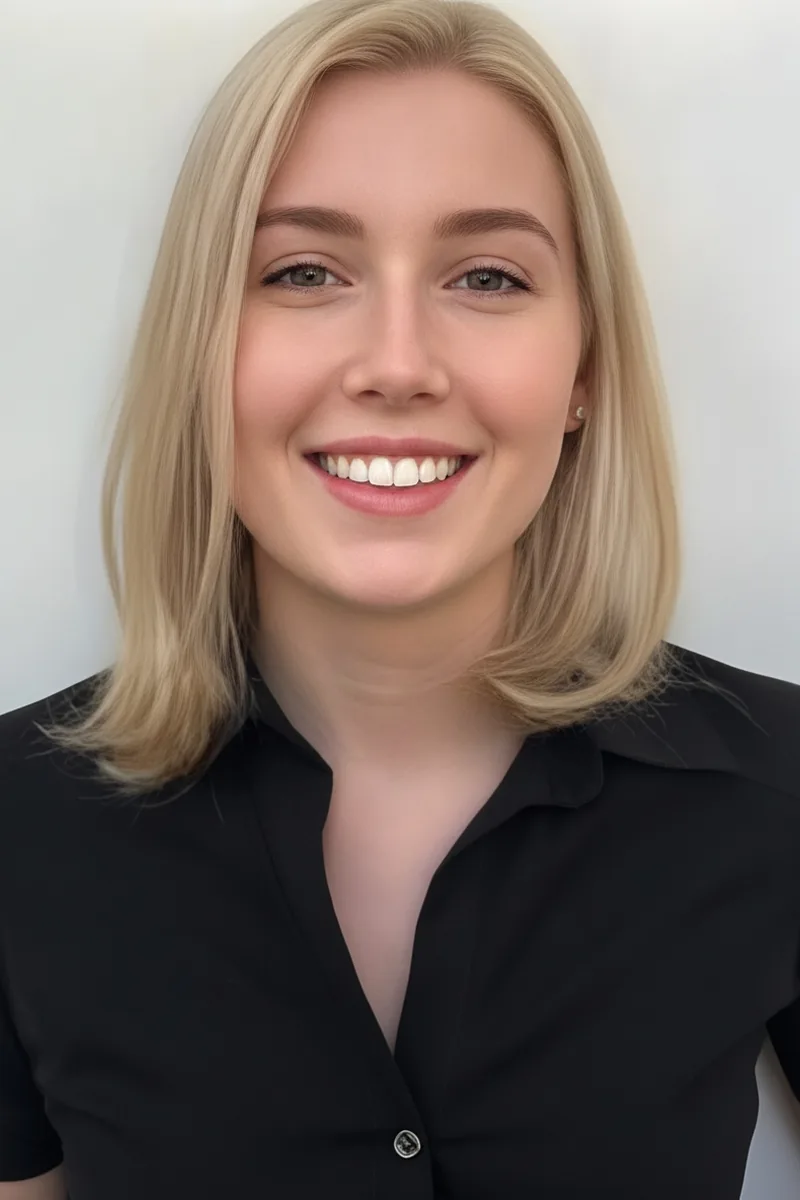
Having TA'd multiple engineering courses at WashU while earning dual degrees in mechanical and energy engineering, Ava spent semesters breaking down the same calculus-based force analysis, work-energy theorems, and rotational dynamics that define the AP Physics C: Mechanics curriculum. Her 35 ACT speaks to the quantitative precision she brings to exam prep, and her current graduate work in environmental engineering keeps her fluent in the applied physics and differential equations students encounter on test day.
AP Physics C: Mechanics often trips up students who are comfortable with calculus in a math class but freeze when they need to apply it to a pulley system or a variable-force spring problem. Andrew pairs his strong math background — he's pursuing a double focus in finance and mathematics at Boston College — with hands-on physics tutoring across multiple levels, including the SAT Physics subject test. That cross-subject fluency means he can spot whether a student's stuck on the physics setup or the calculus execution and address the right one.
Cornell pre-med students rarely double down on calculus-based physics, but Pratik tutors AP Physics C: Mechanics alongside AP Chemistry and AP Biology — giving him a cross-disciplinary lens that's especially useful when mechanics problems involve biological or chemical systems in free-response scenarios. His 35 ACT confirms the quantitative fluency needed to walk students through setting up torque equations or integrating variable forces without losing sight of the underlying physics.
Three years of tutoring introductory physics students while completing dual bachelor's degrees in physics and mathematics — followed by a PhD in Computational Mathematics — means Justin has taught the calculus-based mechanics in AP Physics C from both sides of the chalkboard. He digs into the spots where students typically stall, like setting up angular momentum problems or knowing when a scenario calls for energy methods versus force analysis, and walks through the underlying math until the physics clicks. Rated 5.0 by students.
Biomedical engineering at Rice means Aurnab regularly applies calculus-based mechanics to biological systems — modeling forces on skeletal structures, analyzing motion in prosthetic designs — so the kinematics and Newton's laws on the AP Physics C exam map directly onto problems he's already solving in his coursework. His 36 ACT and 1590 SAT point to the mathematical precision that matters most when students need to cleanly set up a work-energy integral or differentiate a position function under exam time pressure. Rated 4.9 by students.
Steven's biology degree from Drexel included the calculus-based physics sequence that maps directly onto AP Physics C: Mechanics — kinematics, Newton's laws in differential form, and energy conservation problems that demand clean integral setups. Where many science-track tutors skim the mechanics, his organismal physiology concentration meant applying force and motion concepts to biological systems, giving him a concrete way to explain why a free-body diagram matters before any calculus happens. Rated 5.0 by students.
Biophysics at Rice means Aadith solves mechanics problems where the calculus isn't optional — modeling forces on protein structures, analyzing torque in molecular motors, applying Newton's laws to systems most students never picture in a physics classroom. That cross-disciplinary lens gives him a knack for teaching students how to read a physical scenario and decide whether to reach for an energy integral or a force-based differential equation. His 1590 SAT underscores the mathematical precision he brings to every free-response setup.
Chemical-biological engineering at the undergraduate level means Kristen solved mechanics problems with real calculus stakes — variable-force work integrals, rotational inertia derivations, coupled differential equations — long before they became exam questions. Her 36 ACT and 1590 SAT speak to the quantitative sharpness she brings to the trickiest AP Physics C problems, especially when students need to bridge the gap between setting up Newton's second law in differential form and actually executing the integration. Rated 4.9 by students.
Free-body diagrams, rotational inertia, and conservation of energy problems all require calculus-based reasoning that trips students up when they try to rely on formulas alone. Emily completed the full pre-med physics sequence at Cornell and spent her senior year tutoring calculus — two skills that converge directly in AP Physics C: Mechanics. She breaks multi-step problems into the underlying math so students see why the setup matters as much as the answer.
Computer engineering at Michigan means Jie solves mechanics problems where the physics and the math have to work together — modeling forces on robotic actuators, computing torques in electromechanical systems — so the calculus-based dynamics on the AP Physics C exam map directly to what he already builds and debugs. His 34 ACT confirms the quantitative sharpness, and he's especially effective at teaching students how to read a free-body diagram and translate it into the right differential equation rather than reaching for a memorized formula.
Scoring a 5 on both AP Physics C: Mechanics and AP Calculus BC while taking 16 AP courses total, Derek built the habit of connecting calculus tools to physical intuition under real exam pressure — and he brings that same efficiency to tutoring. His computer science major at Harvard sharpens his approach to mechanics problems: decompose the system, identify constraints, then execute the math cleanly, much like debugging code. Rated 4.9 by students, he's particularly effective at teaching the structured problem-solving that turns rotational dynamics and variable-force scenarios into manageable steps.
Testimonials
Because the right AP Physics C: Mechanics tutor makes all the difference.
Average Session Rating – Based on 3.4M Learner Ratings
Practice AP Physics C: Mechanics
Free practice tests, flashcards, and AI tutoring for AP Physics C: Mechanics
Nearby AP Physics C: Mechanics Tutors
Other Sacramento Tutors
Related Science Tutors in Sacramento
Frequently Asked Questions
AP Physics C: Mechanics focuses on classical mechanics and covers kinematics, Newton's laws, work and energy, momentum, circular motion, oscillations, and gravitation. The course emphasizes calculus-based problem solving, which distinguishes it from AP Physics 1. Students learn to apply mathematical reasoning to real-world physics scenarios, making it essential to have strong calculus skills alongside physics understanding.
The main difficulty stems from integrating calculus with physics concepts—students must not only understand the physics but also apply derivatives and integrals correctly. Many students struggle with problem-solving pacing during the exam, as questions require multi-step reasoning and careful setup. Additionally, the free-response section demands clear communication of methodology, which many students find more demanding than multiple-choice questions.
Personalized 1-on-1 instruction allows tutors to identify your specific weak areas—whether that's circular motion, energy conservation, or calculus application—and target those gaps directly. Tutors can also teach you strategic problem-solving approaches, help you practice free-response questions with feedback on your explanations, and build your confidence with timed practice tests that mirror the actual exam format.
Score improvement depends on your starting point and effort level, but students typically see meaningful gains—often 1-2 points on the 1-5 AP scale—when they work consistently with a tutor for several months. The key is identifying weak topics early, practicing problems regularly, and refining your test-taking strategy. Starting tutoring 3-4 months before the exam gives you solid time to build mastery and confidence.
The free-response section rewards clear methodology and correct setup as much as the final answer. Start by identifying the relevant physics principles, define your variables, show your calculus steps, and explain your reasoning. Tutors can help you practice writing concise, well-organized solutions and teach you how to earn partial credit even if your final answer isn't perfect—a crucial skill for maximizing your score.
Varsity Tutors connects you with expert tutors in Sacramento who specialize in AP Physics C: Mechanics and understand the specific challenges of the curriculum. When you get matched with a tutor, you can discuss your current level, target score, and availability to create a personalized study plan that fits your schedule and learning style.
Practice tests are critical because they help you build stamina, identify weak topics under timed conditions, and get comfortable with the exam format. Taking full-length practice tests every 2-3 weeks allows you to track progress and refine your pacing strategy. A tutor can review your practice test results with you, pinpoint patterns in your mistakes, and help you develop targeted strategies to address them.
Yes, calculus proficiency is essential since the course uses derivatives and integrals to solve physics problems. If you're weak in calculus, consider getting support in that area alongside your physics tutoring, or find a tutor who can help you strengthen both skills together. Many students find that understanding the physics concept first, then applying the calculus, makes both subjects easier to grasp.
Let’s find your perfect tutor
Answer a few quick questions. We’ll recommend the right plan and match you with a top 5% tutor.