Award-Winning SAT Math Tutors
serving Seattle, WA
SAT Math
Tutors in Seattle
Private 1-on-1 tutoring, weekly live classes for academic support, test prep & enrichment, practice tests and diagnostics, and more to elevate grades and test scores.
Based on 3.4M Learner Ratings
UniversitiesSchools & Universities
DeliveredHours Delivered
ProficiencyGrowth in Proficiency
Who will be getting tutoring?
No obligation. Takes ~1 minute.

An SAT Math score is often less about what a student knows and more about how quickly they recognize which tool to use — is this a systems problem, a quadratic in disguise, or a ratio setup? Grant, who scored 1530 on the SAT, unpacks the test's recurring question structures so students spend less time deliberating and more time solving.
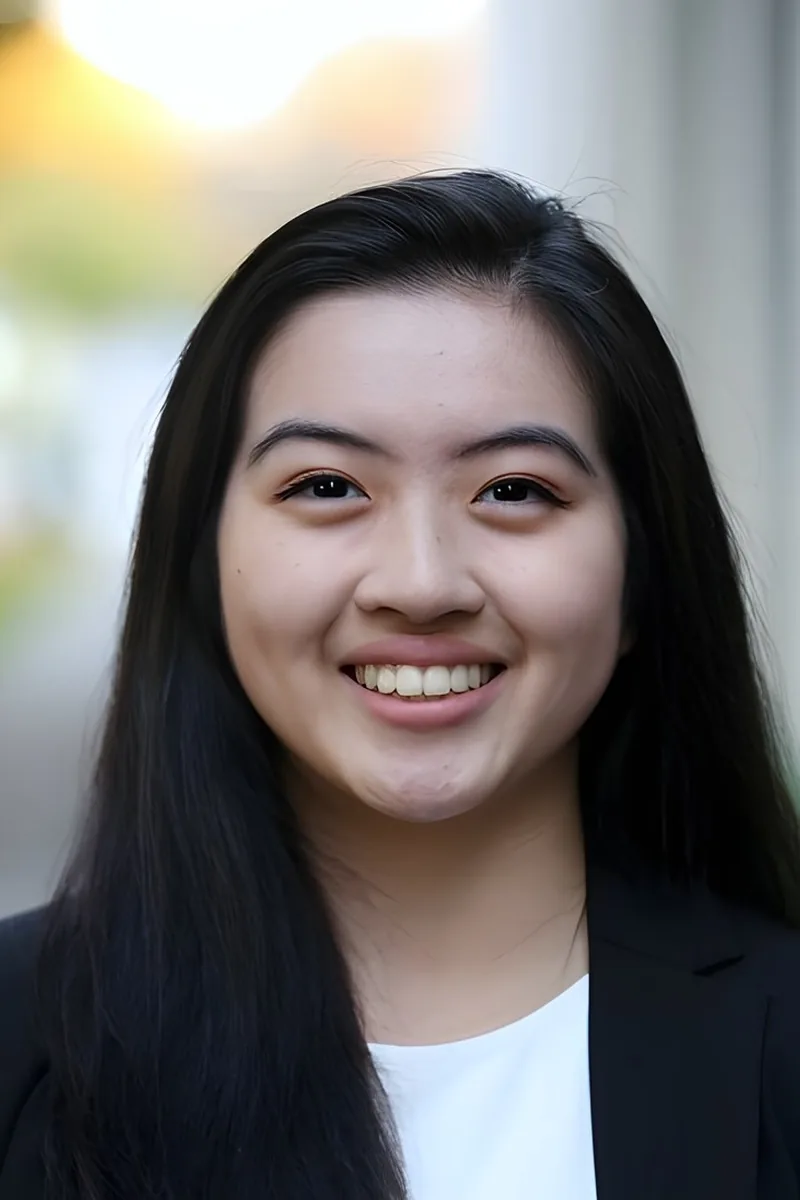
Alice earned a 1550 SAT, and her strength in the Math section comes from years of genuine enthusiasm for problem-solving across algebra, geometry, and data analysis. She zeroes in on the specific question styles College Board uses — like multi-step word problems that bury the actual question — and teaches students to decode them systematically before picking up a pencil.
I am expecting to complete my PhD within the year. I offer tutoring for English or AP English classes, and writing assignments for any class at any level, as well as SAT, GRE and GRE Literature preparation.
I am beginning work as a management consultant in the engineering space this summer (2020).
Scoring 1450 on the SAT gave Xiansheng firsthand insight into the exam's structure, especially the way SAT Math layers algebra, data analysis, and passport-to-advanced-math questions with increasing complexity. He breaks down multi-step word problems into recognizable patterns so students stop second-guessing themselves and start finishing sections with time to spare.
Sameer's strength on SAT Math comes from seeing the same core algebra and precalculus concepts from multiple angles — as a UW computer science student, he thinks about functions, systems of equations, and data analysis both abstractly and computationally. He teaches students to recognize which tool a problem is really asking for, whether that's back-solving, graphing mentally, or setting up a quick equation, so they stop burning time on brute-force approaches.
After earning a 1490 SAT composite, Elizabeth developed a clear sense of which math concepts the College Board tests hardest — linear modeling, quadratic behavior, and ratio reasoning show up far more than students expect. She teaches students to recognize problem types quickly so they spend their time solving, not figuring out what's being asked.
Angela breaks SAT Math into its highest-value skill clusters — linear equations, quadratic behavior, and data analysis — and builds each student's speed by emphasizing algebraic shortcuts over calculator dependence. Her 1500 SAT and quantitative coursework in environmental science give her fluency with the applied math problems that trip up students in the later, harder modules. She holds a 5.0 rating from the students she's worked with.
I am a professional scientist with multiple years of experience in the biopharmaceutical field. I have spent time in the classroom with elementary aged students and am comfortable with this age group. I am also familiar with AP classes and ACT/SAT preparation. I look forward to sharing my love of learning with students and helping them achieve academic goals!
Running a dual-language tutoring program in Mandarin and English sharpened Antonia's ability to explain math concepts multiple ways — a skill that pays off on SAT Math when a student's first approach to a systems-of-equations or ratio problem isn't clicking. She's tutored math from elementary through test prep and knows how to trace SAT mistakes back to the foundational gaps (especially in fraction operations and proportional reasoning) that quietly cost points across the entire section.
I'm a biochemistry major at Northeastern University. I love math and science, and like to work with kids and teens on those subjects. I have also worked in an ESL classroom, and am available to help with reading and writing skills. I look forward to working with you!
A math degree from Georgetown plus a 1580 SAT means Peter doesn't just know the content — he knows which algebraic shortcuts and graph-reading strategies actually save time under pressure. He breaks the SAT Math section into pattern categories so students recognize problem types within seconds and spend their energy solving, not deciphering. Rated 5.0 by students.
Psychology and linguistics both demand rigorous data interpretation — Sherry's UChicago coursework in experimental design and statistical analysis maps directly onto the SAT Math section's tables, scatterplots, and percentage questions. Her perfect 1600 SAT means she's mastered every corner of the test, but she zeroes in on the geometry and advanced math problems where students most often misread what's being asked, using her linguist's instinct to untangle the SAT's deliberately tricky phrasing. Rated 5.0 by students.
I am especially passionate about reading, writing, and foreign languages. I hope to share my passion for knowledge with those around me.
Miranda earned a 1560 SAT composite, which means she tackled the Math section's trickiest territory — passport-to-advanced-math problems involving quadratics, systems, and nonlinear modeling. She teaches students to recognize what each question is actually asking beneath its wording, a skill that turns intimidating multi-step problems into familiar patterns.
Scoring 1550 on the SAT herself, Nina knows the specific traps the math section sets — misleading answer choices on quadratic problems, tricky unit conversions, and data-interpretation questions designed to punish rushing. She teaches students a systematic approach to each question type so that pacing and accuracy improve together. Her statistics training also gives her an edge on the data-analysis questions that many tutors treat as an afterthought.
I am passionate about helping students with math, science, test prep, and more! As sophomore undergraduate at Brown University studying Mathematics and Biophysics, I am well experienced with many topics. I received a perfect 36 on my ACT, so I am very confident with test taking.
Katherine scored a 1500 on the SAT and knows the Math section inside out, from the no-calculator portion's emphasis on algebraic manipulation to the calculator section's data-analysis and modeling questions. She digs into the specific concept gaps that cost students points — whether that's systems of equations, quadratic behavior, or tricky word problems involving ratios and percentages. Her approach is to build fluency with the question formats so nothing on test day feels unfamiliar.
The SAT Math section rewards students who can quickly translate a wordy setup into a clean algebraic expression — a skill Keith honed through years of political science coursework that demanded pulling precise claims from dense, jargon-heavy texts. His 1560 SAT means he's already cracked the test's particular blend of algebra and data reasoning, and he teaches students to approach each problem like a legal argument: identify what's actually being asked, strip out the irrelevant details, then solve.
Elena scored a 1600 on the SAT and treats the math section as a strategic exercise, not just a math test. She teaches students to recognize which problems reward algebraic setup versus back-solving or plugging in, then builds that decision-making instinct through timed practice where she listens to their reasoning in real time and flags inefficient habits.
I am an interdisciplinary educator with an Ed.M. from the Harvard Graduate School of Education and a B.A. from Dartmouth College. My background is primarily in integrated arts learning and museum education and I specialize in visual arts, history and art history, and object-based learning. In all subjects, I take a creative, inquiry-based and learner-centered approach, designing opportunities for each unique individual to meet their learning goals.
I'm currently a student at Northeastern University. Originally from Tennessee, I attended an all-male boarding and day school for high school, and was given a lot of opportunities to pursue advanced coursework and opportunities that weren't available to 99% of students in the area. As a result, I've joined Varsity Tutors as an effort to give back and try to help students get excited about learning various subjects, employing many of the methods that allowed me to succeed. While I tutor a wide range of subjects, I am most passionate about standardized test prep, math (all levels), writing, and economics.
Scoring high on SAT Math often comes down to five or six 'hard' problems that test nonlinear systems, advanced quadratic properties, or tricky ratio setups — the rest is execution speed. Maggie's 1600 composite score came partly from a disciplined strategy: lock down the first 40 questions efficiently, then allocate real thinking time to those final problems. She pinpoints exactly which problem types a student struggles with and builds speed and accuracy from there.
Testimonials
Because the right SAT Math tutor makes all the difference.
Average Session Rating – Based on 3.4M Learner Ratings
Practice SAT Math
Free practice tests, flashcards, and AI tutoring for SAT Math
Other Seattle Tutors
Related Test Prep Tutors in Seattle
Frequently Asked Questions
Score improvement varies based on your starting point and how consistently you work with a tutor, but students typically see gains of 50-100+ points over 2-3 months of focused preparation. The key is identifying your specific weak areas—whether that's algebra, geometry, or test-taking pacing—and targeting them with personalized instruction rather than generic prep.
Your first session focuses on assessment and planning. A tutor will review your current SAT Math performance, discuss your target score, and identify which topics (algebra, advanced math, problem-solving) need the most work. From there, you'll develop a customized study plan that fits your timeline and learning style.
Timing is one of the biggest challenges students face—you have about 80 minutes for 58 questions. A tutor can teach you strategic approaches like tackling easier questions first, knowing when to skip and return to harder problems, and recognizing question patterns that let you work faster. Practice with full-length tests under timed conditions is essential to building this skill.
The best way is to take a full practice test and analyze your results by topic—algebra, advanced math, problem-solving, geometry, and trigonometry. A tutor can help you spot patterns in your mistakes: Are you missing conceptual questions or making careless errors? Do certain question formats consistently trip you up? This diagnostic approach lets you spend study time where it matters most.
Confidence comes from preparation and familiarity. Working with a tutor lets you practice problems repeatedly, learn reliable problem-solving strategies, and take timed practice tests in a low-pressure environment before test day. Understanding the question formats and knowing you've mastered the content significantly reduces anxiety when you sit down for the actual exam.
Most students benefit from 3-4 months of consistent preparation, meeting with a tutor 1-2 times per week and doing independent practice in between. If you're starting further from your target score or have limited time, more intensive sessions can help you make faster progress. Your tutor can recommend a study schedule based on your current level and goals.
The SAT Math section includes multiple-choice questions, student-produced response questions (grid-ins), and questions with multiple correct answers. Each format requires different strategies—for example, multiple-choice lets you work backwards from answer choices, while grid-ins require you to enter your answer directly. A tutor can teach you tailored approaches for each format and help you practice until they feel natural.
Look for tutors with strong math backgrounds and specific SAT prep experience who understand both the content and the test's unique question formats. They should be able to diagnose your weak areas, explain concepts clearly, and teach you strategic problem-solving approaches—not just formulas. Varsity Tutors connects you with expert tutors in Seattle who specialize in SAT Math and can tailor their approach to your needs.
Let’s find your perfect tutor
Answer a few quick questions. We’ll recommend the right plan and match you with a top 5% tutor.