Award-Winning Organic Chemistry Tutors
serving Seattle, WA
Organic Chemistry
Tutors in Seattle
Private 1-on-1 tutoring, weekly live classes for academic support, test prep & enrichment, practice tests and diagnostics, and more to elevate grades and test scores.
Based on 3.4M Learner Ratings
UniversitiesSchools & Universities
DeliveredHours Delivered
ProficiencyGrowth in Proficiency
Who needs tutoring?
No obligation. Takes ~1 minute.

Helping students in their education is my passion. I understand how frustrating it is to keep trying on understanding a concept or master a skill without getting a satisfying result. I aim to help students enjoy learning and acquiring knowledge. Always remember that knowledge is power, and nobody can take it from you. I have sufficient tutoring and teaching experience in secondary and post-secondary settings. I worked as a tutor at the University of Wisconsin Oshkosh. I tutored college students different courses in mathematics, physics, biology, chemistry, and psychology. Also, l worked as a graduate teaching assistant at Marquette University. I taught the laboratory part of general chemistry, analytical chemistry, and organic chemistry. Furthermore, l worked as a science teacher at different secondary schools. I taught science for grades 4,5,6, and 8. Also, l taught chemistry for grade 9. When it comes to my education, l have a bachelor degree in biology healthcare science and chemistry biomolecular science (double major). In addition, l have a master's degree in chemistry. I received my undergraduate education at the University of Wisconsin Oshkosh and my graduate education at Marquette University. I tutor for numerous subjects such as algebra, trigonometry, calculus, physics, organic chemistry, analytical chemistry, human anatomy, developmental biology, ecology, and biochemistry. Also, l tutor for the GRE, DAT, TOEFL, and IELTS. My favorite subjects are the math, physics, biology, and chemistry subjects because l, simply, enjoy these fields. My teaching philosophy and tutoring style are based on practicing with various examples. When you are confronted with numerous problems to solve, you become more confident in that subject area. As a result, better performance in quizzes and exams. Outside of academia, learning about other cultures and countries around the world is my interest.
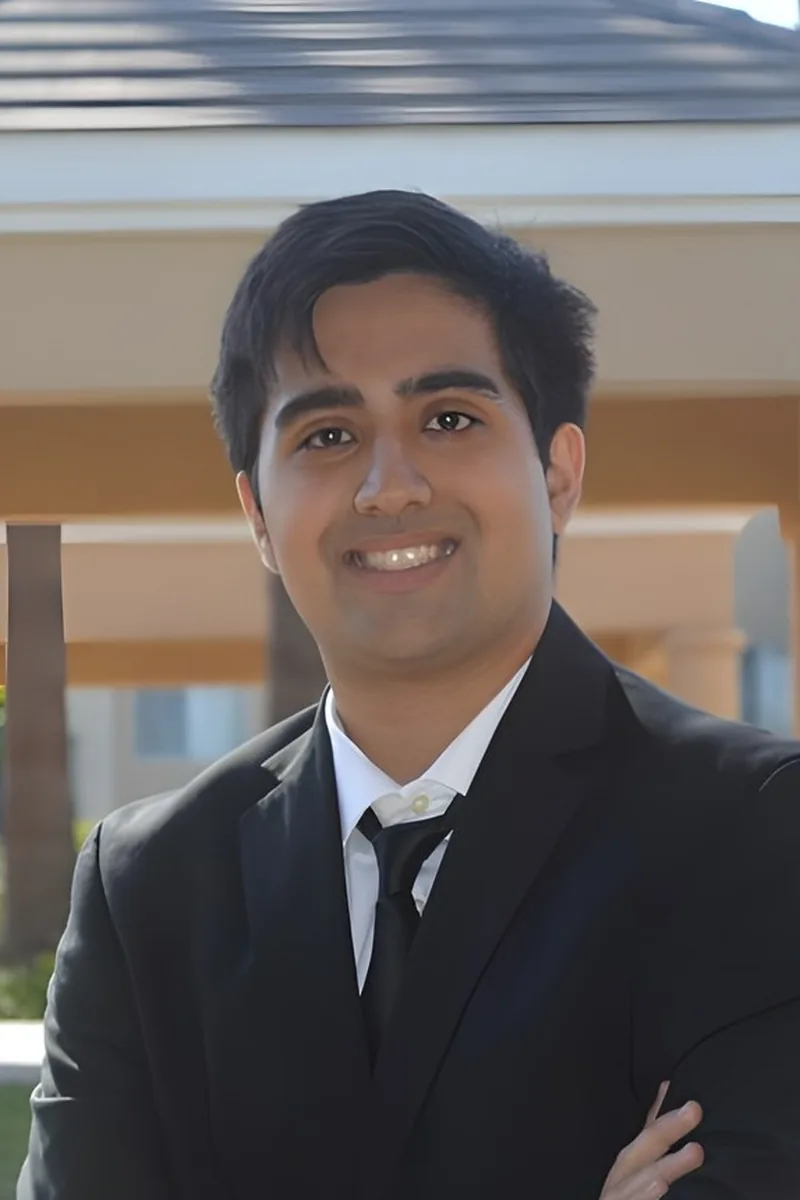
Reaction mechanisms are the language of organic chemistry, and most students struggle because they try to memorize arrows instead of understanding electron flow. Abrahim unpacks each mechanism — SN1 vs. SN2, E1 vs. E2, electrophilic aromatic substitution — by starting with nucleophilicity, sterics, and leaving-group ability so the logic drives the arrow-pushing rather than the other way around. His 5.0 rating speaks to how well that approach clicks.
Four years of tutoring organic chemistry at Yale — while simultaneously doing pre-med coursework — gave Marcus a sharp sense of where students get stuck, particularly with carbonyl reactivity and multi-step synthesis planning. His current research at the Hospital for Special Surgery keeps him actively applying these concepts, so he teaches functional group transformations as interconnected tools rather than an isolated reaction catalog.
Reaction mechanisms in organic chemistry reward the same kind of systematic thinking that drives engineering design: track the electrons, identify the functional groups, and predict what happens next. Lee teaches students to read mechanisms as stories with cause and effect — nucleophile attacks electrophile, leaving group departs — instead of memorizing hundreds of individual reactions. His biomedical background adds context for why specific organic reactions matter in drug design and biochemistry.
Reaction mechanisms are the backbone of organic chemistry, and most students struggle not because the material is impossibly hard but because they try to memorize hundreds of reactions instead of learning the handful of electron-pushing patterns that explain almost all of them. Rebecca's science training means she teaches students to read a mechanism the way you'd read a sentence — subject, verb, object — so new reactions become predictable rather than surprising.
Studying physics with a concentration in chemical principles at Penn means Max encounters organic chemistry from the physical side first — thermodynamics of reaction pathways, orbital interactions driving nucleophilic attacks, and the energy landscapes that determine whether a substitution or elimination wins out. That perspective lets him teach mechanisms by grounding arrow-pushing in the physics of why electrons move, not just where they go.
Reaction mechanisms are the backbone of organic chemistry, and Enoch teaches them by building a visual logic: tracking electron movement, recognizing nucleophile-electrophile patterns, and predicting products from functional group behavior. His biomedical science background means he also connects orgo to real biochemical contexts — amino acid chemistry, drug metabolism, lipid structures — which makes the material stick for premed students especially.
Max spent much of high school independently pursuing organic chemistry through coursework and projects well beyond what was required — the kind of deep, self-driven study that builds real fluency with reaction types and synthesis logic. His chemistry degree from MIT and mathematical instincts mean he approaches problems like retrosynthetic analysis and multi-step mechanism design as structured puzzles, breaking each one into clear decision points. Rated 5.0 by students.
A bio-organic chemistry degree means Alex didn't just pass orgo — the entire major was built around understanding how molecular structure dictates reactivity, from substitution and elimination selectivity to multi-step synthesis design. He breaks down each mechanism by identifying the nucleophile, electrophile, and driving force first, so students develop a repeatable framework instead of a growing pile of flashcards. That same logic scales directly into spectroscopy interpretation and retrosynthetic analysis when exams get harder.
Most organic chemistry frustration comes from trying to memorize hundreds of reactions instead of recognizing the handful of electronic patterns — nucleophilic attack, leaving group ability, steric effects — that drive all of them. Garrett teaches students to read arrow-pushing mechanisms as stories about electron movement, which makes predicting products and regiochemistry intuitive. His approach turns reaction maps from overwhelming charts into logical flowcharts.
Working in a cancer biology research lab means Yasheen encounters the organic chemistry behind drug design and molecular signaling every day — not as textbook problems, but as real questions about how functional groups determine a molecule's behavior in living systems. She connects that bench-level intuition to the arrow-pushing, stereochemistry, and carbonyl reactivity students need to master in their orgo courses. Rated 5.0 by students.
Reaction mechanisms are the backbone of organic chemistry, and Natasha teaches them the way she learned them in her biomolecular engineering program — by tracing electron movement step by step until the logic feels inevitable rather than arbitrary. She digs into arrow-pushing, stereochemistry, and functional group reactivity by asking students to predict products before revealing answers, building real intuition for how molecules behave.
Studying chemistry at Harvard while preparing for Columbia Medical School means James has worked through organic chemistry from both the academic and pre-med sides — understanding mechanisms deeply enough to satisfy a chemistry major, and efficiently enough to apply them in biochemistry and pharmacology contexts. He's particularly strong at teaching students how to predict reaction outcomes by analyzing charge stability and leaving group trends rather than treating each transformation as a new thing to memorize. Rated 4.9 by students.
Testimonials
Because the right Organic Chemistry tutor makes all the difference.
Average Session Rating – Based on 3.4M Learner Ratings
Practice Organic Chemistry
Free practice tests, flashcards, and AI tutoring for Organic Chemistry
Other Seattle Tutors
Related Science Tutors in Seattle
Frequently Asked Questions
Organic Chemistry is notoriously challenging because it requires visualizing 3D molecular structures and understanding reaction mechanisms that aren't always intuitive. Students often struggle with memorizing reactions without understanding the underlying logic, balancing complex equations, and connecting abstract concepts to real-world applications. Personalized tutoring helps students build conceptual understanding rather than relying on memorization, which is key to mastering the subject.
Visualization is crucial in Organic Chemistry, and expert tutors use multiple strategies to help—drawing mechanisms step-by-step, using molecular models, and working through practice problems that build spatial reasoning. Many students benefit from learning to sketch resonance structures, electron movement, and stereochemistry in ways that make the chemistry click. Personalized instruction allows tutors to identify which visualization techniques work best for your learning style.
The short answer: understanding is far more valuable than pure memorization. When you grasp the underlying principles—like nucleophilicity, electrophilicity, and reaction mechanisms—you can predict and solve problems with reactions you've never seen before. Expert tutors help you identify patterns in reactions and build a logical framework, so you're learning chemistry principles rather than just facts. This approach not only improves performance but also makes studying more efficient.
Lab work in Organic Chemistry requires understanding both the theory behind reactions and the practical techniques used to execute them. Tutors can help you prepare for labs by explaining what you'll observe, why reactions proceed the way they do, and how to troubleshoot when something doesn't go as planned. They also help you interpret lab results and connect experimental observations back to the theoretical concepts you're learning in lecture.
During your first session, a tutor will assess your current understanding of Organic Chemistry fundamentals, identify specific topics causing difficulty (like SN1/SN2 reactions, elimination reactions, or synthesis problems), and discuss your goals. From there, they'll create a personalized plan that addresses your weak areas while building on your strengths. Many students find that even the first session provides clarity on concepts that seemed confusing before.
Look for tutors with strong chemistry backgrounds—ideally those who've taken advanced Organic Chemistry courses, completed chemistry majors or minors, or have experience teaching the subject. Varsity Tutors connects you with expert tutors who understand both the content and how to explain complex mechanisms clearly. It's also valuable to find someone who can relate to the specific challenges you're facing, whether that's standardized test preparation or college coursework.
Many students notice improved understanding within 2-3 sessions, especially once a tutor helps them see the patterns and logic underlying reactions. However, true mastery—being able to solve novel problems and apply concepts confidently—typically develops over several weeks of consistent study and tutoring. The timeline depends on your starting point and how frequently you meet, but personalized instruction accelerates progress compared to studying alone.
Seattle's strong science education community means many students have access to excellent lab facilities and peer study groups, which tutors can help you leverage effectively. Expert tutors working with students in Seattle are familiar with the chemistry curricula at local high schools and universities, and can tailor instruction to match your specific course requirements. Whether you're preparing for AP Chemistry, college coursework, or standardized tests, personalized tutoring complements the resources already available to you.
Let’s find your perfect tutor
Answer a few quick questions. We’ll recommend the right plan and match you with a top 5% tutor.