Award-Winning College Physics Tutors
serving Seattle, WA
College Physics
Tutors in Seattle
Private 1-on-1 tutoring, weekly live classes for academic support, test prep & enrichment, practice tests and diagnostics, and more to elevate grades and test scores.
Based on 3.4M Learner Ratings
UniversitiesSchools & Universities
DeliveredHours Delivered
ProficiencyGrowth in Proficiency
Who needs tutoring?
No obligation. Takes ~1 minute.

I am a Masters student in Physics at the University of Washington and have over 10 years of teaching and tutoring experience. Most recently, I worked as a teacher at the Yellow Wood Academy, a private high school that offers students a specialized one-on-one classroom environment. At YWA, I taught all high school science classes (including AP, Computer Programming, and Environmental Science) and all levels of high school math. In addition to my teaching and tutoring duties, I designed individualized lesson plans, curricula, homework assignments, and tests. Subjects I have successfully tutored Physics: all levels Chemistry: all levels high school, plus P-Chem, O-Chem Biology: all levels high school Math: all levels high school, plus Differential Equations, Statistics, some Group Theory. Standardized test preparation (incl. SAT, ACT, GRE, MCAT) Need help in another area? Just ask! While math and science are the subjects I am most passionate about, I am well-versed in many academic areas, and I may be able to help you.
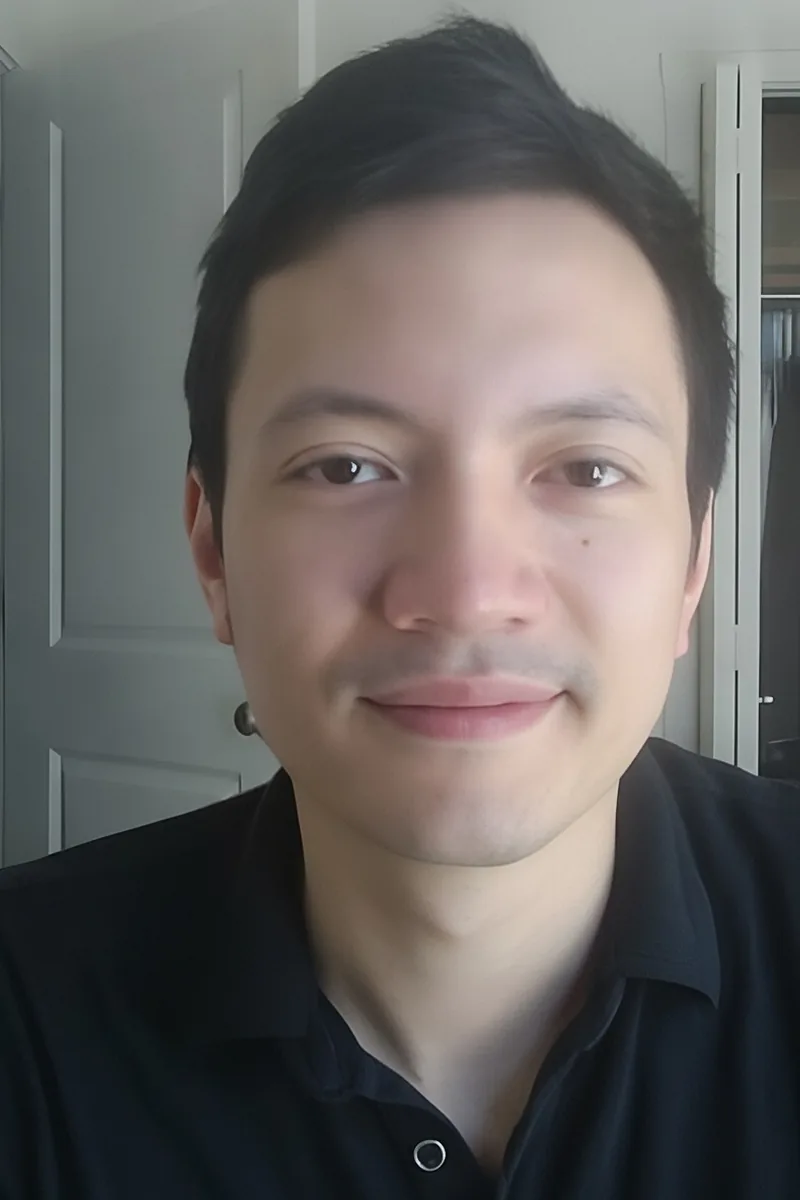
Mechanics is where Cory lights up — it's the moment students first have to fuse physical intuition with real mathematical reasoning, and his physics degree means he can walk through that transition from both sides. He takes a conversational approach, tying concepts like torque or conservation of momentum to situations students have actually encountered, so the equations feel like descriptions of something real rather than symbols to manipulate. Rated 4.9 by students.
When college physics courses hit circuits, capacitors, and electromagnetic induction, Daniel's electrical engineering training at Stevens kicks in — these aren't abstract textbook topics for him but the foundation of everything he's built and designed. He breaks intimidating multi-concept problems into smaller, logical steps, stripping away the fear factor that keeps students from seeing the physics clearly. His experience running calculus review sessions for 200+ students at a time means he's unusually good at finding the explanation that actually clicks.
Bidyut's biomedical engineering coursework at Johns Hopkins means he tackles college physics problems — from rotational dynamics to electromagnetic induction — with the applied perspective of someone who uses these principles in lab and design work daily. He connects abstract force diagrams and circuit analyses to real engineering scenarios so the physics actually clicks. Rated 5.0 by students.
Between simulating supernova shock fronts at Princeton and building optical filters at Norfolk State, Dennis has applied college-level physics across mechanics, electromagnetism, thermodynamics, and wave optics in real research settings. He unpacks difficult problem sets by connecting each concept to the physical scenario it describes — an approach that's especially effective for students transitioning from plug-and-chug to genuine problem-solving.
Three physics-related bachelor's degrees give Avram an unusually deep undergraduate perspective on the subject — he's worked through mechanics, electromagnetism, and modern physics multiple times across different programs, which means he knows exactly where the conceptual gaps tend to hide. He breaks down wave phenomena and optics problems by connecting the math back to physical intuition, so equations feel like descriptions of real behavior rather than symbols to manipulate. His 1520 SAT reflects the quantitative precision he brings to problem solving.
Working at an ExxonMobil refinery before MIT Sloan meant Caroline spent years applying thermodynamics, fluid mechanics, and force analysis to real industrial systems — the same physics that fills college problem sets, except with actual consequences for getting the math wrong. Her mechanical engineering M.S. from WashU (magna cum laude) gave her deep fluency with calculus-based derivations, so she can walk through everything from torque problems to heat transfer without skipping the steps that textbooks gloss over. Rated 5.0 by students.
Studying applied physics at Cornell means Ritesh isn't just teaching college physics concepts — he's actively using them in coursework and research. He digs into the areas that trip up most introductory students, like applying Newton's laws to rotational systems, working through Gauss's law problems, or connecting energy conservation to real circuits. His 4.6 rating speaks to his ability to make those connections click.
Engineering physics at Cornell means Daniel is taking the most mathematically demanding version of every physics course — mechanics, E&M, waves, thermo — and building the intuition to move fluidly between physical reasoning and formal derivation. He's particularly strong at teaching students how to set up problems from scratch, translating a word problem into a free-body diagram or energy equation before any numbers appear. Rated 5.0 by students.
College-level physics ramps up fast, and the jump from textbook examples to exam problems can be brutal. Bryan earned his B.S. in Physics and tackles that gap by teaching problem-solving frameworks — symmetry arguments in electrostatics, constraint equations in multi-body dynamics — that transfer across chapters instead of requiring a new trick every week.
Chemical engineering at Vanderbilt means Greg solves physics problems daily — fluid mechanics, heat transfer, thermodynamics, and force balances are baked into every core course, so his explanations come from repeated, hands-on application rather than textbook summaries. His math double major gives him the calculus fluency to walk through derivations cleanly, especially when problems involve integration over continuous systems or solving second-order differential equations of motion. Rated 5.0 by students.
Thermodynamics is where Rahul lights up — it was his favorite corner of Cornell's chemical engineering program, and that enthusiasm shows when he's walking someone through heat engines, entropy, or the first and second laws in a college physics context. His engineering training means he treats every problem as a physical system first and an equation second, pushing for the conceptual reasoning behind each step rather than formula-matching. Rated 4.9 by students.
Pursuing an MD at Stanford after a double major in economics and molecular/cellular biology, Maggie brings a pre-med perspective to college physics that makes topics like optics, fluid dynamics, and wave mechanics feel immediately relevant rather than abstract. She's especially sharp at teaching students to set up problems cleanly — translating a physical scenario into the right free-body diagram or energy equation before doing any math. Rated 5.0 by students.
Studying applied mathematics at Caltech means Samuel encounters physics constantly — from classical mechanics and energy conservation to electromagnetism and wave behavior. He breaks down the math behind physical systems so that equations like Maxwell's or Newton's second law feel like tools rather than obstacles.
A computer science degree from UCLA means Michael spent semesters deep in the physics that underpins simulation and graphics — kinematics, force modeling, energy systems — and his 1560 SAT confirms the quantitative chops to handle calculus-based problem solving. He teaches students to treat each physics problem like debugging code: isolate what you know, identify the governing principle, then execute step by step until the answer falls out.
Testimonials
Because the right College Physics tutor makes all the difference.
Average Session Rating – Based on 3.4M Learner Ratings
Other Seattle Tutors
Related Science Tutors in Seattle
Frequently Asked Questions
College Physics generally covers mechanics (motion, forces, energy), thermodynamics, waves and sound, electricity and magnetism, and often includes an introduction to modern physics. The exact curriculum varies by institution, but most courses emphasize both theoretical understanding and practical problem-solving. If you're unsure which topics you need help with, tutors can review your course syllabus and focus on the areas where you're struggling most.
Physics relies heavily on visualizing invisible forces and abstract relationships—whether it's electromagnetic fields, quantum behavior, or energy transformations. Tutors use diagrams, real-world analogies, and step-by-step explanations to make these concepts concrete and memorable. Breaking down how theory connects to everyday applications (like how circuits power your phone or why objects fall) helps concepts stick better than memorization alone.
Yes—tutors can help you understand the physics principles behind your lab work, predict expected results, and troubleshoot when experiments don't go as planned. They can also help you analyze data, understand measurement uncertainty, and write clear lab reports that demonstrate your understanding of the scientific method. This preparation often improves both your lab performance and your grasp of the underlying concepts.
Effective physics problem-solving involves identifying what you know and what you're solving for, selecting the right equations or principles, and working through calculations carefully—but many students skip the conceptual foundation. Tutors teach you to visualize the problem first, understand why you're using a particular approach, and check whether your answer makes physical sense. This strategic thinking is just as important as getting the right number.
Unit conversions and dimensional analysis are fundamental skills that many students find tedious but essential for accurate physics work. Tutors can show you systematic methods for tracking units through calculations and help you develop the habit of checking your work before moving on. With practice and clear strategies, these skills become automatic, freeing you to focus on the physics concepts themselves.
Your first session typically starts with a conversation about your course, the specific topics you're studying, and where you're feeling stuck—whether that's conceptual understanding, problem-solving, or exam preparation. The tutor will likely work through a practice problem or concept with you to understand your learning style and identify gaps. This helps them create a personalized plan for your next sessions.
Varsity Tutors connects you with tutors who have strong backgrounds in physics and experience teaching college-level material. You can discuss your specific course (like introductory physics, calculus-based physics, or algebra-based physics) and any particular topics you need help with. Tutors can explain their teaching approach and help you understand how they'll support your learning goals.
That depends on your starting point and the exam scope, but most students benefit from starting 2-3 weeks before a major exam with regular sessions. For a cumulative final, you might need more time to review and connect concepts across units. A tutor can help you create a realistic study timeline, identify which topics need the most practice, and focus your preparation on areas where you'll gain the most points.
Let’s find your perfect tutor
Answer a few quick questions. We’ll recommend the right plan and match you with a top 5% tutor.