Award-Winning High School Science
Tutors
High School Science
Tutors
Private 1-on-1 tutoring, weekly live classes for academic support, test prep & enrichment, practice tests and diagnostics, and more to elevate grades and test scores.
Based on 3.4M Learner Ratings
UniversitiesSchools & Universities
DeliveredHours Delivered
ProficiencyGrowth in Proficiency
Who needs tutoring?
No obligation. Takes ~1 minute.
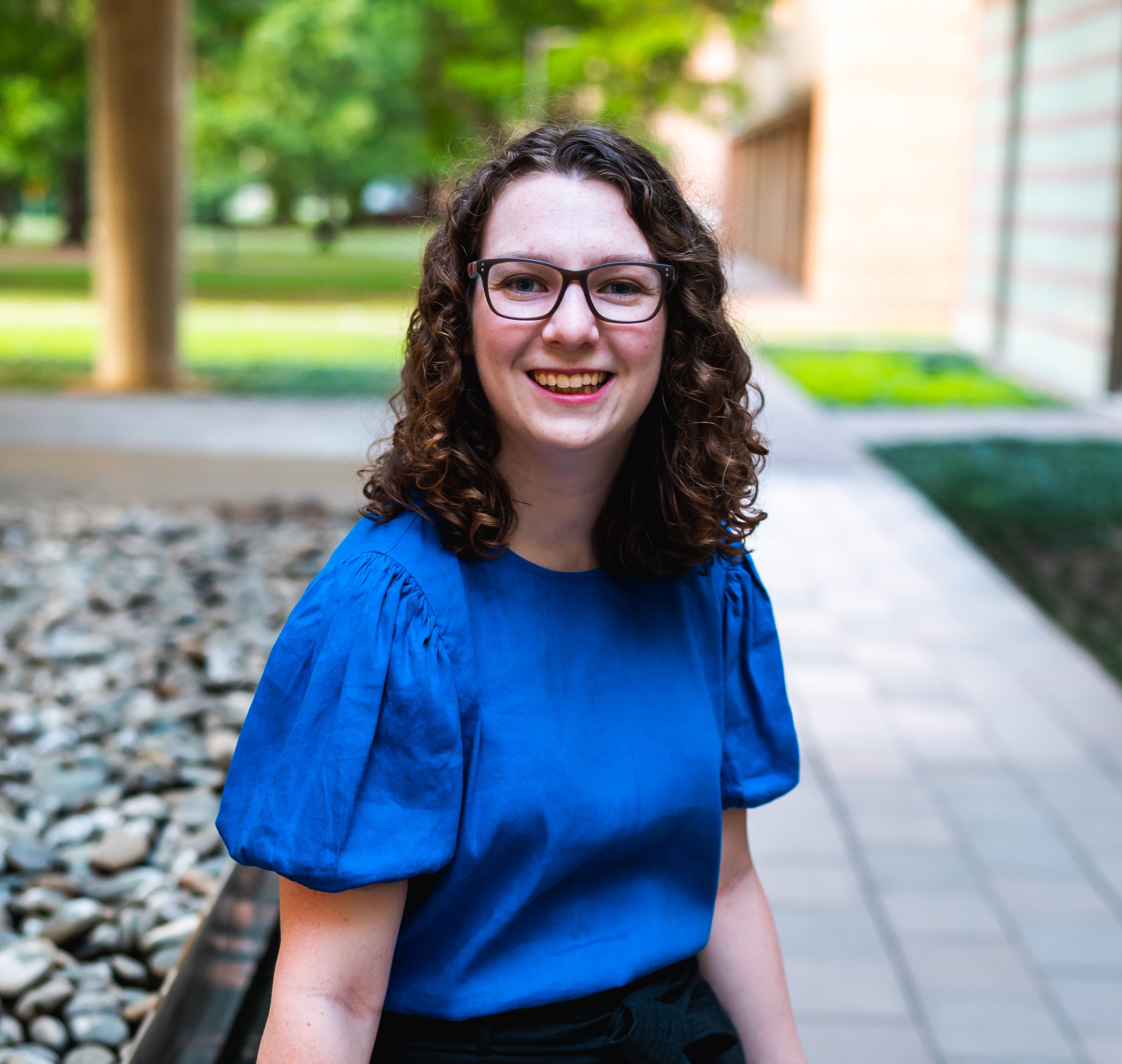
Whether the struggle is balancing chemical equations, interpreting velocity-time graphs, or tracing energy through a food web, Ainsley pinpoints exactly where a student's reasoning breaks down and addresses that gap directly. Her dual physics and philosophy degrees from Rice trained her to think across scientific disciplines while communicating complex ideas clearly. She also has experience supporting students with learning differences like dyslexia and ADHD.
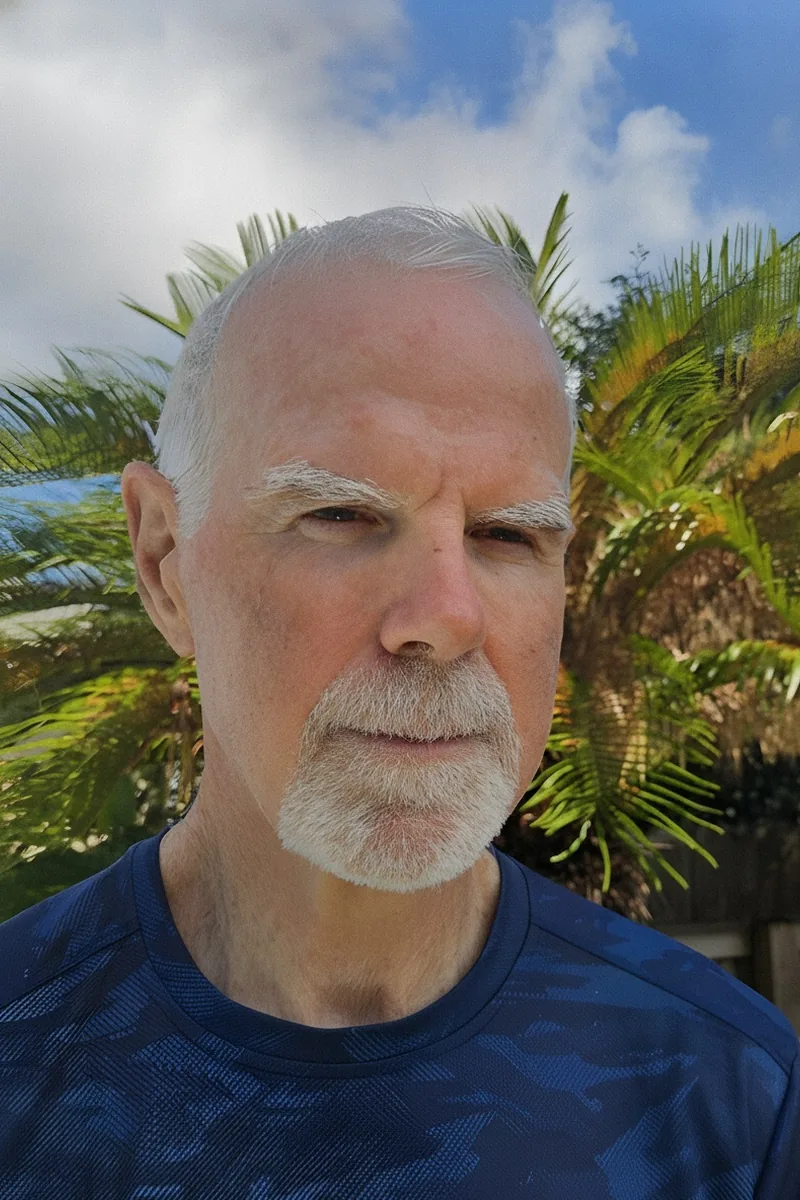
A retired PhD chemical engineer might sound like overkill for high school science, but Steven's depth in chemistry and physics means he can answer the "why" questions that textbooks skip. Whether a student is wrestling with stoichiometry, Newton's laws, or energy conservation, he breaks each idea down multiple ways until it clicks.
I am a graduate of the University of Texas at Dallas who is passionate about helping students. I am currently on my gap year before starting medical school this summer and am taking this time to tutor and teach! I have several years of tutoring experience working with K-12 students and adult learners.
An astrophysics background means Andrew doesn't just know the formulas — he understands the physical intuition behind concepts like energy conservation, wave behavior, and electromagnetic forces. He breaks down problems by connecting abstract principles to real phenomena, whether that's projectile motion on a football field or thermodynamics in a car engine. Rated 4.9 by students.
Having earned two science degrees from Yale and now working as a research associate in a cancer biology lab, Yasheen covers high school science topics — from cellular respiration to Newton's laws to chemical bonding — with real-world context that makes the material stick. She's especially strong at connecting concepts across biology, chemistry, and physics so students see the bigger picture rather than treating each unit as separate.
An engineering undergrad plus a doctorate in Materials Science gives Cathy unusually deep coverage across physics, chemistry, and biology — the three pillars of any high school science curriculum. She's particularly strong at connecting lab concepts like energy transfer or molecular interactions back to the math that underpins them.
Pre-med coursework at UT Austin means Chantelle is actively taking the same biology, chemistry, and physics classes that high school science builds toward — so she knows exactly which concepts students need to nail now and which shortcuts will backfire later. She's especially sharp at breaking down topics like cellular respiration, genetics, and basic chemical reactions into clear cause-and-effect chains instead of isolated facts to memorize. Rated 5.0 by students.
Whether the class is chemistry, physics, or environmental science, high school science rewards students who can think systematically about cause and effect. Morgan's academic path — a chemistry minor at UNC Chapel Hill, a physiology MS at Georgetown, and now medical school — gave her fluency across scientific disciplines. She tackles everything from balancing equations to interpreting lab results by teaching the underlying logic, not just the formulas.
Triple-majoring in Biology, Anthropology, and Medicine, Health & Society at Vanderbilt gave Madison unusually broad scientific fluency, from chemistry fundamentals to environmental science to human physiology. She tackles high school science by connecting lab concepts to real research — including her own published work on sea turtle pathology — so the material feels less like abstract facts and more like an ongoing investigation.
Between his MIT chemical engineering degree and his day job teaching both biology and chemistry at the high school level, Philip covers an unusually wide swath of science. Whether a student needs to untangle physics-adjacent concepts in chemistry or make sense of experimental design in biology, he can draw on direct classroom experience to address it.
From balancing chemical equations in chemistry to diagramming force vectors in physics to tracing energy flow through ecosystems in biology, high school science covers enormous ground. Gordon studied biological science at ASU and has tutored across all three core science disciplines, so he can tie concepts together — like showing how thermodynamics principles in chemistry explain metabolic reactions in biology. That cross-subject fluency keeps students from treating each class as an isolated silo.
Currently in medical school with a biology degree and a 33 ACT under her belt, Kaitlyn has spent years moving between biology, chemistry, and physics at increasing depth — which means she can explain high school-level concepts like gene expression, stoichiometry, or Newton's laws with the confidence of someone who's built on top of them. She's especially good at showing students how to connect what feels like scattered units into a bigger scientific picture, the kind of thinking that pays off on cumulative exams and AP tests. Rated 4.8 by students.
Hi y'all! I hold my Master of Science in Psychology of Sport and my Bachelor of Science in both Psychology and Applied Human and Sport Physiology. I have many years of tutoring under my belt, working with people of all levels from elementary school through college in hard science subjects (Biology, Chemistry, and Mathematics), a few social sciences (History, Psychology, Economics), and language arts. When not tutoring, I love playing soccer and I even coach a youth team. I love encouraging students to learn, grow, and think critically for themselves.
Some students struggle in science because they treat each unit — chemistry stoichiometry, physics vectors, biology cell division — as completely unrelated. Eunice ties these threads together by emphasizing the shared logic of scientific reasoning: forming hypotheses, reading data, and building models. Her dual biology and CS training at Northeastern gives her fluency across multiple scientific disciplines.
An aerospace engineering major might seem like an unusual pick for high school science, but Rohan's coursework at Michigan covers physics, chemistry, and applied math in depth — the same foundations behind most high school curricula. He explains topics like kinematics, energy conservation, and stoichiometry by connecting formulas to the physical situations they describe, so the math and the science reinforce each other.
Sophie's dual background in biology and chemistry — plus time as an engineering student — means she can teach across the high school science curriculum without treating each discipline as its own silo. Whether it's balancing redox reactions, tracing energy through cellular respiration, or applying Newton's laws, she connects concepts through a problem-solving lens that makes the material click. Rated 4.9 by students.
My academic background is in engineering. As a female engineer, I was in the fourth graduating class that admitted women at Johns Hopkins University. However, the desire to pass on my love of math and science, and the ability to solve problems, prompted me to pursue a teaching career. Working for the past three years as a full time teacher, I have been able to pass on my love for the principles of engineering and problem-solving in a private school environment. I have taught high school math, from PreAlgebra up to and including AP Calculus, as well as science, including Biology, Chemistry and Physics. I love the educational environment and interacting with the students. There is nothing I like more than showing students that math and science aren't the "boogie man" they believe they are and encouraging them to pursue STEM careers. In my personal life, I have been happily married for over 30 years and have two grown and successful children. I love sports, particularly tennis, football and volleyball. I also jog everyday and live reading and watching mysteries, gardening and cooking.
Sunwoo's biology degree and dental school training at Rutgers mean he's spent years deep in anatomy, chemistry, and physiology — exactly the content that trips up students in honors and AP-level science courses. He breaks down processes like metabolic pathways or acid-base equilibria by building them up from the basics, so students understand the logic instead of just memorizing diagrams. Rated 4.9 by students.
Whether a student is tackling chemistry stoichiometry, biology cell cycles, or physics wave behavior, Arlin's neuroscience training cuts across all three disciplines daily. He treats each science topic as a puzzle to reason through, building the kind of cross-subject thinking that makes high school science feel less like isolated facts and more like a connected picture. Rated 4.8 by students.
Some students struggle with high school science because each class — biology, chemistry, physics — feels like a separate language. Payal breaks down that barrier by showing how core principles like energy transfer and molecular interactions thread through every discipline. Her background spans both biology and chemistry at the college level, so she's comfortable jumping between subjects as questions come up.
I'm an undergraduate student at the New Jersey Institute of Technology, where I am pursuing a degree in Biology with a neurobiology concentration on the pre-med track. My passion for helping students stems from my own love of learning and a desire to see others succeed. I believe that education is a powerful tool that can transform lives, and I am committed to helping my students reach their full potential. Throughout high school, I gained valuable experience tutoring through the nonprofit organization LimitlessMinds, where I am currently the Vice President of the Edison chapter. In this role, I have had the pleasure of working with elementary school students, helping them improve their reading, writing, math, and reading comprehension skills. Additionally, through various high school organizations, including Honor Societies, I have tutored middle school students in Honors Geometry and high school students in PSAT, SAT, Biology, Spanish, Geometry, and AP Calculus. While I tutor a broad range of subjects, my favorite subjects to tutor are SAT, Biology, and Geometry. I find these subjects fascinating because they require both analytical thinking and creativity. I enjoy helping students understand complex concepts and watching their confidence grow as they master the material. My teaching philosophy centers around patience, encouragement, and adaptability. I strive to create a supportive learning environment where students feel comfortable asking questions and expressing their thoughts. I believe that every student has a unique learning style, and I tailor my tutoring methods to meet their individual needs. Outside of academia, I enjoy engaging in activities that enrich my life and keep me balanced. I am passionate about watching movies and shows, reading, playing card games, exploring new genres and topics, and I also enjoy practicing karate. These activities help me maintain a healthy lifestyle and keep my mind sharp. I look forward to the opportunity to work with you and help you achieve your academic goals!
I am a graduate of Emory University, where I received my Bachelor of Science in Neuroscience and Behavioral Biology with a minor in Dance and Movement Studies. Throughout college, I have trained extensively tutoring students of various ages across many subjects. As an "Emory Reads" tutor for four years, I helped alleviate education inequality by providing weekly tutoring to students in Atlanta's lowest performing elementary schools to enhance reading comprehension and mathematics skills. I worked with the schools to transition engaged learning to an online format. I am a firm proponent of education, and am committed to providing my students with the best learning experience achievable. I am passionate about helping struggling students face the challenges of early education, and help them build a solid foundation for the future. I also served several semesters working with high school and college-age students. As a Teaching Assistant for college-level physics, I developed a sincere bond with my students as I strived to help them achieve there academic goals. I also worked as a peer-editor for papers and personal statements, as appointed by my professors who recognized my strong writing skills. For three years, I tutored and mentored high school students who were passionate about pursuing the sciences in college. I helped them through their AP coursework, preparing for standardized tests, and the college application process. I have worked with students to get into Ivy League universities, Berkeley, UCLA, NYU, and more. I am looking forward to being able to helping every student reach their personal potential, and sharing the joy of eventual success!
I am a Bellingham MA Public High School graduate, where I was a French tutor for levels 2 through 5 Honors and Standard, as well as AP French, and led peer tutoring initiatives as an NHS officer, supporting classmates in AP Chemistry, AP Biology, AP Calculus, and PLTW. I am studying Biology and Neuroscience on the pre-med track at Columbia University, where I continue to nurture my passion for helping students succeed. My involvement in three research teams, including one on molecular biology that received international publication, has sharpened my ability to explain complex scientific concepts clearly. While I tutor various subjects, I find the greatest joy in teaching French and the sciences, aspects of foreign language studies joined with the complexity of STEM, being part of the rewarding moments when students grasp challenging ideas. Education is a powerful tool for personal growth, striving to create an environment that fosters confidence and curiosity.
Whether a student is wrestling with chemical equations, dissecting a lab report, or trying to understand how genes code for proteins, Shannon brings a clinician's perspective to high school science. She's currently finishing medical school and teaches across biology, chemistry, and anatomy — so she can connect dots between disciplines in ways that make each subject click faster.
For students navigating a general science curriculum that spans physics, chemistry, and earth science, Steven anchors explanations in the quantitative reasoning that ties these disciplines together. His engineering background is strongest on the physics and math-heavy side — force, motion, energy, and basic atomic structure — so he's particularly effective when science class starts feeling like a math class.
Kirby's biochemistry degree from the University of Michigan means she's taught herself the connections between biology, chemistry, and physics — exactly what high school science courses demand. Whether a student is struggling with cellular respiration in biology or balancing redox reactions in chemistry, she breaks down the underlying logic so the content clicks across disciplines.
As a dedicated tutor with experience in AP Biology, AP Chemistry, and high school science courses, I am passionate about helping students unlock their potential in the sciences. Currently pursuing a Bachelor's degree in Biomedical Science from the University of South Florida, I utilize my academic background to create engaging and supportive learning environments. My teaching philosophy centers on fostering curiosity and critical thinking, ensuring that each student feels empowered to explore complex concepts. I believe that personalized attention can significantly enhance a learner's confidence and academic success. Outside of tutoring, I enjoy exploring the latest scientific advancements and engaging in community science projects, which further enrich my understanding and teaching of these subjects.
I'm a junior at Cornell University majoring in Biomedical Engineering with a minor in Mechanical Engineering. My academic journey combines a strong foundation in biology, physics, and design, which has given me a problem-solving mindset that I bring into every tutoring session. I graduated from the Bronx High School of Science, where I first discovered my passion for helping others learn. Since then, I've been tutoring for over four years, working with students of all ages to improve their skills in reading, math, and SAT prep.
I'm a medical resident. looking to tutor in biology, anatomy, math, and MCAT prep. Teaching is one of my passions, and I have tutored since I was in high school. I continued to tutor while at Stony Brook University where I graduated with a double major in applied math and bioinformatics/computational biology. Due to unfortunate circumstances, I need to stay home for the next few months. I do not want to stop my tutoring so here I am looking to help students virtually! Medical school has made biology my favorite subject to tutor in as I've really nailed in me how to learn and understand a lot of material in a short amount of time. Medical school has taught me many approaches and tactics to making learning more efficient I wish I knew about earlier. I aim to share these methods with my students to make them stand out from the rest.
Having completed degrees in both biology and computer science with a math minor, Allison brings an unusual combination to high school science — she can teach the life science content directly from her biology training while also strengthening the data analysis and logical reasoning skills that students need for physics and chemistry units. She's especially effective at walking through lab reports and experimental design, where her programming background makes the process of forming hypotheses, controlling variables, and interpreting results feel systematic rather than vague. Her 33 ACT composite reflects comfort across disciplines, which matters when a single science course can jump from cellular biology to chemical equations in the same week.
Because high school science spans everything from physics concepts to chemistry labs to ecology projects, having a tutor who can move fluidly between disciplines matters. Spencer's academic background stretches across science, math, and writing, so he can tackle a lab report one session and equilibrium equations the next without missing a beat.
Whether the class is biology, chemistry, or physics, Jack approaches high school science by teaching students how to read a problem like a scientist — pull out what's given, identify what's being asked, and connect it to the right concept. His neuroscience and CS training at USC spans all three disciplines, so he can jump between topics without losing depth.
I graduated from Texas A&M University, where I received my Bachelor of Science in Biomedical Sciences with minors in Psychology and Spanish. I recently graduated with a Master's in Nutrition from the University of Texas at Austin in December, and I am an incoming first-year medical student. I have tutored students in general chemistry 1 and served as a notetaker for physics 1 and 2, while also specializing in elementary through high school science, Spanish, and mathematics. I am also a teaching assistant for an elementary speech and debate program. I believe that education is a gift, but can still be difficult, and I want to meet students where they are in their learning and tutor by learning what helps them learn best. I enjoy working with learners of all ages, especially younger minds, and I look forward to working with clients towards growth!
Thirty-five years as an electrical engineer means Robert has lived the physics side of high school science — circuits, energy, wave behavior, electromagnetism — in ways that go far beyond what a textbook covers. He's especially effective at walking students through the quantitative problem-solving that trips people up in physics and chemistry units, breaking each calculation into clear, logical steps. His dual master's degrees from Johns Hopkins give him the technical depth to explain not just how to solve a problem but why the method works.
As a medical student with an undergraduate degree in biomedical engineering, Uju covers the full spectrum of high school science — from balancing chemical equations to interpreting motion graphs to diagramming cell division. She approaches each topic interactively, walking through problems step by step rather than lecturing at students. Her 4.9 rating speaks to a teaching style built on patience and a willingness to re-explain concepts as many times as needed.
Whether the class is physics-heavy, chemistry-focused, or a general survey, high school science always comes back to the same core skill: reading a problem, identifying what's actually being asked, and applying the right concept. Thomas brings a broad science toolkit — a molecular biology degree, research experience, and medical training — so he can pivot between topics like energy transfer, chemical bonding, and human body systems within a single session. He's rated 5.0 across his students.
Whether a student is struggling with chemical bonding in chemistry, photosynthesis in biology, or motion equations in physics, Brianna's broad science background covers the high school curriculum thoroughly. Her biology degree and ongoing medical education give her an unusual ability to show how different science disciplines connect — why chemistry explains biology, and why math underlies both.
Whether it's biology, chemistry, physics, or environmental science, Kavya approaches high school science by identifying the specific concept a student is stuck on — not just the chapter. As a fourth-year medical student, she's deeply fluent in how these disciplines overlap, which means she can explain something like enzyme function through both a biology and a chemistry lens depending on what makes it click.
A biomedical engineering major on the pre-med track, Stella covers biology, chemistry, and physics in her own coursework every semester. That cross-disciplinary perspective is exactly what high school science demands — she can explain cellular respiration in biology one session and then connect energy concepts back to chemistry or physics the next.
Between her neuroscience major, marine science degree, and minors in biochemistry and geology, Melanie covers an unusually wide swath of high school science — from biology and chemistry to earth science and anatomy. She explains complex processes like cellular respiration or tectonic activity through real-life scenarios and clear visuals that make the content stick. A National Merit Finalist, she brings both breadth and rigor to every topic.
Testimonials
Because the right High School Science tutor makes all the difference.
Average Session Rating – Based on 3.4M Learner Ratings
Top 20 Science Subjects


Top 20 Subjects
Frequently Asked Questions
Students often find abstract concepts like molecular structure, chemical bonding, and energy transfer challenging because they can't see these processes directly. Balancing chemical equations trips up many students who haven't internalized the logic of conservation of mass. In biology, memorization-heavy topics like cellular processes and anatomy become overwhelming without understanding the "why" behind each structure and function. Physics presents another common hurdle: visualizing forces, motion, and waves requires spatial reasoning that doesn't come naturally to everyone. A tutor can break these invisible processes into concrete, step-by-step explanations and use diagrams or analogies to make the abstract tangible.
Many students follow lab procedures mechanically without grasping why each step matters or how it connects to the underlying science. A tutor helps you think like a scientist by asking questions like "Why are we using this specific temperature?" or "What would happen if we changed this variable?" This shifts your focus from rote steps to experimental reasoning. Tutors can also help you design your own mini-experiments, interpret unexpected results, and communicate findings clearly—skills that go far beyond just getting the lab report done. Understanding the scientific method deeply makes future labs and even standardized science questions feel much more intuitive.
Balancing equations requires holding multiple pieces of information in your head at once—atom counts, oxidation states, and the logic that every atom on the left must match the right. Many students treat it as a guessing game rather than a systematic process. A tutor teaches you a reliable strategy: identify what's unbalanced, adjust coefficients methodically, and verify your work. More importantly, they help you understand that balancing equations isn't arbitrary—it reflects the real conservation of mass that happens in every chemical reaction. Once you see the logic underneath, balancing becomes a skill you can apply to any equation, not a problem you memorize.
Abstract concepts are tough because you can't see electrons orbiting atoms or gas molecules colliding. Experienced tutors use multiple strategies: drawing detailed diagrams, using physical analogies (like comparing electron shells to planetary orbits), creating animations or simulations, and having you model concepts with your hands or objects. For example, to understand diffusion, a tutor might have you watch food coloring spread in water while explaining molecular kinetic energy. These concrete representations build mental models that stick with you long after the tutoring session. Once you can "see" what's happening at the molecular or subatomic level, solving related problems becomes much more straightforward.
Unit conversions frustrate students because they feel like busywork, but they're actually a powerful problem-solving tool when you understand the logic. A tutor teaches you dimensional analysis as a systematic method: write what you know, identify what you need, and use conversion factors to "cancel" unwanted units until you're left with your answer. The key insight is that you're not memorizing conversions—you're using them as bridges between different ways of expressing the same quantity. Practice with real-world examples (like converting grams to moles to molecules) helps you see why this skill matters in actual chemistry. Once you internalize the method, you can solve complex multi-step conversions confidently.
High school science rewards both knowledge and thinking—you need to know facts, but you also need to reason through unfamiliar problems using those facts. A tutor helps you make this shift by asking you to explain the "why" behind every concept: Why does this reaction release energy? Why does this organism have this adaptation? Why does this law of physics apply here? This practice trains your brain to think like a scientist rather than a test-taker. Tutors also teach you to recognize patterns across topics—how energy conservation shows up in chemistry, physics, and biology, or how the scientific method applies whether you're studying genetics or planetary motion. This deeper understanding makes it easier to remember facts (because they're connected to bigger ideas) and to tackle novel questions on exams.
Look for tutors with strong subject-matter expertise—ideally a background in chemistry, biology, physics, or environmental science—combined with the ability to explain complex ideas simply. The best tutors don't just know the content; they understand common misconceptions students have and know multiple ways to explain difficult concepts. They should be comfortable with lab work and experimental design, not just textbook material. Ask potential tutors how they approach abstract concepts, how they help students transition from memorization to reasoning, and whether they've helped students improve on standardized science tests. Experience tutoring at the high school level specifically matters, since the rigor and conceptual depth differ significantly from middle school or college science.
A tutor's approach shifts based on where you are. Struggling students need foundational concept-building, slower pacing, and lots of concrete examples before moving to abstract reasoning. They benefit from tutors who diagnose specific gaps (like shaky algebra skills affecting chemistry) and fill those holes first. Students at grade level need support with deeper understanding and problem-solving strategy—learning to tackle unfamiliar questions by breaking them into manageable pieces. Advanced students often need challenge: exploring connections between topics, diving into real research applications, or preparing for AP-level rigor. Regardless of level, the best tutors personalize their explanations, adjust pacing based on your understanding, and help you build confidence alongside competence.
Let’s find your perfect tutor
Answer a few quick questions. We’ll recommend the right plan and match you with a top 5% tutor.