Award-Winning Analytical Chemistry
Tutors
Analytical Chemistry
Tutors
Private 1-on-1 tutoring, weekly live classes for academic support, test prep & enrichment, practice tests and diagnostics, and more to elevate grades and test scores.
Based on 3.4M Learner Ratings
UniversitiesSchools & Universities
DeliveredHours Delivered
ProficiencyGrowth in Proficiency
Who needs tutoring?
No obligation. Takes ~1 minute.
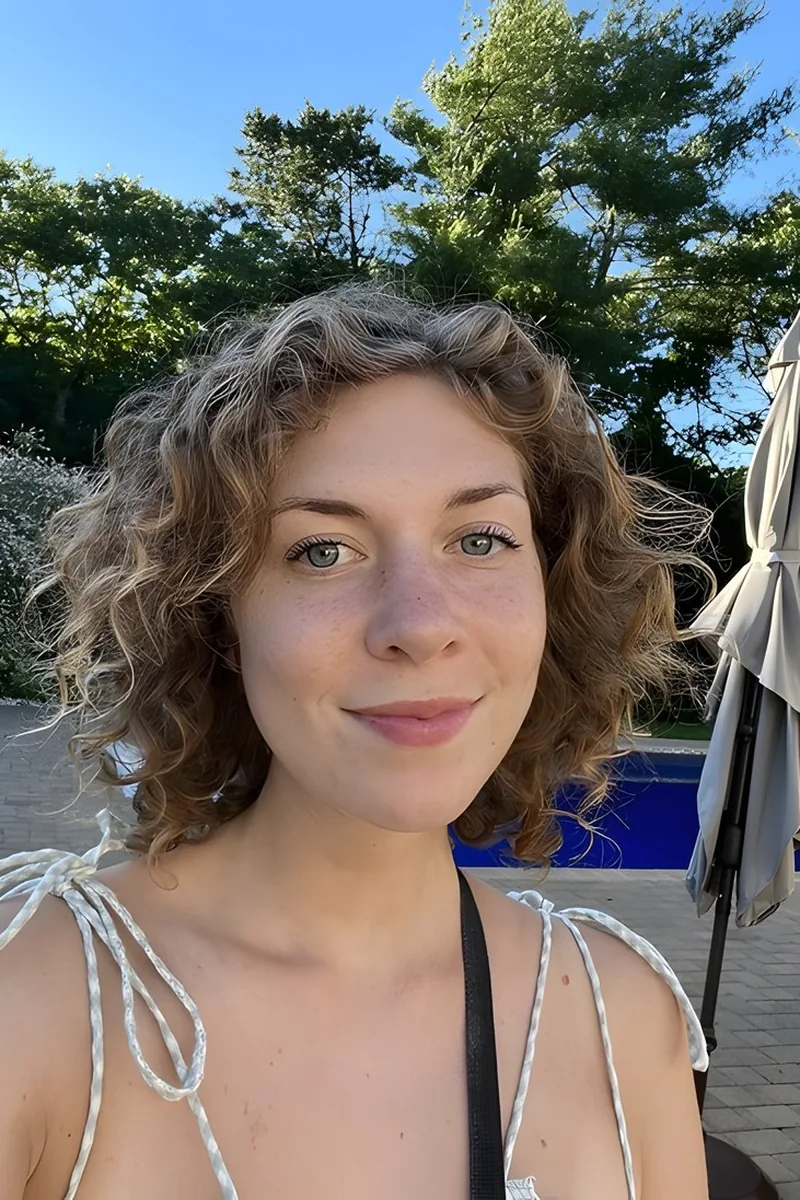
Titration curves, spectrophotometry, and error propagation are the backbone of analytical chemistry, and they demand both conceptual clarity and mathematical precision. Zosia earned her chemistry degree at Yale, where quantitative lab work was central to the curriculum. She walks through calibration techniques and statistical analysis in a way that connects the theory to what's actually happening at the bench.
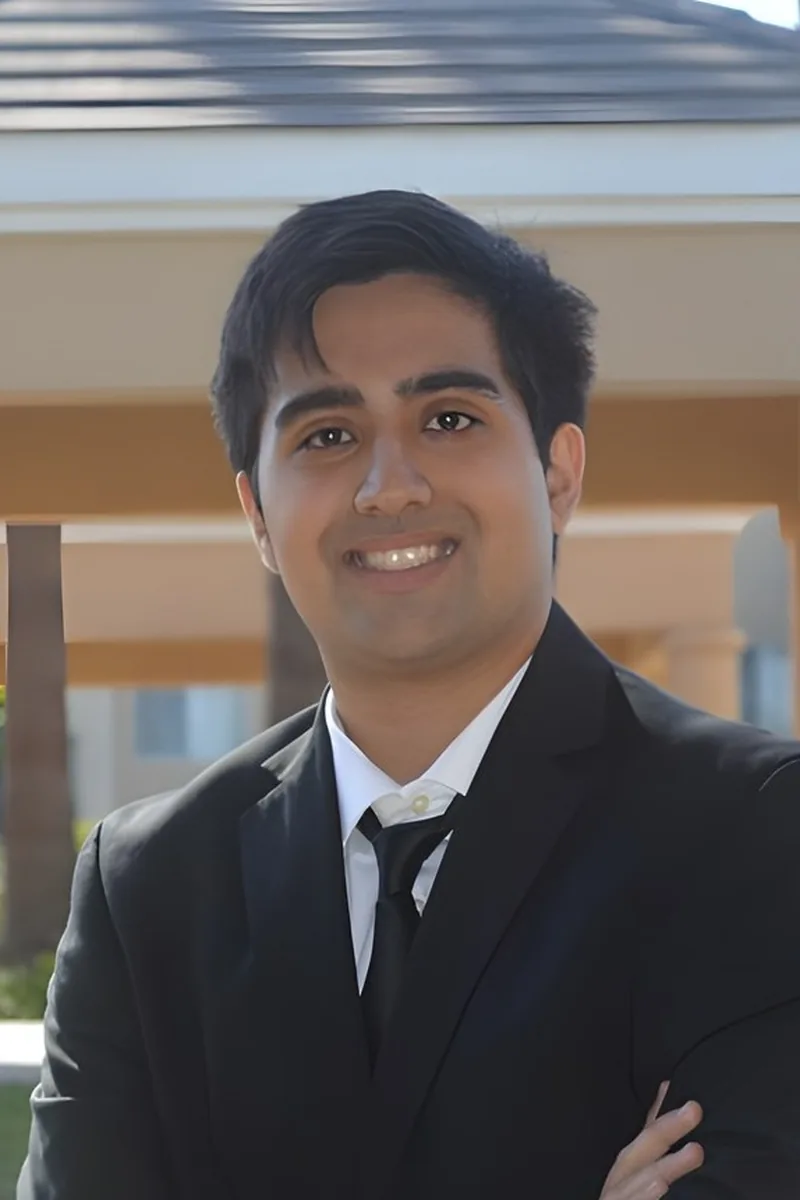
Medical school at the Medical College of Wisconsin means Abrahim has run his share of quantitative assays and knows how sloppy technique or a misunderstood calibration curve can derail an entire experiment. His UCLA biology degree and deep chemistry background — spanning organic, inorganic, and physical chemistry — give him the cross-disciplinary fluency to explain why a particular method works, not just how to execute it. Rated 5.0 by students.
Hands-on biochemistry lab work at Columbia gives Andrew a practical fluency with techniques like spectrophotometry, chromatography, and titration that most tutors can only teach from a textbook. He breaks down quantitative analysis — error propagation, calibration curves, and statistical treatment of data — by connecting each concept to the real experimental contexts where it matters. Rated 4.9 by students.
Saniya's neuroscience degree required serious chemistry coursework — including the kind of quantitative lab techniques that form the core of analytical chemistry, from preparing standard solutions to interpreting calibration data. Her chemistry minor means she's comfortable with the equilibrium and acid-base theory underlying methods like titrations and pH-dependent separations. Rated 5.0 by students.
A retired PhD chemical engineer, Steven spent a career designing processes where getting a measurement wrong meant real consequences — which is exactly the mindset analytical chemistry demands. He teaches topics like calibration design, error propagation, and method selection through the lens of someone who relied on precise quantitative results in industrial settings. Rated 4.9 by students.
Titration curves, spectrophotometry, and error analysis require a different mindset than general chemistry — analytical chem is about precision and understanding what your data actually tells you. Cassandra pairs her biology degree with hands-on science experience to walk through calibration logic, significant figures in multi-step calculations, and how to troubleshoot when lab results don't match theory.
Titration curves, spectrophotometry, chromatographic separations, error propagation — analytical chemistry demands precision in both technique and thinking. Breno's doctoral research at Harvard requires him to design and validate analytical methods regularly, so he teaches this material from the perspective of someone who actually relies on it to generate trustworthy data.
Titration curves, spectrophotometric methods, chromatographic separations, error propagation — analytical chemistry is where precision meets theory. Enric's doctoral work in chemistry gave him hands-on experience with the quantitative techniques that define this course, from calibration design to interpreting instrument output. He walks through each method by connecting the underlying chemistry to the practical question of how we actually measure what's in a sample.
Biochemistry training at Boston College followed by graduate work at Tufts gave Hunter hands-on experience with the spectroscopic and chromatographic techniques that analytical chemistry courses build around — interpreting absorbance data, constructing calibration curves, and understanding why method selection matters for biological samples. He's particularly good at connecting the equilibrium and stoichiometric reasoning from general chemistry to the quantitative problem-solving students need for things like standard addition or back-titration calculations. Rated 5.0 by students.
I'm a 2016 graduate of Pepperdine University with my Bachelor of Arts in Chemistry. Currently I'm preparing to apply to optometry school; I hope to be accepted for the 2018-19 academic year. During my time in college, I was involved as a teaching assistant for General Chemistry I and II laboratory, as a tutor for General Chemistry I, as a member of the Regents Scholar Student Board, and as a "small group" leader through multiple organizations. I am a member of the sorority Pi Beta Phi and held the positions of Historian, Senior Transition Leader, and member of the Leadership and Nominating Committee during my undergraduate years. As far as tutoring goes, I offer my services to students of all ages and in numerous subjects. I particularly enjoy tutoring the STEM subjects. I also thoroughly enjoy working with female STEM students, which allows me to serve as a role model and to offer additional encouragement for my female students to not lose interest in STEM subjects. A large part of my tutoring style focuses on logical thinking for how to tackle new and difficult problems using previous knoledge and educated hypotheses; I have found that my students find both success and a boost in confidence using my methodology. Aside from my academic interests, I love cooking and baking, my cat, photography, and National Parks.
Titration curves, spectrophotometry, error analysis, statistical treatment of data — analytical chemistry demands precision in both lab technique and mathematical reasoning. Edward's chemistry background means he can explain the theory behind methods like HPLC or atomic absorption while also walking through the quantitative calculations that make those results meaningful.
I am very interested in a career in the medical field, so I am apart of some pre-medical organizations. I really enjoy playing all different sports, from soccer to volleyball to tennis.
Teaching general chemistry at the college level while collaborating with researchers across chemistry, biology, pharmacy, and medicine gives Jennifer daily fluency with the quantitative methods analytical chemistry students encounter — from equilibrium-driven separations to interpreting instrument readouts in applied contexts. She's particularly strong at showing how acid-base theory and stoichiometric reasoning translate into practical technique choices, like selecting the right endpoint indicator or designing a dilution scheme. Rated 4.9 by students.
This is Whitney's home turf — she's currently pursuing a PhD in Analytical Chemistry at the University of Illinois Urbana-Champaign. She digs into techniques like HPLC, mass spectrometry, titration methods, and statistical treatment of data with the fluency of someone who uses them in her own research. Students get explanations grounded in real lab practice, not just textbook theory.
Titrations, spectrophotometry, chromatography, error propagation — analytical chemistry is as much about experimental design and data interpretation as it is about chemical theory. Kasey's hands-on research experience in Purdue's chemical engineering department means she can walk students through instrument calibration, standard curves, and statistical analysis with the confidence of someone who runs these techniques regularly.
Titrations, spectroscopy, chromatography, error analysis — analytical chemistry demands precision in both technique and calculation. Nathan's undergraduate chemistry program at TCU gives him hands-on familiarity with these methods, and he unpacks the theory behind each one so students understand not just how to run an analysis but why a particular method was chosen. He's comfortable covering everything from Beer's Law to statistical treatment of data.
I enjoy helping students turn challenging chemistry and biology topics into concepts that actually make sense. I'm a dual major student in Chemistry and Molecular Biology & Biochemistry at SFU, with experience across a wide range of science courses. When I tutor, I like to work through problems step by step, explain the reasoning behind them, and adjust my approach to each student. My goal is to help you feel more confident with the material and eventually tackle problems on your own.
Co-teaching an organic chemistry lab section at UC Berkeley — answering questions on technique, demonstrating procedures, and working alongside a graduate TA — gave Yuxuan firsthand experience with the precision and measurement logic that analytical chemistry demands, from careful solution preparation to interpreting experimental results. His biochemistry degree means he's comfortable with the spectroscopic and equilibrium concepts that underpin methods like UV-Vis analysis and acid-base titrations. Rated 4.9 by students.
A biochemistry degree means Susan has spent real time with the quantitative techniques that analytical chemistry courses lean on hardest — preparing solutions, tracking dilutions, and interpreting data from spectrophotometric assays where precision actually matters. She's especially comfortable with the acid-base and equilibrium reasoning that underpins titration-based methods, having built that foundation across both chemistry and biology coursework.
Most students in analytical chemistry hit a wall not on the chemistry itself but on the statistics underneath it — confidence intervals, Q-tests for outliers, and figuring out whether their data actually means anything. Aaron's chemistry degree paired with his coursework in statistics gives him an unusual ability to unpack both sides of that problem at once. He's also comfortable digging into the equilibrium and acid-base reasoning behind techniques like complexometric titrations when the conceptual side needs shoring up.
Transform Your Study Game with a Tutor Who Knows the Way: Expert Insight, On-Demand! I'm passionate about helping students because I love seeing that "aha!" moment when they finally understand something new. It's incredibly fulfilling to guide them through their learning journey and celebrate their successes. Over the years, I've worked with a variety of students, from those struggling with tough subjects to those aiming for excellence. Each experience has taught me how to adapt my approach to fit different learning styles, making sure every student gets the support they need. My teaching style is all about making learning fun and effective. I believe in personalizing my approach to fit each student's needs, using creative methods to make challenging concepts easier to grasp.
Spectroscopy, chromatography, titration curves — analytical chemistry lives at the intersection of precise technique and deep conceptual understanding. Dana's chemical engineering training required extensive work with quantitative analysis methods, and she teaches students to think critically about error propagation, calibration, and what their data actually means before jumping to conclusions.
Testimonials
Because the right Analytical Chemistry tutor makes all the difference.
Average Session Rating – Based on 3.4M Learner Ratings
Top 20 Science Subjects



Top 20 Subjects
Frequently Asked Questions
Students often find equilibrium calculations and pH problems challenging because they require understanding both the conceptual principles and the mathematical manipulation simultaneously. Gravimetric and volumetric analysis also trip up many students—the logic of stoichiometry combined with real lab procedures can feel disconnected from theory. Additionally, spectroscopy interpretation (UV-Vis, IR, NMR) requires visualizing molecular structure and understanding how light interacts with matter, which is abstract for many learners. Tutors who specialize in analytical chemistry help students connect these quantitative methods to the underlying chemical principles so the math becomes purposeful rather than rote.
The disconnect between lab procedure and theory is real—students perform titrations or prepare solutions without understanding the chemistry driving the experiment. A tutor can work through actual lab data with you, explaining why you're measuring specific parameters, what sources of error matter most, and how your results connect to equilibrium, reaction kinetics, or instrumental principles. This approach transforms lab work from "follow steps and record numbers" into genuine scientific reasoning, helping you design better experiments, troubleshoot problems independently, and understand why analytical methods work the way they do.
These calculations demand multiple skills at once: setting up ICE tables correctly, understanding when approximations are valid, and knowing which equilibrium constant to use (Ka, Kb, Ksp, or Kf). Students often memorize formulas without grasping when and why to apply them, leading to errors on complex problems like buffer calculations or polyprotic acid titrations. Tutors break this down by first solidifying conceptual understanding—what does pH really measure, why does buffer capacity matter—before tackling the math, so you build confidence and develop problem-solving intuition rather than relying on pattern matching.
Spectroscopy interpretation requires visualizing molecular structure and understanding how electrons and bonds interact with different wavelengths of light—skills that don't develop from reading alone. Tutors use visual tools, worked examples with real spectra, and guided practice to help you recognize patterns (like characteristic IR peaks for functional groups or NMR splitting patterns from coupling). The key is moving from memorizing peak positions to understanding the physics and chemistry behind them, so you can confidently interpret unfamiliar spectra and even predict what a spectrum should look like based on molecular structure.
These techniques require understanding both the chemistry (stoichiometry, solubility, reaction completion) and the practical execution (proper glassware, technique, error sources). Rather than memorizing procedure steps, tutors help you understand the reasoning: why you precipitate a specific compound, how purity affects your results, and what errors are systematic versus random. Working through real problems—calculating analyte mass from precipitate weight or determining concentration from titration data—alongside discussion of lab technique helps you see these methods as tools for solving real analytical problems, not just procedures to follow.
Analytical chemistry demands precision—mixing up units or reporting too many significant figures can invalidate your results. Students often struggle because they're juggling molarity, molality, ppm, percent composition, and parts per billion simultaneously, especially in environmental or pharmaceutical analysis. Tutors help you develop a systematic approach: clearly identify what you're given and what you're solving for, use dimensional analysis consistently, and understand why significant figures matter in analytical work (your answer can't be more precise than your least precise measurement). Practice with real analytical scenarios—like calculating detection limits or converting between concentration units—makes these conversions stick.
Choosing between titration, gravimetry, chromatography, or spectroscopy requires understanding what each method measures, its limitations, and the sample characteristics involved. This is where analytical chemistry becomes truly conceptual—you're not just executing a procedure, you're thinking like an analytical chemist deciding the best approach. Tutors help you develop this decision-making framework by discussing real scenarios: why would you use HPLC instead of gas chromatography? When is gravimetry more accurate than titration? Building this reasoning skill transforms you from someone who follows instructions to someone who can design or troubleshoot analytical procedures independently.
Analytical chemistry is fundamentally about accuracy and precision—your result is meaningless without knowing its uncertainty. Students often treat error analysis as a separate calculation rather than understanding that every step (from sample preparation to instrumental measurement) contributes error. Tutors emphasize that recognizing and quantifying error is central to analytical thinking: it helps you identify which procedural steps matter most, design better experiments, and communicate results responsibly. Whether calculating standard deviation, propagating uncertainty, or evaluating method validation, understanding error transforms your analytical work from producing a number to producing a defensible, scientifically sound result.
Let’s find your perfect tutor
Answer a few quick questions. We’ll recommend the right plan and match you with a top 5% tutor.