Award-Winning Organic Chemistry Tutors
serving Raleigh, NC
Organic Chemistry
Tutors in Raleigh
Private 1-on-1 tutoring, weekly live classes for academic support, test prep & enrichment, practice tests and diagnostics, and more to elevate grades and test scores.
Based on 3.4M Learner Ratings
UniversitiesSchools & Universities
DeliveredHours Delivered
ProficiencyGrowth in Proficiency
Who needs tutoring?
No obligation. Takes ~1 minute.
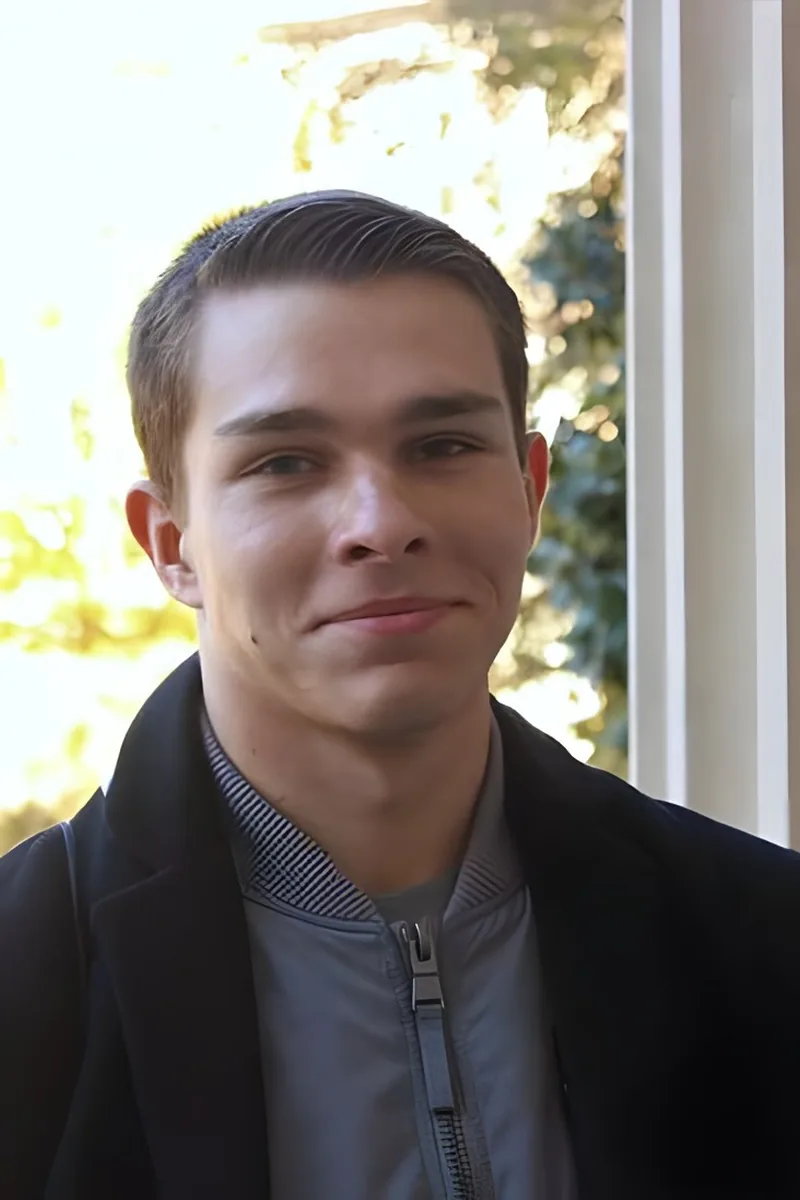
Reaction mechanisms, stereochemistry, and functional group transformations all follow a logic that becomes visible once you stop treating them as isolated reactions to memorize. Dimitry's chemistry minor at UNC Chapel Hill gave him deep exposure to organic chemistry, and he teaches students to trace electron movement step by step so they can predict products on their own.

Hello! My name is Darsh and I am a junior at UNC Chapel Hill studying Chemistry. Chemistry's been my passion for years and I've spent a lot of that time tutoring chemistry to struggling students and helping them towards success. I am capable in teaching IB Chemistry, AP Chemistry, General Chemistry 1 & 2, and Organic Chemistry 1 & 2. My teaching methods usually consist of lots of active learning with using tons of practice problems so you are ready for anything thrown at you!
Reaction mechanisms are the language of organic chemistry, and Taylor became fluent in them as both a student and a tutor in Wake Forest's Chemistry Department. She teaches students to recognize electron-pushing patterns — why a nucleophile attacks here, why this leaving group departs there — so that predicting products becomes intuitive instead of overwhelming.
Reaction mechanisms in organic chemistry follow a logic that becomes predictable once you learn to read electron density and leaving-group stability. Amanda approaches each mechanism as a puzzle in charge movement, walking through arrow-pushing with enough repetition that students start anticipating nucleophilic attacks and rearrangements before being told what happens next.
Most organic chemistry frustration comes from trying to memorize hundreds of reactions instead of recognizing the handful of electronic patterns — nucleophilic attack, leaving group ability, steric effects — that drive all of them. Garrett teaches students to read arrow-pushing mechanisms as stories about electron movement, which makes predicting products and regiochemistry intuitive. His approach turns reaction maps from overwhelming charts into logical flowcharts.
Reaction mechanisms in organic chemistry reward the same kind of systematic thinking that drives engineering design: track the electrons, identify the functional groups, and predict what happens next. Lee teaches students to read mechanisms as stories with cause and effect — nucleophile attacks electrophile, leaving group departs — instead of memorizing hundreds of individual reactions. His biomedical background adds context for why specific organic reactions matter in drug design and biochemistry.
Reaction mechanisms are the backbone of organic chemistry, and Natasha teaches them the way she learned them in her biomolecular engineering program — by tracing electron movement step by step until the logic feels inevitable rather than arbitrary. She digs into arrow-pushing, stereochemistry, and functional group reactivity by asking students to predict products before revealing answers, building real intuition for how molecules behave.
Reaction mechanisms in organic chemistry are less about memorizing hundreds of arrows and more about recognizing a handful of recurring patterns — nucleophilic attacks, leaving group stability, and electron density shifts. Aidan studied organic chemistry as part of Notre Dame's premed track and teaches students to predict products by understanding why electrons move, not just where.
Having earned a chemistry degree from Yale, Zosia spent years immersed in the subject well past the introductory orgo sequence — which means she can contextualize tricky topics like electrophilic aromatic substitution and acyl chemistry within the broader landscape of how molecules actually behave. She walks students through spectral analysis and multi-step synthesis by building from first principles of electronegativity and sterics, so each new reaction type feels like an extension of what they already know rather than a fresh page to memorize. Rated 4.9 by students.
Currently majoring in chemistry at MIT, Nicholas is immersed in the reaction logic and electron-pushing that organic chemistry demands — and he's learning it at a program known for its rigorous mechanistic approach. He breaks down topics like nucleophilic additions and stereochemical outcomes by connecting them to the underlying thermodynamic and kinetic reasoning, making unfamiliar transformations feel predictable rather than random. Rated 5.0 by students.
Biomedical engineering at Johns Hopkins means Nicholas encounters organic chemistry where it intersects with real applications — polymer biomaterials, drug delivery systems, and the functional group chemistry that governs how molecules interact with biological tissue. He teaches reaction types by grounding them in that engineering context, turning abstract arrow-pushing into something students can visualize and reason through. Rated 4.8 by students.
Having fought through orgo on the path to a 36 ACT and a biology degree — with MCAT prep sharpening every mechanism further — Aleeza knows exactly where students get tripped up on topics like carbonyl additions and substitution-vs-elimination decision-making. She teaches reaction patterns by connecting them back to the biological molecules they show up in, which makes the logic behind electron flow feel purposeful rather than abstract. Rated 4.9 by students.
Reaction mechanisms are the backbone of organic chemistry, and students who try to memorize each one individually run out of mental storage by the second exam. Bintou's chemistry training at Penn taught her to classify reactions by electron behavior — nucleophilic attack, leaving group stability, carbocation rearrangement — so patterns emerge instead of isolated steps. She teaches students to predict products by reading the mechanism, not by recognizing a specific example they've seen before.
A bio-organic chemistry degree means Alex didn't just pass orgo — the entire major was built around understanding how molecular structure dictates reactivity, from substitution and elimination selectivity to multi-step synthesis design. He breaks down each mechanism by identifying the nucleophile, electrophile, and driving force first, so students develop a repeatable framework instead of a growing pile of flashcards. That same logic scales directly into spectroscopy interpretation and retrosynthetic analysis when exams get harder.
Having taught General Chemistry, Organic Chemistry, and GOB courses for health professions repeatedly at the college level, Jeremy approaches reaction mechanisms as skills to be practiced — not facts to be memorized. His PhD in Chemistry from Yale means he can trace arrow-pushing, stereochemical analysis, and multi-step synthesis all the way down to first principles, then rebuild them at whatever level a student needs. He holds a 4.6 rating.
Reaction mechanisms in organic chemistry are essentially molecular storytelling — electron pairs move, bonds break and form, and stereochemistry shifts in predictable ways. Andrew's molecular biology training required deep fluency with organic reactions at the biomolecular level, so he teaches arrow-pushing and functional group transformations as logical sequences rather than steps to memorize.
Testimonials
Because the right Organic Chemistry tutor makes all the difference.
Average Session Rating – Based on 3.4M Learner Ratings
Practice Organic Chemistry
Free practice tests, flashcards, and AI tutoring for Organic Chemistry
Nearby Organic Chemistry Tutors
Other Raleigh Tutors
Related Science Tutors in Raleigh
Frequently Asked Questions
Organic Chemistry requires visualizing 3D molecular structures and understanding reaction mechanisms—skills that don't come naturally to most students. Many struggle with memorizing hundreds of reactions without grasping the underlying logic, balancing complex equations, and connecting theoretical concepts to real-world applications. Personalized tutoring helps students move beyond memorization to develop true conceptual understanding, which is essential for success in the course and beyond.
Visualization is one of the most important skills in Organic Chemistry, and it takes practice to develop. Expert tutors work with students using molecular models, 3D diagrams, and step-by-step mechanism drawings to build spatial reasoning skills. With personalized instruction, you'll learn techniques for drawing and interpreting structures, predicting electron movement, and understanding how molecular geometry affects reactivity—making abstract concepts concrete and memorable.
While General Chemistry focuses on atomic structure, bonding, and basic reactions, Organic Chemistry dives deep into carbon-based molecules and the mechanisms behind their transformations. Organic Chemistry requires stronger visualization skills, more pattern recognition, and a deeper understanding of how structure determines reactivity. If you found General Chemistry challenging, personalized tutoring in Organic Chemistry can help you build the foundational understanding and study strategies needed to master this more complex course.
Yes—many Raleigh students benefit from tutoring that connects lab experiments to lecture concepts. Expert tutors help you understand the purpose behind each procedure, predict outcomes, interpret results, and write clear lab reports that demonstrate your understanding. Tutoring can also help you prepare for lab practicals and develop the scientific reasoning skills needed to troubleshoot when experiments don't go as planned.
Effective Organic Chemistry study relies on active practice rather than passive reading—drawing mechanisms repeatedly, working through problems, and explaining concepts out loud all strengthen understanding. Spaced repetition and practice testing help cement reaction patterns in memory. Personalized tutoring helps you develop a customized study plan based on your learning style, identify gaps in understanding before exams, and learn efficient problem-solving strategies that save time and boost confidence.
Look for tutors with strong chemistry backgrounds—ideally with advanced coursework or professional experience in organic chemistry, biochemistry, or related fields. They should excel at explaining complex mechanisms clearly, using visual tools effectively, and adapting explanations to your learning style. Varsity Tutors connects you with expert tutors in Raleigh who have proven success helping students master Organic Chemistry and develop the problem-solving skills needed for chemistry majors, pre-med students, and beyond.
Your first session is designed to understand your specific challenges and goals. The tutor will assess your current understanding of key concepts, identify areas where you're struggling (whether it's mechanisms, nomenclature, or synthesis), and discuss your learning style. From there, you'll develop a personalized plan to address gaps, build confidence, and improve your grade—whether you're just starting the course or preparing for an exam.
Exam preparation with a tutor focuses on both content mastery and test-taking strategy. Tutors help you identify the most commonly tested topics and reaction types, practice problems under timed conditions, review your mistakes to understand misconceptions, and build the confidence needed to tackle unfamiliar problems on test day. With personalized guidance, you'll develop a deeper understanding that translates to stronger performance on midterms, finals, and standardized tests like the MCAT.
Let’s find your perfect tutor
Answer a few quick questions. We’ll recommend the right plan and match you with a top 5% tutor.