Award-Winning Organic Chemistry Tutors
serving Charlotte, NC
Organic Chemistry
Tutors in Charlotte
Private 1-on-1 tutoring, weekly live classes for academic support, test prep & enrichment, practice tests and diagnostics, and more to elevate grades and test scores.
Based on 3.4M Learner Ratings
UniversitiesSchools & Universities
DeliveredHours Delivered
ProficiencyGrowth in Proficiency
Who needs tutoring?
No obligation. Takes ~1 minute.

Hello! My name is Darsh and I am a junior at UNC Chapel Hill studying Chemistry. Chemistry's been my passion for years and I've spent a lot of that time tutoring chemistry to struggling students and helping them towards success. I am capable in teaching IB Chemistry, AP Chemistry, General Chemistry 1 & 2, and Organic Chemistry 1 & 2. My teaching methods usually consist of lots of active learning with using tons of practice problems so you are ready for anything thrown at you!
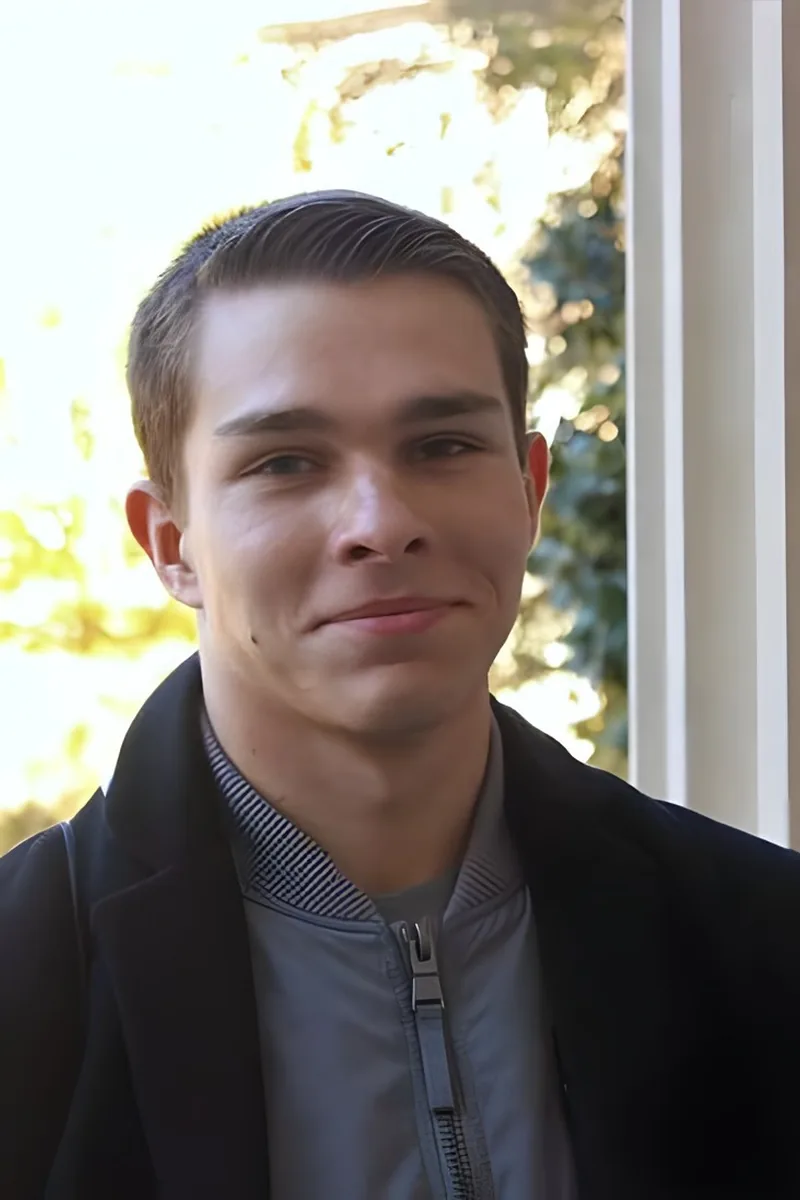
Reaction mechanisms, stereochemistry, and functional group transformations all follow a logic that becomes visible once you stop treating them as isolated reactions to memorize. Dimitry's chemistry minor at UNC Chapel Hill gave him deep exposure to organic chemistry, and he teaches students to trace electron movement step by step so they can predict products on their own.
Reaction mechanisms are the language of organic chemistry, and Taylor became fluent in them as both a student and a tutor in Wake Forest's Chemistry Department. She teaches students to recognize electron-pushing patterns — why a nucleophile attacks here, why this leaving group departs there — so that predicting products becomes intuitive instead of overwhelming.
Reaction mechanisms in organic chemistry follow a logic that becomes predictable once you learn to read electron density and leaving-group stability. Amanda approaches each mechanism as a puzzle in charge movement, walking through arrow-pushing with enough repetition that students start anticipating nucleophilic attacks and rearrangements before being told what happens next.
Being on the pre-med track at Northwestern while studying both biology and chemistry means Kade is taking organic chemistry alongside the same students he tutors — he knows which professors emphasize what, which problem sets are brutal, and where the common mistakes hide in topics like stereochemistry and acyl substitution. That proximity to the material gives him a practical, recently-tested understanding of how to break down multi-step synthesis problems into manageable pieces.
I'm a current medical student at VCU School of Medicine, and a graduate of Johns Hopkins University. I received my Bachelor of Science in Molecular and Cellular Biology. I've had the pleasure of tutoring a diverse range of students for 5 years; while I tutor a broad set of subjects, I'm most passionate about biology, psychology, and chemistry. I'm a big proponent of ensuring understanding over memorization and teaching concepts that last for years to come (particularly for other students interested in medicine!) In my free time, I love to write poetry, edit essays, and gush about game writing with friends.
Reaction mechanisms in organic chemistry are essentially molecular storytelling — electron pairs move, bonds break and form, and stereochemistry shifts in predictable ways. Andrew's molecular biology training required deep fluency with organic reactions at the biomolecular level, so he teaches arrow-pushing and functional group transformations as logical sequences rather than steps to memorize.
Penn's pre-health track put Brittany through rigorous chemistry coursework alongside her psychology degree, and she spent her undergraduate years tutoring General Chemistry I and II at the university's Tutoring Center — building the kind of fluency with reaction fundamentals that carries directly into organic mechanisms. She approaches topics like nucleophilic substitution and carbonyl reactivity by connecting them back to the foundational principles of electron behavior and molecular structure, making each new reaction type feel like an extension of something students already know.
Reaction mechanisms become far more intuitive when you understand the electron-level logic behind each arrow push. Andrew earned his biochemistry degree and continues working in biochemical laboratories, so he teaches organic chemistry as a language of molecular behavior — connecting nucleophilic substitutions, elimination pathways, and carbonyl chemistry to the biological contexts where they actually matter.
Siddharth's biology degree means he first encountered organic chemistry through the lens of biomolecules — amino acid reactivity, lipid structures, and the functional group behavior that drives metabolic pathways. That biological framing gives him a practical way to teach arrow-pushing and reaction classifications, connecting each mechanism to molecules students can visualize rather than treating them as abstract exercises.
Preparing for medical school means Benjamin ground through organic chemistry with the kind of intensity that only MCAT stakes demand — reaction mechanisms, carbonyl chemistry, and spectroscopy all studied until the logic behind each transformation became second nature. His evolutionary anthropology background at Duke also gives him a knack for seeing patterns across complex systems, which is exactly the skill that separates students who struggle with synthesis problems from those who can map a retrosynthetic pathway confidently. Rated 5.0 by students.
David is earning his PhD in organic chemistry at Northwestern, where he teaches undergraduate orgo labs and recitations and has co-written exam questions for the department. That means he knows exactly which reaction mechanisms, stereochemistry problems, and retrosynthesis challenges professors test — and how to break them down so the logic clicks. Rated 5.0 by students, he ties each mechanism to real-world applications that make the material stick.
Four years of tutoring organic chemistry at Yale — while simultaneously doing pre-med coursework — gave Marcus a sharp sense of where students get stuck, particularly with carbonyl reactivity and multi-step synthesis planning. His current research at the Hospital for Special Surgery keeps him actively applying these concepts, so he teaches functional group transformations as interconnected tools rather than an isolated reaction catalog.
Reaction mechanisms are the backbone of organic chemistry, and most students struggle not because the material is impossibly hard but because they try to memorize hundreds of reactions instead of learning the handful of electron-pushing patterns that explain almost all of them. Rebecca's science training means she teaches students to read a mechanism the way you'd read a sentence — subject, verb, object — so new reactions become predictable rather than surprising.
Reaction mechanisms are the language of organic chemistry, and Josef teaches students to read them — arrow pushing, stereochemistry, and functional group reactivity — rather than memorize hundreds of individual reactions. His biochemistry focus at Cornell means he can connect orgo concepts like nucleophilic substitution and carbonyl chemistry directly to biological molecules students will encounter later.
I am a freshman at Vanderbilt University studying biochemistry and involved in analytical chemistry research. Despite my studies being very science oriented, I also enjoy studying English and the humanities. I'd be happy to tutor you in any of these areas!
Testimonials
Because the right Organic Chemistry tutor makes all the difference.
Average Session Rating – Based on 3.4M Learner Ratings
Practice Organic Chemistry
Free practice tests, flashcards, and AI tutoring for Organic Chemistry
Nearby Organic Chemistry Tutors
Other Charlotte Tutors
Related Science Tutors in Charlotte
Frequently Asked Questions
Organic chemistry requires visualizing molecules in three dimensions and understanding reaction mechanisms—skills that go beyond memorization. Many students find the abstract nature of bonding, stereochemistry, and electron movement challenging to grasp from lectures alone. Personalized 1-on-1 instruction helps break down these complex concepts into digestible pieces and builds the spatial reasoning skills that make organic chemistry click.
Your first session focuses on understanding your current level, learning goals, and specific pain points—whether that's mechanisms, nomenclature, or synthesis problems. A tutor will assess which concepts need reinforcement and create a personalized study plan tailored to your course pace and exam timeline. This foundation ensures every session after builds on what works best for your learning style.
Reaction mechanisms are the heart of organic chemistry, and understanding them requires seeing how electrons move and why bonds break or form. Tutors use visual tools, molecular models, and step-by-step walkthroughs to make these abstract processes concrete. With guided practice on pushing electrons and predicting products, you'll develop intuition for mechanisms rather than just memorizing them.
Yes. Tutors can help you connect lab work to the theoretical concepts you're learning in lecture, explain experimental procedures, and guide you through analyzing results. Understanding the 'why' behind experiments—how they demonstrate reaction principles or test hypotheses—deepens your grasp of organic chemistry and strengthens your lab reports and performance.
Synthesis and retrosynthesis require strategic thinking and pattern recognition. Tutors teach you to work backwards from a target molecule, identify key transformations, and select appropriate reagents and conditions. Through guided practice with progressively complex problems, you'll build the problem-solving toolkit to tackle unfamiliar synthesis questions on exams.
Starting 4-6 weeks before an exam gives you time to solidify foundational concepts, practice problems, and refine weak areas. However, even 2-3 weeks of focused tutoring can significantly boost your confidence and performance if you're already familiar with the material. The sooner you identify gaps—especially in mechanisms and nomenclature—the more time you have to master them.
Look for tutors with strong chemistry backgrounds—ideally a degree in chemistry, biochemistry, or a related field, plus experience teaching organic chemistry at the college level. They should be able to explain concepts clearly, use effective visual aids, and adapt their teaching to your learning style. Varsity Tutors connects you with expert tutors who have proven success helping students master organic chemistry.
Absolutely. Ongoing tutoring throughout the semester is often more effective than cramming before exams because it builds understanding incrementally and prevents concepts from piling up. Regular sessions help you stay on pace with your course, tackle challenging topics when they're introduced, and develop strong problem-solving habits that carry through to exams and beyond.
Let’s find your perfect tutor
Answer a few quick questions. We’ll recommend the right plan and match you with a top 5% tutor.