Award-Winning AP Chemistry Tutors
serving Raleigh, NC
AP Chemistry
Tutors in Raleigh
Private 1-on-1 tutoring, weekly live classes for academic support, test prep & enrichment, practice tests and diagnostics, and more to elevate grades and test scores.
Based on 3.4M Learner Ratings
UniversitiesSchools & Universities
DeliveredHours Delivered
ProficiencyGrowth in Proficiency
Who needs tutoring?
No obligation. Takes ~1 minute.
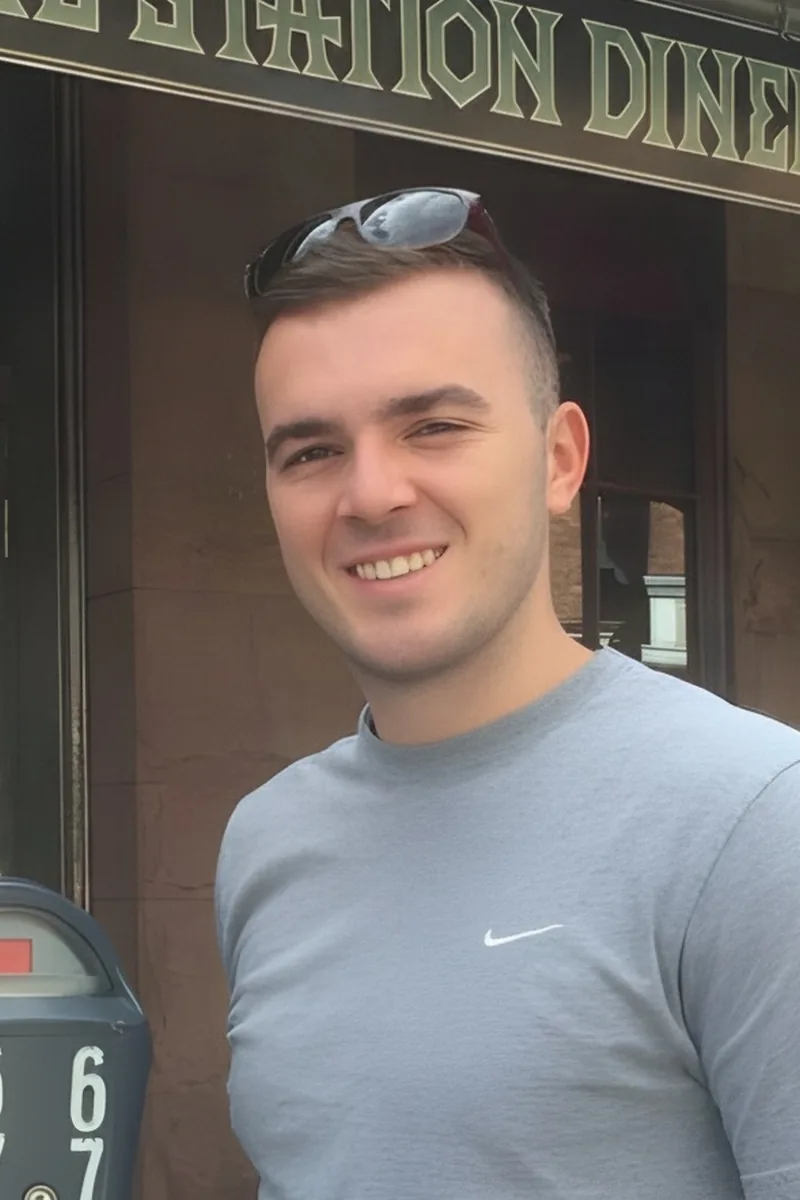
The jump to AP Chemistry is really a jump in reasoning — suddenly students need to connect thermodynamics to kinetics, predict reaction spontaneity using Gibbs free energy, and interpret lab data quantitatively. Hunter brings a researcher's perspective from his graduate work at Tufts and upcoming PhD at Duke, where these aren't textbook abstractions but daily tools. He breaks down multi-step free-response problems by teaching students to identify what the question is actually testing.

I am a chemist having majored in Organic chemistry for my BS degree and environmental chemistry for my MS degree, in my career as an analytical chemist both in Research and development in a plastics industry and analytical chemist in environmental health laboratories, I have been a lifetime student of organic chemistry and chemistry in general. My passion has always been to help student excel in chemistry, especially organic chemistry which has endless applications in the present word. I started by tutoring my own children in high school and helped my daughter graduate with a BS in chemical engineering at North Carolina State University and my son as an electrical engineer from the same college. Organic chemistry bogs down students if they are behind in some basic principles such as understanding the periodic table and why the elements are arranged in specific patterns, i.e. periods and groups. They must be very clear about the filling of electrons in various shells and orbitals. A basic understanding of this will open doors to many aspects of the bonding theory, hybridization of carbon and its tetrahedral nature and the ability of carbon to infinitely bond with itself to make long chains and many complex derivatives. Chemical reactions take place at the outermost, also referred to as the valency shell and therefore understanding the orbitals in the outer shell helps the student tell what a sigma or a Pi bond is and other characteristics of a bonded atom such as lone pair of electrons which plays important roles in reactions and ligand chemistry. My favorite hobby is soccer and football. I love music so I usually play my guitar for leisure. I spend a lot of time studying interesting topics in organic chemistry on the internet.
AP Chemistry's jump from memorizing periodic trends to applying thermodynamics and equilibrium concepts trips up a lot of students. Eric's engineering coursework at Duke required mastering these same principles — reaction kinetics, enthalpy calculations, electrochemistry — and he teaches them with the quantitative rigor the AP exam demands. Rated 5.0 by students.
Though English is her home base, Lexy has spent considerable time tutoring math and science at the middle and high school level, building custom materials like worksheets and visual walkthroughs that break abstract processes into concrete steps. For AP Chemistry, that means she approaches problems like stoichiometry and gas law calculations with the same structured, step-by-step scaffolding a student might not expect from an English major — but that methodical clarity is exactly what makes dimensional analysis and mole conversions click.
Chemical engineering at NC State means Devin is knee-deep in quantitative chemistry right now — the same reaction stoichiometry, thermodynamics, and equilibrium concepts that form the backbone of the AP Chemistry exam. He unpacks the math-heavy sections by connecting calculations back to what's physically happening in a reaction, which makes topics like enthalpy diagrams and Le Chatelier's principle easier to reason through on free-response questions. Rated 5.0 by students.
Hello! My name is Darsh and I am a junior at UNC Chapel Hill studying Chemistry. Chemistry's been my passion for years and I've spent a lot of that time tutoring chemistry to struggling students and helping them towards success. I am capable in teaching IB Chemistry, AP Chemistry, General Chemistry 1 & 2, and Organic Chemistry 1 & 2. My teaching methods usually consist of lots of active learning with using tons of practice problems so you are ready for anything thrown at you!
Taylor tutored a high school student specifically preparing for the AP Chemistry exam, walking her through everything from equilibrium calculations to electrochemistry while building test-taking strategies for the free-response section. She graduated with honors in chemistry from Wake Forest, where she also worked as a department tutor — so she knows both the college-level depth the AP exam demands and how to make it accessible.
Thermochemistry, equilibrium, and reaction kinetics demand both mathematical precision and conceptual understanding — Madison brings both as a science major who scored a 34 ACT. She approaches AP Chemistry problems by building visual models of what's happening at the molecular level, so students can reason through unfamiliar questions instead of relying on memorized shortcuts.
Studying chemistry at the college level every day gives Srikavya an edge most AP Chem tutors don't have — she's actively working with thermodynamics, equilibrium, and reaction kinetics in her own coursework right now. She unpacks tough concepts like electrochemistry and intermolecular forces by tying them back to the atomic-level reasoning that holds the entire course together. Students who feel lost in the math-heavy units especially benefit from her dual strength in chemistry and calculus.
Comparative literature might seem far from chemistry, but Ian's analytical approach to close reading transfers surprisingly well to interpreting AP Chemistry's data-heavy free-response questions — pulling meaning from graphs, experimental setups, and equilibrium expressions requires the same careful, evidence-based reasoning. He teaches the conceptual side of topics like periodicity and molecular geometry by emphasizing the 'why' behind trends, so students can reason through unfamiliar problems instead of relying on memorized rules.
A chemistry minor at UNC Charlotte means Kelsey is actively working through the college-level material that AP Chemistry is building toward — from equilibrium and thermodynamics to the lab techniques that show up in free-response questions. She also tutors chemistry through UNCC's Center for Academic Excellence, which gives her a sharp sense of where students lose the thread, especially when problems layer multiple concepts like stoichiometry onto acid-base or redox reactions.
Currently studying chemistry as an undergrad, Amanda is working through the same material AP Chemistry covers — electrochemistry, kinetics, thermodynamics — in real time, which means she knows exactly which concepts feel counterintuitive the first time around. She teaches students to think through problems by mapping out what's happening at the particle level before touching any math, turning abstract equations into something that actually makes physical sense. Rated 4.5 by students.
Stoichiometry, equilibrium constants, thermodynamics — AP Chemistry layers quantitative problem-solving on top of conceptual understanding in a way that overwhelms many students. Jaela's dual comfort with higher-level math and chemistry means she can teach the calculations and the underlying theory in the same breath, which is exactly what the AP exam demands.
AP Chemistry's free-response questions demand more than memorizing reactions — they require students to connect equilibrium, thermodynamics, and kinetics into coherent explanations under time pressure. Vishank's data analytics background at Ohio State sharpens how he breaks down multi-step problems, teaching students to identify what the question is really testing before diving into calculations. Rated 4.9 by students.
The jump from honors chemistry to AP Chemistry catches students off guard because suddenly they need to explain *why* — why equilibrium shifts, why certain reactions are spontaneous, why atomic structure dictates bonding behavior. Cassandra tackles these conceptual layers by tying each unit back to the underlying thermodynamic and kinetic principles, so students aren't just memorizing trends but understanding the logic that drives them. Her science degree and experience with analytical chemistry give her depth well beyond the AP curriculum.
AP Chemistry's leap from stoichiometry to thermodynamics and equilibrium trips up students who were comfortable in general chem. Matthew, pursuing his biochemistry degree at Yale, unpacks these concepts by showing how energy, entropy, and reaction kinetics actually govern the molecular behavior students already learned about. His 5.0 rating speaks to how well that approach lands.
Cornell's biology curriculum required Viraj to work through college-level chemistry — from reaction energetics to molecular interactions — in courses where chemical reasoning underpins everything from cellular metabolism to pharmacology. He applies that cross-disciplinary perspective to AP Chemistry topics like intermolecular forces and solution chemistry, teaching students to predict behavior at the molecular level instead of memorizing isolated rules. Rated 5.0 by students.
Equilibrium, thermodynamics, and electrochemistry form the backbone of AP Chemistry's toughest units, and they're also central to Phillip's biomedical engineering coursework at Brown. He tackles these topics by connecting abstract equations — like the Nernst equation or Le Chatelier's principle — to concrete lab scenarios students can visualize. His 5.0 rating speaks to how well that approach lands.
The AP Chemistry exam demands fluency with topics like electrochemistry, kinetics, and thermodynamic favorability — not just memorized formulas but the ability to explain why a reaction proceeds. Shawn earned his Master's in Chemistry, which means he can unpack the theory behind Le Chatelier shifts or galvanic cell potentials at whatever depth a student needs. His approach prioritizes the conceptual reasoning the free-response section rewards.
Christopher's molecular biology training at Johns Hopkins gave him a deep working knowledge of the chemistry that underpins life — thermodynamics, equilibrium, acid-base reactions, and molecular bonding all show up in his coursework daily. He applies that fluency to AP Chemistry by connecting abstract concepts like Le Chatelier's principle or electron orbital theory to concrete, memorable examples.
Hello! My name is Danica and I am an incoming sophomore at the University of Pennsylvania majoring in Neuroscience and Psychology. As the founder of my high school's Chemistry Club, I worked to make challenging scientific concepts approachable and engaging for students of all grade levels. I developed educational materials, organized meetings, and created an environment where students felt comfortable asking questions and exploring their curiosity. I tailor my tutoring approach to each student's learning style, whether that involves working through practice problems, reviewing test corrections, creating study resources, or breaking down complex topics into manageable steps. I believe every student is capable of growth when provided with patience, guidance, and the right support. As a tutor, my goal is not only to help students improve their grades but also to foster confidence, independence, and a genuine appreciation for learning.
Thermodynamics, equilibrium, and electrochemistry are where most AP Chemistry students start losing their footing. Sharon tackles these topics by connecting abstract concepts to biological systems she knows inside out from medical school — like why buffer systems matter in blood pH regulation. That cross-disciplinary lens makes the toughest AP Chem material more intuitive.
Three semesters as a college chemistry TA gave Joshua deep familiarity with the exact concepts that stump AP students: equilibrium calculations, thermodynamics, and electrochemistry. He knows how free-response questions are structured and teaches students to connect mathematical problem-solving with the conceptual reasoning the AP exam rewards.
A PhD in chemical engineering means Steven didn't just study chemistry — he lived in thermodynamics, kinetics, and equilibrium for an entire career. For AP Chemistry, he unpacks topics like electrochemistry, reaction mechanisms, and Le Chatelier's principle by explaining the concept, restating it differently, and then grounding it in a real-world scenario that makes the logic stick. Rated 4.9 by students.
Neuroscience at Duke required Ankit to master chemistry at the molecular level — understanding how ions cross membranes, how neurotransmitters bind receptors, and how electrochemical gradients drive cellular processes. That gives him a concrete, biology-rooted way to teach AP Chemistry topics like oxidation-reduction reactions and intermolecular forces, where seeing the real-world consequences makes the theory click. His 1580 SAT and 4.8 rating back up the depth he brings to exam preparation.
Testimonials
Because the right AP Chemistry tutor makes all the difference.
Average Session Rating – Based on 3.4M Learner Ratings
Practice AP Chemistry
Free practice tests, flashcards, and AI tutoring for AP Chemistry
Other Raleigh Tutors
Related Science Tutors in Raleigh
Frequently Asked Questions
AP Chemistry covers eight main units: atomic structure, bonding, reactions, stoichiometry, thermodynamics, equilibrium, acids and bases, and redox reactions. Most students benefit from starting test prep 3-4 months before the exam, though this varies based on your current chemistry foundation. A personalized tutor can assess your strengths and gaps to create a realistic timeline tailored to your schedule.
Score improvement depends on your starting point and consistency. Students who work with tutors typically see gains of 1-3 points on the 1-5 AP scale, with larger improvements possible if you're addressing significant knowledge gaps. The key is identifying your weak areas early—whether that's lab calculations, equilibrium problems, or conceptual understanding—and focusing practice there rather than reviewing material you already know well.
Students most commonly struggle with quantitative problem-solving (stoichiometry and equilibrium calculations), conceptual understanding of bonding and molecular structure, and time management during the exam. Many also find the free-response section intimidating because it requires showing all work and explaining reasoning, not just getting the right answer. A tutor can help you develop strategies for each question type and build confidence through targeted practice.
Practice tests are essential for AP Chemistry success—they help you understand the exam format, identify weak topics, and build stamina for the 3-hour test. Rather than taking full practice tests early on, start with topic-specific practice problems to build skills, then move to full-length tests under timed conditions in the final 4-6 weeks. A tutor can review your practice test results to pinpoint exactly which concepts need more work and which strategies aren't working for you.
Test anxiety in AP Chemistry often stems from feeling unprepared for certain question types or worrying about running out of time. Working through timed practice problems regularly builds confidence and helps you internalize a realistic pace (roughly 1.5 minutes per multiple-choice question, 20-25 minutes per free-response question). Tutors can also teach you strategies like tackling easier questions first, managing calculator use efficiently, and recognizing when to move on from a difficult problem.
Varsity Tutors connects you with expert tutors in Raleigh who specialize in AP Chemistry and stay current with the latest exam changes. When you get matched with a tutor, you can discuss their experience with the exam, their approach to teaching problem-solving strategies, and how they personalize instruction based on your goals. Most students benefit from starting with 1-2 sessions per week several months before the exam, then increasing frequency as test day approaches.
Yes, tutors can help you understand lab concepts and experimental design, which appear throughout both the multiple-choice and free-response sections. Free-response questions often require you to explain experimental procedures, interpret data, and justify conclusions—skills that go beyond just knowing chemistry facts. A tutor can walk you through how to structure these written explanations clearly and completely, which is crucial since the free-response section makes up 50% of your AP score.
Taking a diagnostic practice test or working through sample problems in each unit early on reveals which topics need the most attention. Many students find that their struggles cluster around specific areas—like equilibrium calculations or bonding theory—rather than being scattered across the curriculum. A tutor can help you analyze your mistakes, determine whether they stem from conceptual misunderstandings or careless errors, and create a study plan that prioritizes high-impact topics while reinforcing your strengths.
Let’s find your perfect tutor
Answer a few quick questions. We’ll recommend the right plan and match you with a top 5% tutor.