Award-Winning AP Statistics Tutors
serving Charlotte, NC
AP Statistics
Tutors in Charlotte
Private 1-on-1 tutoring, weekly live classes for academic support, test prep & enrichment, practice tests and diagnostics, and more to elevate grades and test scores.
Based on 3.4M Learner Ratings
UniversitiesSchools & Universities
DeliveredHours Delivered
ProficiencyGrowth in Proficiency
Who needs tutoring?
No obligation. Takes ~1 minute.

Most AP Stats students come in expecting another algebra class and hit a wall when the exam asks them to explain *why* a Normal model applies or *what* a 95% confidence level actually means in context. Shourya's physics training at UNC Chapel Hill gives him a natural entry point here — physics labs demand exactly this kind of reasoning about uncertainty, variability, and whether a result is real or just random scatter. He breaks down the interpretive language the free-response section rewards, connecting it to the kind of data reasoning students already do intuitively but haven't yet learned to articulate.
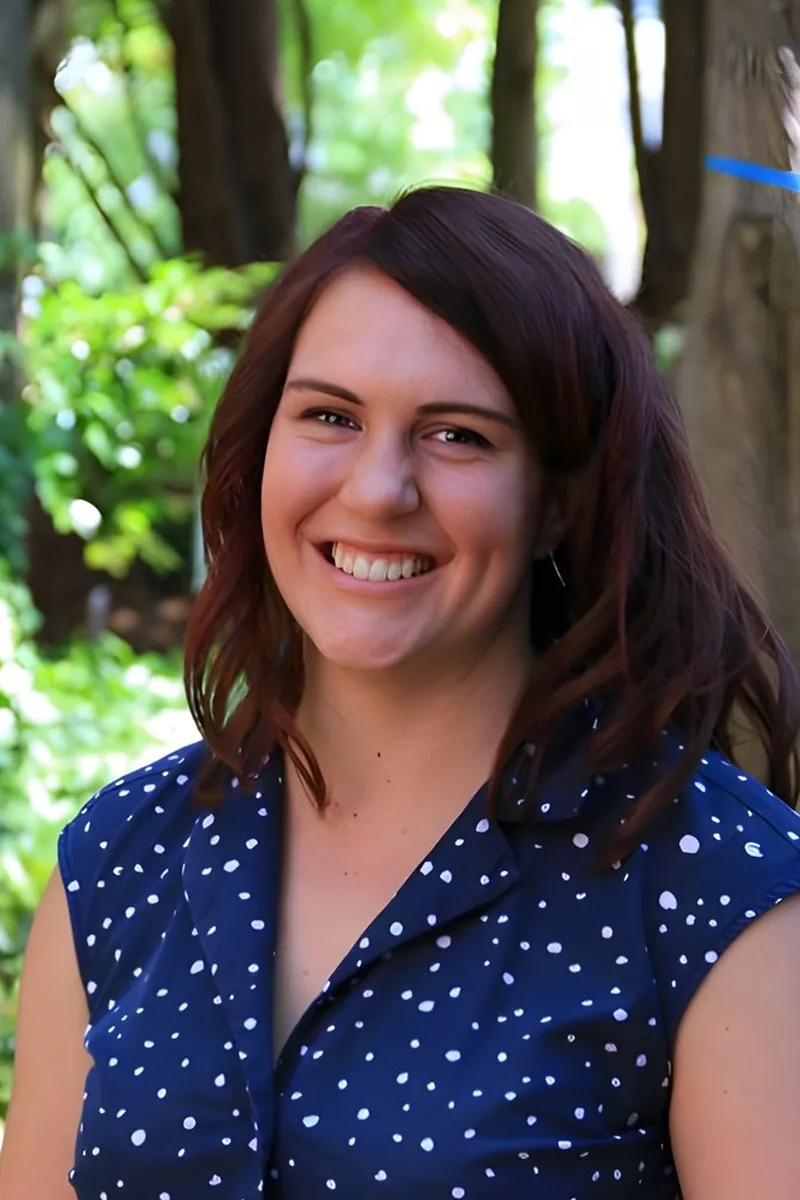
Engineering PhD programs at Georgia Tech don't let you hand-wave through data — Jordan's biomedical research required designing experiments, validating sensor measurements, and running the kind of statistical inference that AP Stats builds its entire curriculum around. That lab experience makes him especially sharp on the exam's trickiest conceptual pieces, like distinguishing between observational studies and experiments or explaining why a particular confidence level changes an interval's width. Rated 5.0 by students.
Computer science students deal with data constantly — and James's CS coursework means he approaches AP Statistics through the lens of data analysis and pattern recognition rather than rote formula application. He's especially effective at teaching students how to read output tables and translate statistical results into the precise written interpretations the AP exam demands. Rated 5.0 by students.
Psychology research runs on statistics — chi-square tests, confidence intervals, regression analysis — and Isabella spent her undergraduate years at UT applying these tools to real behavioral data. That experience means she teaches AP Statistics concepts like experimental design and inference not as abstract formulas but as tools that answer actual questions. Rated 5.0 by students.
I'm an archaeology PhD student at the University of Pennsylvania with extensive teaching experience at the college level. I've taught at Penn, University of the Sciences, and Methodist University in various social sciences, including anthropology, sociology, statistics, public health, and psychology. As a teacher, I'm guided by the idea that what I'm doing with students should be useful to them long-term. Making topics interesting, relevant, and accessible is of paramount importance because it allows students to hone skills that they'll use for the rest of their lives. Teaching is fun for me because I love getting to facilitate and witness my students' breakthroughs. There's nothing better than getting to that eureka moment!
As a statistics major at UNC Chapel Hill, Akshay doesn't just know AP Stats — he's immersed in it daily, from probability distributions and inference testing to experimental design. He breaks down tricky concepts like Type I and Type II errors or interpreting confidence intervals in plain language that clicks. Rated 5.0 by students.
Jenna's bachelor's degree in Statistics makes AP Statistics one of her strongest subjects — she doesn't just teach the formulas for chi-square tests or confidence intervals but explains the reasoning behind choosing one inference method over another. She also knows how the AP exam's free-response questions are scored, so she coaches students on how to justify conclusions in the precise language the rubric rewards.
Neuroscience research at Vanderbilt means Blake regularly encounters experimental design, data interpretation, and statistical inference in contexts like brain imaging studies and behavioral experiments — the same reasoning AP Stats tests on every free-response question. He's especially strong on the conceptual side, walking through why a particular test applies and how to communicate conclusions about p-values and confidence intervals with the precision the rubric demands. Rated 5.0 by students.
Public health research is fundamentally a statistics course in disguise — Kimberly's Masters work at Columbia involves reading epidemiological studies built on sampling design, confidence intervals, and hypothesis testing, so she can ground AP Stats concepts in real research questions about why a particular study's conclusions hold up or fall apart. She's especially sharp on the inference and study design units, where her psychology background adds a second layer of understanding around confounding variables and observational versus experimental distinctions that the free-response section loves to test.
Data analytics coursework in biomedical and public health analysis means Vishank doesn't just know the AP Stats formulas — he's used them to draw real conclusions from messy health data sets, which is the exact skill the exam's free-response questions are testing. He's especially sharp on the data collection and study design unit, breaking down why randomization matters and how confounding variables sneak into observational studies. Rated 4.9 by students.
Twenty-five years teaching science in Massachusetts public schools means Jacques has walked hundreds of students through the messy reality of collecting lab data, spotting outliers, and deciding whether results actually mean something — which is the interpretive core of AP Statistics. His Princeton chemical engineering training leaned heavily on statistical modeling and differential equations, giving him a quantitative backbone that makes concepts like normal distributions and expected value click in context rather than in isolation. Rated 4.8 by students.
Biomedical engineering at UIC meant Apoorva was designing experiments, collecting noisy biological data, and running statistical tests to figure out whether a device prototype actually performed better than chance — which is the same inferential reasoning AP Stats builds its curriculum around. She's especially sharp on the probability and simulation units, where her engineering instinct for modeling uncertainty makes abstract concepts like sampling variability feel concrete and grounded. Holds a 4.6 rating.
Psychology research is fundamentally a statistics course in disguise — Martha's work at Michigan examining how culture shapes self-related psychological processes means she's constantly designing studies, choosing between t-tests and ANOVAs, and defending whether her sample sizes and methods actually support her conclusions. That firsthand experience with the full research cycle translates directly to the AP Stats units on experimental design and inference, where she can explain why you'd stratify a sample or what a Type II error looks like in a real study rather than a textbook prompt. Rated 5.0 by students.
Pre-med coursework at Cornell means Pratik reads research papers full of p-values, confidence intervals, and regression tables — the same statistical literacy AP Stats is designed to build. He leans into the biology-meets-data angle, teaching students how to interpret experimental results and articulate why a particular inference procedure fits the study design, which is where the free-response rubric awards the most points. His 35 ACT reflects the kind of precise, structured reasoning that translates well to stats communication.
Cognitive science at Rice meant Adam spent semesters immersed in experimental design, hypothesis testing, and statistical inference — the exact skills AP Statistics demands. He teaches students to think through probability distributions and confidence intervals the way a researcher would, connecting each concept to the logic behind the test rather than just the formula sheet.
Most AP Stats students come in expecting another math class and get blindsided by how much the exam rewards written explanation over calculation — Benjamin's finance and economics training at Notre Dame, where he constantly interpreted data to support business decisions, built exactly that skill set. He teaches students his own shortcuts for quickly reading output tables and translating statistical results into the precise, context-specific language that earns full marks on free-response inference questions. Rated 5.0 by students.
Running experiments in a brain sciences PhD program means Tashina designs studies, collects behavioral data, and determines whether her results hold up under statistical scrutiny — the same cycle of experimental design, data analysis, and inference that AP Stats tests on every free-response question. She's especially sharp on the interpretive side, like articulating why a particular sampling method matters or what a confidence interval actually captures, because her dissertation work requires defending those choices to peer reviewers. Rated 4.7 by students.
Pure math training at the University of Chicago might seem like an odd fit for AP Stats, but Carson's coursework in probability theory and combinatorics gives him the formal backbone behind concepts like sampling distributions and expected value that most students only encounter as calculator procedures. He's especially sharp at demystifying the normal distribution and z-score logic, connecting them back to the mathematical reasoning that makes the formulas make sense rather than just appear on a formula sheet.
Most AP Stats students come in expecting another math class and get blindsided when the exam asks them to write — to describe distributions in context, justify a choice of test, or explain what a confidence interval actually captures. Emerson's dual background in biology and psychology means he's read and dissected dozens of studies built on exactly this kind of statistical reasoning, from clinical trial designs to behavioral research with messy human data. Rated 5.0 by students, he teaches the interpretive vocabulary and structured argumentation that turn a halfway answer into full free-response credit.
Testimonials
Because the right AP Statistics tutor makes all the difference.
Average Session Rating – Based on 3.4M Learner Ratings
Practice AP Statistics
Free practice tests, flashcards, and AI tutoring for AP Statistics
Other Charlotte Tutors
Related Math Tutors in Charlotte
Frequently Asked Questions
AP Statistics covers four main units: exploring data through distributions and relationships, sampling and experimentation, probability and random variables, and inference. The course emphasizes statistical thinking, data analysis, and interpretation rather than heavy computation. Students learn to design studies, collect and analyze data, and communicate statistical findings—skills tested across the AP exam's multiple-choice and free-response sections.
Score improvement depends on your starting point and commitment level. Students who work consistently with a tutor typically see gains of 2-4 points on the AP scale (out of 5), though some improve more significantly. The key is identifying your specific weak areas—whether that's probability concepts, inference procedures, or exam pacing—and targeting those through focused practice and feedback.
Many students struggle with conceptual understanding of probability and inference—topics that require thinking differently than algebra or geometry. Others find the free-response section challenging because it requires clear communication of statistical reasoning, not just correct calculations. Time management on the exam is another common issue, since students must balance careful reading of complex scenarios with efficient problem-solving.
Start by reading questions carefully—AP Statistics questions often contain important context clues. For multiple-choice, eliminate obviously wrong answers and don't leave blanks. On free-response, show your work and explain your reasoning, since partial credit is available. Many students benefit from practicing full-length exams under timed conditions to build pacing skills and identify which question types slow them down.
Aim to complete at least 3-4 full-length practice exams in the weeks leading up to the test, with the final one about a week before. Between full tests, practice individual question types and problem sets focused on your weaker areas. Quality matters more than quantity—review each practice test thoroughly to understand mistakes rather than rushing through multiple tests without reflection.
Ideally, students begin tutoring early in the school year to build a strong foundation in probability and inference concepts. However, tutoring can be valuable at any point—even students who start a few months before the exam can improve significantly by focusing on weak areas and exam strategy. The earlier you start, the more time you have to practice and reinforce concepts, but consistent effort matters more than when you begin.
Look for tutors with strong statistics backgrounds and proven experience teaching AP Statistics specifically. They should understand the College Board's curriculum framework and be familiar with common student misconceptions in statistics. Experience with the exam format, knowledge of effective test-taking strategies, and the ability to explain abstract concepts clearly are all important for helping you succeed.
Your first session focuses on assessment and goal-setting. A tutor will likely review your current understanding of key concepts, discuss your target score, and identify your specific challenges—whether that's probability, confidence intervals, or exam pacing. From there, you'll develop a personalized study plan that addresses your needs and fits your timeline before the AP exam.
Let’s find your perfect tutor
Answer a few quick questions. We’ll recommend the right plan and match you with a top 5% tutor.