Award-Winning LSAT Logical Reasoning Tutors
serving Minneapolis, MN
LSAT Logical Reasoning
Tutors in Minneapolis
Private 1-on-1 tutoring, weekly live classes for academic support, test prep & enrichment, practice tests and diagnostics, and more to elevate grades and test scores.
Based on 3.4M Learner Ratings
UniversitiesSchools & Universities
DeliveredHours Delivered
ProficiencyGrowth in Proficiency
Who needs tutoring?
No obligation. Takes ~1 minute.
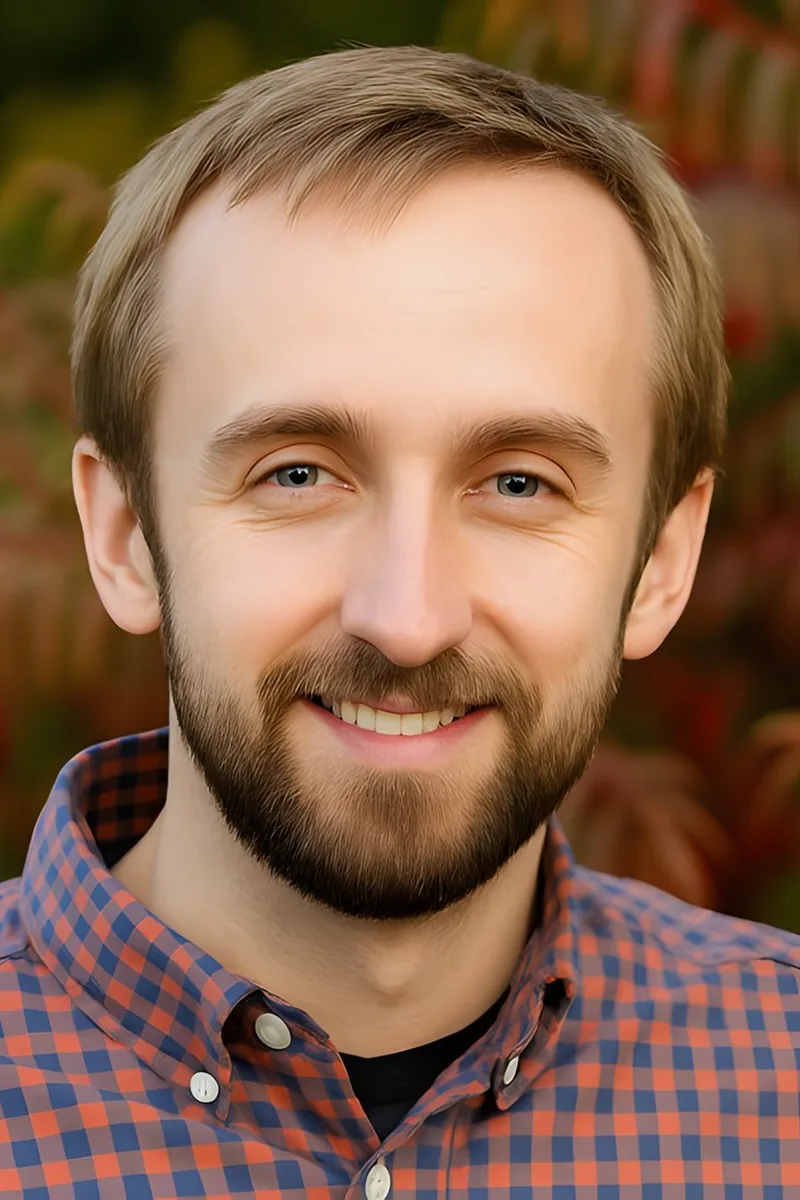
I'm experienced in and passionate about (especially computer skills, Python, and math) with others. I try to convey the principles and thought process that are the basis of my own understanding of the subject, not just rules to follow or things to memorize. Being able to explain your answer is even more important than simply getting it right! My tutoring style is personalized, with plenty of examples and frequent knowledge checks to ensure I and my student(s) are in sync. In my spare time I enjoy cycling, skiing, woodworking, reading, and vacationing to Lake Superior.
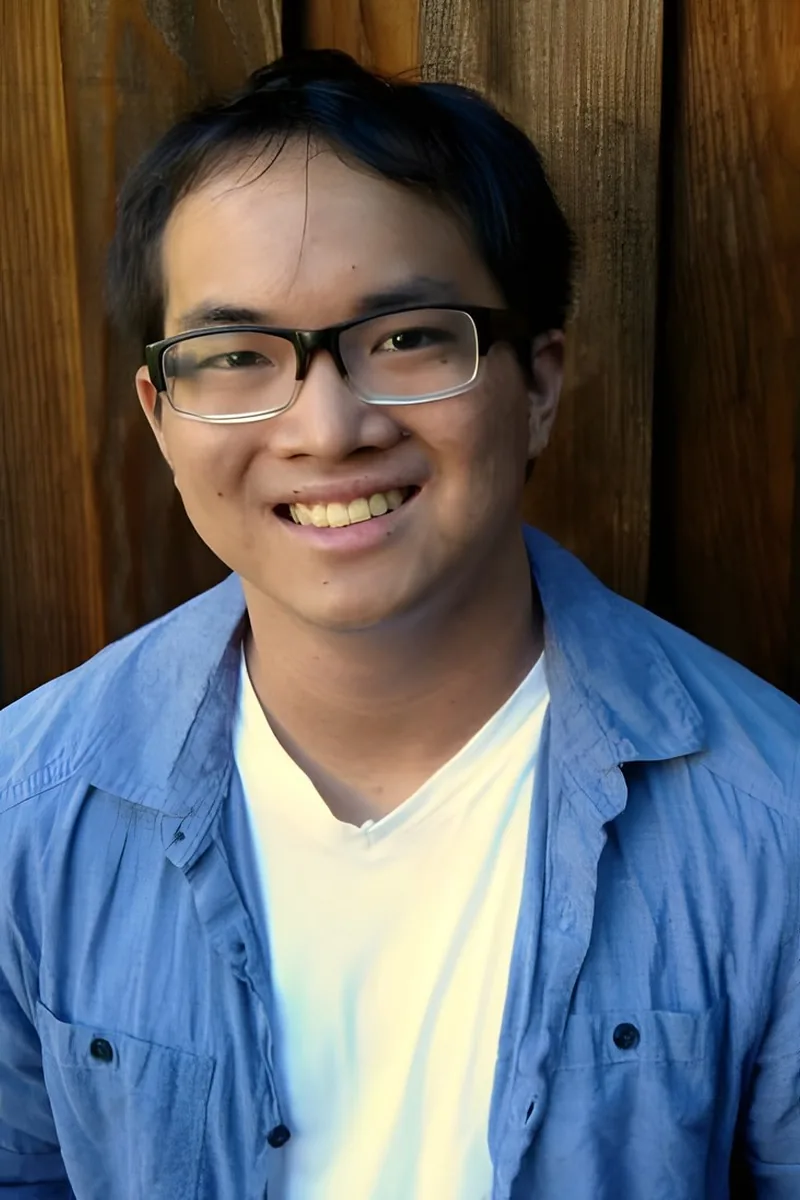
I am a graduate of Stanford University, where I received a BS in Cognitive Science and an MS in Computer Science. After graduation, I spent a summer in Palestine, where I taught web development, app development, and entrepreneurship to a cohort of overenthusiastic high school students; now, I've moved halfway across the country from the Bay Area to the Twin Cities. From volunteering with organizations like Twin Cities Rise and The Mid-Continent Oceanographic Institute to checking out art institutions like the Walker and Mia, it's been such a wonderful time settling into this new place that I call home.
I am currently a senior at the University of Minnesota, Twin Cities, and I am double majoring in Genetics, Cell Biology, and Development and French. I am pre-med, so I do hope to go to medical school next year and am currently in the process of applying. I graduated from Hinsdale Central High School in 2012, and there I was a member of the National Honors Society which was my first experience with tutoring. I am currently a volunteer at the University of Minnesota Masonic Children's Hospital, and I help patients and siblings with homework and reading there, as well.
I am an honors student at the University of Minnesota studying English and Journalism. I've been tutoring, teaching, and volunteering in schools for five years and specialize in language arts and standardized test preparation.
I'm more likely to give an answer quickly when a teacher asks a question if I have a habit of properly attuned instincts. So, if I want your confidence to grow, I need to redirect the water your instincts flow through to the proper conduits of careful thinking.
I am a current veterinary student and lifelong lover of science, literature and learning. My background is primarily in biology and the life sciences, and in addition to my veterinary program, I also work as part of a research team in comparative oncology that develops treatments for cancer that benefit both humans and animals. I am passionate about increasing public understanding of science, and am happy to work with students of any level of science education.
I am a rising senior at Pomona College, a small liberal arts college in California, majoring in Public Policy Analysis with a concentration in Economics and a minor in Mathematics. Born and raised just outside of Minneapolis, I am excited to be tutoring in the area. I've studied a variety of topics over the course of my academic career, but I feel especially confident in my knowledge base and tutoring ability in math, history, and standardized testing (especially the ACT).
I'm a student at the University of Minnesota studying Computer Science with a minor in music. I have a wide variety of experience in many math and science subjects and programming in various languages. I know exactly what it is like to be a student in the subjects I'm tutoring, to struggle with the material, to finally get to that point understand it all. I love learning and to help others out with their work when they're struggling to learn, and I'm excited to share my passions with you!
I'm dedicated to critical thought and careful, clear writing. In my independent written work, I focus on issues of political economy, critical theory, and the social and political impacts of technology. I recently also have begun to work on a science fiction novel. In tutoring, I hope to encourage students to approach writing and language with ease and technical competence. I have extensive experience in many academic areas, and can help develop skills for large research projects, short essays, standardized test taking, and everything in between. Nothing is too complex to be broken down clearly and mastered!
I'm passionate about both STEM subjects and the humanities, and love helping students translate their strengths in one area to another.
I am a supportive teacher but I always push my students to succeed. I don't teach based on what my students can already do, I teach based on where I know they are capable of going and what they are capable of doing. I also make sure to talk with them. No one knows how the students learn best more than the students themselves. I bring multiple approaches and vantage points, ready to hit every possible arena and hopefully perk the students' learning style at some point.
I am a current student at the University of St. Thomas, working towards my major of Computer Science and while I am proficient in a broad range of subjects I love math and science the most. Before university, I was able to travel with my family to a lot of places and meet a huge variety of people because of this I love meeting new people. I love hearing about their family dynamic or their group of friends at school and exchanging funny stories along the way.
I am now pursuing a Master's Degree in education from the University of Minnesota and am working toward obtaining my K-6 elementary teaching license. During the day, I work full time as a reading tutor at a school in South Minneapolis. I enjoy basketball, video games, hiking, and reading. In addition to my undergraduate degree in finance, I also received my CFA Charter in 2019.
I am a sophomore at the University of Minnesota majoring in Economics. I enjoy helping people learn because I believe true mastery of a subject is being able to teach it. My promise to the students I work with is to put in as much work as they do. I firmly believe that what you get out of something depends on what you put in, so whatever a student will put in I will give back.
I am an avid classical pianist, EMT, swimmer, and tinkerer. I love explaining things and paying forward my knowledge to those around me!
I am back in the United States, I work at Children's Defense Fund as the Youth Programs Associate. In my free time, I like to hike with my dog, read, and cook!
I am able to tutor a broad range of chemistry courses, from organic to physical to general chemistry, as well as math and physics classes. I can also help with test prep for the ACT, SAT, or GRE. I believe that asking questions is the basis of independent learning, so I strive to create an environment students feel that no question is too small to be asked. I love learning, and I hope to spark the joy of new understanding in my students!
I'm Emma! I'm a rising senior Classics major at Carleton College in Northfield, MN. I study Latin, Ancient Greek, and the histories associated with the two languages. Outside of class, I'm an RA, and I spend 6-8 hours a week tutoring and teaching college access courses in a nearby high school. In the future, I hope to teach high school Latin!
I am a Mechanical Engineering student at the University of Wisconsin, Madison. I have had a lot of experience tutoring standardized prep through my own old tutoring non-profit. I believe in learning by doing, so we are going to be doing a lot of practice problems to learn all the best test taking methods!
I'm excited to work with students and to facilitate their learning and school engagement. I have graduated recently enough to remember what school and class are like. It's an exciting time in life, but it can bring challenges too, at any level of education. That's why I'm here to collaborate with any students who can benefit from my tutoring. I hope to show clarity, professionalism, and respect in helping students master their work and continue to feel eager about learning.
I am a software engineer and logistics specialist with a B.S. from the College of Science & Engineering at the University of Minnesota.
I am right now if not for the patient, determined, and creative teachers I had who not only helped me academically but also made me feel safe and connected. This is the kind of teacher I want to be, and I hope that I can make the kind of difference in my students’ lives that my teachers have made for me.
I'm a huge Red Sox fan and love watching detective shows when I have free time.
I am currently a fourth year medical student in Indianapolis. I completed my undergraduate education at Indiana University Bloomington, where I majored in Biology and Spanish. I also completed two minors in Mathematics and Chemistry. While at IU, I worked for the Department of Mathematics and Department of Spanish. I also worked as a Peer Tutor for the IU Athletics Department, tutoring in several subjects including statistics, chemistry, physics, and Spanish. I graduated from college with a 4.0, and I entered medical school shortly thereafter. Since coming to medical school, I have excelled in all of my pre-clinical coursework, and I currently rank in the Top 20% of my class. I feel very comfortable and confident tutoring other students in a variety of subjects from math and science to Spanish. I like to think that the same techniques I have used to excel in all phases of my education can be easily adapted to other students and help you achieve your academic goals, just as I have!
I am a graduate of the University of Chicago, with a bachelor's degree in psychology and linguistics. Currently, I am pursuing a master's degree in speech-language pathology at Teachers College, Columbia University. In the past, I have worked as a teacher's aide in a public school classroom, a mentor to middle school girls, an instructor and tutor at the literacy education organization 826, and a summer camp counselor. I tutor a diverse range of subjects, and I find that I especially enjoy tutoring language arts, reading, and writing at all levels, from elementary school all the way up to college/grad school test prep. As a tutor, I am committed to helping students reach their full potential as learners. Throughout my years as an educator, I have seen firsthand the remarkable academic growth that can occur when tutors provide students with the individualized support that they need. In my spare time, I enjoy reading, journaling, and learning about other languages and cultures.
I'm a current medical student at the University of Arizona College of Medicine with undergraduate degrees from Washington and Lee in chemical engineering and anthropology. I have extensive experience in tutoring and teaching since 2010, and am ready to help you with your learning needs! I focus on standardized testing (SAT/ACT) and also tutor in a wide range of math, English, and Spanish classes. In my free time, I like to run, do CrossFit, volunteer, and watch TV!
I'm a freshman at Stanford University pursuing a degree in mathematical and computational science. I've been tutoring students from grades 3-12 throughout high school, and I look forward to continue in college. Nothing excites me more than learning something new, and I strive to share my excitement with my tutees.
I am proud to be a part of Varsity Tutors! I am originally from San Antonio, TX; I completed my undergraduate education at Rice University in Houston where I received a bachelor's degree in Biochemistry and Cell Biology. Currently, I am in my second year of medical school at Baylor College of Medicine.
I am no longer needed.
I'm not tutoring or buried in my textbooks, you will either find me rock climbing at the Triangle Rock Club, playing Ultimate Frisbee, working on my car, or enjoying the great outdoors (beaches, mountains, forests--you name it, I love it). On rainy weekends I enjoy tinkering with computers and old electronics, playing Pokemon, or picking at my guitar.
I'm Dennis. I study physics, math, and computer science. I have done research about cosmic ray acceleration at supernova shock fronts in the Princeton University Department of Astrophysics, simulating how the turbulent plasmas push protons and ions. I have also worked at the Norfolk State University Department of Engineering, designing, simulating, optimizing, and building light filters for wavelength-division optical-electronic multiplexers. Another field I study is the mathematics of quasicrystals and aperiodic tilings, such as the Penrose tiling of rhombuses.
I am an interdisciplinary educator with an Ed.M. from the Harvard Graduate School of Education and a B.A. from Dartmouth College. My background is primarily in integrated arts learning and museum education and I specialize in visual arts, history and art history, and object-based learning. In all subjects, I take a creative, inquiry-based and learner-centered approach, designing opportunities for each unique individual to meet their learning goals.
I am a junior at Purdue University studying Aerospace Engineering and am part of the Air Force ROTC program. I have 6 years of tutoring experience at places including Kumon, Mathnasium, and Purdue University. I have worked with kids of all ages from kindergarten to sophomores in college, each with their own set of unique strengths, and tutored a variety of subjects, including calculus, trigonometry, geometry, thermodynamics, chemistry, and physics. Like many of my previous students, I struggled to understand concepts that I was being taught and was a terrible test taker. However, I found ways to overcome my obstacles and develop an better intuition for what I was learning. I believe that it is only this intuition and understanding that helps overcome these obstacles. My least favorite thing to see people be discouraged, so with a little bit of guidance and reassurance, I want to show people that they are capable of anything they put their mind to.
Testimonials
Because the right LSAT Logical Reasoning tutor makes all the difference.
Average Session Rating – Based on 3.4M Learner Ratings
Practice LSAT Logical Reasoning
Free practice tests, flashcards, and AI tutoring for LSAT Logical Reasoning
Nearby LSAT Logical Reasoning Tutors
Other Minneapolis Tutors
Related Graduate Test Prep Tutors in Minneapolis
Frequently Asked Questions
Score improvement depends on your starting point and study commitment, but most students see meaningful gains through personalized instruction. Research on 1-on-1 tutoring shows it significantly accelerates learning compared to self-study alone. Many students improve by 3-7 points on the Logical Reasoning section when they work with a tutor to identify their specific weaknesses—whether that's assumption questions, weaken/strengthen arguments, or conditional reasoning. Your tutor will create a targeted study plan, track your progress on practice tests, and adjust strategies based on which question types challenge you most.
The most frequent mistakes fall into a few categories: misidentifying the argument's conclusion, confusing necessary conditions with sufficient conditions, and selecting answer choices that sound good without matching what the question actually asks. Students often rush through stimulus passages without fully mapping the logical structure, which leads to errors on assumption and inference questions. Another common issue is overthinking—selecting an answer that's technically related to the argument but doesn't answer the specific question. A tutor can help you develop a systematic approach to breaking down arguments, spotting logical flaws, and eliminating wrong answers methodically rather than relying on instinct.
Pacing is about working smarter, not faster. The Logical Reasoning sections have 24-26 questions in 35 minutes, so you need a strategy beyond just reading quickly. Expert tutors recommend starting with a 1-2 minute scan of all questions to identify easier ones, then tackling them first to build confidence and bank time. More complex assumption or parallel reasoning questions might need 2-3 minutes, while basic inference questions should take 60-90 seconds. Practice tests are essential—use them to identify your personal timing patterns and which question types slow you down. Your tutor can help you develop conditional benchmarks: if you're finishing 5+ questions early, you have time to be thorough; if you're rushing at the end, you need to trim time on easier questions.
The LSAT tests several core question types repeatedly: Main Point/Primary Purpose, Assumption, Weaken/Strengthen, Flaw, Inference, and Parallel Reasoning. Assumption questions are particularly common and often challenge students because they require you to identify unstated premises that make an argument work. Weaken/Strengthen questions test your ability to evaluate how additional information affects an argument's logic. Flaw questions ask you to spot logical errors in reasoning. Because these types repeat across every test, a tutor will help you develop a pattern-recognition system for each one—understanding what each question is really asking and what wrong answers typically look like. Once you master the framework for each question type, your accuracy and speed both improve.
Consistency beats intensity. Research on learning science shows that spaced repetition and practice testing build stronger skill development than cramming. A realistic schedule for students in Minneapolis preparing for the LSAT typically involves 3-5 focused study sessions per week, with each Logical Reasoning session running 45-90 minutes depending on where you are in your prep. Start by drilling individual question types for accuracy, then move to timed sections once your accuracy is solid (usually 75%+ on untimed work). Full practice tests should happen 1-2 times per week in your final 4-6 weeks of prep. Your tutor will help you track which question types need more work and adjust your schedule accordingly—if you're struggling with assumption questions, you might dedicate an entire session to those before moving on.
Varsity Tutors connects you with expert tutors who tailor their approach to your needs. Your first sessions usually involve diagnostic work—reviewing your practice test results, identifying which question types give you trouble, and understanding your timing patterns. From there, your tutor builds a customized plan that might include drilling specific question types, learning logical reasoning frameworks (like mapping conditional statements or argument structures), reviewing your wrong answers to spot patterns, and gradually introducing timed practice. Sessions are personalized 1-on-1 instruction, so pacing and depth align with your learning speed. Many students work with a tutor 1-2 times per week throughout their LSAT prep, with frequency increasing as test day approaches. Your tutor will also help you develop confidence by celebrating progress on practice tests and adjusting strategies when something isn't working.
Test anxiety often stems from feeling unprepared or uncertain about your approach. The best antidote is building genuine skill and confidence through targeted practice. Work extensively with practice tests so the format and question types feel familiar—familiarity reduces anxiety. Develop a consistent pre-test routine: breathing exercises, reviewing key frameworks, and reminding yourself that you've seen every question type before. During the actual test, focus on the process (reading carefully, following your strategy) rather than the outcome (your score). If you freeze on a question, a tutor-taught strategy like marking it and moving on helps preserve your mental energy. Many students also benefit from discussing test-day anxiety with their tutor, who can help normalize the experience and build a mental game plan specific to your anxiety triggers.
Let’s find your perfect tutor
Answer a few quick questions. We’ll recommend the right plan and match you with a top 5% tutor.