Award-Winning College Chemistry Tutors
serving Minneapolis, MN
College Chemistry
Tutors in Minneapolis
Private 1-on-1 tutoring, weekly live classes for academic support, test prep & enrichment, practice tests and diagnostics, and more to elevate grades and test scores.
Based on 3.4M Learner Ratings
UniversitiesSchools & Universities
DeliveredHours Delivered
ProficiencyGrowth in Proficiency
Who needs tutoring?
No obligation. Takes ~1 minute.
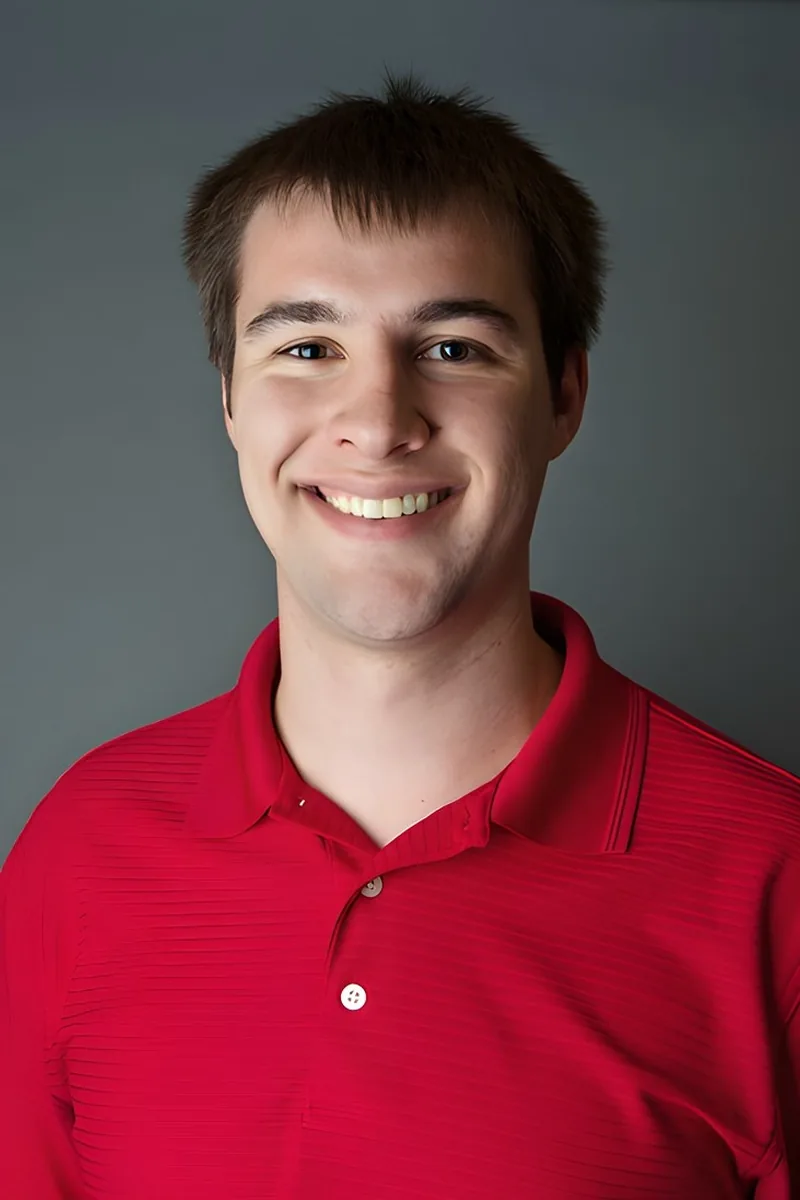
Thermochemistry, equilibrium constants, and reaction kinetics show up heavily in engineering coursework, so Joe has worked through these concepts under pressure and at depth. He unpacks the logic behind equations like the Nernst equation or Hess's law so students understand the derivations, not just the plug-and-chug.

Neuroscience at Vanderbilt means Blake has been neck-deep in college chemistry — gen chem concepts like molecular bonding, reaction energetics, and acid-base systems are the scaffolding for everything from neuropharmacology to membrane biophysics. His approach leans on building intuition for why a reaction behaves the way it does, drawing on his interest in how people actually learn and retain complex material. Rated 5.0 by students.
Computer science at Cornell Engineering required Ravnoor to grind through the same rigorous gen chem sequence that gates so many STEM majors — and his 5.0 rating suggests he retained more than enough to teach it. He tackles calculation-dense topics like stoichiometry and gas laws by decomposing them the way a programmer would: isolate the variables, track the units, and debug each step before moving forward.
Forty-plus students tutored in general and AP Chemistry, a bachelor's in chemistry, and a master's in environmental toxicology — Amy has seen college-level chemical concepts from the classroom side and the research side, where sloppy equilibrium reasoning or shaky thermodynamics understanding actually costs you results. She walks through problems like calorimetry, solution preparation, and reaction stoichiometry with an emphasis on dimensional analysis and unit tracking, which is where most gen chem mistakes quietly start. Rated 5.0 by students.
General chemistry at the college level demands more than balancing equations — it requires thinking in terms of energy, equilibrium, and molecular behavior. Jhonatan approaches topics like thermodynamics, acid-base chemistry, and kinetics by grounding abstract formulas in physical intuition, drawing on the quantitative rigor he developed through his biological sciences degree. His 5.0 rating speaks to how well that approach lands with students.
Pre-med bio-psychology coursework at UCSB means Aaron has pushed through college chemistry the same way his students are — as a high-stakes prerequisite where every gap in stoichiometry or equilibrium shows up again in upper-division science courses. He talks through problems conversationally, pressing students to explain the reasoning back to him, which exposes shaky understanding far faster than just re-solving practice sets. Holds a 5.0 rating.
Leading weekly peer mentor sessions for General Chemistry at WashU means Sarah doesn't just know college chemistry — she's actively teaching it, walking small groups through problem sets on equilibria, stoichiometry, and solution chemistry every week. That hands-on repetition sharpens her ability to spot exactly where a concept falls apart for each student and rebuild understanding from that point. Rated 5.0 by students.
Going from a Penn undergrad to medical school means Jessica sat through college chemistry twice — once as a prerequisite and again when biochemistry and pharmacology demanded she actually internalize concepts like reaction energetics, acid-base equilibria, and molecular interactions at a deeper level. That second pass gave her a clear sense of which gen chem topics students need to truly own versus merely survive, and she teaches accordingly. Rated 4.8 by students.
Medical school demands fluency in chemistry that goes well beyond introductory courses, and Abrahim brings that depth to college-level topics like thermodynamics, kinetics, and electrochemistry. He diagnoses conceptual gaps fast — if a student can balance an equation but can't explain why a reaction is spontaneous, that's exactly where the session will dig in.
Going through med school means Amanda has seen what happens when gen chem concepts like acid-base equilibria and reaction thermodynamics aren't truly understood — they unravel in biochemistry, pharmacology, and every clinical science that follows. She teaches college chemistry by grounding each topic in the bigger picture of where it leads, using her biology degree and 4.2 GPA from Alabama to zero in on the quantitative reasoning — electron configurations, enthalpy calculations, equilibrium expressions — that students need to own rather than just survive.
Thermodynamics, equilibrium constants, and reaction kinetics demand more than memorizing formulas — they require thinking about why a reaction proceeds the way it does. Garrett's coursework in physical chemistry and organic chemistry means he can unpack the energy landscapes and molecular interactions behind each concept. He connects general chemistry principles to their applications in biochemistry and physiology, which makes abstract ideas click faster.
Cognitive Studies at Vanderbilt gave Vy an unusual angle on college chemistry — she understands how students actually learn and retain dense, concept-heavy material like electron configurations, equilibrium shifts, and thermodynamic laws, not just the content itself. She uses that awareness to structure explanations around how the brain organizes new information, which makes a real difference when a student is drowning in a fast-paced gen chem course. Holds a 5.0 rating.
Between AP Chemistry, organic chemistry, and inorganic chemistry, Rebecca has covered college-level chemical concepts from multiple angles — but it's her biology background that shapes how she teaches gen chem topics like electron configurations, bonding, and solution chemistry, always tying them back to the biological systems where students will encounter them again. She's especially sharp at bridging the gap between memorizing periodic trends and actually using them to predict reactivity or molecular behavior. Rated 5.0 by students.
Testimonials
Because the right College Chemistry tutor makes all the difference.
Average Session Rating – Based on 3.4M Learner Ratings
Nearby College Chemistry Tutors
Other Minneapolis Tutors
Related Science Tutors in Minneapolis
Frequently Asked Questions
College Chemistry usually covers atomic structure, bonding, stoichiometry, thermodynamics, equilibrium, acid-base chemistry, and redox reactions. Many courses also include laboratory components where you'll conduct experiments to reinforce theoretical concepts and develop hands-on scientific skills. The pace is faster than high school chemistry, so understanding foundational concepts deeply—rather than memorizing—becomes essential for success.
Balancing equations requires understanding both the underlying chemistry and systematic problem-solving skills. Many students struggle because they try to memorize patterns rather than grasping the conservation of mass principle. Personalized tutoring helps you develop a logical approach to balancing equations by breaking down the process step-by-step and connecting it to the chemistry concepts you're learning, making the skill stick long-term.
Yes. Tutors can help you understand the scientific method, prepare for lab sessions, interpret experimental results, and connect what you observe in the lab to the theoretical chemistry you're studying in class. This support strengthens both your experimental design skills and your ability to think like a scientist—skills that extend far beyond just getting the right answer.
Molecular visualization is a skill that improves with guided practice. Tutors can use molecular models, drawings, and 3D visualization tools to help you build mental models of how atoms bond and molecules behave. Once you can visualize these concepts, problem-solving becomes much more intuitive, and you'll find yourself understanding reactions rather than just memorizing them.
Unit conversions and stoichiometry are foundational skills that unlock success in College Chemistry. The key is understanding the logic behind dimensional analysis rather than treating it as a formula to memorize. Personalized tutoring breaks these concepts down systematically, gives you plenty of practice with feedback, and helps you recognize patterns across different problem types so you can apply these skills confidently.
Your first session focuses on understanding where you are right now. You'll discuss which topics feel solid and where you're struggling—whether that's conceptual understanding, problem-solving, or test preparation. The tutor will assess your learning style and goals, then create a personalized plan to address your specific challenges and help you build real mastery of College Chemistry.
College Chemistry rewards understanding over memorization. Tutors focus on building your conceptual foundation by connecting abstract ideas to real-world applications, working through problems together, and asking questions that deepen your thinking. This approach not only helps you perform better on exams—it also makes chemistry feel less overwhelming because you're building genuine understanding rather than trying to remember disconnected facts.
Varsity Tutors connects you with tutors who have deep expertise in College Chemistry and understand how to teach it effectively. You can share your specific needs—whether you need help with a particular unit, exam prep, or overall course support—and get matched with someone who's a great fit for your learning style and goals. The process is straightforward, and you can start personalized instruction quickly.
Let’s find your perfect tutor
Answer a few quick questions. We’ll recommend the right plan and match you with a top 5% tutor.