Award-Winning College Physics Tutors
serving Minneapolis, MN
College Physics
Tutors in Minneapolis
Private 1-on-1 tutoring, weekly live classes for academic support, test prep & enrichment, practice tests and diagnostics, and more to elevate grades and test scores.
Based on 3.4M Learner Ratings
UniversitiesSchools & Universities
DeliveredHours Delivered
ProficiencyGrowth in Proficiency
Who needs tutoring?
No obligation. Takes ~1 minute.

Cancer research lab work at the University of Minnesota gave Brian a hands-on feel for the physical principles that show up in college physics — optics in microscopy, fluid dynamics in cell culture, energy transfer in spectroscopy — so he can ground abstract problem sets in tangible phenomena. His genetics and cell biology coursework required calculus-based physics, and his 34 ACT reflects the quantitative reasoning he brings to breaking down multi-step mechanics and thermodynamics problems. Rated 4.9 by students.
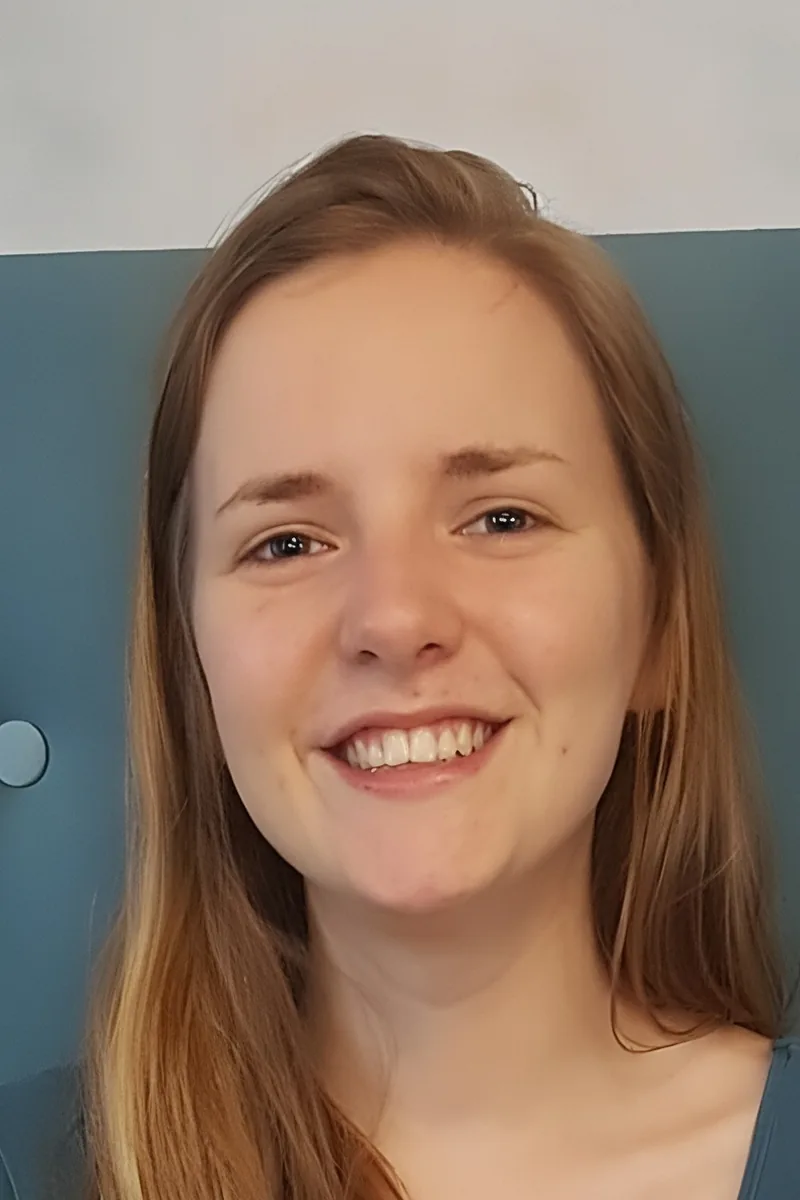
Finishing a physics degree while eyeing graduate work in biomedical engineering, Jane sits right at the crosspoint where classical mechanics, wave behavior, and electromagnetism feed into real applications — pressure in fluid systems, signal propagation in biological sensors, stress analysis in implant design. That application-minded perspective shapes how she breaks down college physics problems, connecting the abstract math to the physical scenario it actually describes. Rated 4.9 by students.
Most college physics struggles come down to not knowing which tool to grab — is this a conservation of energy problem or a Newton's second law problem? Broden's computer science training wired him to think in logical frameworks, and he applies that same structured reasoning to mechanics and electromagnetism, breaking each scenario into a decision tree before any equations appear. Rated 5.0 by students.
Building things that actually work — which is what mechanical engineering is — means Vania spent her degree applying Newton's laws to real structures, calculating heat transfer through materials, and analyzing fluid flow, not as textbook exercises but as design requirements. That hands-on engineering intuition shows up when she breaks down free-body diagrams or walks through energy conservation problems, because she's solved versions of them that had to hold up in the physical world. Her 1590 SAT underscores the quantitative precision she brings to calculus-based problem solving.
Aerospace engineering coursework at the University of Minnesota means Ethan solves college physics problems for a living — orbital mechanics is applied Newtonian gravity, flight dynamics is rotational kinematics, and propulsion is thermodynamics with real stakes. He brings that applied perspective to tutoring, walking students through how to set up free-body diagrams and energy conservation problems the way engineers actually think about them. Holds a 5.0 rating.
Introductory college physics moves fast, and the gap between understanding a lecture and solving the problem set can feel enormous. Moosa completed two years of university coursework through PSEO while still in high school, including physics at the college level, so he knows exactly where that gap shows up — especially in topics like rotational dynamics, circuits, and wave mechanics. He walks through problems step by step, emphasizing how to set up the physics before diving into the math.
I am a huge supporter of the notion that doing helps you learn. Being a distance runner and expanding into the triathlon world, I know the power of practice and putting in the time to make sure that you put effort into practice. I live by the phrase "You play how you practice.... So practice hard."
College-level physics ramps up fast once vectors, torque, and electromagnetic fields enter the picture. Julia's experience with university-level science coursework means she can unpack those tougher problem sets and show how to set up equations from first principles instead of hunting for the right formula to plug into.
Ella earned her physics degree doing exactly what college physics courses ask of students — grinding through mechanics, E&M, waves, and thermodynamics with the calculus to back it up. She's particularly sharp at teaching students to dissect multi-concept problems, like combining rotational kinematics with energy methods, because she approaches each one as a chain of smaller physical arguments rather than a formula hunt. Holds a 5.0 rating.
Joe's mechanical engineering degree means he didn't just study college physics — he applied it, running stress analyses, modeling thermal systems, and solving dynamics problems where getting the physics wrong meant a design that wouldn't work. That hands-on engineering context makes him particularly effective at teaching free-body diagrams, energy methods, and the kinematics-to-kinetics pipeline that forms the backbone of most introductory sequences. He breaks problems into physical setup first, math second, so students stop guessing at formulas and start reasoning through scenarios.
Three years of tutoring introductory physics while completing dual bachelor's degrees in physics and mathematics gave Justin a detailed map of exactly where students lose the thread — the jump from one-dimensional kinematics to rotational analogs, the shift from intuitive force reasoning to formal energy methods. His PhD in Computational Mathematics at the University of Chicago deepened that foundation, adding fluency with the differential equations and vector calculus that make the leap from algebra-based to calculus-based physics so steep. Rated 5.0 by students.
College-level physics ramps up quickly, especially once calculus-based mechanics and electromagnetism enter the picture. Richard's time as a course assistant in Harvard's math department gave him deep comfort with the calculus underpinning topics like electric flux integrals and differential equations of motion. He teaches the physics and the math simultaneously, so students aren't left wondering where a derivation came from.
Predentistry requires a deep pass through college physics — optics, fluid dynamics, mechanics of materials — and Erica tackled that coursework at Harvard alongside a History of Science degree that gave her an unusual ability to explain *where* physical concepts come from and how they evolved into the frameworks students use today. She breaks down problem-solving by connecting the conceptual narrative to the math, so students aren't just plugging into formulas but understanding the physics driving each step. Rated 4.9 by students.
Three physics-related bachelor's degrees give Avram an unusually deep undergraduate perspective on the subject — he's worked through mechanics, electromagnetism, and modern physics multiple times across different programs, which means he knows exactly where the conceptual gaps tend to hide. He breaks down wave phenomena and optics problems by connecting the math back to physical intuition, so equations feel like descriptions of real behavior rather than symbols to manipulate. His 1520 SAT reflects the quantitative precision he brings to problem solving.
Serving as a TA for Duke's Electricity and Magnetism course means Florence has graded the exact types of problems — Gauss's law applications, RC circuits, Faraday's law scenarios — that make college physics students sweat, and she knows precisely where the reasoning breaks down. Her computer science background also gives her a knack for teaching the systematic, step-by-step problem decomposition that turns a wall of physics into something solvable. Holds a 5.0 rating.
Studying molecular biophysics at Brown means Srini lives at the intersection of physics and biology — applying thermodynamics, electromagnetism, and wave mechanics to understand how molecules actually behave in living systems. That dual perspective makes him especially effective at unpacking the conceptual reasoning behind problems in mechanics, circuits, and optics that trip up so many college students.
Studying computer science and applied math at Harvard means Derek uses physics constantly — from electromagnetism in circuit design to mechanics in computational modeling. He tackles college-level topics like Lagrangian dynamics and wave equations by connecting the math to physical intuition, making dense derivations feel less abstract.
Engineering physics at Cornell means Daniel is taking the most mathematically demanding version of every physics course — mechanics, E&M, waves, thermo — and building the intuition to move fluidly between physical reasoning and formal derivation. He's particularly strong at teaching students how to set up problems from scratch, translating a word problem into a free-body diagram or energy equation before any numbers appear. Rated 5.0 by students.
Biomedical engineering at VCU meant Waleed spent years applying physics to biological systems — modeling forces on prosthetic joints, analyzing fluid flow through vessels, understanding the electromagnetic principles behind imaging equipment like MRI and ultrasound. That gives him a concrete hook for the mechanics, thermodynamics, and E&M topics that fill college physics problem sets, since he can ground abstract equations in systems students can actually picture. Holds a 5.0 rating.
Molecular biology might seem like a different world from physics, but Agustin's coursework lives in the overlap — diffusion equations, fluid dynamics in cellular transport, and the thermodynamics behind protein folding all demand real physics fluency. He pairs that life-sciences perspective with strong quantitative chops (1560 SAT) to break down mechanics and energy problems in ways that click for students who think more naturally in biological terms than abstract force diagrams.
Studying applied mathematics at Caltech means Samuel encounters physics constantly — from classical mechanics and energy conservation to electromagnetism and wave behavior. He breaks down the math behind physical systems so that equations like Maxwell's or Newton's second law feel like tools rather than obstacles.
A bio-organic chemistry degree means Alex spent semesters in calculus-based physics courses where thermodynamics, electromagnetism, and mechanics weren't electives — they were prerequisites for understanding molecular behavior. That chemistry-physics overlap gives him a knack for unpacking energy conservation and electric potential in ways that click for students who think in terms of atoms and reactions rather than pulleys and ramps.
Testimonials
Because the right College Physics tutor makes all the difference.
Average Session Rating – Based on 3.4M Learner Ratings
Nearby College Physics Tutors
Other Minneapolis Tutors
Related Science Tutors in Minneapolis
Frequently Asked Questions
College Physics usually covers mechanics, thermodynamics, waves, electricity, magnetism, and often includes introductions to modern physics. The course emphasizes both conceptual understanding and problem-solving, typically requiring students to apply Newton's laws, energy conservation, and electromagnetic principles to real-world scenarios. Many college physics courses also integrate lab work where students design experiments and collect data to test theoretical predictions.
Many students excel at one aspect but struggle with the other—understanding why something happens versus calculating how much it happens. Personalized 1-on-1 instruction helps bridge this gap by having tutors work with you on visualizing abstract concepts (like electric fields or momentum), then connecting them to the math. This dual approach strengthens your ability to both reason through problems physically and execute the calculations confidently.
Yes. Beyond classroom content, tutors can help you understand the scientific method, design experiments, analyze data, and troubleshoot why results might differ from predictions. Since many college physics labs require you to write reports and defend your methodology, personalized instruction can improve how you think through experimental setup, measurement uncertainty, and drawing valid conclusions from your observations.
Students often struggle with unit conversions (keeping track of SI units and dimensional analysis), setting up equations correctly, and visualizing forces or fields that aren't directly observable. Another frequent challenge is translating word problems into mathematical models—knowing which principles apply and which can be ignored. Tutors work with you to develop systematic approaches to these problem types, building confidence and accuracy over time.
Varsity Tutors connects you with tutors who have expertise in College Physics and understand the specific curriculum and expectations of Minneapolis-area institutions. The matching process considers your learning style, schedule, and particular topics you need help with—whether that's electromagnetism, thermodynamics, or lab report writing. This personalized pairing helps ensure you work with someone who can address your exact needs.
Most College Physics courses require solid algebra and trigonometry skills, plus a foundation in kinematics (motion) from high school physics. However, many students find the college-level course significantly harder due to increased conceptual depth and mathematical rigor. If you're feeling underprepared or need to strengthen prerequisites, personalized tutoring can help you fill gaps quickly so you can keep pace with the course.
Effective physics exam prep involves more than memorizing formulas—it requires practice applying concepts to unfamiliar problems. Tutors help you build a problem-solving toolkit by working through past exams and problem sets, identifying which principles to apply, and developing strategies for working through multi-step problems under time pressure. Regular practice with immediate feedback significantly improves both accuracy and confidence on test day.
Let’s find your perfect tutor
Answer a few quick questions. We’ll recommend the right plan and match you with a top 5% tutor.