Award-Winning Calculus Tutors
serving Minneapolis, MN
Calculus
Tutors in Minneapolis
Private 1-on-1 tutoring, weekly live classes for academic support, test prep & enrichment, practice tests and diagnostics, and more to elevate grades and test scores.
Based on 3.4M Learner Ratings
UniversitiesSchools & Universities
DeliveredHours Delivered
ProficiencyGrowth in Proficiency
Who needs tutoring?
No obligation. Takes ~1 minute.
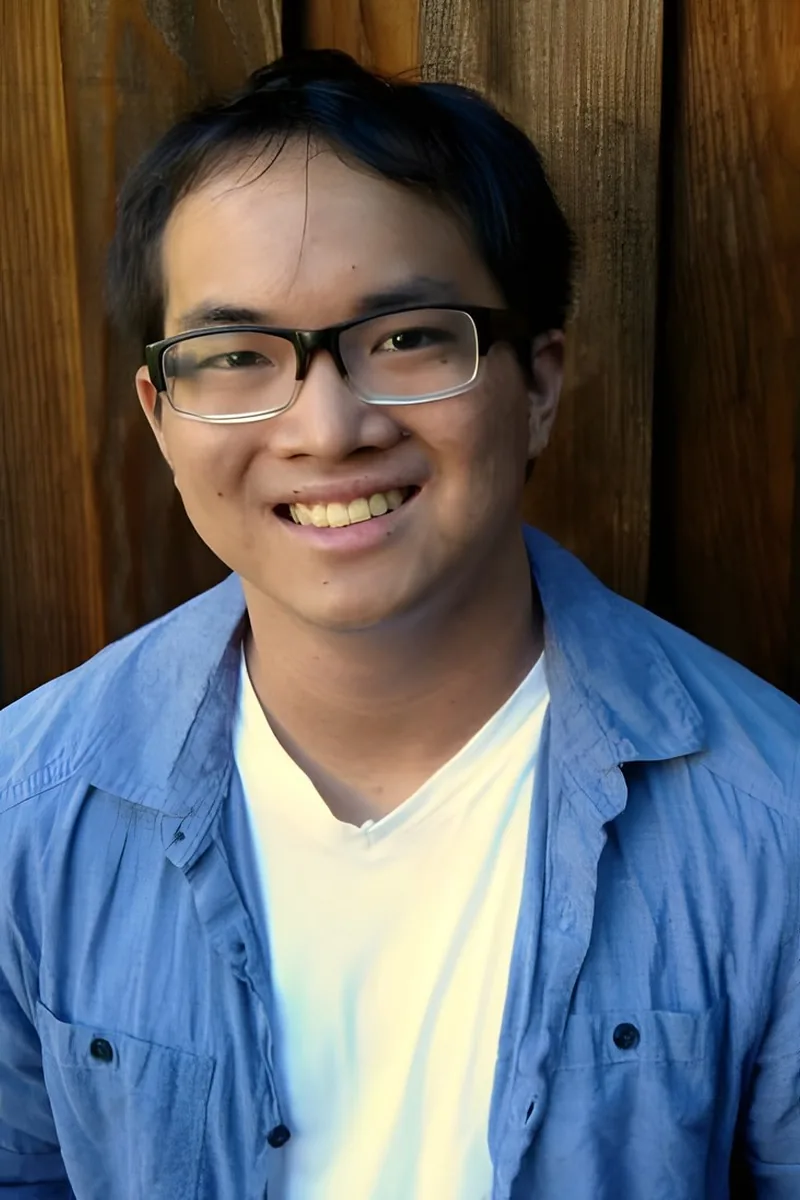
Computer science at Stanford means David didn't just take calculus — he relied on it, using derivatives for gradient descent in machine learning and integrals for probability distributions in algorithms courses. That ongoing dependence on calculus as a working tool gives him a practical fluency with the material, and his 1570 SAT confirms the quantitative chops to back it up.

Angela's business administration degree involved the quantitative side of economics — optimization, marginal analysis, cost modeling — all of which depend on derivatives and basic integration. That grounding means she can walk students through differentiation rules and their applications with concrete examples from business contexts, like finding where profit peaks or how costs change at different production levels.
Neuroscience coursework at the University of Minnesota means Nisarg uses calculus daily — from modeling neural firing rates with derivatives to applying integrals in pharmacokinetic equations. He breaks down limits, chain rule applications, and related rates by tying each concept to something tangible, so the logic behind the math clicks before the formulas do.
Philosophy trains you to follow an argument step by step and know exactly where the logic breaks — which is precisely what Anniessa brings to early calculus concepts like limits and continuity, where intuition often misleads and precise reasoning matters. Her Master's in Education and K-12 math tutoring experience mean she can unpack the conceptual shift from algebra to calculus thinking, walking through why a derivative captures instantaneous change rather than just drilling the power rule. Rated 5.0 by students.
George's Child Studies degree doesn't scream calculus, but his 1570 SAT proves he can handle rigorous quantitative work, and his broad math tutoring — from pre-algebra through calculus — means he's watched students navigate every stumbling block that leads up to the subject. He's especially effective at connecting the algebraic intuitions students already have to new ideas like limits and instantaneous rate of change, making the transition feel like a natural next step rather than a cliff. Rated 5.0 by students.
Political science at Boston College didn't require heavy calculus, so this sits at the edge of Adam's teaching range rather than its center. His 31 ACT shows solid quantitative chops, though, and his broad math tutoring experience means he can walk students through the conceptual shift from algebra into early calculus — particularly what a limit is actually doing and how slope becomes something you can calculate at a single point.
Social work and special education aren't typical paths into calculus, but Emily's daily work involves interpreting data trends, tracking student progress quantitatively, and breaking complex processes into manageable steps — skills that map directly onto early calculus thinking. She tackles limits and introductory derivatives by slowing down the reasoning at each stage, making sure the logic behind the notation is clear before moving forward. Rated 5.0 by students.
Veterinary medicine is surprisingly calculus-heavy — Marika's DVM coursework involves pharmacokinetic modeling, fluid dynamics in cardiovascular systems, and the rate-of-change math behind anesthetic dosing protocols. That daily exposure to applied calculus means she can anchor derivatives and integrals in tangible problems where the math genuinely matters. Rated 5.0 by students.
Product Design at the University of Minnesota pairs math with making — Lillian's coursework means she's applied derivatives to optimization problems like minimizing material waste and maximizing structural efficiency, giving her a designer's intuition for what calculus actually does. She teaches concepts like related rates and the chain rule by connecting them to the physical, spatial reasoning that design students use every day.
Having worked in Grinnell College's math lab specifically as a calculus tutor, Audrey has walked dozens of students through limits, derivative rules, integration techniques, and the conceptual leaps that make calc feel overwhelming. Her mathematics background means she can connect ideas like the chain rule or the Fundamental Theorem back to the intuition behind them, not just the formulas.
Theater and social work don't scream calculus, but Katie's 35 ACT composite shows she can handle high-level quantitative reasoning, and her experience tutoring math from elementary through pre-calculus means she understands the conceptual scaffolding students need before derivatives make sense. She's especially effective at translating dense notation into plain, approachable language — the same skill that makes her strong across reading and writing subjects.
Celestine's PhD in Applied Economics required heavy use of calculus — optimization problems, partial derivatives, and integral techniques that underpin economic modeling. That daily application means she teaches concepts like the chain rule and Riemann sums with a clear sense of why they matter, not just how to execute them.
Teaching music theory means Danny already thinks in terms of patterns, intervals, and rates of change — concepts that map surprisingly well onto calculus. His Master's in Music Education and 1450 SAT score show both the quantitative chops and the teaching instinct to walk someone through derivatives and integration by breaking each problem into smaller, logical steps rather than drowning in notation.
Between a 36 ACT, a 1570 SAT, and a computer science degree, David has the kind of quantitative depth where calculus isn't just a course he passed — it's the mathematical backbone of everything he builds and codes. He teaches concepts like integration techniques and series convergence by emphasizing the reasoning behind each step, so students can explain *why* an approach works rather than just replicate it. Rated 5.0 by students.
Pre-med genetics coursework at the University of Minnesota meant Jaya worked through calculus in the context of modeling gene expression rates, growth curves, and the quantitative backbone of cell biology — so the material isn't abstract to her. Her 35 ACT composite backs up that quantitative fluency, and she teaches derivatives and integration by connecting each concept to the biological systems where they actually matter.
Having covered math through multivariable calculus on a double-accelerated track, Anna treats limits, derivatives, and integrals as a connected story rather than isolated procedures. She's especially sharp at unpacking the chain rule and related rates problems — the spots where students most often lose the thread between setup and solution.
Psychology research leans heavily on statistical modeling, and Brita's coursework in that field gave her experience with the rate-of-change concepts that underpin early calculus — particularly how variables shift in relation to one another. She brings a counselor's patience to walking through limits and derivative rules, breaking intimidating notation into manageable, logical steps. Rated 4.8 by students.
Political economy coursework gave Cleo regular exposure to quantitative reasoning — marginal analysis, optimization problems, and the derivative logic that underpins economic modeling. A 1530 SAT confirms she can handle that level of math, and her teaching instinct is to strip away intimidating notation until the underlying concept is plain and workable. Rated 5.0 by students.
Economics coursework leans heavily on calculus — marginal analysis, optimization problems, and interpreting how cost and revenue functions behave all require fluency with derivatives. Rohit's econ degree means he's applied these tools to real models, and his debate-coaching instinct to break arguments into logical steps carries over to walking through chain rule and integration problems piece by piece. Rated 5.0 by students.
Genetics coursework at the University of Minnesota meant Brian lived in calculus — modeling gene expression rates, analyzing growth curves, and working through the differential equations that describe how cell populations change over time in his cancer research lab work. That hands-on experience with derivatives and integrals in biological systems gives him a concrete toolkit for teaching the material, connecting each rule to problems where rates of change actually matter. Rated 4.9 by students.
Kelly's undergraduate finance degree required working through calculus in applied contexts — compound interest modeling, present value derivations, and the optimization problems that underpin portfolio theory. Now pursuing a Master's in education from the University of Minnesota, she brings that quantitative background together with formal training in how students actually learn, which makes a real difference when someone is stuck on the chain rule or struggling to interpret what an integral represents. Rated 4.9 by students.
Steve's English and Global Studies degree doesn't scream calculus, so he's honest that this isn't his deepest subject — but a 32 ACT and years tutoring math through college algebra mean he's comfortable with the conceptual ramp into derivatives and limit definitions. His approach leans on translating dense notation into plain, readable language, a skill that comes naturally from his writing background.
Computer science at the University of St. Thomas means Abirami uses calculus constantly — from analyzing algorithm efficiency to computing summations and understanding how continuous functions behave in optimization problems. That daily exposure to derivatives and integrals in code gives her a programmer's intuition for the material, where every formula connects to something a machine actually computes.
Physics majors don't just take calculus — they breathe it, using derivatives to describe motion and integrals to compute work, energy, and flux across every course from mechanics to electromagnetism. Jane's physics degree means she teaches concepts like the chain rule or integration by parts with the intuition of someone who's applied them daily to solve real problems, not just practiced them for exams. Her 4.9 rating and 33 ACT composite back up that quantitative fluency.
Studying mathematics at the University of Minnesota means Matt doesn't just know how to differentiate and integrate — he understands the theory underneath, from epsilon-delta definitions to the Fundamental Theorem of Calculus. He explains Calculus concepts by tying abstract rules back to the graphical behavior students can actually see, making techniques like related rates and series convergence far more intuitive.
A biochemistry-focused biology degree from Carleton College means Mikkel didn't just take calculus — he applied it, using derivatives and integrals to model enzyme kinetics, reaction rates, and population dynamics. That applied lens makes him especially effective at teaching concepts like the chain rule, related rates, and integration techniques in ways that actually click.
Jade's academic home is political science and writing, not mathematics, so she's upfront that calculus is well outside her primary expertise. Her experience tutoring math at multiple levels means she can offer support with early concepts, and her strong analytical reasoning — sharpened through legal writing and policy analysis — translates to breaking down word-heavy application problems where other students freeze.
Biomedical engineering at Arizona State meant Colleen didn't just take calculus — she used it daily, from modeling stress distributions in orthopedic implants to analyzing how biological signals change over time. That applied background lets her teach derivatives and integrals as tools with a purpose, connecting each concept to the physical systems where they actually matter.
Limits, derivatives, and integrals each demand a different kind of thinking, and most Calculus struggles come from not recognizing which tool fits which problem. Emily's biomedical engineering major at the University of Minnesota means she's applied calculus to everything from fluid dynamics to biological modeling, so she teaches the reasoning behind each technique rather than just the procedure.
Three years of tutoring undergraduates through Pre-calculus and Calculus I gave Alexandra a sharp sense of where students get stuck — whether it's the conceptual leap from average to instantaneous rate of change or setting up integrals for applied problems. Her math and statistics degree means she can explain the 'why' behind derivative rules and convergence tests, not just walk through the steps. Rated 5.0 by students.
Studying computer science means Broden applies calculus constantly — optimization problems, summation techniques, and rate-of-change analysis show up across his coursework. He walks students through integration and differentiation with an emphasis on understanding what the math is actually describing, which makes problem-solving on exams far more intuitive.
Engineering students don't just take calculus — they use it daily, and Shannon's Bioproducts and Biosystems Engineering program at the University of Minnesota means she's applied derivatives and integrals to real systems like heat transfer, fluid flow, and bioprocess modeling. That hands-on engineering context lets her explain why the chain rule or integration by parts exists, not just how to execute the steps.
Derivatives and integrals each have a clean geometric meaning, but textbooks often bury that meaning under notation and procedural steps. Nate walks through techniques like integration by parts, u-substitution, and implicit differentiation by first making the underlying idea concrete, then layering on the mechanics. His teaching spans the full math sequence through differential equations, giving him a clear sense of which calculus skills matter most going forward.
Danae's political science major doesn't scream calculus, but her math tutoring background — she's been teaching algebra and pre-algebra to middle schoolers — means she understands the building blocks that make or break a student's transition into derivatives and limits. Her 33 ACT composite confirms she can handle the quantitative side, and she tackles early calculus by making sure the algebraic instincts underneath are rock-solid before layering on new notation.
Three years of tutoring across math levels means Naomi has walked students through the algebraic reasoning that calculus builds on — function behavior, rates of change as an intuitive idea, and the graphical thinking that makes limits and derivatives less abstract. Her interdisciplinary studies background actually suits early calculus well, since she's practiced at connecting ideas across domains and explaining why a concept works rather than just demonstrating the steps.
An economics major at the University of Minnesota, Parsan encounters calculus constantly — demand elasticity, marginal utility, and optimization problems are all derivative and integral applications baked into his coursework. That daily exposure to applied calculus, paired with a computer science degree's emphasis on algorithmic thinking, means he can walk through both the mechanics and the reasoning behind concepts like the chain rule or area under a curve.
Between a math minor at Pomona College and a 36 ACT composite, David has the quantitative chops to teach calculus with real depth — not just derivative rules and integration techniques, but the underlying reasoning that connects them to the algebra and precalculus concepts students already know. He's particularly sharp at showing how the chain rule or related rates problems follow logically from simpler ideas, so the material builds instead of feeling like a pile of disconnected formulas. Rated 5.0 by students.
An economics degree means Chad spent serious time with calculus in its natural habitat — marginal analysis, optimization problems, and interpreting how cost and revenue curves behave as quantities shift. That background lets him teach derivatives and integrals as tools with a purpose, connecting the mechanics of differentiation to the economic intuition behind it. Rated 5.0 by students.
International relations coursework doesn't scream calculus, and Samantha is honest about that — but her 33 ACT composite shows she handles quantitative reasoning well, and her broad tutoring range across math and science means she's comfortable walking through the mechanics of early calculus topics like differentiation rules and curve sketching. Her approach leans on asking students to explain each step back to her, which tends to surface exactly where the confusion lives.
Psychology research leans heavily on statistical modeling, and Carey's undergraduate training included the quantitative reasoning that underpins concepts like rates of change and area under a curve — ideas that show up constantly in data analysis. She brings that applied perspective to early calculus topics like derivatives and integrals, walking through the logic behind each step rather than rushing to formulas. Rated 5.0 by students.
Testimonials
Because the right Calculus tutor makes all the difference.
Average Session Rating – Based on 3.4M Learner Ratings
Nearby Calculus Tutors
Other Minneapolis Tutors
Related Math Tutors in Minneapolis
Frequently Asked Questions
Many students struggle with the transition from algebra and precalculus to calculus because it requires both procedural fluency and conceptual understanding. Common pain points include mastering limits and continuity, understanding the derivative as a rate of change (not just a formula), applying the chain rule correctly, and connecting abstract concepts to real-world applications. Word problems involving optimization and related rates are particularly challenging because they require students to translate language into mathematical models. Personalized tutoring helps students build these connections by working through problems step-by-step and identifying where their understanding breaks down.
Your first session is about understanding where you are and what you need. A tutor will likely review your current coursework, identify specific topics causing difficulty (whether it's derivatives, integrals, or applications), and assess your comfort with prerequisite skills like limits and function behavior. Together, you'll discuss your goals—whether you're aiming to improve your grade, prepare for an exam, or build deeper understanding—and create a plan tailored to your learning style. This diagnostic approach ensures that every session after that is focused and productive.
Showing work in Calculus isn't just about getting points—it reveals your thinking process and helps you catch errors. Tutors teach you to organize multi-step problems clearly, explain each rule you're applying (like the product rule or u-substitution), and verify your answers using alternative methods. By working through problems together and discussing why each step matters, you develop habits that reduce careless mistakes and build mathematical communication skills. Over time, this structured approach becomes automatic, and you'll notice improvement in both accuracy and test performance.
Memorizing the derivative formula gets you through a few problems, but understanding what a derivative actually represents—the instantaneous rate of change—lets you solve any derivative problem and apply it to real situations. Conceptual understanding means seeing patterns: why the chain rule works, how limits connect to continuity, how integration reverses differentiation. Students who build this deeper understanding are more flexible problem-solvers and retain what they learn much longer. Personalized tutoring focuses on these connections, helping you see why concepts work rather than just how to apply them mechanically.
Word problems require you to translate English into mathematical language, set up equations correctly, and then solve them—it's a multi-step process where one mistake early on ruins the whole solution. The challenge is that there's no single formula; you have to recognize what type of problem it is (related rates, optimization, accumulation) and choose the right calculus tool. Tutors help by teaching you a systematic approach: identify what you know, define variables clearly, write equations that match the situation, and check whether your answer makes sense in context. With practice and feedback, word problems become much less intimidating.
Look for tutors with strong content knowledge—ideally someone who has taken advanced math courses and can explain not just how to solve problems but why methods work. Teaching ability matters just as much as expertise; a great tutor listens to where you're stuck, adapts explanations to your learning style, and helps you build confidence alongside skills. Experience working with students at your level (AP Calculus, college Calculus I/II, etc.) is valuable because different courses emphasize different skills. Varsity Tutors connects you with expert tutors who meet these standards and can provide personalized instruction tailored to your specific goals and challenges.
It depends on where you're starting, but most students benefit from consistent tutoring in the weeks leading up to an exam rather than cramming at the last minute. If you're working to strengthen foundational concepts, starting 6-8 weeks before the exam gives you time to build understanding and practice. For targeted review closer to the exam, 2-3 weeks of focused sessions can help you identify weak spots, practice under timed conditions, and refine test-taking strategies. Your tutor will help you create a realistic study plan based on your current performance and the specific exam format (AP Calculus AB/BC, college midterm, etc.).
Math anxiety often stems from past negative experiences or feeling lost in class, and personalized tutoring directly addresses both by providing a judgment-free space to ask questions and work at your own pace. When you understand concepts deeply rather than memorizing formulas, and when you see yourself successfully solving problems, confidence naturally grows. Tutors also teach problem-solving strategies and help you develop a growth mindset—the understanding that mathematical ability develops through practice and effort, not innate talent. Many students find that one-on-one support transforms their relationship with math and their willingness to tackle challenging material.
Let’s find your perfect tutor
Answer a few quick questions. We’ll recommend the right plan and match you with a top 5% tutor.