Award-Winning MCAT Psychological, Social, and Biological Foundations of Behavior Tutors
serving Minneapolis, MN
Who needs tutoring?
FEATURED BY


TUTORS FROM
- YaleUniversity
- PrincetonUniversity
- StanfordUniversity
- CornellUniversity
Award-Winning MCAT Psychological, Social, and Biological Foundations of Behavior Tutors serving Minneapolis, MN
Certified Tutor
6+ years
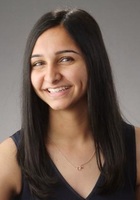
Rhea
The Psych/Soc section of the MCAT is deceptively content-heavy — from operant conditioning and social identity theory to the biological underpinnings of perception and memory. Rhea tackles this section by linking psychological and sociological terminology to concrete examples, making hundreds of voc...
University of Chicago
Bachelor of Science, Biology, General
Certified Tutor
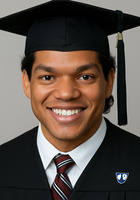
Tony
Many science-minded students underestimate the Psych/Soc section, but it covers a huge content domain — from neurotransmitter pathways to sociological theories of deviance. Tony's interest in psychiatry and neurology, combined with his biology training at Yale, gives him a natural grip on the biolog...
Yale University
Bachelor of Science in Biology
Certified Tutor
10+ years
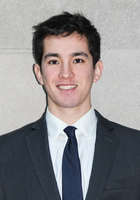
Zachary
Psych/Soc is the section many science-heavy students underestimate, but it covers a sprawling range of material from social psychology to neurobiology to research methodology. Zachary approaches it by building a framework around the highest-yield terms and theories — operant conditioning, symbolic i...
Yale University
Bachelors, Biochemistry and Biophysics
Certified Tutor
6+ years
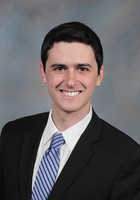
David
Spanning sociology, psychology, and biology in a single section, Psych/Soc rewards students who can think across disciplines — exactly what David's neuroscience and bioethics background trained him to do. He tackles high-yield frameworks like social identity theory, the stress-diathesis model, and s...
Yale University
Bachelor of Science in Neuroscience
Harvard University
Current Grad Student, Bioethics and Medical Ethics
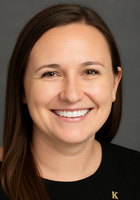
Certified Tutor
Laura
Most pre-med students underestimate the Psych/Soc section because it seems "softer" than the science-heavy ones, but it requires precise recall of terminology from psychology, sociology, and neuroscience. Laura tackles this by connecting abstract concepts — operant conditioning, social stratificatio...
Massachusetts Institute of Technology
Bachelors, Economics
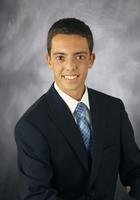
Certified Tutor
9+ years
Benjamin
The Psych/Soc section of the MCAT sits right at the intersection of Benjamin's expertise — his neuroscience training covered the biological underpinnings of behavior, from neurotransmitter systems to brain region function, while his broad liberal arts education at Vanderbilt exposed him to sociologi...
Vanderbilt University
Bachelor's degree in neuroscience and Russian
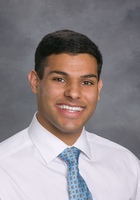
Certified Tutor
6+ years
Sanjay's medical school training gives him firsthand familiarity with the psychology and sociology concepts the MCAT Psych/Soc section tests — from Erikson's developmental stages to social determinants of health and the neurobiological basis of behavior. He breaks down passage-based questions by tea...
Rice University
Bachelor in Arts
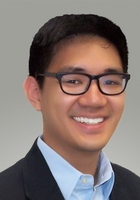
Certified Tutor
15+ years
Matthew
The MCAT's Psych/Soc section catches a lot of science-heavy applicants off guard because it rewards conceptual fluency with theories — Piaget's stages, the elaboration likelihood model, social stratification frameworks — rather than raw memorization. Matthew's interdisciplinary range, spanning biolo...
Stanford University
Master of Science, Mechanical Engineering
The University of Texas at Austin
Bachelor of Science, Mechanical Engineering
Certified Tutor
8+ years
Amanda
The Psych/Soc section of the MCAT trips up many pre-meds because it blends sociology, psychology, and biology into passage-based questions that reward conceptual thinking over rote recall. Amanda tackled this section during her own MCAT prep and now, as a medical student finishing her MD and MPH, sh...
The University of Alabama
Bachelor of Science, Biology, General
Baylor College of Medicine
Doctor of Medicine, Public Health

Certified Tutor
Connie
Having gone through medical school at Boston University and into residency, Connie tackled the MCAT's Psych/Soc section when it was still relatively new to the exam — and scored a 34 ACT composite, reflecting the kind of disciplined test-taking she brings to standardized prep. She unpacks the sectio...
Northwestern University
Bachelor's degree in Biology
Northwestern State University of Louisiana
Bachelor in Arts, Biology, General
Other Minneapolis Tutors
Related Graduate Test Prep Tutors in Minneapolis
Frequently Asked Questions
The Psychological, Social, and Behavioral Sciences section (also called PSBB) covers psychology, sociology, and biology as they relate to human behavior and social systems. Key topics include:
- Sensation, perception, and cognition
- Learning and conditioning
- Motivation, emotion, and personality
- Stress, coping, and mental health
- Social interactions and group behavior
- Biological bases of behavior (neurotransmitters, brain structures)
- Cultural and environmental influences on behavior
Understanding how these concepts connect to real-world scenarios is essential, since the MCAT tests your ability to apply psychological and social principles to novel situations.
Most students preparing for the MCAT dedicate 3-4 months of study, with the PSBB section typically receiving 15-20% of total study time—roughly 4-6 weeks of focused preparation. However, this varies based on your baseline knowledge. If you have a psychology or biology background, you may need less time; if these subjects are new to you, consider allocating extra weeks for foundational concepts.
For students in Minneapolis preparing with personalized tutoring, a tutor can help you identify knowledge gaps early and create an efficient study timeline tailored to your schedule and learning pace.
Students often struggle with several aspects of this section:
- Passage interpretation: Distinguishing between what the passage states and what you know from background knowledge
- Terminology overload: Psychology has extensive vocabulary that can feel overwhelming
- Concept application: Translating theoretical knowledge into practical problem-solving
- Pacing: Managing 95 minutes across 59 questions with dense reading passages
- Interdisciplinary thinking: Connecting psychology, sociology, and biology concepts that don't always feel related
Working with a tutor can help you develop targeted strategies for each challenge and practice under timed conditions.
Most MCAT prep experts recommend taking 10-15 full-length practice tests throughout your overall MCAT preparation. For focused PSBB practice, aim for at least 5-8 section-specific practice tests in addition to full-length exams. This volume helps you become familiar with question formats, timing demands, and common trap answers.
More importantly than quantity is quality—after each practice test, you should spend time analyzing wrong answers to understand why you missed them. Connecting with a tutor can accelerate this analysis process, helping you identify patterns in your errors and adjust your strategy accordingly.
Score improvement depends on your starting point and effort level. Students typically see a 3-5 point improvement on the PSBB section (which is scored 118-132) when they work with a tutor on targeted weak areas and practice consistently. Students who begin with significant gaps may see larger gains, while those already scoring near 130 may see smaller improvements as they approach the ceiling.
The key is identifying your specific weak areas—whether that's passage comprehension, particular content domains, or test-taking strategy—and focusing your preparation accordingly. Tutors working with students in Minneapolis can create personalized study plans that maximize your improvement timeline.
The PSBB section gives you roughly 96 seconds per question, but passages vary in length and difficulty. Effective pacing strategies include:
- Spending 3-4 minutes reading and annotating passages before answering questions
- Skipping extremely difficult questions and returning to them if time permits
- Practicing with a timer to identify your natural pace and bottlenecks
- Using passage structure to predict likely questions
A tutor can work with you on pacing drills, helping you practice these strategies under realistic test conditions and adjust your approach based on your personal reading speed and comprehension style.
Varsity Tutors connects you with expert tutors who specialize in MCAT preparation and the Psychological, Social, and Behavioral Sciences section. When selecting a tutor, look for someone with:
- Strong MCAT scores and test preparation experience
- Deep knowledge of psychology, sociology, and relevant biology
- Experience working with students on passage analysis and time management
- Ability to explain complex concepts clearly
Whether you're looking for help with specific content review, practice test analysis, or comprehensive test preparation, connecting with the right tutor early in your preparation can significantly impact your performance and confidence on test day.
Connect with MCAT Psychological, Social, and Biological Foundations of Behavior Tutors in Minneapolis
Get matched with local expert tutors