Award-Winning Pre-Algebra
Tutors
Pre-Algebra
Tutors
Private 1-on-1 tutoring, weekly live classes for academic support, test prep & enrichment, practice tests and diagnostics, and more to elevate grades and test scores.
Based on 3.4M Learner Ratings
UniversitiesSchools & Universities
DeliveredHours Delivered
ProficiencyGrowth in Proficiency
Who needs tutoring?
No obligation. Takes ~1 minute.
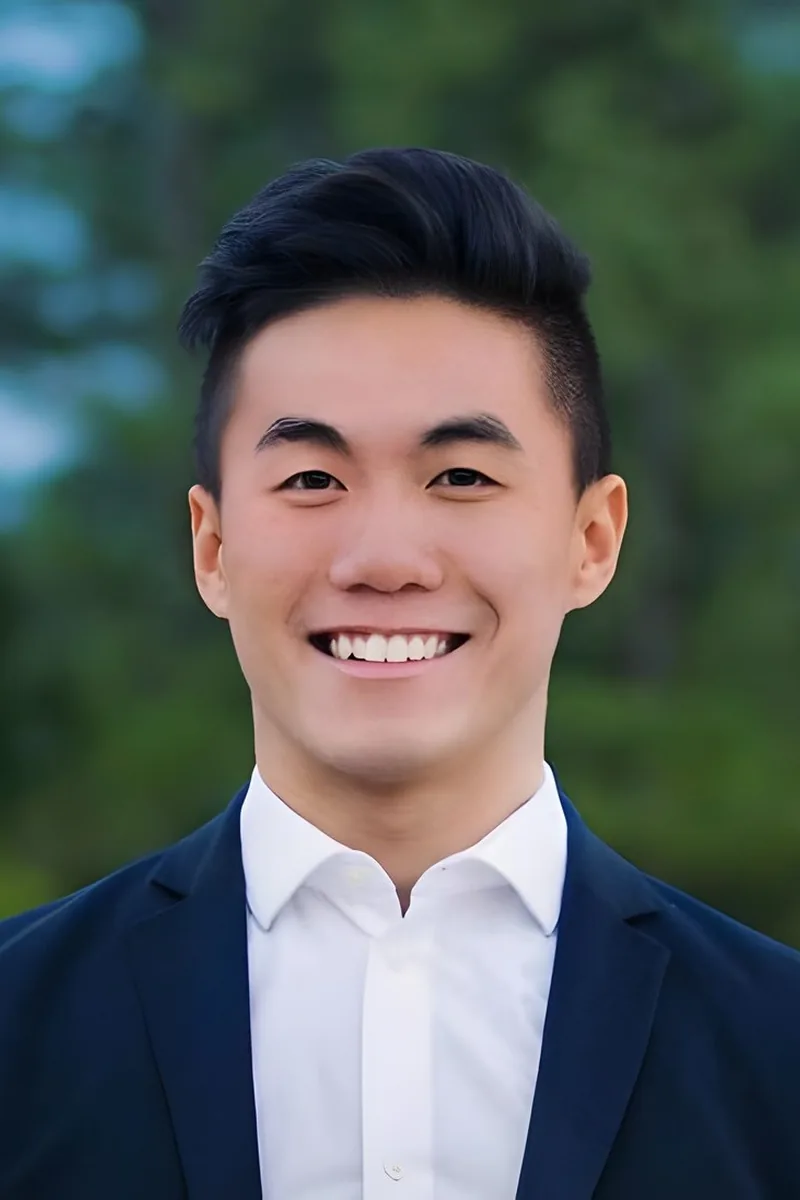
Between his mechanical engineering undergrad and current grad work, Aaron has solved thousands of equations that all depend on the same core skills pre-algebra introduces — manipulating expressions, working with signed numbers, and translating real-world problems into mathematical language. He scored a 1530 SAT, so that foundational fluency runs deep, and his engineering mindset means he teaches each concept as something students will genuinely use rather than something to survive and forget. Rated 5.0 by students.

Most students who say they 'hate math' actually hit a specific wall somewhere in pre-algebra — usually fractions, signed numbers, or the leap into expressions with variables — and Reid is unusually good at diagnosing exactly where that breakdown happened. His PhD in Education and sociology background mean he thinks carefully about how individual students process abstract concepts, and his own 32 ACT confirms the math chops to back up that diagnostic instinct. He's especially effective with students who've decided they're 'not math people,' since making intimidating subjects approachable is his wheelhouse.
Getting comfortable with integers, fractions, and order of operations now makes every future math class easier — Pre-Algebra is genuinely the foundation everything else sits on. Michelle breaks down each concept with clear, step-by-step reasoning, drawing on the same methodical thinking that carried her through a biochemistry degree at Rice and into medical school at Baylor.
Getting the fundamentals right in pre-algebra — integer operations, order of operations, basic properties of fractions and ratios — determines how smoothly everything from algebra through calculus will go. Charles approaches these building blocks with the precision of an engineering student who knows exactly where each concept leads, tailoring explanations with visuals or conceptual reasoning depending on what clicks for the learner.
Having directed tutors at a Boston charter middle school while earning her Master's in Special Education, Liz has seen exactly where students with different learning profiles get tripped up during the leap from arithmetic to algebraic thinking — especially around fraction operations and signed numbers. She adapts her explanations on the fly, drawing on years of experience with students who have dyslexia, ADHD, and other learning differences that can make abstract symbol manipulation feel overwhelming. Her 34 ACT confirms the math fluency underneath, and her 4.7 rating speaks to how well that adaptive approach lands.
Having a PhD in Computational Mathematics means Justin built everything on the same bedrock pre-algebra covers — integer operations, fraction fluency, and the leap from arithmetic into expressions and variables. He's spent years tutoring introductory students and knows how to trace a stumbling point in algebra or physics back to a specific pre-algebra concept that didn't fully land the first time. Rated 5.0 by students.
Having TA'd math courses at MIT and taught gifted middle schoolers at summer programs, Isabella has seen the exact moment pre-algebra clicks — when a student stops treating variables as mysterious letters and starts reading them as placeholders they can manipulate. Her math degree and current PhD work in Operations Research at Georgia Tech mean she can trace every fraction operation or signed number rule back to something concrete and logical. Rated 5.0 by students.
Growing up bilingual in Cantonese and Mandarin trained Ingrid to switch between symbol systems naturally — a skill she brings to teaching students how to read and manipulate variables, expressions, and signed numbers for the first time in pre-algebra. Her biomedical engineering coursework at Northwestern means she uses these foundational operations constantly in lab calculations and data modeling, so she can show students exactly where each skill leads. She scored a 33 ACT and 1540 SAT, confirming the math fluency underpinning her approach.
After scoring a 35 ACT and completing her political science degree at the University of Chicago — where quantitative reasoning underpins policy analysis and statistical argumentation — Asta brings a practical fluency to the foundational math that pre-algebra covers. She's especially effective at demystifying the leap from arithmetic into expressions and basic equation-solving, connecting each new concept to the logical thinking students already use in everyday reasoning. Rated 5.0 by students.
Andrew's PhD in Biomedical Engineering means he's spent years relying on the exact proportional reasoning and equation-building skills that pre-algebra introduces — and his physics undergrad ensures he can trace every concept back to its logical foundation. He teaches across math from middle school through multivariable calculus, so he knows which specific gaps in signed number operations or fraction fluency will cause problems two courses down the line. Rated 4.9 by students.
Daniel's 1500 SAT score means the arithmetic and early algebraic reasoning at the heart of pre-algebra — integer operations, fraction fluency, translating words into expressions — are skills he's already proven under pressure. His sociology background also gives him a different angle: he's used to thinking about how systems and patterns connect, which is exactly the mental shift students need when numbers start sharing space with variables. Rated 5.0 by students.
Sam's PhD in Statistics and biomedical engineering degree both required building fluency in algebraic reasoning from the ground up — and that process starts in pre-algebra, where students first learn to translate real situations into expressions and equations. He uses that engineering instinct for structured problem-solving to teach concepts like ratio setup and signed number operations as logical steps rather than arbitrary rules. Rated 4.9 by students.
Emily's biology coursework at Yale — from molecular genetics to developmental bio — meant constantly translating real-world processes into mathematical relationships, and that translation skill is exactly what clicks for students navigating their first encounter with variables and expressions. She earned a perfect 36 ACT, so the underlying arithmetic and algebraic reasoning are deeply fluent, and she uses that fluency to pinpoint exactly where a student's understanding gaps are hiding beneath surface-level mistakes. Rated 5.0 by students.
Getting comfortable with integers, fractions, and order of operations now pays off for years — these are the building blocks that every math course afterward depends on. Akarsh breaks down each Pre-Algebra concept step by step, connecting arithmetic rules to the algebraic thinking students will need next.
Twenty writing prizes before eighteen might not scream 'math tutor,' but Valerie's University of Chicago core curriculum meant rigorous coursework across mathematics alongside her Classics and Theatre majors — and her 1540 SAT confirms that quantitative fluency is real. She's especially effective at translating the abstract language of variables and expressions into something concrete, drawing on the same close-reading instincts she uses to decode Latin texts. That cross-disciplinary wiring makes her a natural fit for students who think of themselves as 'not math people' but just need the concepts framed differently.
Between tutoring a Differential Equations course at Yale and conducting biomedical engineering research, Ellie works backward through math constantly — which means she knows exactly which pre-algebra concepts like ratio setup, fraction operations, and basic expression manipulation have to be rock-solid before anything else holds together. Her 35 ACT and 1530 SAT confirm that fluency runs deep, and her 5.0 rating shows she communicates it clearly to students still building those fundamentals for the first time.
Getting Pre-Algebra right matters more than most people realize — it's where students either build real number sense or start faking their way through math. Kevin takes concepts like integer operations, order of operations, and basic variable manipulation and ties them to concrete examples that click. His experience founding a summer tutoring program in high school gave him a knack for catching gaps before they compound.
Every engineering course Phillip takes at Brown — from circuit analysis to biomechanics — starts with the same handful of skills students first encounter in pre-algebra: setting up expressions, working with ratios, and solving for unknowns. His 1560 SAT and 5.0 tutoring rating back up that fluency, and his biomedical engineering training gives him a catalog of real examples to show students exactly where these building blocks lead.
Simon's economics training — three degrees deep — meant constant work with models, graphs, and formulas that all depend on the exact skills pre-algebra introduces: manipulating expressions, working with ratios, and solving for unknowns. He scored a 1540 SAT, so that foundational number sense runs deep, and he applies it by walking students through the logic behind each operation instead of just drilling procedures. His range across math, Spanish, and writing means he's practiced at adjusting his explanations until the lightbulb actually turns on.
Biology majors don't usually get credit for math skills, but Joseph's path from UCLA biology through Yale's public health program means he's been doing proportional reasoning, unit conversions, and basic algebraic manipulation in research contexts for years — exactly the skills pre-algebra is building toward. He connects concepts like ratio setup and signed number operations to real scenarios from lab work and data analysis, giving students a tangible reason to master them. Rated 4.9 by students.
Every concept in pre-algebra — integers, fractions, order of operations, basic variable manipulation — becomes the scaffolding for years of math ahead. Brian approaches these building blocks with the kind of precision and patience that comes from someone who went on to study math-heavy disciplines at Caltech, making sure each idea clicks before moving forward.
Tom's PhD in American Studies might not scream math, but his 1520 SAT confirms the quantitative chops — and his experience teaching across 40+ subjects means he's unusually good at diagnosing exactly where a student's arithmetic understanding breaks down as they transition into working with variables and expressions. He approaches pre-algebra as a logic and communication problem, walking through each step until the specific point of confusion surfaces, then building from there. Rated 4.9 by students.
Julie's philosophy training at Princeton — where she's also earning a certificate in Statistics and Machine Learning — means she thinks about logical structure all day, which is exactly the skill pre-algebra demands when students start translating arithmetic into expressions and equations. She volunteers as a math tutor through the Petey Greene Program during the school year, so she's practiced at meeting a wide range of starting points and building fluency with signed numbers, fraction operations, and variable basics from wherever a student actually is. Rated 4.9 by students.
Between organic chemistry problem sets and medical school coursework at Baylor, Sugi has used every skill pre-algebra introduces — integer operations, ratio setup, basic equation solving — thousands of times over, so she teaches them with the fluency of someone who genuinely relies on them. Her 36 ACT and summa cum laude finish at Rice reflect math fundamentals that are deeply automatic, which lets her zero in on the specific step where a student's reasoning breaks down. Rated 5.0 by students.
Linguistics training at Harvard sharpened Samuel's ability to break down rule systems — which is essentially what pre-algebra asks students to do when they move from arithmetic into expressions, variables, and order of operations. He approaches each concept as a logical structure to decode rather than a procedure to memorize, and his 5.0 rating suggests that analytical style clicks with students. His 1430 SAT confirms the underlying math fluency to back it up.
Getting pre-algebra right matters more than most people realize — it's where students either build number sense or start memorizing tricks that fall apart later. Bidyut breaks down concepts like integer operations, ratios, and basic variable manipulation by tying them to concrete, real-world scenarios. His 5.0 rating speaks to an ability to make even foundational math feel purposeful rather than tedious.
Before anyone can tackle algebra, they need to be fluent in the language of variables, order of operations, and basic equation-solving — and that's exactly what Pre-Algebra establishes. Richard has tutored elementary and middle school students since high school and genuinely enjoys making concepts like fractions, ratios, and integer operations click for younger learners. He considers math tutoring the most rewarding part of his teaching experience.
Getting comfortable with integers, fractions, and order of operations now sets up everything that comes later in math — and Ryne takes that seriously. He completed the University of Minnesota Talented Youth Math Program through multivariable calculus, so he knows exactly which pre-algebra building blocks matter most and can explain the "why" behind each rule.
Maggie earned a perfect 1600 SAT and a dual degree in Economics and Molecular Biology — meaning she's used the proportional reasoning and expression manipulation from pre-algebra as daily tools in both quantitative modeling and lab work. Now pursuing her MD at Stanford, she pinpoints exactly where a student's arithmetic understanding breaks down and rebuilds it so that the jump to variables and equations feels natural rather than intimidating. Rated 5.0 by students.
Cornell's biological engineering program threw Mary into differential equations and computational modeling early — but she's quick to point out that none of it works without rock-solid command of the basics like fraction operations, proportional reasoning, and translating word problems into expressions. She genuinely prefers teaching at the pre-algebra level, where she can catch the gaps in arithmetic fluency that quietly derail students later. Rated 5.0 by students.
Until age 16, Viktor thought math was just memorizing formulas and forgetting them after the test — which is exactly how most pre-algebra students feel when they first hit variables and expressions. That changed when he discovered the logic underneath, a perspective he carried through a math degree at UChicago and now brings to teaching concepts like signed number rules and order of operations as ideas that genuinely make sense rather than arbitrary steps. His 1600 SAT and 35 ACT confirm the depth behind that approach.
Competition math throughout high school taught Tracy to see patterns in numbers before formulas ever enter the picture — a habit that pays off in pre-algebra, where students need to develop intuition about how signed numbers, fractions, and basic expressions behave before drilling procedures. Her three economics degrees mean she's spent years translating real situations into mathematical language, which is exactly the skill students are building when they first set up equations from word problems. Rated 4.9 by students.
Dennis's astrophysics research at Princeton — simulating how plasmas accelerate cosmic rays — required building mathematical models from the ground up, starting with the same integer operations, ratios, and variable manipulation that pre-algebra introduces. That experience means he teaches these concepts as real tools with real destinations, not isolated procedures. His 36 ACT and physics background ensure the fundamentals are rock-solid.
Getting comfortable with integers, fractions, and order of operations now is what makes algebra feel manageable later — Aimee treats pre-algebra as the bridge it's meant to be. Her chemical engineering background at Georgia Tech means she uses math daily and can show students exactly why these foundational skills matter down the road.
Building confidence with integers, fractions, and order of operations now pays off for years — pre-algebra is the bridge between arithmetic and every math course that follows. Jane regularly teaches math to kids ages 5–11 during her breaks from Princeton and knows how to make concepts like ratios and basic variable expressions click before they become intimidating.
Having taught a test prep course in Hanoi and tutored math across multiple grade levels, Erika knows that the leap from arithmetic to working with variables and expressions is where most students either gain momentum or start losing confidence. Her public policy graduate work required constant data interpretation and quantitative reasoning — skills rooted in the same proportional thinking and equation setup that pre-algebra demands. Rated 5.0 by students.
Ten years of teaching kids ages 8–15 means Jessica has seen every way a student can get tripped up on fractions, signed numbers, and that first leap into working with variables — and she's developed specific strategies for each stumbling point. Her Master's in Education backs up that classroom instinct with structured approaches to building the number sense pre-algebra demands. Rated 5.0 by students.
Mechanical engineering at Dartmouth meant Rachel spent four years watching pre-algebra concepts — proportional reasoning, basic equation manipulation, unit relationships — scale up into the formulas behind bridges and engines, so she teaches those early skills with a clear sense of where they're headed. Her experience as a teaching assistant sharpened her ability to pinpoint exactly where a student's arithmetic reasoning breaks down and rebuild it on the spot. A 1470 SAT confirms the math fluency backing that up.
Currently doing research in Spectral Graph Theory at MIT, Enrico built his math intuition from the ground up — and he's sharp about pinpointing the exact moments in pre-algebra where definitions like variables, signed numbers, and order of operations stop making intuitive sense to students. His 36 ACT and 5.0 tutoring rating back up an approach that prioritizes genuine understanding of each rule so the jump to full algebra feels natural rather than overwhelming.
Two years teaching Algebra and Geometry at a charter high school showed Wamweni exactly which pre-algebra gaps — especially around fraction operations and translating words into expressions — cause students to hit walls later on. She runs through these sticking points with a focus on building genuine number sense, not just drilling procedures until they temporarily hold. Rated 5.0 by students.
Testimonials
Because the right Pre-Algebra tutor makes all the difference.
Average Session Rating – Based on 3.4M Learner Ratings
Practice Pre-Algebra
Free practice tests, flashcards, and AI tutoring for Pre-Algebra
Top 20 Math Subjects



Top 20 Subjects
Frequently Asked Questions
Pre-Algebra is where math shifts from mostly arithmetic (basic calculations) to abstract thinking—introducing variables, expressions, and the 'why' behind operations. Many students struggle because they need to move from just following steps to understanding concepts. For example, solving 2x + 5 = 13 requires understanding what a variable represents and why we perform the same operation on both sides of an equation. This conceptual leap is normal, and personalized tutoring helps students build that deeper understanding rather than just memorizing procedures.
Word problems require students to translate English into math—a skill many find intimidating. Expert tutors teach systematic strategies: identifying what you know, what you're solving for, and which operations connect them. Tutors help students practice breaking down complex scenarios into simpler steps and checking whether their answer makes sense in the real-world context. With personalized instruction, students learn to recognize patterns in problem types and build confidence tackling unfamiliar questions.
The best Pre-Algebra tutors combine subject expertise with patience and clear communication. They should explain why mathematical rules work, not just how to apply them. Look for someone who adapts to your child's learning style, asks questions to check understanding, and helps students show their work so errors become learning opportunities. Varsity Tutors connects you with tutors who excel at making abstract concepts concrete and building mathematical confidence from the ground up.
Most students begin grasping concepts within 4-6 weeks of consistent, personalized tutoring—though the timeline depends on how much material needs to be reviewed and how frequently tutoring occurs. Early wins often come from tackling specific trouble spots (like multi-step equations or negative numbers) that unlock understanding of larger topics. With sustained support, students typically develop the problem-solving strategies and conceptual foundation needed to feel confident moving into Algebra 1.
Careless mistakes often signal that students are rushing through steps or haven't internalized a concept as fully as they think. Expert tutors slow down the process, helping students develop habits like showing all work, checking answers by substituting back into the original problem, and recognizing common error patterns. Personalized instruction also identifies whether 'careless' mistakes stem from gaps in foundational skills—like order of operations or working with negative numbers—that need reinforcement.
Different schools and districts use different textbooks and approaches (some emphasize graphing early, others prioritize equations first). Varsity Tutors connects you with tutors who are flexible and curriculum-aware—they can work with your child's specific textbook, align with what's being taught in class, and fill gaps no matter which sequence was used. This personalized alignment ensures tutoring reinforces classroom learning rather than introducing conflicting methods.
Math anxiety often peaks when students encounter abstract concepts, and one-on-one tutoring creates a judgment-free space to ask questions and make mistakes safely. Tutors help rebuild confidence by celebrating small wins, breaking big topics into manageable pieces, and showing how mistakes are valuable for learning. When students understand the logic behind Pre-Algebra concepts rather than memorizing rules, they typically feel more in control and less anxious about math.
Let’s find your perfect tutor
Answer a few quick questions. We’ll recommend the right plan and match you with a top 5% tutor.