Award-Winning PCAT Writing
Tutors
PCAT Writing
Tutors
Private 1-on-1 tutoring, weekly live classes for academic support, test prep & enrichment, practice tests and diagnostics, and more to elevate grades and test scores.
Based on 3.4M Learner Ratings
UniversitiesSchools & Universities
DeliveredHours Delivered
ProficiencyGrowth in Proficiency
Who needs tutoring?
No obligation. Takes ~1 minute.
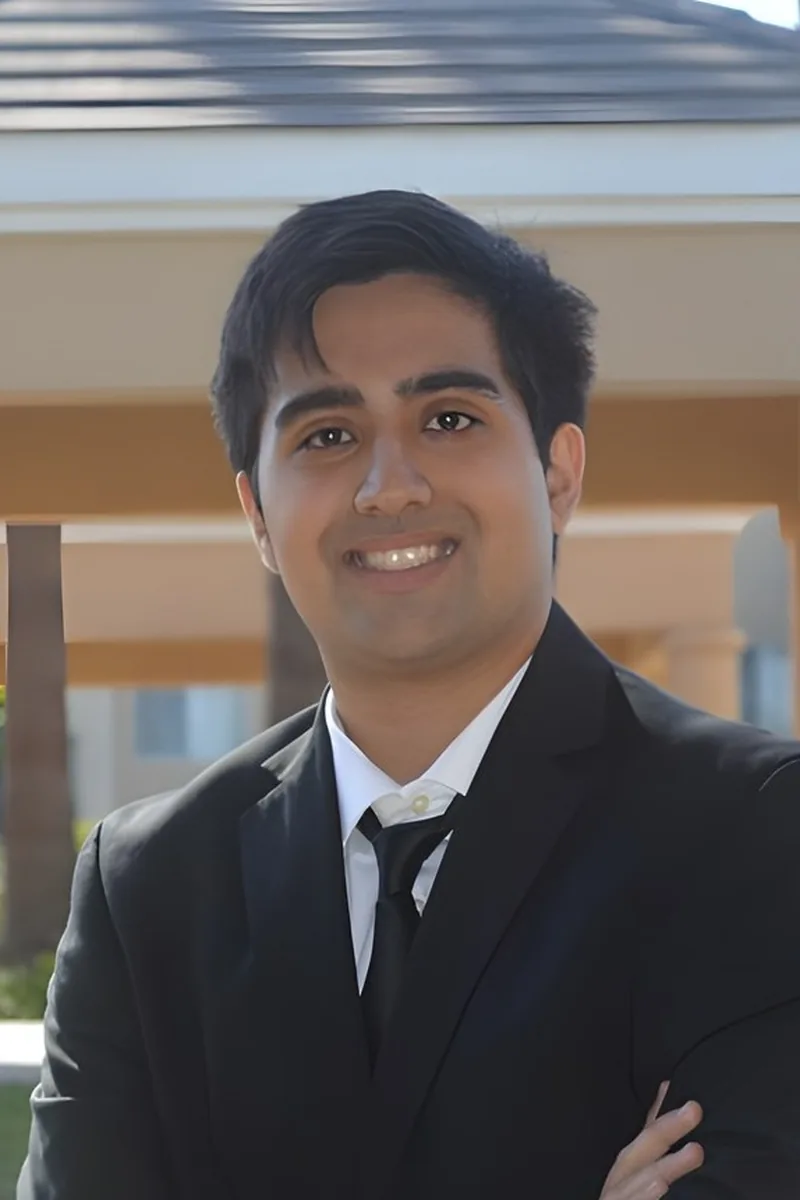
Constructing a strong PCAT essay means building a clear argument under time pressure, not showcasing vocabulary. Abrahim teaches a structured approach — thesis, evidence, counterpoint — that lets students organize their thinking in the first two minutes so the writing flows naturally from there.

A neuroscience and biotechnology background means Rithi has spent years translating complex scientific concepts into clear, logical prose — exactly the skill PCAT Writing graders reward on health-related argumentative prompts. Now a medical student at Robert Wood Johnson, she teaches a streamlined outlining method that turns a blank page into a thesis-evidence-counterpoint structure in under three minutes. Rated 4.9 by students.
Strong timed essays come down to having a reliable structure before the clock starts — something Sydney drills by teaching students to map out a thesis, two supporting points, and a counterargument in under three minutes. Her writing background spans college essays, English literature, and grammar instruction, so she knows how to sharpen both the architecture and the sentence-level clarity that PCAT graders look for. Rated 4.9 by students, she adapts her approach for science-minded test-takers who aren't used to producing persuasive prose on demand.
Arianna's neuroscience training at Dartmouth meant years of distilling complex research into tight, evidence-driven arguments — the exact skill PCAT Writing graders score on. She teaches students to treat the prompt like a scientific claim: stake a clear position, line up logical support, and address the counterargument before time runs out. Rated 4.8 by students.
The PCAT Writing section asks test-takers to construct a clear, well-organized essay under tight time constraints on a health-science-related prompt. Richard teaches a structured drafting method — thesis, targeted evidence, logical transitions — that keeps essays focused and scoreable even when the topic is unfamiliar.
The PCAT Writing section asks for a clear, well-organized essay under tight time constraints — exactly the kind of writing Terry practiced throughout law school. He breaks the task into a repeatable framework: identify the prompt's core tension, stake out a defensible position, and support it with structured reasoning. His approach turns a stressful timed essay into a manageable, almost formulaic process.
The PCAT writing section asks for a clear, well-organized argumentative essay under tight time pressure — a format Syeda practiced extensively throughout pharmacy school. She teaches a repeatable essay structure that lets test-takers spend less time planning and more time developing specific, evidence-backed points that score well on both conventions and problem-solving criteria.
Miguel's double major in Computer Science and English means he's spent equal time writing code and writing arguments — and it's the English side that makes him useful for PCAT essay prep, where the entire challenge is building a coherent, persuasive response to a health-related prompt under a tight time constraint. He teaches students to front-load their planning by sketching a thesis and two support points before writing a single sentence, which prevents the mid-essay drift that tanks organization scores. His 4.9 rating and 1550 SAT back up his command of both structure and sentence-level conventions.
Alexandra's creative writing degree means she's spent years learning how to construct arguments quickly and revise on the fly — skills that map directly onto the PCAT's 30-minute essay format. She teaches students to pin down a defensible thesis before they start writing, then layer in evidence and a counterpoint using a streamlined structure that keeps the prose clean under pressure. Rated 4.9 by students.
The PCAT Writing section asks for a focused, well-organized essay under tight time constraints, which means students need a reliable process for generating ideas and structuring arguments on the fly. Mary spent years evaluating and scoring standardized writing samples across grade levels, giving her a sharp eye for what distinguishes a top-scoring response from a mediocre one. She walks students through prompt analysis, thesis construction, and paragraph-level transitions that keep essays coherent under pressure.
The PCAT Writing section asks for more than generic essay structure — it demands clear scientific reasoning presented in a persuasive format under tight time constraints. Kevin, a second-year medical student at UCF with a background in education studies from UCSD, teaches students to outline argument-driven essays quickly and support each claim with concrete examples. Rated 4.9 by students, he breaks down how to balance conventions, problem-solving prompts, and time management in a single sitting.
Between creative writing, expository essays, and college composition, Manuel has spent years teaching people how to build arguments on paper — a skill that transfers directly to the PCAT's timed argumentative essay format. He zeroes in on the sentence-level clarity and logical flow that graders actually score, coaching students to cut filler and let their reasoning do the heavy lifting. Rated 5.0 by students.
Strong PCAT essays require a clear thesis built under time pressure on health science topics — a skill Xhesika sharpened through years of scientific writing in her dual Ph.D./Pharm.D. program. She teaches students to outline rapidly, structure arguments with specific evidence, and avoid the vague generalizations that keep scores in the middle range.
The PCAT Writing section asks students to take a position on health-science topics and defend it with organized, evidence-based reasoning in a tight time window. Michelle's science background means she can coach both the writing mechanics and the scientific thinking that evaluators look for — clear thesis statements backed by logically structured support paragraphs.
I am a law student, but I took an unusual route to get there. I used to attend medical school but had a change of heart in my career path. Part of this was due to my political science major (double major with biology) in college as well as a number of Spanish and other courses that I took. Tutoring is something, I feel, that has come naturally to me, even back to my high school days. My goal is to help you learn as much as you can and reach your true potential. I will work hard to make sure that this happens, as long as you put in the work, too! We will work together to tailor your learning experience to your needs.
I'm also a recent graduate of The New School, with a Bachelor of Arts in Literary Studies.
The PCAT Writing section asks for a clear, well-organized argumentative essay under time pressure — a skill Milan has practiced extensively through scientific writing in USF's Honors College. He teaches students to build a thesis quickly, structure supporting paragraphs around concrete reasoning, and avoid the vague filler that drags scores down.
Testimonials
Because the right PCAT Writing tutor makes all the difference.
Average Session Rating – Based on 3.4M Learner Ratings
Top 20 Graduate Test Prep Subjects



Top 20 Subjects
Frequently Asked Questions
The PCAT Writing section tests your ability to identify and correct grammatical errors, awkward phrasing, and structural issues in short passages—all under time pressure. Most students struggle with three key areas: recognizing subtle grammar mistakes (like pronoun-antecedent disagreement or misplaced modifiers), managing the fast pace of the section, and understanding what makes a sentence "better" versus simply "correct." Many test-takers also find it difficult to distinguish between style preferences and actual errors, which can lead to second-guessing their answers.
Score improvement depends on your starting point and effort level, but most students see meaningful gains with focused, personalized instruction. Students who begin 6-8 weeks before test day and work consistently typically improve by 2-4 points on the Writing section. The key is identifying your specific weak areas—whether that's grammar rules, sentence correction patterns, or time management—and targeting those directly. A tutor can pinpoint exactly which concepts you're missing and help you build the muscle memory needed to spot errors quickly and confidently.
The PCAT Writing section requires you to work through questions efficiently without sacrificing accuracy. Effective strategies include: reading the entire sentence once before looking at answer choices to get context, focusing on underlined portions first since errors are only within those sections, and learning to quickly eliminate obviously correct answer choices rather than overthinking each one. Many students benefit from practicing with a timer to build speed, then gradually refining their approach to catch errors more reliably. A tutor can help you find the right balance between speed and accuracy for your testing style.
Full-length practice tests are essential for PCAT preparation because they let you experience the real test conditions, including fatigue and pacing across all sections. Taking practice tests regularly helps you identify patterns in the questions you miss, understand where you need more study time, and build confidence in your test-day approach. We recommend taking at least 3-4 full practice tests during your preparation period, with time between them to focus on weak areas. Reviewing your mistakes thoroughly is just as important as taking the test itself—that's where real learning happens.
The PCAT Writing section focuses on core grammar concepts you'll encounter repeatedly: subject-verb agreement, pronoun agreement and reference, verb tense consistency, misplaced and dangling modifiers, and parallel structure. The test also emphasizes clarity and conciseness—sometimes the "correct" answer removes unnecessary words or restructures a sentence for better flow. Rather than trying to memorize obscure grammar rules, successful test-takers focus on mastering these high-frequency concepts and learning to recognize how they appear in different sentence structures. A tutor can help you build rapid recognition of these patterns so you can answer confidently under time pressure.
Test anxiety on the Writing section often stems from uncertainty about whether you're catching all the errors or making the right choices. Building confidence requires a combination of thorough preparation, practice with timed questions, and developing a consistent strategy you trust. Taking practice tests in test-like conditions helps reduce anxiety because you'll know exactly what to expect. Working with a tutor also provides reassurance—they can review your practice test performance, explain why certain answers are correct, and help you recognize that you're improving. Many students find that confidence grows naturally once they develop a reliable approach and see their scores improve.
The best PCAT Writing tutors combine deep knowledge of grammar rules, test format, and question patterns with the ability to explain concepts clearly and adapt to your learning style. They should help you identify your specific weak areas through practice tests and targeted drills, not just review grammar in general. Look for someone experienced in test prep who understands the unique challenges of the PCAT Writing section and can teach you both the content and test-taking strategies that work together. Varsity Tutors connects you with tutors who specialize in PCAT prep and can create a personalized study plan based on your goals and timeline.
Let’s find your perfect tutor
Answer a few quick questions. We’ll recommend the right plan and match you with a top 5% tutor.