Award-Winning Middle School Math Tutors
serving Phoenix, AZ
Middle School Math
Tutors in Phoenix
Private 1-on-1 tutoring, weekly live classes for academic support, test prep & enrichment, practice tests and diagnostics, and more to elevate grades and test scores.
Based on 3.4M Learner Ratings
UniversitiesSchools & Universities
DeliveredHours Delivered
ProficiencyGrowth in Proficiency
Who needs tutoring?
No obligation. Takes ~1 minute.
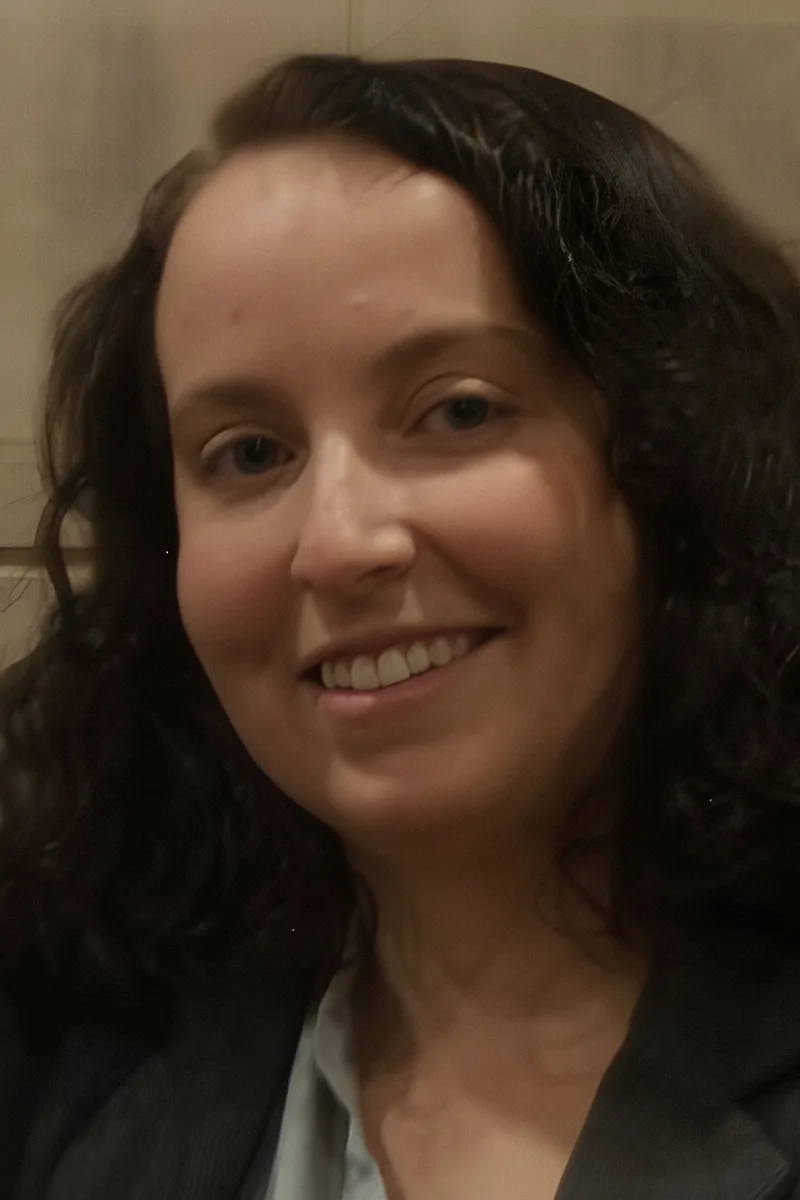
Having taught and TA'd every level of math from elementary through multivariable calculus at Harvard, Kristi knows exactly which gaps from middle school — especially around fractions, negative numbers, and early variable work — cause the biggest problems later in algebra and beyond. Her astrophysics training means she genuinely uses this math daily and can show a sixth or seventh grader what it looks like when these skills actually matter. Rated 5.0 by students.

The jump from arithmetic to algebraic thinking is one of the biggest conceptual leaps in a student's math education. Rachelle makes that transition less intimidating by connecting new ideas — variables, proportional reasoning, integer operations — to concrete examples students already understand. Her background in philosophy means she's especially good at asking the right questions to get a student unstuck.
Teaching anatomy to high schoolers in cadaver labs and designing neuroscience demos for middle schoolers through Marquette's Brain Brigade gave Elise practice at breaking complex ideas into age-appropriate pieces — a skill she now applies to topics like integer operations, ratios, and early equation work. Her medical training means she's fluent in the quantitative reasoning these concepts build toward, so she can show students where middle school math is actually heading. Rated 4.9 by families.
Three years as a primary instructor at a Kumon Math and Reading Center gave Megan a deep sense of where middle schoolers typically get stuck — whether it's integer operations, proportional reasoning, or the jump into pre-algebra. She breaks problems into visual, step-by-step pieces so students actually understand the logic behind each procedure. Her computer science background at Harvey Mudd also means she's comfortable connecting math concepts to real-world problem-solving.
The spread of topics in middle school math — from fractions and ratios to early equation-solving — means students often have one area that clicks and another that doesn't. Tucker identifies which specific skill is causing the bottleneck and zeroes in on it, using structured 25-minute work blocks that keep sessions productive without overwhelming a younger student. His 5.0 rating speaks to how well that targeted approach lands.
At the middle school level, math starts asking students to think abstractly for the first time — ratios, proportional reasoning, and basic equation-solving all require a mental shift. Adrian is especially good at making that shift feel natural, using everyday scenarios to show why a variable represents something real. His easygoing personality creates a low-pressure environment where students are willing to ask the questions they'd normally keep to themselves.
Fractions, decimals, proportional reasoning, and early equation-solving are the skills that either launch a student into algebra or leave them scrambling to catch up. Tracey's secondary math education training means she teaches middle schoolers with an eye toward where the math is headed, not just the worksheet in front of them. She's especially good at reaching students who've started to believe math isn't for them.
Jared holds a state teaching certification and a romance languages degree — an unusual combination that means he's spent years internalizing rule-based systems, whether it's Spanish verb conjugations or the grammar of algebraic expressions. That pattern-recognition skill translates directly when he teaches middle schoolers to work with integers, decode multi-step problems, and build fluency with variables. His 1590 SAT speaks to deep quantitative comfort, but the teaching license means he also knows how to pace a lesson for a twelve-year-old, not just solve the problem himself.
Getting comfortable with fractions, ratios, and basic equation-solving in middle school sets the trajectory for everything that comes after in math. Paul has spent years working with younger students on these foundational concepts, breaking problems into manageable steps and building the kind of number sense that makes pre-algebra feel like a natural next move.
The transition from arithmetic to algebraic thinking is one of the biggest shifts in a student's math life — variables, proportions, and negative numbers can feel like a new language. Cameron approaches middle school math by building each new idea onto what a student already knows, making concepts like solving equations and working with fractions feel like natural next steps.
Three and a half years as a peer tutor at Stevenson University meant Chris spent more time explaining fractions, decimals, and pre-algebraic concepts to struggling students than most people spend studying them — and his applied mathematics minor gives him the formal grounding to back up that intuition. His psychology master's work at NYU also sharpens his read on how middle schoolers think through multi-step problems, so he catches misunderstandings early rather than letting them compound. Rated 5.0 by students.
Ratios, decimal operations, and early equation-solving can feel like a jumble to a middle schooler who missed one key step along the way. Maurice pinpoints exactly where that gap is and rebuilds from there, drawing on his special education training to adapt explanations on the fly. He keeps sessions structured but flexible enough that students actually engage instead of shutting down.
Getting comfortable with fractions, ratios, and early algebraic thinking in middle school sets the trajectory for every math class that follows. Naveen first sharpened his teaching instincts tutoring his younger brother through exactly these topics, and that experience taught him how to explain proportional reasoning and integer operations in language that actually lands for younger students.
Creative writing might seem far from math, but Isabel's 32 ACT composite proves she's sharp with numbers — and her writing background means she's unusually good at breaking down word problems, where most middle schoolers stumble because they can't parse what the question is actually asking. She treats each problem like a sentence to be read carefully: what information do you have, what's missing, and what operation connects them.
Jamison teaches across nearly every level of math — from elementary through calculus — which means he knows exactly what skills a sixth or seventh grader needs to lock down now so that algebra and beyond don't become a struggle later. He's particularly good at finding unexpected ways to explain concepts like integer operations or fraction reasoning when the standard textbook approach isn't landing. Rated 5.0 by students.
Fractions, ratios, and early equation-solving are the concepts that either build lasting math confidence or quietly erode it. Daniel is easygoing and patient, and he makes middle school topics like proportional reasoning and integer operations click by connecting them to sports stats, outdoor measurements, and other things students already care about.
Fractions, ratios, and proportions trip up more middle schoolers than almost any other topic — and Pooja has a knack for breaking these concepts into visual, step-by-step explanations that actually click. Her biology and math coursework at the University of Houston keeps her sharp on the quantitative reasoning skills that middle school math is building toward. Rated 5.0 by students.
Every topic in middle school math — from fraction operations to early equation solving — becomes a building block that either supports or undermines years of future coursework. Samuel zeroes in on the specific gaps holding a student back, whether that's decimal placement, ratio reasoning, or translating word problems into expressions, and addresses them before they compound.
Psychology training at Notre Dame sharpened Teresa's ability to read how a student is actually processing information — a skill that matters enormously when a sixth or seventh grader hits a wall with negative numbers or solving for a variable and can't articulate what's confusing them. She picks up on those sticking points quickly and adjusts her explanations in real time, drawing on both her social work background and her breadth across math subjects to keep the momentum going. Rated 4.9 by families.
Before diving deep into organic chemistry and biochemistry at UC Berkeley, Yuxuan built his math foundation the same way middle schoolers are doing now — and his tutoring experience stretches back to high school, where he regularly worked with peers on exactly these kinds of foundational topics. He's particularly strong at bridging the gap between arithmetic and the algebraic thinking that shows up in geometry and beyond, breaking down how variables and equations actually work rather than just drilling procedures. Rated 4.9 by students.
Psychology training at the undergraduate level gave Mladen a sharp sense of how kids process new information — useful when a seventh grader hits the wall between comfortable arithmetic and the abstract leap into variables and equations. He breaks down that transition by anchoring each new idea to something concrete the student already knows, building fluency with expressions and operations step by step. His 33 ACT score confirms the quantitative chops behind his approach.
SriVinotha | Certified STEM Tutor (K-8) Hi! I am SriVinotha, a certified educator dedicated to building long-term academic confidence in elementary and middle school students. I hold a master's degree in engineering and an official Arizona teaching certification. Over the past three years, I have helped dozens of young learner's master Math and Science by breaking down complex concepts into fun, digestible steps. My engineering background allows me to connect classroom lessons to real-world applications, sparking genuine curiosity in my students. I strongly believe that "we learn together to make a difference." I treat every tutoring session as a collaborative journey, celebrating your child's milestones and helping them feel proud of their own academic growth. Let's work together to unlock your child's full potential!
I am an Arizona native. Upon graduating from Desert Mountain High School, I attended Rice University and I received my Bachelor of Arts in Kinesiology with a business focus. At Rice I was a student/athlete representing the Division I Owls in track and field. After several years experience voluntarily tutoring friends and family members I became a professional private tutor my junior year of college. My senior year, I took advantage of the opportunity to reach more students, creating a small private tutoring company in Houston in which I served as lead tutor and conducted all business operations. After graduating from college, I moved back to Arizona and am excited to have the opportunity to continue my passion of helping young men and women achieve academic excellence through tutoring. I have experience tutoring elementary through college-aged students in all academic disciplines. My primary areas of focus include: math, English, and standardized test prep. In my spare time I enjoy exercising, following sports, and spending time with friends and family.
Fractions, ratios, and proportions show up constantly in science and medicine — and Daniel uses real examples from his microbiology and dental science background to make these concepts click for middle schoolers. When a student can see why cross-multiplication actually works instead of just following steps, the skill sticks.
Fractions, decimals, ratios, and that first taste of negative numbers — middle school math is where students either build confidence or start avoiding the subject entirely. Diana asks targeted questions to figure out how each student thinks about a problem, then tailors her explanation to match that thinking style. She's tutored every level from basic arithmetic upward, so she knows how to make today's lesson lay the groundwork for algebra next year.
The jump from arithmetic to algebraic thinking is one of the biggest conceptual leaps in a student's math life, and middle school is exactly when it happens. John makes variables and equations feel concrete by tying them to real scenarios — budgeting a project, calculating distances, reasoning through ratios — so the abstraction doesn't feel arbitrary.
The jump from elementary arithmetic to middle school math — ratios, negative numbers, basic linear equations — is where a lot of students quietly lose confidence. Arshia tackles that gap by slowing down on the conceptual transitions, making sure a student actually understands why dividing by a fraction flips the operation before moving on to the next topic. Her 5.0 rating speaks to how well that patience pays off.
I am Arizona born and raised, my education includes an NYC law school degree with an undergraduate BS degree from University of Miami. In college I majored in Health Sciences with minors in Psychology and Public Health while in law school I leaned into corporate law and finance. Between law school and college I've pretty much covered every topic under the sun! In my spare time, I enjoy reading (especially mystery novels), pretending I'm a chef, and meditating.
The jump from following arithmetic steps to reasoning about ratios, proportions, and basic geometry catches a lot of middle schoolers off guard. Alex brings an engineer's knack for real-world examples — mixing concentrations, scaling recipes, calculating areas — that make abstract concepts click for younger students.
The best part of tutoring is promoting students' long-term success through mastery of reading, writing, math, study skills, organization, and critical thinking. In particular, I enjoy helping students build test-taking strategies and core skills for the ACT, SAT, and other admissions tests. I also support pre-K and K-12 students learning math and ELA. Before joining Varsity, I tutored in a Reading and Writing Lab for university students with learning disabilities where I earned a College Reading and Learning Association (CRLA) certification. Since joining Varsity, I have completed continuing education through the Lastinger Center for Learning. I graduated from the University of Arizona in 2021 with a BA in Cultural Anthropology. In addition to tutoring, I have worked as an instructional aide for an art program, an applied anthropology researcher, and a nonprofit program coordinator. Out of all these experiences, I enjoy tutoring the most. I look forward to working with you!
I have an MBA from Rice University and both real-world business experience and teaching experience. Most recently, I taught a first-year college course in Microeconomics for nine years, in addition to other classes in the university's international trade program. My students came from over 30 countries! I've worked in over a dozen countries for the U.S. Department of Commerce, as well as for private firms in building engineering and the energy industry. I enjoy helping students gain competence and master their chosen area of study.
Geometry and ratio problems come alive when a tutor can pull examples from fieldwork — Amanda's anthropology and archaeology training means she's spent years measuring, scaling, and calculating proportions in real-world contexts, from skeletal measurements to site mapping. Her biology background adds a second layer of quantitative fluency, and a 1550 SAT score confirms the math fundamentals are rock-solid. Rated 4.9 by families.
Between fractions, ratios, and early equation-solving, middle school math is quietly one of the most important stages in a student's trajectory. Gordon's experience through Teach for America gave him years of practice making these foundational concepts stick for students at different readiness levels. He's especially effective at turning word problems from a source of anxiety into a repeatable problem-solving process.
A Northwestern economics degree means Andrew spent years translating real-world problems into mathematical language — the same skill middle schoolers are building when they tackle proportional reasoning, basic equations, and data interpretation. His 4.9 rating from families reflects a knack for making that transition from arithmetic to algebraic thinking feel natural rather than intimidating.
Sixth through eighth grade is when students either lock in the number sense that carries them through high school or start accumulating gaps that compound later. Brodie zeros in on the specific skills — proportional reasoning, negative number operations, intro to linear equations — that make or break a student's confidence heading into algebra.
I am here because I thoroughly enjoy working with students and watching them succeed in their academic studies. As a Mathematics major at the University of Arizona (currently a junior), I have extensive experience teaching and tutoring: I have been a teacher's assistant for a Calculus II section at my university and have spent a great deal of time assisting students with non-math related subjects as well such as English and essay-writing, time management and study skills techniques, and standardized test prep (SAT).
The jump from arithmetic to middle school math — ratios, proportions, basic geometry, negative numbers — is where a lot of students quietly lose confidence. Lindsey catches those gaps early by connecting each new idea to something concrete, whether it's using cooking ratios to explain fractions or sports stats to make percentages tangible. Her 5.0 client rating speaks to how well that approach lands with younger learners.
The jump from arithmetic to middle school math — ratios, proportions, intro to equations — is where many students first decide whether they're 'math people.' Steven breaks each new concept into small, logical steps and builds confidence by showing students they already know more than they think. His 4.8 rating speaks to how well that approach lands.
Before becoming a teacher, Chris worked as a scientist for NASA — programming, analyzing data, and applying math daily across projects like Cassini and Galileo. That background means when a sixth grader asks "when will I ever use this?" about integers or coordinate graphing, he can answer with specific, honest examples. His master's in Teaching and Teacher Education adds formal training in how to actually deliver those explanations at a middle schooler's level.
Testimonials
Because the right Middle School Math tutor makes all the difference.
Average Session Rating – Based on 3.4M Learner Ratings
Other Phoenix Tutors
Related Math Tutors in Phoenix
Frequently Asked Questions
Middle school math introduces a major shift from learning procedures to understanding why those procedures work. Students move from arithmetic to abstract thinking with variables, equations, and algebraic concepts. This transition can feel overwhelming because it requires students to think conceptually rather than just following steps.
Personalized tutoring helps bridge this gap by breaking down abstract ideas into concrete examples. Tutors work with students to build conceptual understanding alongside procedural fluency, so they're not just memorizing steps—they're seeing the logic behind them.
Word problems are where procedural math meets real-world application, and they require students to translate language into mathematical operations. Many middle school students can do the math but struggle to identify what the problem is actually asking.
Varsity Tutors connects you with tutors who teach problem-solving strategies like breaking problems into smaller steps, identifying key information, and checking answers for reasonableness. Tutors help students develop a systematic approach rather than just guessing which operation to use, building both confidence and accuracy.
Math anxiety is common in middle school when concepts become more abstract, and it often stems from feeling lost or making mistakes without understanding why. One-on-one instruction in a low-pressure environment can be transformative because students get immediate feedback and can ask questions without self-consciousness.
Personalized tutoring helps by celebrating progress, breaking skills into manageable pieces, and letting students work at their own pace. When students understand concepts rather than just memorizing, they naturally feel more confident and less anxious about problem-solving.
Yes, curriculum alignment matters. Phoenix middle schools use different textbooks and approaches—some emphasize visual/graphical representations, others focus on algebraic manipulation, and many blend multiple methods. A tutor familiar with your student's specific curriculum can directly support what they're learning in class rather than teaching concepts in isolation.
When you connect with a tutor through Varsity Tutors, let them know which textbook and curriculum your school uses. This helps tutors tailor explanations to match what your student is seeing in class, making the transition between tutoring and classroom learning smoother.
Graphing is where algebra becomes visual, but many middle school students struggle with the coordinate plane because it requires understanding both algebraic expressions and spatial reasoning simultaneously. Students often memorize that y = mx + b is a line, but don't understand why or what each part represents.
Expert tutors help by starting with concrete examples—plotting points from a table, seeing how changes in the equation shift the graph—before moving to abstract reasoning. This visual-to-algebraic approach helps students see the connection between equations and graphs, making both feel less mysterious.
Multi-step equations require students to remember the order of operations, inverse operations, and keeping equations balanced—all while managing variables they can't see as concrete objects. Students often make careless errors or lose track of which step comes next, leading to frustration and mistakes.
Personalized tutoring helps by teaching students to work methodically, checking each step, and understanding why they're doing each operation. Tutors help students develop strategies like working backwards to check answers and organizing their work clearly, turning a confusing process into a predictable, manageable one.
The right tutor match depends on your student's learning style, pace, and personality. Some students need a tutor who's energetic and breaks concepts into tiny pieces; others prefer someone who moves faster and explores deeper connections. Matching matters because even an expert tutor might not click with every student.
Varsity Tutors connects you with tutors who specialize in middle school math and understand the specific challenges Phoenix students face. You can discuss your student's learning style, goals, and needs to find someone who's the right fit—and if the match isn't perfect, you can adjust and find someone better suited.
Let’s find your perfect tutor
Answer a few quick questions. We’ll recommend the right plan and match you with a top 5% tutor.