Award-Winning CLEP College Algebra
Tutors
CLEP College Algebra
Tutors
Private 1-on-1 tutoring, weekly live classes for academic support, test prep & enrichment, practice tests and diagnostics, and more to elevate grades and test scores.
Based on 3.4M Learner Ratings
UniversitiesSchools & Universities
DeliveredHours Delivered
ProficiencyGrowth in Proficiency
Who needs tutoring?
No obligation. Takes ~1 minute.

Factoring, inequalities, systems of equations, and function transformations make up the core of the CLEP College Algebra exam, and Rithi has drilled these topics with students across algebra, pre-calculus, and competition math settings. Her approach leans on building intuition for why algebraic rules work, which cuts down on the rote memorization that usually fails under timed test conditions. Rated 4.9 by students.
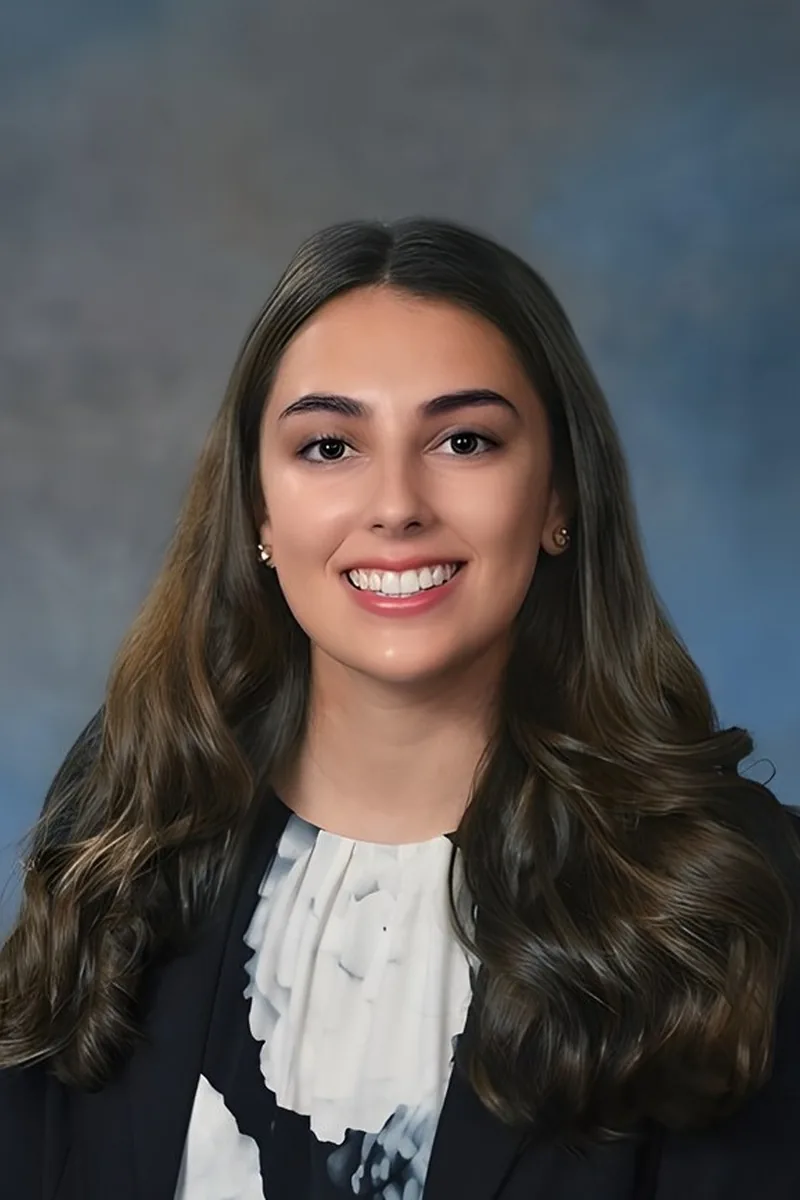
The CLEP College Algebra exam covers a predictable set of concepts — functions, exponents, logarithms, systems of equations — and Amanda's approach is to map out exactly which problem types appear most frequently and drill those first. Her biology and pre-med coursework required heavy algebra fluency, so she explains these topics through practical application rather than abstract rules.
The CLEP College Algebra exam packs functions, inequalities, logarithms, and polynomial behavior into a single timed sitting, and knowing the math isn't enough — you need to move quickly. Stephanie earned her spot in Mu Alpha Theta and has tutored algebra at multiple levels, so she knows which problem types eat up time and how to shortcut them without sacrificing accuracy.
Most CLEP College Algebra questions come down to manipulating rational expressions, understanding function transformations, and solving systems — skills that reward fluency over brute-force calculation. Chris earned a perfect 800 on SAT Math and carries that algebraic precision into CLEP prep, emphasizing the quick factoring and substitution techniques that save time on exam day.
Passing the CLEP College Algebra exam means being fluent with functions, logarithms, and systems of equations under timed pressure — topics that many students learned once and half-forgot. John digs into the specific problem formats CLEP favors, like function composition and rational expressions, and builds speed through targeted drills rather than broad review.
Samantha has tutored algebra at the college level and teaches the exact function types, inequalities, and polynomial concepts that dominate the CLEP College Algebra exam. She walks through each problem category — from factoring and rational expressions to systems of equations — with an emphasis on recognizing which strategy fits which question. Rated 4.9 by students.
Earning CLEP College Algebra credit means demonstrating mastery of functions, logarithms, and systems of equations under timed conditions, which is a different challenge than passing a semester-long course. Raphael digs into the specific question formats the exam uses — especially the function composition and rational expression problems that tend to eat up time — and builds speed through targeted practice. He's rated 5.0 across his tutoring subjects.
The CLEP College Algebra exam covers a lot of ground fast — polynomial functions, systems of equations, logarithmic and exponential models, and inequalities all in 90 minutes. Shawn's M.S. in Chemistry means he's used every one of these tools in applied settings, so he teaches the underlying logic rather than just drilling formulas. His 4.9 rating speaks to how well that approach clicks with students under test pressure.
The CLEP College Algebra exam covers a dense range of topics — polynomial operations, rational expressions, logarithmic functions, and systems — in a tight time window. Jenny's two years teaching Algebra I and II plus her Master's-level math training mean she can zero in on the specific concept areas a student needs to review and build efficient problem-solving strategies for exam day.
Passing the CLEP College Algebra exam comes down to confident manipulation of functions — factoring, solving systems, working with rational and polynomial expressions under time pressure. Remington has taught algebra at every level from elementary through college and uses that range to diagnose exactly where a student's understanding breaks down. His 5.0 rating speaks to an approach that's efficient and tailored rather than one-size-fits-all.
The CLEP College Algebra exam leans heavily on functions — evaluating, composing, and finding inverses — plus systems of equations and polynomial behavior. Marissa's coursework through calculus means she approaches these algebraic concepts from a place of depth, connecting ideas like factoring and rational expressions to the bigger mathematical picture. She maps each practice session to the actual CLEP content outline so students study what's tested, not what isn't.
During my Bachelor's studies at the University of Michigan-Dearborn, I was a mathematics and statistics tutor for a year, which I greatly enjoyed. I am currently a fourth-year Ph.D. student studying mathematics at the University of Florida. During my Ph.D. at the University of Florida, I was a teaching assistant for Calculus I, Calculus II, and Precalculus, and I was an instructor for a section of Calculus I. These experiences helped me develop my tutoring skills. Many students see math as a set of formulas that they can apply to the problems on their exams and homework. However, I feel that this way of thinking not only stifles true understanding, but also makes students' lives harder. My teaching philosophy is that if a strong conceptual understanding is built, then students will be well-equipped to answer any question that they can be asked. When I tutor, I make sure that students develop this foundation first and foremost.
The CLEP College Algebra exam covers a lot of ground — functions, equations, inequalities, and number systems — but it rewards efficient test-taking as much as raw math knowledge. Jasmine earned a 1420 SAT and has tutored college students in math, so she knows how to zero in on the high-frequency topics like polynomial and rational functions that dominate the exam. Her systematic approach to preparation turns a broad content list into a manageable study plan.
The CLEP College Algebra exam covers a dense range of topics — polynomial functions, logarithmic equations, systems of inequalities — in a tight timeframe, so efficiency matters as much as accuracy. Claire teaches the underlying algebra concepts across multiple levels, which means she can quickly identify where a student's gaps are and target review accordingly.
The CLEP College Algebra exam covers a lot of ground — functions, inequalities, systems of equations, polynomial operations — and Sarah's chemical engineering degree means she's used every one of those tools in real problem-solving contexts. She breaks each topic into clear steps and teaches students how to recognize which technique a problem is actually asking for, which is the key to finishing within the time limit.
I am also interested in tutoring college students preparing for the GRE general test. For test preparation, I assign a decent amount of homework each week and I spend the majority of my sessions going over the questions my students answer incorrectly.
Polynomial factoring, rational expressions, and function transformations are the core of the CLEP College Algebra exam, and Jing approaches each one by building the reasoning behind the rules. Her background in accounting and business management means she's spent years applying algebraic thinking to real quantitative problems, not just textbook exercises. She holds a 5.0 tutoring rating.
Passing the CLEP College Algebra exam can save a full semester of tuition, but the test covers a dense range of material from polynomial operations to logarithmic equations. Dibyendu's extensive university-level math teaching means he knows exactly where most students stumble — factoring strategies, rational expressions, and function transformations — and can target review sessions accordingly.
Factoring, systems of equations, inequalities, and function behavior make up the core of CLEP College Algebra, and rushing through practice problems without understanding underlying structure is the most common mistake students make. Arianna's teaching spans developmental algebra through competition math, so she can diagnose whether a student's real issue is with algebraic manipulation, word-problem translation, or graphical reasoning — and address it directly.
The CLEP College Algebra exam covers a dense range — from polynomial operations and rational expressions to logarithmic and exponential functions — and passing it means skipping an entire semester of coursework. Ammaar's statistics coursework at Cornell keeps him fluent in the algebraic manipulation and function analysis the exam tests most heavily.
Passing the CLEP College Algebra exam can knock out a full semester's credit, but it requires solid command of functions, logarithms, systems of equations, and inequalities all at once. Shin tackles each of these topic clusters methodically, drawing on the same algebraic foundations he uses in his Columbia engineering coursework to show students the underlying logic rather than a pile of disconnected formulas.
Factoring polynomials, solving systems of equations, graphing rational functions — CLEP College Algebra demands fluency across topics that many students last saw years ago. Anuj diagnoses which algebraic skills are rusty and rebuilds them with targeted problem sets, so students aren't just re-memorizing steps but understanding why each technique works. That conceptual grounding pays off when the exam throws unfamiliar-looking problems.
Passing the CLEP College Algebra exam requires fluency with functions, polynomial operations, and systems of equations — topics Shahnawaz has taught and studied extensively through two mathematics degrees. He walks students through the specific problem formats CLEP uses, from logarithmic equations to rational inequalities, so nothing on test day feels unfamiliar. His 4.9 rating speaks to how clearly he communicates even abstract algebraic concepts.
The CLEP College Algebra exam covers a dense range of topics — polynomial functions, logarithmic equations, systems of inequalities, matrices — and passing it means proving genuine command of the material without a semester of coursework. Jackie's approach is to identify which of those topic clusters a student struggles with most and dig into the underlying reasoning, not just the formulas. She's earned a 5.0 rating by making that targeted preparation efficient.
Factoring, rational expressions, and systems of equations all show up on the CLEP College Algebra exam, and each one has its own set of traps for students who rely on shortcuts. Kaitlyn's experience teaching algebra and algebra 2 means she knows exactly where students tend to lose points and can drill those weak spots before exam day.
The CLEP College Algebra exam covers a specific set of skills — functions, equations, inequalities, and their graphical representations — and rewards efficiency as much as knowledge. Timothy's approach is to map out exactly which problem types appear most frequently and drill the underlying techniques until they're automatic. His economics and MBA coursework kept him working with algebraic models consistently, so the material stays sharp.
I am looking to tutor in the areas of: Math, English, and for test prep. I was an honors student in High School, scored very well on all my tests, and have now earned a scholarship to go to Rutgers University for the Honors Program.
Neuroscience coursework at Boston University's Kilachand Honors College meant Katie spent semesters working through exponential decay models, logarithmic transformations, and polynomial curve-fitting long before tutoring them — so the algebra on the CLEP exam is material she's used in real research contexts, not just textbook exercises. She's particularly good at untangling function composition and inverse problems for students who haven't seen the notation in years, building speed through focused repetition that mirrors the 90-minute test format. Holds a 5.0 rating.
Passing the CLEP College Algebra exam often comes down to fluency with functions — transformations, compositions, inverses, and rational expressions that need to feel automatic under time pressure. Ellyn's daily work as a college mathematics instructor means she sees where students get stuck on these concepts and can diagnose gaps quickly.
Polynomial operations, rational expressions, systems of equations, and function behavior — CLEP College Algebra covers a lot of ground in a short test. Matthew's approach zeroes in on the underlying structure of each problem type so students recognize what to do without second-guessing themselves. As a mechanical engineering student who earned a 5.0 tutoring rating, he brings both deep math fluency and a knack for clear explanation.
Polynomial division, rational expressions, and systems of equations make up the backbone of the CLEP College Algebra exam — and they're areas Samuel has taught extensively at both the introductory and advanced level. He zeroes in on the algebraic reasoning behind each problem type so students can adapt when the exam phrases a familiar concept in an unfamiliar way.
Factoring, rational expressions, systems of equations, and function transformations all show up on the CLEP College Algebra exam, and Sally tackles each one by building intuition for what the algebra is actually doing. Studying mathematics at Georgia Tech gave her a deep comfort with abstraction that she translates into clear, step-by-step explanations for students who need to pass this exam efficiently.
I am a firm believer of this and, as such, I do not spoon feed students during sessions but rather guide them to figure out how to answer their own questions and solve their own problems. Thus, I focus not only on what to do, but how and why to do it. One of the most significant drivers of independent learning is curiosity, and this is one of the primary traits I aim to cultivate in students.
Passing the CLEP College Algebra exam means handling polynomial operations, rational expressions, and systems of equations under time pressure — and knowing which problems to solve algebraically versus which to estimate. Terry has taught algebra at multiple levels and uses that range to quickly identify whether a student's sticking point is conceptual or procedural. He builds targeted practice sets around the specific question types that appear most frequently on the CLEP.
Factoring, systems of equations, and function transformations make up the core of the CLEP College Algebra exam, and Daiven teaches all of these regularly across his algebra and pre-calculus sessions. He breaks problems into recognizable patterns so students learn to identify which technique applies before they start solving. A biology major who uses algebra constantly for data analysis, he connects abstract rules to practical reasoning.
Teaching general and organic chemistry at the University of Tennessee means Taylor solves algebraic problems constantly — rearranging rate laws, working with logarithmic relationships in equilibrium, manipulating polynomial expressions in thermodynamics — so the material on the CLEP exam is deeply familiar ground. He breaks down each problem type by connecting it to the algebraic reasoning underneath, which makes unfamiliar question formats on test day feel manageable. Rated 5.0 by students.
I am very interested in a career in the medical field, so I am apart of some pre-medical organizations. I really enjoy playing all different sports, from soccer to volleyball to tennis.
After years of using exponential and logarithmic models in cellular and molecular biology research — growth curves, decay rates, dose-response relationships — Patrick treats the algebra on the CLEP exam as practical toolkit rather than abstract theory. He breaks down each function family the test covers by tying it to intuitive patterns, which makes retaining the material far easier than rote re-memorization. Rated 5.0 by students.
The CLEP College Algebra exam covers a predictable set of topics — functions, exponents, logarithms, and systems of equations — but the time pressure means students need to recognize problem types quickly. Herve teaches efficient strategies for each category so test-takers spend less time figuring out what's being asked and more time solving.
Students who haven't opened an algebra textbook in years often find the CLEP exam's function and logarithm questions feel like a foreign language — Alexandra rebuilds that fluency by zeroing in on the specific manipulation skills the test rewards, like simplifying rational expressions and interpreting graphs of polynomial behavior. Her 33 ACT and broad tutoring experience across math levels mean she can quickly spot where the rust is thickest and target those gaps with focused practice sets designed for the 90-minute format.
Testimonials
Because the right CLEP College Algebra tutor makes all the difference.
Average Session Rating – Based on 3.4M Learner Ratings
Top 20 Test Prep Subjects



Top 20 Subjects
Frequently Asked Questions
Students typically find exponential and logarithmic functions, rational expressions, and systems of equations most difficult. Many also struggle with function notation and transformations, as these require both conceptual understanding and procedural fluency. Polynomial operations and factoring are foundational skills that, when weak, create cascading problems in later topics. A tutor can identify which of these areas are holding you back and build targeted practice around them.
The exam has 60 questions in 90 minutes, giving you roughly 1.5 minutes per question—but not all questions take equal time. Easier problems (like basic linear equations) should take 30-45 seconds, while complex multi-step problems may need 2-3 minutes. The strategy is to answer quick questions first, flag harder ones, then return if time permits. A tutor can help you practice this pacing on full-length practice tests so you develop timing instincts before test day.
Function notation (f(x), domain, range) is abstract and often taught without enough concrete examples. Students confuse function evaluation with solving equations, and struggle to visualize how transformations like f(x-2) or 2f(x) shift and stretch graphs. The CLEP heavily tests these concepts because they're foundational for higher math. Tutoring helps by connecting notation to actual graphs and real-world contexts, making the abstraction concrete and memorable.
Yes, but you'll need focused remediation first. Weak factoring, fraction manipulation, or equation-solving skills will severely limit your score since almost every problem builds on these foundations. Rather than trying to memorize answers, a tutor can diagnose exactly which foundational gaps exist and create a targeted review plan. Many students successfully rebuild these skills in 4-8 weeks with consistent practice, then move into college-level material.
Take full-length, timed practice tests early to establish a baseline and identify weak areas—don't save them all for the end. After each test, spend more time analyzing wrong answers than celebrating correct ones. Ask: Did I misunderstand the concept, make a careless error, or run out of time? A tutor can help you categorize mistakes and create a study plan that targets your specific error patterns rather than reviewing everything equally.
Rational expressions require you to factor, find common denominators, simplify, and solve—often in one problem. Students often skip steps, forget to check for extraneous solutions (values that make the denominator zero), or incorrectly cancel terms. The CLEP tests whether you can handle these multi-step operations accurately under time pressure. Tutoring focuses on building systematic approaches and checking your work, so you catch errors before submitting answers.
These topics feel foreign because they're often taught as separate rules rather than as inverse operations. Understanding that logarithms undo exponentials—and vice versa—is the key insight. Once you see this relationship, solving equations like 2^x = 8 or log₃(x) = 2 becomes intuitive rather than formula-memorization. A tutor can use visual explanations and real-world contexts (like compound interest or pH scales) to cement this connection, then build problem-solving speed through targeted practice.
Test anxiety often stems from uncertainty about whether you'll recognize problem types or have enough time—both manageable with preparation. Taking multiple full-length practice tests under timed conditions builds familiarity and confidence. A tutor can also teach you to skip difficult questions strategically rather than getting stuck, and help you develop a pre-test routine (breathing, positive self-talk) that calms your nerves. Knowing you've practiced similar problems before is the most effective anxiety antidote.
Let’s find your perfect tutor
Answer a few quick questions. We’ll recommend the right plan and match you with a top 5% tutor.