Award-Winning Calculus Tutors
serving Nashville, TN
Calculus
Tutors in Nashville
Private 1-on-1 tutoring, weekly live classes for academic support, test prep & enrichment, practice tests and diagnostics, and more to elevate grades and test scores.
Based on 3.4M Learner Ratings
UniversitiesSchools & Universities
DeliveredHours Delivered
ProficiencyGrowth in Proficiency
Who needs tutoring?
No obligation. Takes ~1 minute.
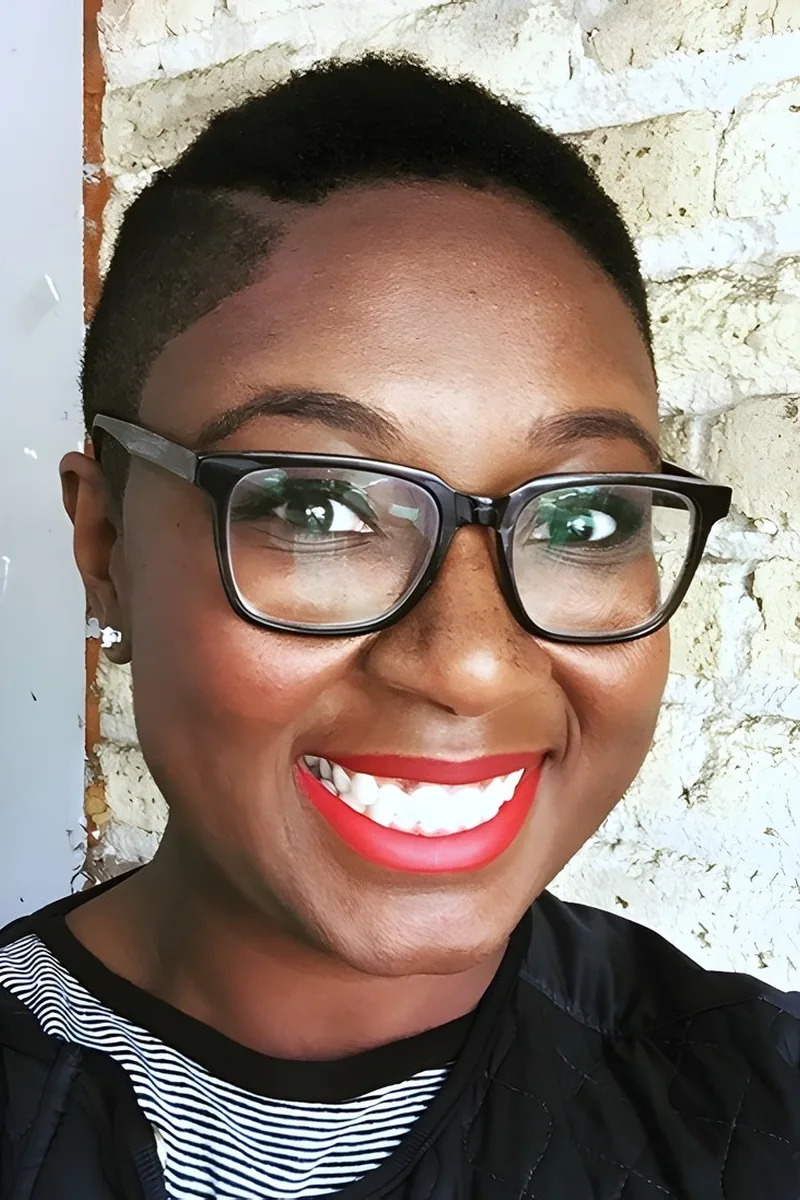
Comparative literature at Princeton isn't a typical path to calculus, but the close-reading discipline Brittney developed there — pulling apart layered arguments piece by piece — maps surprisingly well onto unpacking limit definitions and derivative rules where every symbol carries specific meaning. Her 1440 SAT confirms solid quantitative reasoning, and she brings that same meticulous, notation-decoding approach to early calculus concepts. Rated 5.0 by students.
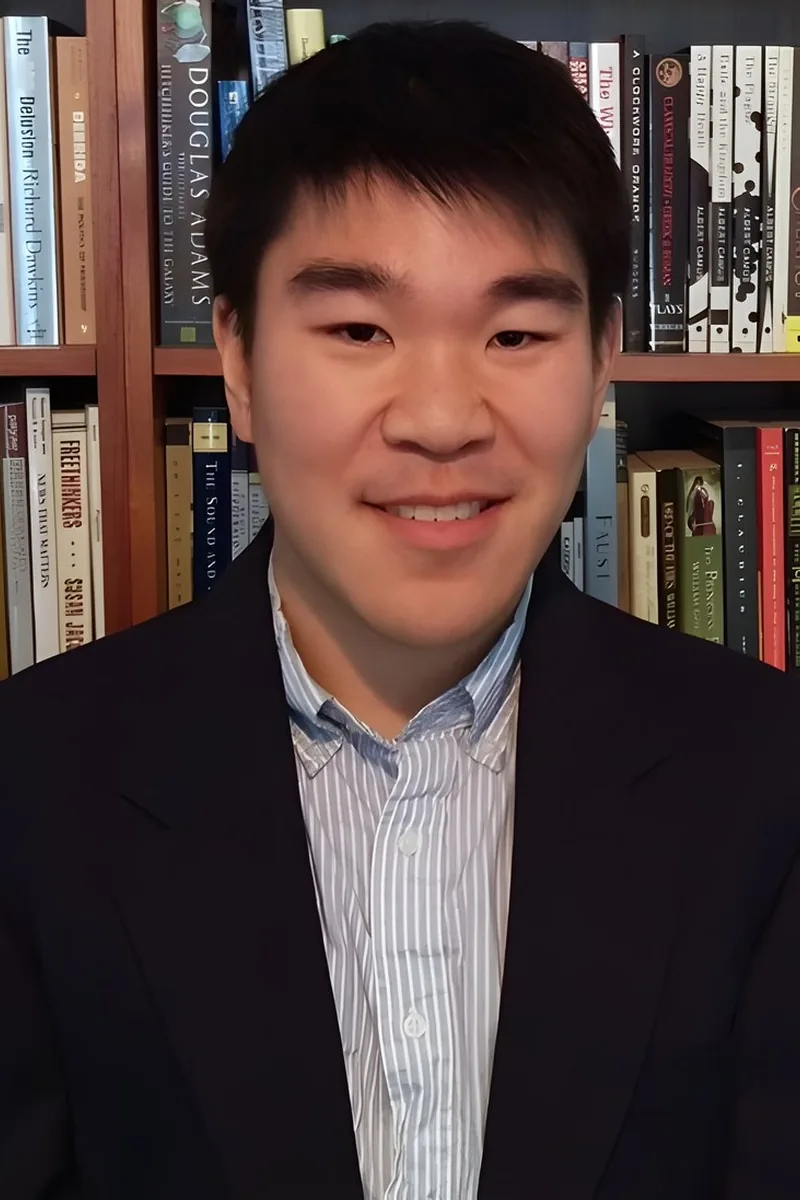
Graduate work in Chemical and Physical Biology at Vanderbilt meant Dennis was neck-deep in calculus — reaction kinetics, thermodynamic modeling, and the differential equations that govern molecular behavior all demanded fluency with derivatives and integrals. That daily, applied use of the material lets him teach concepts like the chain rule or integration by parts through the scientific problems where they naturally arise, not as isolated procedures. Rated 5.0 by students.
Between a 36 ACT composite and a computer science track at Vanderbilt that runs through multivariable math, Kerr has the quantitative chops to teach calculus with real fluency — not just the mechanics of differentiation and integration, but the underlying logic of why a Riemann sum converges or how the chain rule actually works. His programming background also means he can frame calculus concepts computationally, showing how an algorithm approximates an integral step by step. Rated 4.9 by students.
Studying neuroscience at Vanderbilt, Eileen applies calculus daily — modeling neural firing rates with derivatives and calculating areas under pharmacokinetic curves with integrals. She teaches differentiation and integration by grounding each technique in what it actually represents, which makes chain rules and u-substitutions feel purposeful instead of arbitrary.
Lisa's sociology and anthropology degree doesn't scream calculus, but her perfect 1600 SAT score signals the kind of sharp quantitative reasoning that makes tackling derivatives and integration approachable. She breaks down the abstract notation into logical steps, treating each new rule the way a social scientist treats a model — something to understand structurally before applying it.
Political science on a pre-law track isn't a calculus-heavy path, so Kit is straightforward that this isn't his deepest subject. That said, a 1540 SAT reflects strong quantitative reasoning, and his pre-law training in building logical, step-by-step arguments maps surprisingly well onto walking through limit definitions and derivative rules where each piece needs to follow cleanly from the last.
Limits, derivatives, and integrals each build on the last, so a shaky grasp of one concept quietly undermines everything downstream. Rhamy applies calculus constantly in his Vanderbilt engineering courses — from modeling circuit behavior to optimizing systems — and brings that applied perspective into every session. His 5.0 rating speaks to how well that approach translates for students.
Heather's Quantitative Methods minor at Vanderbilt put her squarely in the calculus pipeline — working through derivatives and integrals as tools for statistical modeling and data analysis rather than as isolated textbook exercises. That background means she teaches concepts like the chain rule or area under a curve by connecting them to the quantitative questions they were built to answer. Rated 4.9 by students.
Derivatives and integrals click faster when a student sees them as tools, not just formulas. Nat is a math and computer science double major at Vanderbilt Engineering, which means he uses calculus constantly — from optimization problems to modeling change in real systems. He walks through each concept with enough context that students can tackle unfamiliar problems on their own.
Preparing for the LSAT while studying history and business at Vanderbilt has sharpened Alexander's ability to break complex logical sequences into manageable steps — a skill that translates directly to walking through limit definitions and derivative rules in early calculus. His 1510 SAT confirms solid quantitative reasoning, and his teaching style emphasizes understanding each step's purpose before moving to the next one.
Speech-language pathology research is more quantitative than most people realize — Mary's Vanderbilt master's program involves analyzing acoustic measurements, rate-of-change data in speech signals, and statistical modeling that draws directly on calculus concepts. That hands-on experience with derivatives in a research context lets her explain what a rate of change actually represents, grounding abstract notation in something tangible. Rated 5.0 by students.
I'm a 24 year old student of life that graduated from Vanderbilt University in 2014. My first experience with tutoring came 5 years ago when I opened a branch of ACT prep tutoring for Revolution Prep. At that time, I taught small classes of 5-9 students and also worked as a private tutor. I absolutely love to learn and am fulfilled by guiding students to reach their maximum potential.
I am a freshman at Vanderbilt University studying biochemistry and involved in analytical chemistry research. Despite my studies being very science oriented, I also enjoy studying English and the humanities. I'd be happy to tutor you in any of these areas!
While Christina's primary expertise is in education and language teaching, her NYU training included the math foundations needed to support students working through early calculus concepts like limits, derivatives, and basic integration. She breaks problems into smaller, structured steps — an approach shaped by her special education background, where clarity and scaffolding matter most.
Electrical engineering at Vanderbilt put Daniel through the full calculus sequence with real stakes — analyzing circuit behavior through integrals, modeling signal processing with derivatives, and solving the differential equations that govern everything from power systems to control theory. A perfect 36 ACT composite backs up that quantitative depth, and he teaches calculus by connecting each technique to the engineering problems where it actually gets used.
Mechanical engineering at Vanderbilt means Megan doesn't just remember Calculus — she's actively using derivatives for optimization, integrals for area and volume, and differential equations in her upper-level coursework right now. That ongoing fluency makes a difference when explaining tricky topics like implicit differentiation or disk-and-washer methods. She connects each technique to a tangible problem so the reasoning sticks beyond the exam.
Cognitive science trains you to think in systems and models — exactly the mindset calculus demands when connecting derivatives to rates of change or interpreting what an integral actually represents. Ruiy applies that analytical framework to break down limit problems, chain rule applications, and area-under-curve questions so the logic behind each step is clear, not just the procedure.
A strong algebra and trig foundation makes or breaks a student's experience in calculus, and Jakobi knows exactly where the gaps tend to hide. He walks through limits, derivatives, and integration by tying each new concept back to the prerequisite skills, so students aren't fighting old confusion while learning new material.
Chemistry majors at Vanderbilt don't just take calculus — they use it constantly, from reaction rate equations to thermodynamic integrations and equilibrium modeling. Elsa has tutored college students in calculus-based physics, which means she's comfortable teaching derivatives and integrals in applied contexts where the math has to actually produce correct answers. That science-embedded repetition gives her a fluency with the material that's hard to fake.
I'm pursuing a double major in Mathematics and English at Vanderbilt University. I have been tutoring math since High School and have native proficiency in Mandarin Chinese. I am dedicated to helping students explore the study methods that will fit their individual needs.
Caroline's neuroscience background at Vanderbilt required heavy calculus coursework — from limits and derivatives to integrals applied in modeling biological systems. She breaks down problems like related rates and area-under-the-curve by connecting the math to real scenarios, which makes abstract concepts click faster.
Political science majors don't usually list calculus on their résumé, and Miah is honest that it's not her deepest subject — but a 34 ACT composite shows she can think quantitatively when it counts. Her knack for systematic problem-solving and a 5.0 tutoring rating mean she's well-suited to support students tackling the early conceptual hurdles, like understanding what a derivative actually represents before the notation gets heavy.
Training to teach secondary math at Vanderbilt's Peabody College means Karen isn't just learning calculus — she's learning how to explain it, anticipate where students get stuck, and sequence ideas so that limits, derivatives, and integration rules build on each other naturally. Her 1570 SAT confirms the quantitative chops, and her education coursework gives her something most math-strong tutors lack: formal training in how people actually learn mathematical concepts. Rated 5.0 by students.
Cognitive science at Vanderbilt involves enough statistics and mathematical modeling — signal detection theory, computational models of perception, Bayesian reasoning — that Leanna has real familiarity with how calculus underpins the science of the mind. She's strongest in the conceptual territory: what a derivative actually represents, how rates of change connect to real phenomena, and why integration reverses that process. Rated 4.9 by students.
Human Development coursework doesn't scream calculus, but Jamie's experience tutoring math across grade levels — including algebra through algebra 2 — means she's walked students through the exact algebraic scaffolding that early calculus builds on. She's particularly good at catching the prerequisite gaps in function manipulation and graphing intuition that quietly derail students once limits and derivatives enter the picture. Rated 4.9 by students.
Limits, derivatives, and integrals each demand a different kind of thinking, and Elena approaches Calculus by making sure students see the geometric intuition behind every rule before drilling computation. She's especially strong at unpacking the chain rule and related rates problems, two areas where students often memorize steps without understanding why they work.
Kaitlyn's academic focus is creative writing, not mathematics, so she's upfront that calculus is well outside her primary expertise. Her experience tutoring math at multiple levels and strong quantitative instincts — reflected in a 1540 SAT — mean she can support students working through early concepts like limits and basic derivatives, breaking each step down with the same careful attention to logic and structure she applies to her writing work.
Natural resources coursework is surprisingly calculus-heavy — modeling population growth with differential equations, calculating rates of resource depletion, analyzing change in ecosystems over time. Katie's dual science degrees mean she's worked through these applications firsthand, so she can ground derivatives and integrals in concrete ecological problems rather than leaving them as abstract symbol manipulation. Rated 5.0 by students.
Economics PhD work at Vanderbilt is surprisingly calculus-heavy — Zeeshan regularly uses derivatives for optimization problems, integrals for consumer and producer surplus, and differential equations in growth modeling, so the core toolkit of calculus is part of his daily research life. He teaches the material by connecting each rule to the economic intuition behind it, like explaining why a second derivative test matters through the lens of diminishing marginal returns.
Biology coursework gave Marjorie firsthand experience with the calculus that drives population growth models, enzyme kinetics curves, and rate-dependent biological systems — so she teaches derivatives and integrals as tools that describe how living things actually change over time. A 34 ACT composite and 5.0 tutoring rating back up her quantitative chops, and her emphasis on teaching students to diagnose their own weak spots means she zeroes in on exactly where the conceptual gaps are hiding.
Studying both economics and math at Vanderbilt means Jacob lives in calculus daily — from optimization problems and marginal analysis to the rigorous limit definitions underpinning it all. He breaks down concepts like the chain rule and integration by parts by connecting them to real applications, so the techniques actually make sense rather than feeling like arbitrary steps.
Economics lives and breathes calculus — marginal cost, marginal revenue, and optimization are all derivative problems in disguise — and Grant's economics degree means he learned the math through those applied lenses first. He teaches concepts like the chain rule and integration by connecting them to the economic models where they naturally appear, which tends to make the abstract machinery feel purposeful. Rated 5.0 by students.
I am able to create quality, yet comprehensive curriculum for my students that will thrust them to succeed. I am very detailed oriented, creative, and have a passion for ensuring student success. It is my endeavor to combine my range of experience with my wealth of education. This includes being a loving, motivating, supporting, fun, and integral educator who will make a positive contribution to each student. I want to help all students build confidence, which will enhance their self esteem as well as personal values. Reaching this objective will directly reflect in the progression of their academic success.
Linguistics training is essentially applied logic — parsing syntax trees, mapping phonological rules, and tracing how structured systems transform inputs into outputs — which is surprisingly close to how calculus asks you to think about functions and their behavior. William brings that pattern-recognition instinct to early calculus concepts like limits and derivatives, breaking down the notation into something that reads more like a language than a wall of symbols. His 32 ACT and 4.9 rating speak to how well that analytical approach lands with students.
Having a Masters in Learning and Design from Vanderbilt means Mary knows how to structure the cognitive leap that trips most students up — moving from "follow the steps" algebra to the conceptual reasoning calculus demands. Her English background actually sharpens this: she treats notation like close reading, unpacking what each symbol in a limit or derivative expression is really saying before rushing to solve. Rated 5.0 by students.
Elementary education majors rarely get credit for their math chops, but Jessica's 1520 SAT shows she can handle quantitative reasoning well beyond the elementary level. Her training at Vanderbilt in how students actually learn new concepts — scaffolding, building from concrete to abstract — gives her a useful lens for unpacking ideas like limits and derivatives, where the intuition matters as much as the computation.
Business school math is calculus in disguise — marginal revenue, cost optimization, and elasticity are all derivative problems with dollar signs attached. Ryan's MBA coursework at Vanderbilt and his undergraduate international business training mean he can walk through differentiation and integration by connecting each concept to the economic reasoning behind it, making the abstract feel immediately useful.
The statistical modeling and data analysis Tristan performs daily as a Vanderbilt neuroscience PhD candidate relies heavily on calculus — from integration techniques in probability distributions to differential equations in computational models. He unpacks concepts like limits, derivatives, and the chain rule by connecting them to real problems, so the notation stops feeling arbitrary and starts making sense.
Engineering coursework at the graduate level means Allyson has used calculus as a daily tool — not just in problem sets, but in modeling biological systems, analyzing fluid dynamics, and solving differential equations with real physical meaning. She breaks down concepts like integration techniques and series convergence by connecting them to tangible applications, which makes abstract rules easier to internalize.
I'm a first year surgical resident at Vanderbilt University Medical Center in the field of Otolaryngology (Ear, Nose, and Throat). I typically work with medical students while at the hospital, but I'd enjoy tutoring any student with an interest in medicine and/or science. In addition to tutoring in subjects such as the MCAT, ACT, and Biology, I can also assist in application prep for Medical School and Medical Residency.
Testimonials
Because the right Calculus tutor makes all the difference.
Average Session Rating – Based on 3.4M Learner Ratings
Nearby Calculus Tutors
Other Nashville Tutors
Related Math Tutors in Nashville
Frequently Asked Questions
Many students struggle with the transition from algebra and precalculus to the conceptual thinking Calculus requires. Common pain points include understanding limits and continuity, mastering derivatives and their real-world applications, and connecting visual graphs to symbolic equations. Word problems involving rates of change and optimization can feel overwhelming without a clear problem-solving strategy. Personalized tutoring helps students break down these concepts into manageable pieces and see how they connect to the bigger picture.
During your first session, a tutor will assess your current understanding of foundational concepts like limits, derivatives, and integrals, as well as identify specific topics causing difficulty. They'll discuss your learning style, goals (whether you're aiming for a strong grade, AP exam preparation, or college readiness), and any math anxiety you might be experiencing. This personalized approach means your tutoring plan is tailored to your needs from day one, not based on a generic curriculum.
Tutors teach you step-by-step problem-solving strategies that go beyond just getting the right answer. They help you organize multi-step problems, explain your reasoning at each stage, and understand why certain approaches work. By practicing with immediate feedback, you'll develop habits like checking your work, identifying when to use different techniques, and communicating mathematical thinking clearly—skills that matter for both tests and real understanding.
Personalized tutoring focuses on building conceptual understanding by connecting abstract ideas to concrete examples and visual representations. Rather than just memorizing that the derivative represents slope, a tutor helps you see why, using graphs and real-world scenarios like velocity and acceleration. This deeper understanding makes it easier to tackle unfamiliar problems and see patterns across different topics—which is exactly what Calculus is really about.
Word problems require you to translate English into mathematical language, identify which Calculus concepts apply, and then solve—that's a lot of steps. Tutors teach you a systematic approach: reading carefully, defining variables, sketching diagrams, and deciding whether you need derivatives, integrals, or optimization. With guided practice on problems similar to what you'll see in class or on the AP exam, these problems become much less intimidating.
Varsity Tutors connects you with tutors who are familiar with different Calculus approaches and textbooks used across Nashville's school districts. Whether your school uses AP Calculus AB, AP Calculus BC, or a standard precalculus-to-calculus sequence, tutors can align their instruction with your specific curriculum and pacing. They'll also know what topics typically appear on standardized assessments, so you're prepared for whatever comes next.
Math anxiety often comes from feeling lost or making mistakes without understanding why. Personalized tutoring creates a judgment-free space where you can ask questions, work through problems at your own pace, and celebrate small wins. As you develop a deeper understanding of concepts and see your problem-solving improve, confidence naturally builds. Many students find that one-on-one instruction transforms their relationship with math entirely.
Varsity Tutors makes it easy to connect with an expert tutor who matches your needs and schedule. Simply tell us about your Calculus goals, current challenges, and availability, and we'll match you with a tutor ready to provide personalized instruction. You can start with a single session to see if it's a good fit, then continue with a schedule that works for you—whether that's weekly sessions leading up to an exam or ongoing support throughout the year.
Let’s find your perfect tutor
Answer a few quick questions. We’ll recommend the right plan and match you with a top 5% tutor.