Award-Winning Organic Chemistry Tutors
serving Nashville, TN
Organic Chemistry
Tutors in Nashville
Private 1-on-1 tutoring, weekly live classes for academic support, test prep & enrichment, practice tests and diagnostics, and more to elevate grades and test scores.
Based on 3.4M Learner Ratings
UniversitiesSchools & Universities
DeliveredHours Delivered
ProficiencyGrowth in Proficiency
Who needs tutoring?
No obligation. Takes ~1 minute.
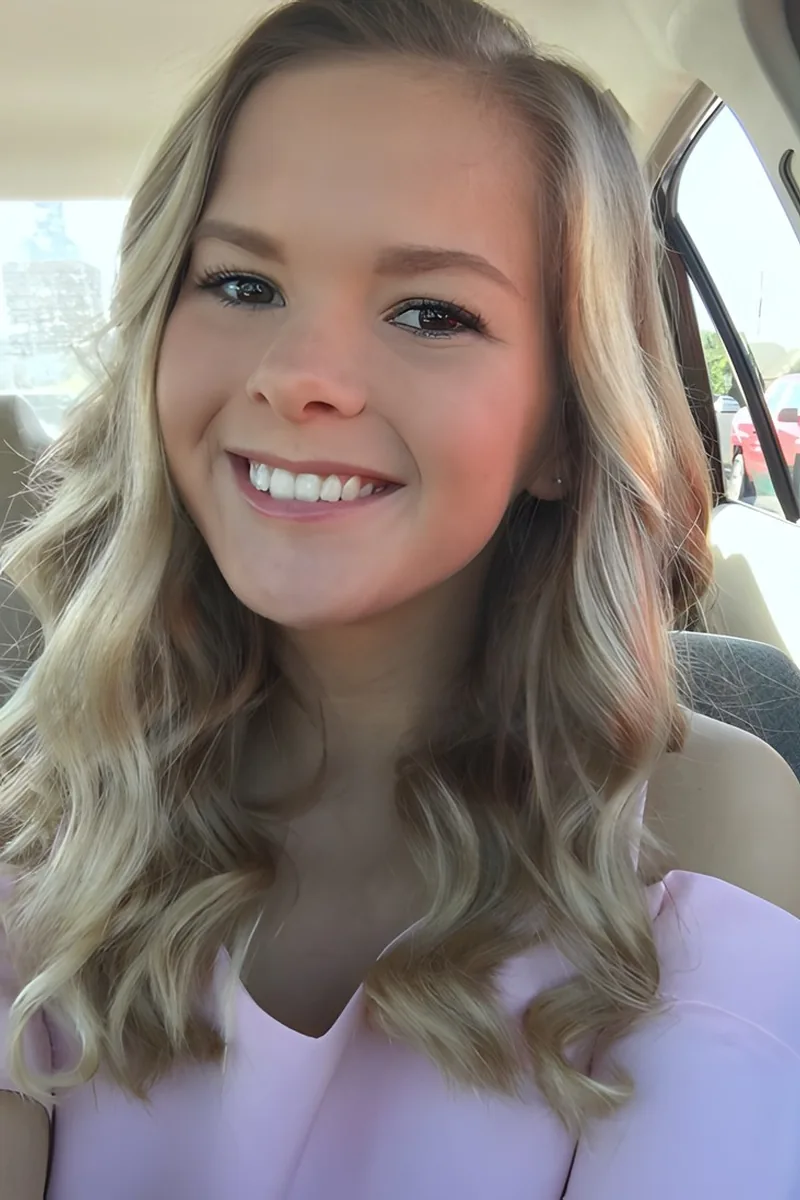
I am a freshman at Vanderbilt University studying biochemistry and involved in analytical chemistry research. Despite my studies being very science oriented, I also enjoy studying English and the humanities. I'd be happy to tutor you in any of these areas!

Jacob lists organic chemistry among his favorite subjects to teach, and his economics-trained habit of tracing systems through chains of cause and effect gives him a structured way to walk through multi-step mechanisms — particularly carbonyl chemistry and aromatic substitution patterns. He approaches each reaction type by building the logic from scratch: what's electron-rich, what's electron-poor, and why that determines everything. Rated 5.0 by students.
Reaction mechanisms are the language of organic chemistry, and Kathleen reads them fluently. She completed her undergraduate Chemistry degree at the University of Arkansas and went on to apply organic principles daily during her Vanderbilt Ph.D. research, where understanding molecular structure and reactivity was essential to her lab work. She walks students through arrow-pushing, stereochemistry, and synthesis design by connecting each reaction type to a clear underlying logic.
Reaction mechanisms are the backbone of organic chemistry, and most students struggle because they try to memorize arrow-pushing patterns without understanding electron density or orbital interactions. Fay's biochemistry background means she approaches orgo from a structural and energetic perspective — explaining why an E2 elimination is favored over SN1, not just that it is.
Pre-med coursework in psychology and biology gave Kristen a biomolecular entry point into organic chemistry — she learned reaction mechanisms through the lens of how drugs bind receptors and how metabolic pathways depend on functional group transformations. She tackles arrow-pushing by walking students through the "why" behind electron movement, connecting nucleophilicity and leaving group ability to the biological molecules that make those concepts tangible.
Having taught General Chemistry, Organic Chemistry, and GOB courses for health professions repeatedly at the college level, Jeremy approaches reaction mechanisms as skills to be practiced — not facts to be memorized. His PhD in Chemistry from Yale means he can trace arrow-pushing, stereochemical analysis, and multi-step synthesis all the way down to first principles, then rebuild them at whatever level a student needs. He holds a 4.6 rating.
Surviving organic chemistry as a chemistry major and then revisiting it for dental school admissions gave Jackson two passes through reaction mechanisms, stereochemistry, and spectroscopy interpretation. That repetition means he knows exactly where students get lost — arrow-pushing notation, carbonyl chemistry, substitution vs. elimination — and can walk through each step without skipping the reasoning.
I am a chemistry tutor with a solid academic and teaching background, possessing more than seven years of experience in chemistry. Being a tutor is an exciting interaction surpassing anything else I have experienced. I want to continue tutoring because I can positively influence students to reach their full potential academically. Enabling students to understand the basic knowledge and skills they may use for the rest of their lives is mightily rewarding. I have had a tremendously positive experience of both high school and college education. I received a chemistry bachelor's degree at the Cross River University of Technology, Nigeria, and a master's degree in chemistry at East Tennessee State University, TN. As a high school classroom teacher, and a graduate assistant, I taught a Chemistry course and instructed Organic Chemistry laboratory sessions, respectively. These teaching assignments have kindled positive and gratifying responses. The work of Howard Gardner has influenced my learning style. He theorized that we have many kinds of intelligence and that everyone has the potential to be brilliant but tends to express it uniquely. Therefore, all students have a unique learning style that is suitable for them. As a tutor, I can meet my students' academic needs provided I know their right learning style. Outside teaching, I volunteer in my local church youth weekly program to set up the gym so that the youths could have some fun games before listening to Bible-based teaching. I believe the spiritual well-being of an individual is just as important as their academic success. Volunteering my time to something that makes young people spiritually and mentally fit is fulfilling. Having decided to teach, I look forward to working as a tutor. It will be an honor to make a real difference in the life of those I tutor.
Siddharth's biology degree means he first encountered organic chemistry through the lens of biomolecules — amino acid reactivity, lipid structures, and the functional group behavior that drives metabolic pathways. That biological framing gives him a practical way to teach arrow-pushing and reaction classifications, connecting each mechanism to molecules students can visualize rather than treating them as abstract exercises.
Teaching two Chemistry 101 lab sections gave Davis hands-on experience explaining reaction mechanisms, functional group behavior, and electron-pushing arrows to students encountering them for the first time. He approaches organic chemistry as a language of patterns — once students learn to read electron density and leaving-group tendencies, synthesis problems become far more manageable.
Reaction mechanisms are the language of organic chemistry, and Zain treats them that way — teaching students to read electron flow in arrow-pushing diagrams the same way they'd follow the logic of a sentence. His university coursework in organic chemistry at Vanderbilt covered everything from substitution and elimination selectivity to carbonyl chemistry and retrosynthetic analysis.
Reaction mechanisms in organic chemistry reward the same kind of systematic thinking that drives engineering design: track the electrons, identify the functional groups, and predict what happens next. Lee teaches students to read mechanisms as stories with cause and effect — nucleophile attacks electrophile, leaving group departs — instead of memorizing hundreds of individual reactions. His biomedical background adds context for why specific organic reactions matter in drug design and biochemistry.
As an MD/PhD student at Northwestern doing doctoral research in organic synthesis, Austin lives in the world of reaction design — figuring out which bonds to form, which protecting groups to use, and why one retrosynthetic route beats another. That daily immersion means he teaches mechanisms and stereochemistry with the fluency of someone who actually builds molecules, not just someone who once passed the course.
Studying chemistry at Harvard while preparing for Columbia Medical School means James has worked through organic chemistry from both the academic and pre-med sides — understanding mechanisms deeply enough to satisfy a chemistry major, and efficiently enough to apply them in biochemistry and pharmacology contexts. He's particularly strong at teaching students how to predict reaction outcomes by analyzing charge stability and leaving group trends rather than treating each transformation as a new thing to memorize. Rated 4.9 by students.
Reaction mechanisms are the language of organic chemistry, and most students struggle because they try to memorize arrows instead of understanding electron flow. Abrahim unpacks each mechanism — SN1 vs. SN2, E1 vs. E2, electrophilic aromatic substitution — by starting with nucleophilicity, sterics, and leaving-group ability so the logic drives the arrow-pushing rather than the other way around. His 5.0 rating speaks to how well that approach clicks.
David is earning his PhD in organic chemistry at Northwestern, where he teaches undergraduate orgo labs and recitations and has co-written exam questions for the department. That means he knows exactly which reaction mechanisms, stereochemistry problems, and retrosynthesis challenges professors test — and how to break them down so the logic clicks. Rated 5.0 by students, he ties each mechanism to real-world applications that make the material stick.
Currently majoring in chemistry at MIT, Nicholas is immersed in the reaction logic and electron-pushing that organic chemistry demands — and he's learning it at a program known for its rigorous mechanistic approach. He breaks down topics like nucleophilic additions and stereochemical outcomes by connecting them to the underlying thermodynamic and kinetic reasoning, making unfamiliar transformations feel predictable rather than random. Rated 5.0 by students.
Reaction mechanisms are the language of organic chemistry, and David treats them that way — once a student can read electron flow through curved arrows, predicting products for substitution, elimination, and addition reactions becomes systematic rather than overwhelming. His Yale neuroscience training required two semesters of organic chemistry, and he still uses those fundamentals daily in his bioethics graduate work.
Most students dread organic chemistry because it feels like a new language, but the logic underneath reaction mechanisms is surprisingly consistent once someone lays it out clearly. Ade approaches each reaction type — substitution, elimination, addition — by teaching students to read electron movement and predict products rather than memorize hundreds of individual reactions.
Reaction mechanisms in organic chemistry are less about memorizing hundreds of arrows and more about recognizing a handful of recurring patterns — nucleophilic attacks, leaving group stability, and electron density shifts. Aidan studied organic chemistry as part of Notre Dame's premed track and teaches students to predict products by understanding why electrons move, not just where.
Testimonials
Because the right Organic Chemistry tutor makes all the difference.
Average Session Rating – Based on 3.4M Learner Ratings
Practice Organic Chemistry
Free practice tests, flashcards, and AI tutoring for Organic Chemistry
Nearby Organic Chemistry Tutors
Other Nashville Tutors
Related Science Tutors in Nashville
Frequently Asked Questions
Organic Chemistry is notoriously challenging because it requires both memorization and deep conceptual understanding—you need to know reaction mechanisms, but also understand *why* reactions occur the way they do. Many students struggle with visualizing 3D molecular structures, tracking electron movement, and recognizing reaction patterns across different functional groups. A tutor can help you move beyond memorization to truly grasp the underlying logic, making it easier to predict reactions and solve unfamiliar problems.
Your first session is about building a personalized plan. A tutor will assess your current understanding, identify which topics (like SN1/SN2 reactions, synthesis, or stereochemistry) are causing the most difficulty, and understand your learning style. They'll then create a roadmap tailored to your goals—whether that's improving your grade, preparing for an exam, or mastering specific units. This foundation ensures every session afterward is focused and productive.
Organic Chemistry is inherently visual, and many students struggle without strong spatial reasoning skills. Tutors use multiple strategies—drawing mechanisms step-by-step, using molecular models, working through 3D representations, and relating structures to real molecules you encounter daily. By repeatedly practicing drawing and interpreting structures with feedback, you'll develop intuition for how molecules behave, making complex reactions feel much more manageable.
Absolutely. Many Organic Chemistry courses include lab components, and tutoring can bridge the gap between theoretical concepts and hands-on experiments. A tutor can help you understand the purpose behind each lab procedure, predict what you should observe, and connect your results back to reaction mechanisms and theory. This integration deepens your understanding and helps you see why the chemistry you're learning matters in practice.
Effective exam prep goes beyond reviewing notes—it involves practicing problems under timed conditions, identifying weak areas, and building confidence with unfamiliar reaction types. A tutor will work with you to prioritize high-yield topics, teach you how to approach synthesis and mechanism problems strategically, and give you feedback on your problem-solving process. Regular practice sessions in the weeks leading up to your exam make a significant difference in performance.
Varsity Tutors connects you with expert tutors who deliver personalized 1-on-1 instruction tailored to your pace and learning style. Sessions focus on your specific challenges—whether that's reaction mechanisms, synthesis problems, or exam preparation—rather than generic review. Your tutor will work with you to build conceptual understanding, practice problem-solving, and develop strategies for tackling unfamiliar questions on tests.
With an average student-teacher ratio of 18.3:1 in Nashville schools, classroom teachers often can't provide the individualized attention that Organic Chemistry demands. Personalized 1-on-1 instruction allows a tutor to focus entirely on your learning gaps, adjust explanations to match your thinking style, and spend as much time as needed on challenging concepts. This targeted approach has been shown to dramatically improve both understanding and performance in complex subjects like Organic Chemistry.
Varsity Tutors matches you with tutors who have deep expertise in Organic Chemistry—many have advanced degrees, teaching experience, or strong backgrounds in chemistry. When you connect with a tutor, you can discuss their experience with the specific topics you need help with, their teaching approach, and how they've helped other students succeed. This personalized matching ensures you get expert instruction that fits your needs.
Let’s find your perfect tutor
Answer a few quick questions. We’ll recommend the right plan and match you with a top 5% tutor.