Award-Winning AP Physics C: Mechanics Tutors
serving Nashville, TN
AP Physics C: Mechanics
Tutors in Nashville
Private 1-on-1 tutoring, weekly live classes for academic support, test prep & enrichment, practice tests and diagnostics, and more to elevate grades and test scores.
Based on 3.4M Learner Ratings
UniversitiesSchools & Universities
DeliveredHours Delivered
ProficiencyGrowth in Proficiency
Who needs tutoring?
No obligation. Takes ~1 minute.

I'm pursuing a double major in Mathematics and English at Vanderbilt University. I have been tutoring math since High School and have native proficiency in Mandarin Chinese. I am dedicated to helping students explore the study methods that will fit their individual needs.
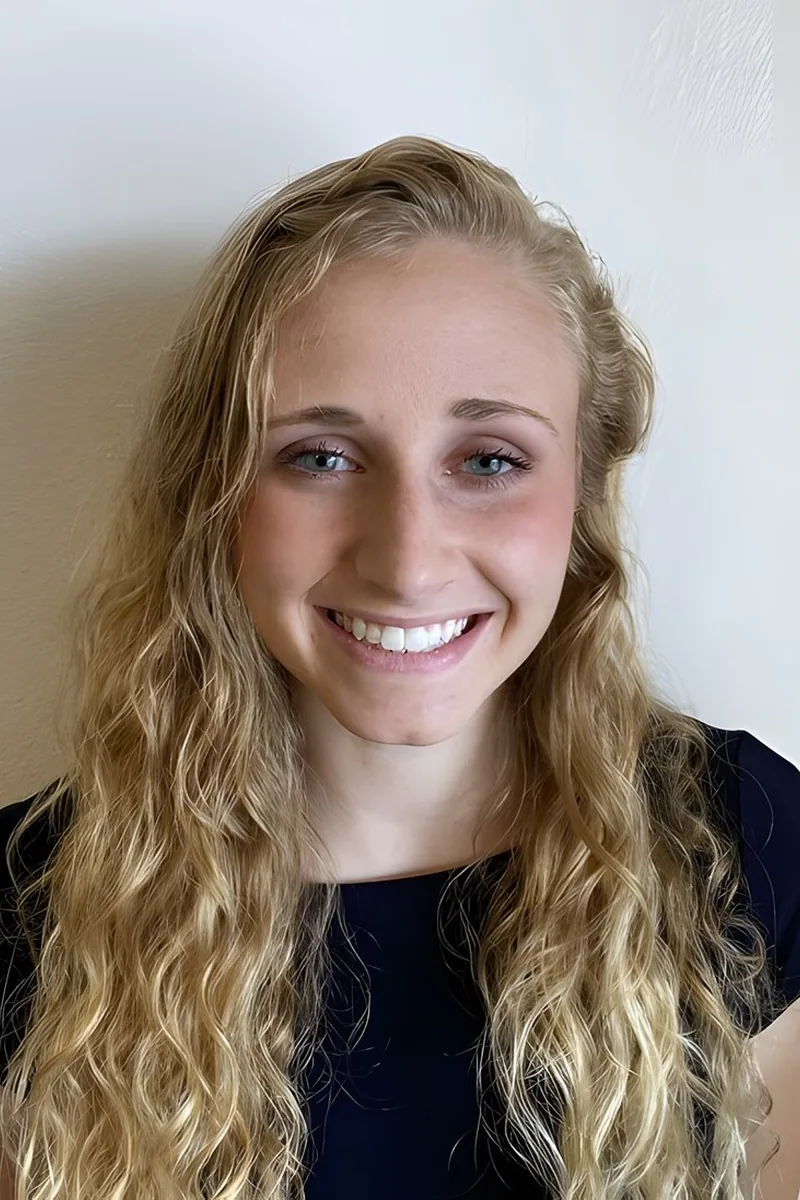
I am an Applied Physics Major with an Emphasis in Mechanical Engineering at Brigham Young University. I love to share the joy I have in the sciences and math to show truly the applications are so far-reaching.
Richard holds both a B.S. in Math and a B.S. in Physics, which means the calculus and the mechanics aren't two separate languages for him — they developed together, and he teaches AP Physics C that way, treating the math as inseparable from the physical reasoning rather than an add-on. His graduate work in atmospheric sciences demanded constant modeling of force systems and fluid dynamics, so problems involving variable forces or energy conservation across complex scenarios are second nature. He can also tutor entirely in Spanish for bilingual students who think more clearly in their first language.
Pharmacy school trains you to think in systems — how one variable cascades through an entire mechanism — and Lillian applies that same reasoning to mechanics problems where forces, constraints, and calculus all interact at once. Her prepharmacy science background covers the physics and math rigor AP Physics C demands, and her 34 ACT confirms the quantitative chops to back it up. She's especially effective at teaching students to identify which physical principle governs a problem before touching any equations, rated 4.9 by students.
Chemical engineering grad work at ASU Barrett means Alex solves calculus-based mechanics problems daily — from force balances on fluid systems to energy integrals across reactors — and that fluency translates directly to the kinematics, work-energy, and rotational dynamics on the AP Physics C: Mechanics exam. He also tutors AP Calculus BC and SAT Math (1560 SAT), so when a student's free-response answer falls apart, he can quickly isolate whether it's the physics reasoning or the integration technique that needs fixing. Rated 5.0 by students.
Jared's PhD work in mechanical engineering at Lehigh means he's solving advanced dynamics problems daily — the kind where AP Physics C's rotational kinematics and work-energy integrals are just the warm-up. His biomedical engineering background adds a practical dimension: he can show students how a torque problem on the exam mirrors the same mechanics behind joint loading or prosthetic design, making abstract calculus-based physics feel grounded in something real.
Holding dual degrees in mathematics and physics, Maxwell brings the rare ability to see both sides of every AP Physics C: Mechanics problem simultaneously — the physical intuition and the calculus machinery. Where many students stumble is in translating a free-body diagram into the correct line integral or second-order differential equation; Maxwell treats that translation step as the core skill to master, not an afterthought. Rated 5.0 by students, with a 1520 SAT backing up the quantitative chops.
Bidyut's biomedical engineering coursework at Johns Hopkins fuses calculus-based mechanics with real physical systems — analyzing forces on prosthetic joints, modeling fluid dynamics in arteries — so the Newtonian mechanics and rotational problems on the AP Physics C exam feel like simplified versions of what he already does daily. He scored a 36 ACT and holds a 5.0 tutoring rating, and he's particularly sharp at showing students how to translate a word problem into the correct integral or differential equation before touching any numbers.
Simulating cosmic ray acceleration through turbulent plasmas requires exactly the kind of calculus-based mechanics reasoning that AP Physics C tests — Newton's laws applied to complex systems, rotational dynamics, and energy methods. Dennis walks students through the hardest problems on the exam by teaching them to set up the physics first and let the calculus follow naturally. Rated 4.7 by students.
Having TA'd multiple engineering courses at WashU while earning dual degrees in mechanical and energy engineering, Ava spent semesters breaking down the same calculus-based force analysis, work-energy theorems, and rotational dynamics that define the AP Physics C: Mechanics curriculum. Her 35 ACT speaks to the quantitative precision she brings to exam prep, and her current graduate work in environmental engineering keeps her fluent in the applied physics and differential equations students encounter on test day.
Darren is midway through his physics degree at Northwestern, which means he's actively taking the upper-division mechanics courses that build directly on everything AP Physics C tests — and he still remembers exactly where the conceptual jumps from kinematics to rotational dynamics tripped him up the first time. He zeroes in on free-body diagrams and getting the calculus setup right before students ever touch a number, treating each problem as a reasoning exercise rather than a formula hunt. Rated 5.0 by students.
I am a graduate of Cornell University's College of Arts and Sciences. I received my Bachelor of Arts in Chemistry with Distinction in 2015. Since graduation, I was a physics/chemistry teacher and soccer coach at a private school in Virginia for a year, where I led the soccer team to an undefeated season. Before teaching and coaching professionally, I was a Teaching Assistant for the Cornell Math and Physics Departments, where I taught many subjects including calculus, mechanics, electromagnetism. Throughout my time at Cornell and as a teacher, I tutored subjects ranging from the SAT to AP Physics and Algebra II, which is where my true talents lie: in small group or one-on-one settings where I can give students the full attention they deserve and tailor my approach specifically to their learning styles. This is why I am now pursuing tutoring as a part-time occupation at Varsity Tutors. I embrace teaching all math and science subjects, especially physics and calculus, at both the college and high school level and will go above and beyond to make sure all of my students succeed, according to their definition of success. In my spare time, I enjoy playing league soccer, basketball, tennis and guitar, and also like to travel and see as much of the world as I can.
AP Physics C: Mechanics often trips up students who are comfortable with calculus in a math class but freeze when they need to apply it to a pulley system or a variable-force spring problem. Andrew pairs his strong math background — he's pursuing a double focus in finance and mathematics at Boston College — with hands-on physics tutoring across multiple levels, including the SAT Physics subject test. That cross-subject fluency means he can spot whether a student's stuck on the physics setup or the calculus execution and address the right one.
Most pre-med students avoid the calculus-heavy physics — Manideep leans into it, tackling AP Physics C: Mechanics alongside his biological sciences coursework at Northwestern, where he also TAs in the sciences. He breaks down conservation of energy and momentum problems by starting with the physical scenario and building the integral from there, so students learn a repeatable process instead of hunting for the right formula. Rated 5.0 by students.
Testimonials
Because the right AP Physics C: Mechanics tutor makes all the difference.
Average Session Rating – Based on 3.4M Learner Ratings
Practice AP Physics C: Mechanics
Free practice tests, flashcards, and AI tutoring for AP Physics C: Mechanics
Nearby AP Physics C: Mechanics Tutors
Other Nashville Tutors
Related Science Tutors in Nashville
Frequently Asked Questions
AP Physics C: Mechanics focuses on classical mechanics and includes kinematics, Newton's laws, work and energy, momentum, circular motion, oscillations, and gravitation. The course emphasizes calculus-based problem-solving, which distinguishes it from AP Physics 1. For students in Nashville, understanding these topics deeply is essential since the AP exam requires both conceptual understanding and the ability to apply calculus to physics problems.
The main challenge is integrating calculus with physics concepts—students must not only understand the physics but also apply derivatives and integrals correctly. Many students struggle with problem-solving pacing, as mechanics problems often require multiple steps and careful analysis. Common pain points include translating word problems into equations, understanding when to use different approaches, and managing time during the exam's timed sections.
Personalized 1-on-1 instruction allows tutors to identify your specific weak areas—whether that's calculus application, free-body diagram interpretation, or energy conservation problems—and focus on those gaps. Tutors can also teach you effective problem-solving strategies, help you practice with real AP exam questions, and build your confidence through targeted practice. This customized approach is especially valuable for mechanics, where conceptual misunderstandings often compound across multiple topics.
Score improvement depends on your starting point and how consistently you engage with tutoring and practice. Students who work with tutors typically see meaningful gains by focusing on their weakest topics and practicing with full-length exams under timed conditions. The AP Physics C: Mechanics exam is scored from 1-5, and most improvement comes from moving from conceptual confusion to consistent problem-solving accuracy—which is exactly what targeted tutoring addresses.
Your first session is an assessment and planning meeting. A tutor will discuss your current understanding of mechanics concepts, review your recent exams or problem sets to identify patterns in your mistakes, and learn about your goals (score target, timeline, specific topics). From there, you'll develop a customized study plan that prioritizes your biggest challenges and builds toward AP exam readiness.
Practice tests are critical—they help you understand the exam format, identify weak topics, and build pacing skills under time pressure. Taking full-length practice exams every 1-2 weeks during your prep timeline allows you to track progress and adjust your study strategy. Many students find that working through practice tests with a tutor is especially valuable, since you can get immediate feedback on your reasoning and learn where you're losing points.
Varsity Tutors connects you with tutors who have deep expertise in AP Physics C: Mechanics and understand the calculus-based problem-solving the course demands. When you get matched with a tutor, you can discuss their experience with AP exam prep, their approach to teaching mechanics, and how they've helped other students improve. This personalized matching ensures you work with someone who can address your specific learning style and goals.
For most students, 1-2 tutoring sessions per week combined with 3-5 hours of independent practice and problem-solving is effective for solid AP exam preparation. The exact schedule depends on your starting level, target score, and how much time until the exam. Your tutor can help you create a realistic timeline and adjust the frequency of sessions based on your progress and areas that need more focus.
Let’s find your perfect tutor
Answer a few quick questions. We’ll recommend the right plan and match you with a top 5% tutor.