Award-Winning AP Biology Tutors
serving Nashville, TN
AP Biology
Tutors in Nashville
Private 1-on-1 tutoring, weekly live classes for academic support, test prep & enrichment, practice tests and diagnostics, and more to elevate grades and test scores.
Based on 3.4M Learner Ratings
UniversitiesSchools & Universities
DeliveredHours Delivered
ProficiencyGrowth in Proficiency
Who needs tutoring?
No obligation. Takes ~1 minute.
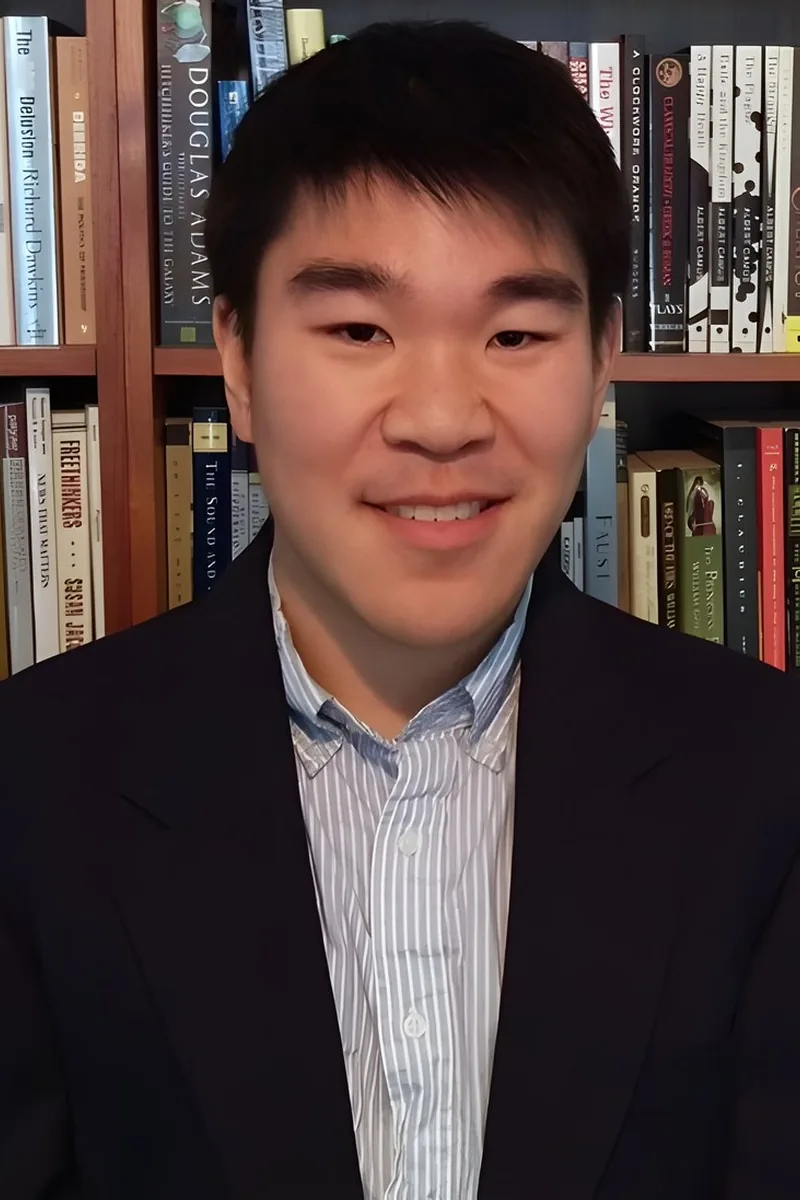
Graduate research in Chemical and Physical Biology at Vanderbilt meant Dennis spent years at the intersection of chemistry and living systems — dissecting metabolic pathways, protein interactions, and cellular energetics at a level that makes AP Bio's toughest biochemistry content second nature. His biochemistry undergraduate degree adds even more depth to the molecular biology and genetics units, where he can unpack processes like enzyme kinetics or gene regulation by grounding them in the actual chemistry students rarely get to see in a high school course. Rated 5.0 by students.
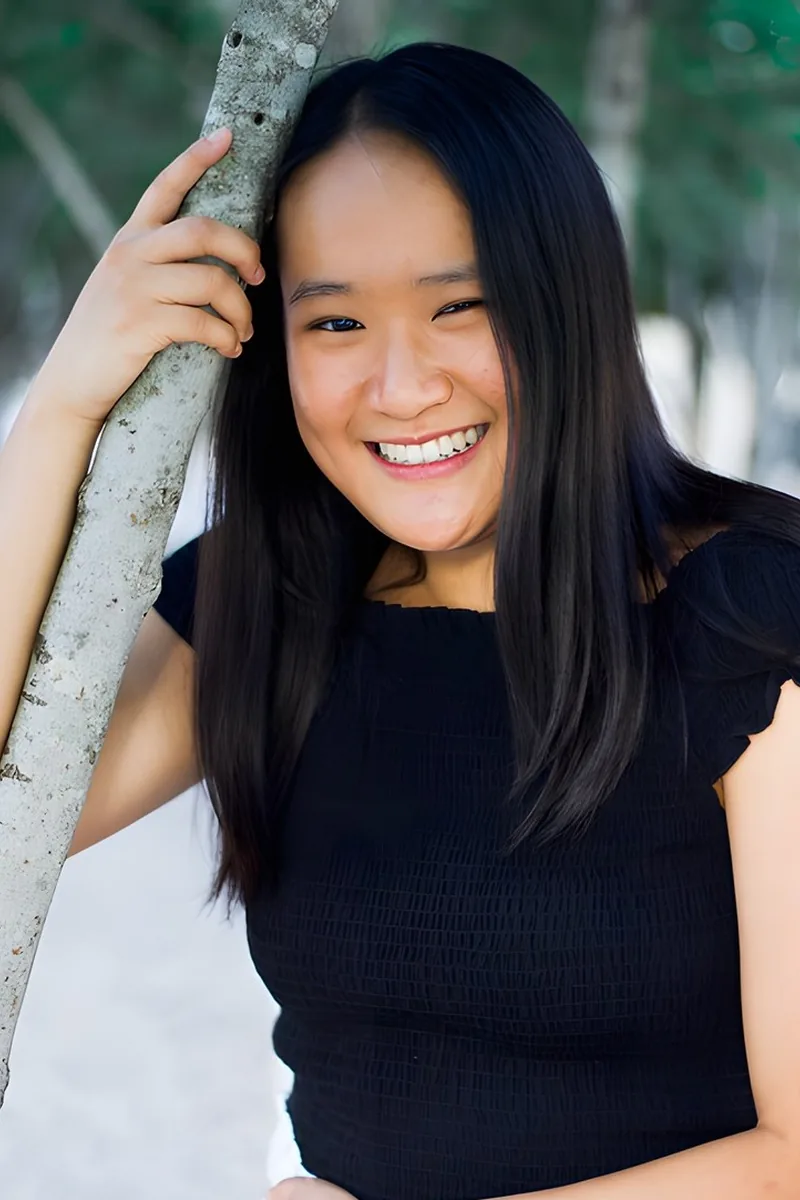
As a neuroscience major on the pre-med track at Vanderbilt, Eileen lives inside the material AP Biology tests: cell signaling, gene expression, metabolic pathways, and evolutionary mechanisms. She unpacks dense topics like the lac operon or oxidative phosphorylation by sketching out each step visually, turning overwhelming detail into a logical sequence students can actually reconstruct on exam day.
I am a freshman at Vanderbilt University studying biochemistry and involved in analytical chemistry research. Despite my studies being very science oriented, I also enjoy studying English and the humanities. I'd be happy to tutor you in any of these areas!
Hi, my name is Jorge and I am from Lima Peru. Most of my academic experience is related to Biomedical sciences, in the fields of Molecular Biology, Genetics, Biochemistry, Cell Biology and development. During my PhD, I had a proactive role organizing scientific symposiums and retreats. This trained my presentation skills to share my research in important scientific meetings in the US: I won best poster award at the Gordon Research Conference (GRC) in 2022 and was an invited speaker at Cold Spring Harbor meeting in 2023, among others. Besides my research experience, I have a strong commitment to improve higher education in STEM. Since 2020, I co-direct the Research Experience for Peruvian Undergrads (REPU) program, that provides international scientific internships to Peruvian undergrads in top universities in the US and Europe. I have the chance to mentor undergards in STEM. Additionally, I am a native Spanish speaker, which allowed me to give Spanish lessons to some students in the USA. I want to use my best of my abilities to support students and build a career for myself in Education.
A PhD in Molecular Pathology & Immunology from Vanderbilt means Kathleen has spent years doing the kind of deep mechanistic thinking AP Bio only scratches the surface of — tracing how gene regulation, immune cell signaling, and protein interactions drive outcomes at the organism level. That research background is especially valuable for the exam's experimental design and data interpretation questions, where students need to think like a scientist rather than just recall vocabulary. Her chemistry and biology double major also keeps her sharp on the biochemistry threads — enzyme kinetics, energetics, molecular structure — that run quietly through nearly every AP Bio unit.
AP Biology's free-response questions demand more than memorized facts — they require students to design experiments, interpret data, and build arguments using evidence. Karen earned her PhD and holds deep expertise in cellular and molecular biology, so she digs into the reasoning behind topics like gene regulation, signal transduction, and energy flow that the AP exam tests hardest.
AP Biology's breadth is what makes it intimidating — one week it's cellular respiration, the next it's population genetics or signal transduction. Jordan's neuroscience training at Vanderbilt means he's deeply familiar with the molecular and cellular biology that dominates the exam's free-response questions, and he teaches students to connect processes across units rather than memorize them in isolation.
A chemistry degree from Rhodes College means Eric has the molecular-level foundation — organic reactions, thermodynamics, chemical equilibrium — that directly underpins AP Bio's most demanding units on cellular energetics and enzyme function. His medical internship experience, from transplant surgery to clinical practice in Tanzania, also gives him real-world context for the physiology and anatomy concepts students need to connect back to cellular mechanisms on free-response questions.
Isaac's cellular and molecular biology degree means he's spent serious time with the content AP Bio students find hardest — gene regulation, protein synthesis, and the molecular mechanics of cell division — not as survey-level overview but as his actual field of study. That depth shows up when he teaches students to build the kind of process-level explanations the exam demands, like tracing how a single mutation in a gene can ripple through transcription, translation, and ultimately organism-level phenotype.
Philosophy trained Alyssa to build careful, logical arguments from evidence — a skill that translates surprisingly well to AP Bio's free-response questions, where students must construct step-by-step explanations linking concepts like energy flow or genetic inheritance to experimental data. She won't out-depth a biology major on metabolic pathways, but she's sharp at teaching students how to read dense passages, interpret data tables, and write the kind of precise, reasoned answers that earn full credit on the exam.
The trickiest part of AP Bio for most students isn't memorizing content — it's learning to think across scales, like connecting a single point mutation to a shift in protein folding to a change in organism fitness. Kara's broad science teaching background, spanning earth science through calculus, gives her a cross-disciplinary habit of linking concepts that translates well to the way AP Bio's free-response questions demand multi-step biological reasoning. She's especially handy for students who need to strengthen their data interpretation and experimental design skills alongside the core content.
A human biology degree from Cornell plus current graduate work in human development means Jonathan has studied the organism-level physiology and developmental processes that AP Bio's later units build toward — growth, reproduction, and how organisms maintain homeostasis through feedback mechanisms. He's particularly good at teaching students to read experimental data and construct the kind of evidence-based arguments the free-response section demands, a skill sharpened by his own med school prep and 1550 SAT analytical training. Rated 4.9 by students.
Running an immunology lab at Columbia Medical Center means Matthew doesn't just remember AP Biology content — he uses cellular signaling, gene expression, and immune system mechanics in active research. He teaches the course's trickiest units, like cell communication and ecology data analysis, by connecting textbook diagrams to what actually happens at the bench. That real-world grounding is especially useful for the AP exam's experimental-design and data-interpretation questions.
Owen is a neuroscience major at Brown, which means AP Biology's toughest units — cell signaling, gene expression, and cellular energetics — overlap directly with material he's studied at the college level. He teaches students to think like the exam demands: interpreting experimental data, constructing explanations using evidence, and connecting molecular-scale processes to organism-level outcomes.
Rice University's biochemistry program is notoriously rigorous, and Michelle came out of it with a deep understanding of how molecular processes — protein folding, enzyme kinetics, gene regulation — drive the larger biological systems AP Bio tests at every level. Now in her second year of medical school at Baylor, she's actively applying concepts like metabolic pathways and cellular communication in clinical settings, which means she can teach students not just what happens during something like signal transduction, but why it matters physiologically.
Between her teaching assistant role for introductory biology at Cornell and her active cancer immunotherapy research on melanoma, Annie lives the material that AP Biology tests. She digs into the toughest units — cell signaling, gene expression and regulation, energy pathways — with the kind of mechanistic detail that earns 4s and 5s on the exam.
Three years running a cell biology lab section at Notre Dame gave Connor a front-row seat to exactly where students stumble on AP Bio material — signal transduction pathways, gene regulation, experimental design questions. His master's work in biomedical sciences deepened that knowledge, and he teaches the course with an eye toward the free-response questions that separate 4s from 5s.
Studying biology and chemistry on the pre-med track at Northwestern means Kade is immersed daily in the exact material the AP Bio exam tests — from cellular respiration and signal transduction to gene regulation and evolutionary mechanisms. He also runs study groups at his university, so he's practiced at explaining dense concepts like feedback inhibition or Hardy-Weinberg equilibrium in ways that actually stick. That combination of current coursework and teaching experience makes a real difference on exam day.
As a pre-med biosciences major at Rice University, Tegan is studying the same cellular processes, genetics, and ecological concepts that AP Bio covers — but at the college level, which means she can explain the *why* behind topics like enzyme kinetics or signal transduction rather than just the textbook summary. She's especially good at breaking down the plant biology and photosynthesis material that many students rush past, connecting light reactions and carbon fixation to the energy flow concepts the exam circles back to repeatedly. Rated 4.9 by students.
UCLA's Physiological Sciences program and subsequent research work gave Annie deep fluency with the organ-system and cellular-level biology that AP Bio tests — particularly the units on homeostasis, membrane dynamics, and metabolic regulation. Now a second-year medical student, she teaches students to think like the exam writers do: tracing a biological mechanism from molecule to organism, which is the connective reasoning that earns full marks on free-response questions. Rated 5.0 by students.
Cellular respiration, gene regulation, ecological energy flow — AP Biology demands that students think across scales, from molecules to ecosystems, often within a single free-response question. Sharan is deep in this material as a Human Biology major on the premed track at Cornell, and she unpacks complex processes like signal transduction by walking through each step with clear cause-and-effect reasoning.
Ethan's economics and public policy studies at the University of Chicago aren't a typical path into AP Bio, but they've made him sharp at interpreting data sets, constructing evidence-based arguments, and reasoning through cause-and-effect chains — all skills the exam's free-response questions heavily reward. He's especially useful for students who struggle with the experimental design and data analysis portions of the test, where reading graphs and evaluating hypotheses matters more than memorizing vocabulary.
From signal transduction pathways to Hardy-Weinberg equilibrium, AP Biology demands comfort with both molecular detail and big-picture ecological thinking. Amanda earned her biology degree at the University of Alabama and later built on that foundation through medical school coursework in genetics, physiology, and cell biology. She breaks down dense topics like gene regulation and cellular respiration into visual, step-by-step logic that sticks on exam day.
Testimonials
Because the right AP Biology tutor makes all the difference.
Average Session Rating – Based on 3.4M Learner Ratings
Practice AP Biology
Free practice tests, flashcards, and AI tutoring for AP Biology
Nearby AP Biology Tutors
Other Nashville Tutors
Related Science Tutors in Nashville
Frequently Asked Questions
Score improvement depends on your starting point and how consistently you engage with tutoring. Students who work with tutors typically see gains of 1-2 points on the AP scale through focused practice on weak units, strategic test-taking approaches, and targeted review of challenging concepts like cellular respiration and genetics. The key is identifying your specific knowledge gaps early—whether that's photosynthesis, evolution, or exam pacing—and addressing them systematically over several months.
Yes. AP Biology covers eight major units: chemistry of life, cell structure and function, cellular transport, cell communication and division, heredity, gene expression, natural selection, and ecology. Expert tutors for students in Nashville work through these units at your pace, ensuring you understand both the foundational concepts and the connections between them—which is critical for the free-response questions on exam day.
Most students struggle with photosynthesis, cellular respiration, and genetics—topics that require understanding both the big-picture processes and the specific mechanisms involved. The free-response section also trips up many test-takers because it demands clear explanations of biological concepts, not just multiple-choice recall. A tutor can help you practice articulating these complex ideas and tackle the reasoning questions that appear throughout the exam.
The AP Biology exam is 3 hours total: 90 minutes for 60 multiple-choice questions and 90 minutes for 6 free-response questions. A smart strategy is spending about 1.5 minutes per multiple-choice question, which leaves time to review. For free-response, aim to spend 15 minutes per question—roughly 5 minutes to plan and 10 minutes to write. Tutors can help you practice this pacing with full-length practice tests so timing becomes automatic on exam day.
Taking 4-6 full-length practice tests over your prep timeline is ideal—ideally starting 2-3 months before the exam. Each practice test should be timed and scored to identify patterns in your mistakes. Tutors can review your results with you, pinpoint whether errors stem from knowledge gaps or careless mistakes, and adjust your study plan accordingly. This targeted approach is much more effective than taking endless practice tests without analysis.
Look for tutors with strong AP Biology experience—ideally someone who has taught or tutored the course and understands both the College Board's expectations and the specific question formats on the exam. For students in Nashville, connecting with a tutor who knows how to break down complex topics like evolution and cell signaling into clear, memorable explanations makes a real difference. They should also be comfortable with practice test strategy and helping you build confidence in your weakest areas.
Test anxiety often stems from feeling unprepared or uncertain about exam format. Taking multiple full-length practice tests under timed conditions is one of the best anxiety-reducers because it builds familiarity and confidence. A tutor can also help you develop a pre-exam routine, teach you breathing techniques for staying calm, and remind you that the exam is designed to test understanding, not trick you. Knowing you've thoroughly reviewed the material and practiced the question types goes a long way.
Ideally, start tutoring in the fall if you're taking the exam in May—this gives you 6-7 months to work through all eight units and build mastery. If you're starting later, even 3-4 months of focused tutoring can significantly strengthen your understanding and test performance. The earlier you identify weak areas, the more time you have to practice and build confidence before exam day.
Let’s find your perfect tutor
Answer a few quick questions. We’ll recommend the right plan and match you with a top 5% tutor.