Award-Winning Physical Chemistry Tutors
serving Memphis, TN
Physical Chemistry
Tutors in Memphis
Private 1-on-1 tutoring, weekly live classes for academic support, test prep & enrichment, practice tests and diagnostics, and more to elevate grades and test scores.
Based on 3.4M Learner Ratings
UniversitiesSchools & Universities
DeliveredHours Delivered
ProficiencyGrowth in Proficiency
Who needs tutoring?
No obligation. Takes ~1 minute.
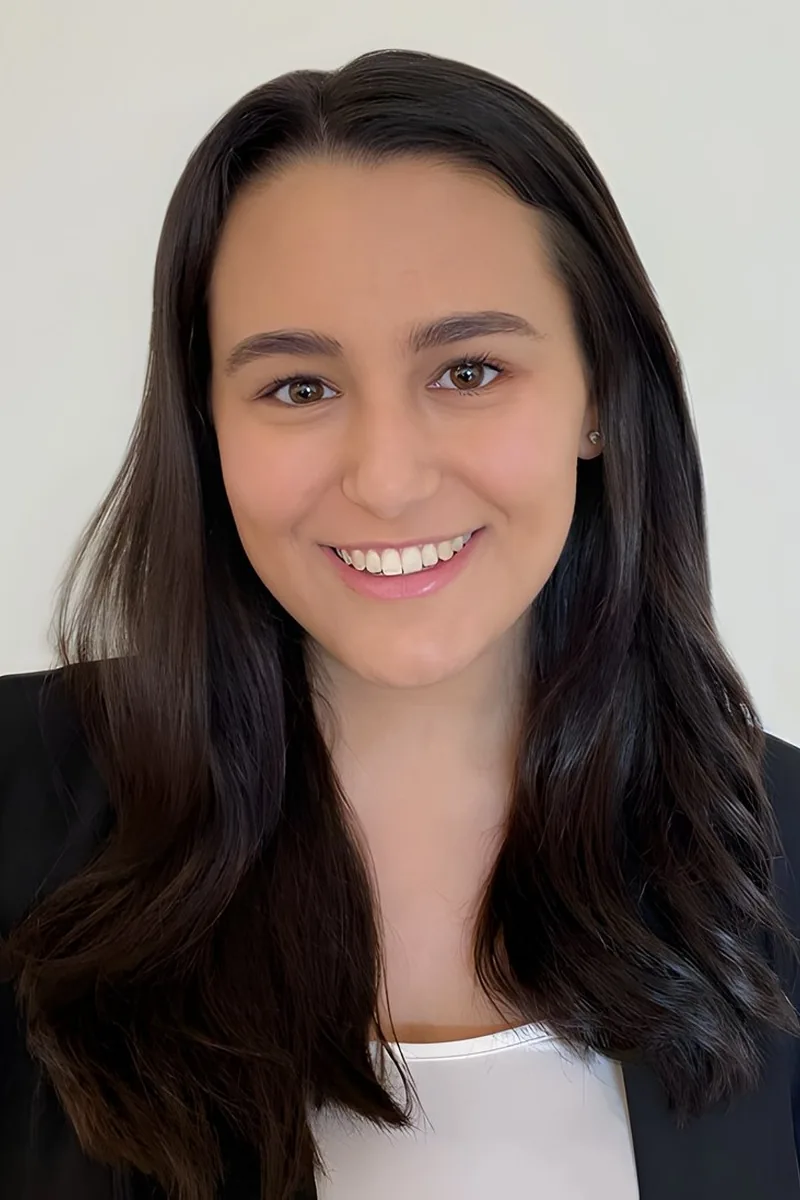
Two biomedical engineering degrees mean Allyson has been doing the calculus-heavy thermodynamics and kinetics work that p-chem formalizes — modeling energy transfer in biological systems, working through rate equations for physiological processes — since undergrad. She zeroes in on the specific mathematical step where a derivation goes from followable to opaque, whether that's a tricky partial derivative in a Maxwell relation or the statistical reasoning inside a Boltzmann distribution. Rated 4.9 by students.
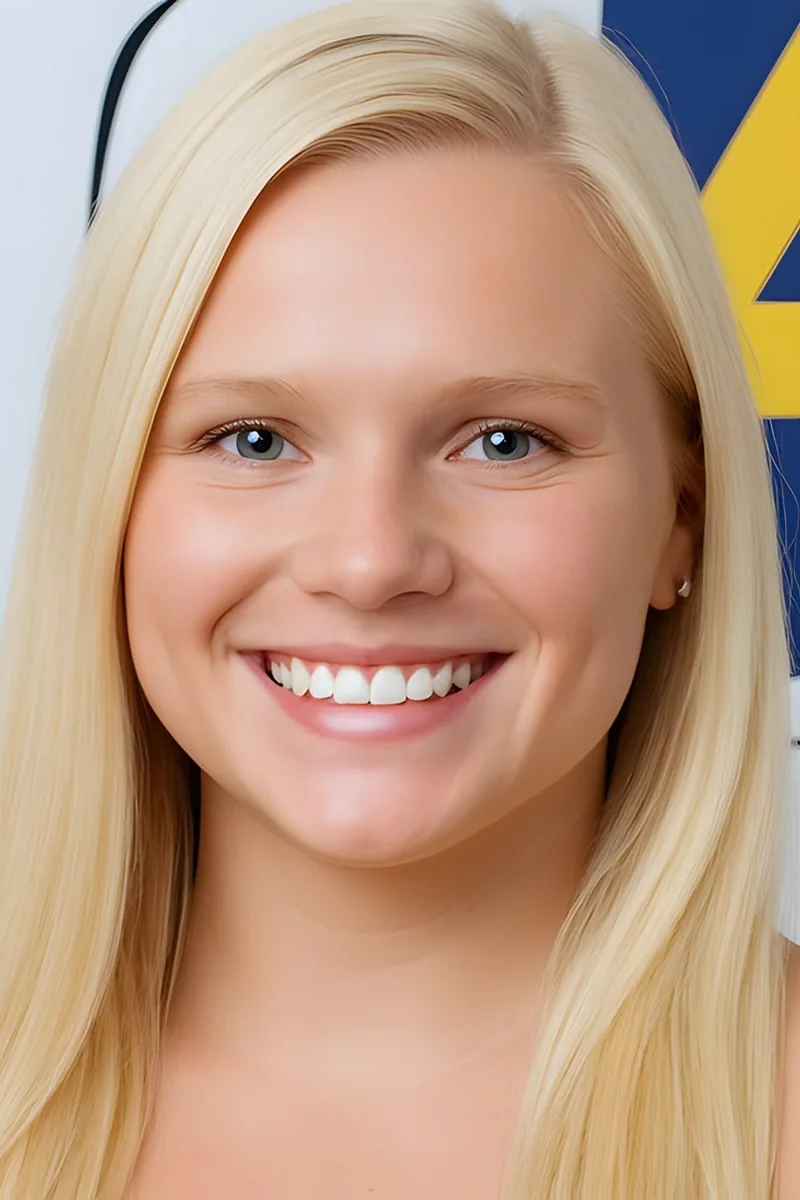
Kirby's biochemistry degree at Michigan meant grinding through the thermodynamics and kinetics that sit at the heart of p-chem — Gibbs free energy calculations, equilibrium derivations, and the statistical mechanics of molecular systems were baked into her upper-level coursework. She breaks down the calculus-heavy formalism by keeping each variable tied to the chemical reality it represents, so a daunting derivation like a Clausius-Clapeyron equation reads as a description of phase behavior rather than an abstract math exercise. Rated 4.9 by students.
I am a public school teacher (Chemistry and Living Environment) but can tutor most sciences. I truly believe in differentiated learning and once I know the learning style of a student, I tailor my teaching style for optimum time usage. I love to utilize stories from my real life experiences in labs to help students understand the implications of their science education.
A PhD in chemistry means Justin didn't just pass p-chem — he lived in its formalism for years, from quantum mechanical models to statistical thermodynamics, and then kept using it through doctoral research. That depth shows when he teaches: he can trace a concept like chemical potential or a Maxwell relation back to the physical picture driving the math, catching the exact step where a student's understanding breaks down. Rated 5.0 by students.
Medical school at Tufts demands fluency in the thermodynamics and kinetics that p-chem students dread — Eric works through Gibbs free energy calculations, entropy-driven processes, and rate equations daily in a clinical science context, which keeps the material grounded rather than purely abstract. His economics background also sharpens the kind of quantitative modeling and equilibrium thinking that translates surprisingly well to topics like chemical potential and phase diagrams.
Studying biochemistry and cell biology at Rice means Sugi already had to internalize the thermodynamic and kinetic principles that drive cellular processes — free energy calculations for metabolic reactions, equilibrium constants governing binding events — before tackling them in their pure mathematical form. She unpacks p-chem derivations by linking each variable back to the molecular behavior it quantifies, turning something like a chemical potential expression into a description of what molecules are actually doing at a phase boundary. Rated 5.0 by students.
Katherine's broad math and science background — spanning calculus, thermodynamics, and physics — means she's comfortable with the multivariable calculus and differential equations that make p-chem derivations so dense. She takes apart concepts like Maxwell relations and chemical potential by slowing down at the exact algebraic step where the physical intuition tends to disappear. Rated 5.0 by students.
Enric holds a PhD in Chemistry, which means p-chem wasn't just a course requirement — it was the foundation his entire research career was built on, from quantum mechanical modeling to thermodynamic analysis at the graduate level. He teaches the subject by slowing down at the exact calculus step where a derivation goes from followable to opaque, rebuilding the physical reasoning behind each manipulation before moving forward. Rated 5.0 by students.
This is Jacob's home turf. He earned his Ph.D. in Physical Chemistry from UC Berkeley and now conducts research at Northwestern, so topics like quantum mechanics, statistical thermodynamics, and spectroscopy are part of his everyday work. He walks students through the math-heavy derivations that make p-chem notoriously difficult, connecting each equation back to the physical picture it describes.
Medical school at the Medical College of Wisconsin means Abrahim encounters p-chem's core concepts daily — reaction kinetics in pharmacology, thermodynamic energy balances in physiology, and the quantum mechanical principles behind spectroscopic diagnostics. His UCLA biology degree and 34 ACT demonstrate the mathematical fluency needed to work through derivations involving state functions, equilibrium constants, and entropy calculations without losing sight of what the chemistry actually describes. Rated 5.0 by students.
Biochemistry lab work and a dual bachelor's in arts and biochemistry mean Andrew has already applied the thermodynamics, kinetics, and quantum mechanical concepts that make p-chem brutal — calculating free energy changes in enzyme systems, modeling reaction rates at the molecular level. He unpacks the heavy calculus in derivations by keeping one foot in the real chemistry, so a partition function or a phase diagram reads as a description of molecular behavior rather than an exercise in pure math. Rated 4.9 by students.
A physics degree gives Cory something many p-chem tutors lack — native comfort with the quantum mechanics and statistical mechanics that chemistry students often encounter for the first time in this course. He treats topics like wave functions, partition functions, and thermodynamic state variables as extensions of the physics he already thinks in, then builds the chemical context around them. Rated 4.9 by students.
Testimonials
Because the right Physical Chemistry tutor makes all the difference.
Average Session Rating – Based on 3.4M Learner Ratings
Nearby Physical Chemistry Tutors
Other Memphis Tutors
Related Science Tutors in Memphis
Frequently Asked Questions
Physical chemistry bridges chemistry and physics by studying the properties of molecules and how chemical reactions occur at a molecular level. It's challenging because it requires understanding abstract concepts like thermodynamics, quantum mechanics, and kinetics—often simultaneously—while also applying mathematical problem-solving skills. Many students struggle with visualizing molecular behavior and connecting equations to real-world chemical processes, which is where personalized instruction can make a significant difference.
Varsity Tutors connects you with expert tutors who tailor instruction to your specific challenges, whether that's balancing redox equations, understanding thermodynamic principles, or mastering kinetics. Your tutor will work with you to break down complex concepts into manageable pieces, help you visualize molecular interactions, and build problem-solving strategies that apply across different topics. Sessions can focus on homework help, exam preparation, or deepening your conceptual understanding of the material.
Students typically struggle with unit conversions, balancing chemical equations, understanding thermodynamic relationships (like enthalpy and entropy), and applying quantum mechanical concepts to real molecules. Many also find it difficult to visualize abstract processes like electron orbitals, molecular motion, and reaction mechanisms. A tutor can help you develop mental models for these concepts and create systematic approaches to problem-solving that reduce errors and build confidence.
Yes. While tutors excel at explaining theoretical concepts and helping you master calculations, they can also help you understand the principles behind lab experiments, prepare for lab reports, and connect what you're observing in the lab to the theory you're learning in class. This connection between hands-on work and conceptual understanding is crucial for truly grasping physical chemistry.
Your first session is an opportunity for your tutor to understand your current level, identify specific areas where you need support, and learn your learning style. You might work through a practice problem together, discuss concepts that are confusing, or review your course syllabus and upcoming assessments. This foundation helps your tutor create a personalized plan for your sessions going forward.
Tutors help you review key concepts, practice problem-solving under exam conditions, identify patterns in question types, and build strategies for tackling complex multi-step problems. Rather than just memorizing formulas, you'll develop a deeper understanding of when and why to use them—which translates to better performance on exams that test conceptual reasoning alongside calculation skills.
Varsity Tutors matches you with tutors who have expertise in physical chemistry and understand the specific curriculum you're working with. When you connect with us, you can discuss your needs, timeline, and learning preferences, and we'll help you find a tutor who's a great fit. You can start with a single session to see if the match works before committing to ongoing tutoring.
Understanding concepts is far more valuable in physical chemistry than memorization. When you understand the underlying principles—like why enthalpy and entropy matter in thermodynamics, or how reaction rates depend on molecular collisions—you can apply that knowledge to new problems you've never seen before. A good tutor will help you build this conceptual foundation so formulas make sense and stick with you long-term.
Let’s find your perfect tutor
Answer a few quick questions. We’ll recommend the right plan and match you with a top 5% tutor.