Award-Winning AP Physics C: Electricity and Magnetism Tutors
serving Knoxville, TN
AP Physics C: Electricity and Magnetism
Tutors in Knoxville
Private 1-on-1 tutoring, weekly live classes for academic support, test prep & enrichment, practice tests and diagnostics, and more to elevate grades and test scores.
Based on 3.4M Learner Ratings
UniversitiesSchools & Universities
DeliveredHours Delivered
ProficiencyGrowth in Proficiency
Who needs tutoring?
No obligation. Takes ~1 minute.
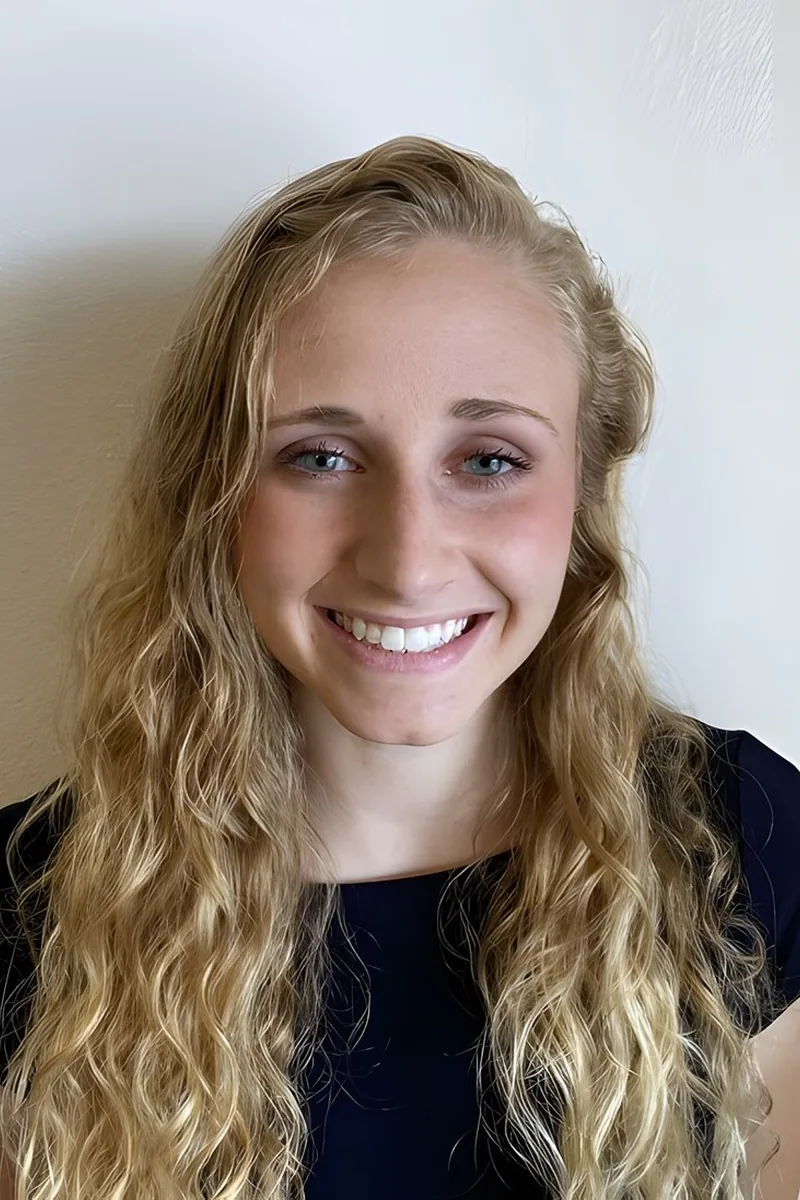
I am an Applied Physics Major with an Emphasis in Mechanical Engineering at Brigham Young University. I love to share the joy I have in the sciences and math to show truly the applications are so far-reaching.

Gauss's law, Ampère's law, Faraday's law — AP Physics C: E&M asks students to wield vector calculus inside electromagnetic theory, which is a steep jump from mechanics. Richard's electrical and computer engineering background at the University of Tulsa means he's worked through these derivations extensively and can connect abstract field equations to tangible circuits and real devices. He breaks down each Maxwell equation into physical intuition first, then builds toward the math.
Gauss's law, Ampère's law, RC circuits, electromagnetic induction — E&M demands that students think in vector fields and apply calculus to invisible phenomena. As a Stony Brook physics major who also codes simulations, Kiran unpacks these abstractions by walking through the physical setup before touching an integral, which turns intimidating problems into a sequence of logical steps.
AP Physics C: E&M is where calculus and physics collide — Gauss's law, Ampère's law, and Faraday's law all require setting up and solving integrals that many students haven't encountered in their math classes yet. Raphael's combined strength in calculus and physics, built through his Cornell science curriculum, means he can teach both the mathematical machinery and the physical intuition behind electromagnetic fields and circuits. Rated 5.0 by students.
I am a graduate of Cornell University's College of Arts and Sciences. I received my Bachelor of Arts in Chemistry with Distinction in 2015. Since graduation, I was a physics/chemistry teacher and soccer coach at a private school in Virginia for a year, where I led the soccer team to an undefeated season. Before teaching and coaching professionally, I was a Teaching Assistant for the Cornell Math and Physics Departments, where I taught many subjects including calculus, mechanics, electromagnetism. Throughout my time at Cornell and as a teacher, I tutored subjects ranging from the SAT to AP Physics and Algebra II, which is where my true talents lie: in small group or one-on-one settings where I can give students the full attention they deserve and tailor my approach specifically to their learning styles. This is why I am now pursuing tutoring as a part-time occupation at Varsity Tutors. I embrace teaching all math and science subjects, especially physics and calculus, at both the college and high school level and will go above and beyond to make sure all of my students succeed, according to their definition of success. In my spare time, I enjoy playing league soccer, basketball, tennis and guitar, and also like to travel and see as much of the world as I can.
AP Physics C: E&M is where calculus and physics truly merge — Gauss's law, Ampère's law, and Faraday's law all require setting up and evaluating integrals that many students haven't encountered in their math classes yet. Eitan's physics degree means he can teach both the physical intuition behind electric and magnetic fields and the vector calculus needed to solve the problems. Rated 5.0 by students.
Unlock your academic potential with a tutor who bridges the gap between elite performance and foundational mastery. As a National AP Scholar with advanced coursework in Multivariable Calculus and Data Structures, I bring high-level expertise to your studies. Whether you are tackling complex algorithms or advanced math, I provide the precise guidance you need to excel. My experience at Kumon and Mathnasium taught me that even the most complex goals start with strong basics. I believe in both individual learning as well learning through guided practice, so whatever your way to learn I can accomodate to help you do the very best.
Gauss's Law, Ampère's Law, Faraday's Law — E&M asks students to think in three dimensions about invisible fields, which is a genuinely different skill from anything in Mechanics. Lila tackles this by grounding each law in a concrete setup (a charged sphere, a solenoid, a changing flux through a loop) before generalizing, so the vector calculus feels like a tool rather than an obstacle.
Gauss's law, Ampère's law, Faraday's law — AP Physics C: E&M asks students to wield vector calculus in physical contexts that feel deeply abstract. Shira tackles this by grounding each law in a concrete scenario first (a charged sphere, a solenoid, a changing magnetic flux) before layering on the integral setup, so students build physical intuition alongside mathematical fluency.
This is Michael's home turf. As an electrical and computer engineering major at Northwestern specializing in robotics and control systems, he lives in the world of Gauss's law, Faraday's law, and RC/RL circuits every semester. He unpacks Maxwell's equations and circuit analysis in ways that connect the abstract math to real systems — like the power electronics he builds for Northwestern's solar car.
Gauss's law, Ampère's law, Faraday's law — E&M asks students to visualize invisible fields and then describe them with vector calculus. David approaches each topic by first making the field geometry concrete, using symmetry arguments and sketches before diving into surface or line integrals. His physics coursework gives him firsthand familiarity with the exact problem types and conceptual traps the AP exam targets.
Gauss's law, Ampère's law, Faraday's law — E&M demands comfort with vector calculus that most high schoolers haven't fully developed yet. Sanjana's applied math training at Harvard means she can teach the calculus and the physics simultaneously, connecting flux integrals and field equations to physical intuition rather than leaving students to wrestle with two subjects at once.
E&M is where most AP Physics students hit their ceiling — Gauss's law, Ampère's law, and Faraday's law demand spatial reasoning and calculus fluency at the same time. Bidyut's biomedical engineering curriculum at Johns Hopkins required extensive work with electromagnetic theory, from circuit analysis to field modeling. He unpacks each law by building the physical picture first, then layering in the math so the integrals actually make sense.
Testimonials
Because the right AP Physics C: Electricity and Magnetism tutor makes all the difference.
Average Session Rating – Based on 3.4M Learner Ratings
Practice AP Physics C: Electricity and Magnetism
Free practice tests, flashcards, and AI tutoring for AP Physics C: Electricity and Magnetism
Nearby AP Physics C: Electricity and Magnetism Tutors
Other Knoxville Tutors
Related Science Tutors in Knoxville
Frequently Asked Questions
AP Physics C: Electricity and Magnetism focuses on electrostatics, conductors and insulators, electric circuits, magnetic fields, and electromagnetic induction. The course emphasizes calculus-based problem-solving, requiring students to work with concepts like Coulomb's Law, Gauss's Law, Ampère's Law, and Faraday's Law. Mastering these foundational topics is essential for scoring well on the exam, which tests both conceptual understanding and mathematical application.
Students often struggle with visualizing electric and magnetic fields, applying Gauss's Law and Ampère's Law correctly, and managing the heavy calculus requirements throughout the course. Many find the transition from Mechanics to Electricity and Magnetism conceptually difficult, especially when dealing with vector fields and flux calculations. Personalized 1-on-1 instruction helps break down these abstract concepts and build confidence in problem-solving techniques.
The exam consists of two 45-minute sections: multiple choice and free response. For multiple choice, aim to spend about 1.5 minutes per question, leaving time to review difficult items. On free response, read all questions first to identify which are most straightforward, then allocate your 90 minutes strategically—typically 15-20 minutes per question depending on complexity. Practice tests under timed conditions are crucial for developing pacing skills and identifying where you tend to lose time.
Score improvement depends on your starting point and commitment level, but students typically see meaningful gains—often 1-2 points on the 1-5 scale—when they work consistently with expert tutors to address specific weak areas. For students in Knoxville with access to personalized instruction, the key is identifying whether your challenges are conceptual (understanding field theory) or procedural (applying calculus to physics problems), then targeting practice accordingly. Regular practice tests and targeted review of past FRQ questions accelerate improvement significantly.
Most students benefit from taking 4-6 full-length practice tests over their study period, with the first one early to establish a baseline and the rest spaced throughout your preparation. Between full tests, focus on targeted practice with specific topics or question types where you're weakest. Spacing out your practice tests allows time to review mistakes, learn from them, and apply those lessons to subsequent attempts—a principle called retrieval practice that strengthens long-term retention.
Varsity Tutors connects you with expert tutors in Knoxville who specialize in AP Physics C: Electricity and Magnetism and understand the specific demands of the exam. When getting matched with a tutor, look for someone with strong physics credentials and proven experience helping students improve their scores. Your first session is a great opportunity to discuss your goals, identify your biggest challenges, and develop a customized study plan leading up to exam day.
Building confidence through repeated practice with similar question types and timed conditions is one of the most effective anxiety-reduction strategies. Working with a tutor allows you to practice explaining your problem-solving process out loud, which reduces the unfamiliarity factor on test day and helps you catch errors before they happen. Additionally, developing a pre-exam routine—reviewing key formulas, doing a few warm-up problems, and getting adequate sleep—helps you approach the exam with a calm, focused mindset.
Your first session with a tutor typically involves discussing your current understanding of AP Physics C: Electricity and Magnetism, identifying your specific challenges (whether it's conceptual gaps, calculus application, or test-taking strategy), and reviewing your goals for the course. The tutor will likely assess your baseline knowledge through questions or a brief diagnostic, then create a personalized study plan tailored to your needs and timeline. This foundation ensures that all future sessions focus directly on the areas where you need the most help.
Let’s find your perfect tutor
Answer a few quick questions. We’ll recommend the right plan and match you with a top 5% tutor.